Building real strength in your horse comes down to three things: smart exercise, balanced nutrition, and consistent recovery. If you want to know how to make your horse stronger using proven methods, this guide walks you through every step, from foundation drills to year round care. You will learn the most effective workouts, the breeds best suited for power, and the daily habits that protect your horse’s muscles.
Every section gives you practical actions you can use immediately at the barn or arena. You do not need expensive equipment or complicated science. You need a clear plan, the right inputs, and the patience to let strength build naturally over weeks and months. Whether you ride for pleasure, train for competition, or simply want a healthier companion, the principles in this guide apply to horses of all ages and disciplines.
Key Takeaways
- Strength training works best when paired with quality forage and gradual workload increases.
- Hill work, cavaletti, and lunging are the three most efficient power building drills for most horses.
- Quarter Horses, Arabians, Thoroughbreds, and Draft breeds each excel at different strength profiles.
- Year round conditioning prevents muscle loss during winter and overheating during summer training.
- Rest days, hydration, and protein rich feed accelerate muscle repair and lasting performance gains.
The Foundation: What Horse Strength Really Means
Horse strength is the combined capacity for power, endurance, balance, and recovery, all working together to support healthy movement. A truly strong horse can carry weight, climb hills, accelerate quickly, and bounce back the next day. Most owners focus only on muscle size, but real strength sits in the deeper systems, including tendons, ligaments, cardiovascular health, and topline development.
Think of it this way. A horse that gallops once and stays sore for three days is not strong. A horse that trots up a long incline and finishes calm and breathing easily is.
Before you start any conditioning plan, evaluate your horse honestly. The American Association of Equine Practitioners recommends a baseline veterinary check before increasing intensity, especially for older or previously sedentary horses. This protects against hidden joint issues and lets you build with confidence.
Horse strength is the integrated capacity of muscle, tendon, and cardiovascular systems to perform repeated effort with quick recovery. True equine strength develops through progressive resistance, balanced nutrition, and adequate rest. Without recovery, training breaks the horse down instead of building it up.
A useful starting point is the Henneke Body Condition Scoring system, developed at Texas A&M University. Most working horses thrive at a score between five and six. Below five, your horse may lack the energy reserves for steady training. Above six, excess fat hides real muscle development and can stress joints.
Strength also depends on the horse’s age, history, and natural conformation. A six year old gelding with a thick neck and short back may already carry power, while a long backed thoroughbred mare needs more time to fill out. Match your goals to what your horse actually offers, and you will see steady progress.
Set a realistic goal before you begin: a stronger topline, more trail stamina, or better push from the hind end. Each goal demands a different blend of exercises, and naming it makes every session purposeful.
Finally, remember that strength is built through small, frequent stresses, not through occasional heroic efforts. Two short, smart sessions per week outperform one long, exhausting workout every time. The horse’s body learns to adapt only when it receives consistent, manageable challenges. Keep a simple training journal so you can spot which exercises lift the topline fastest.
Powerful Exercises That Make Horses Stronger Fast
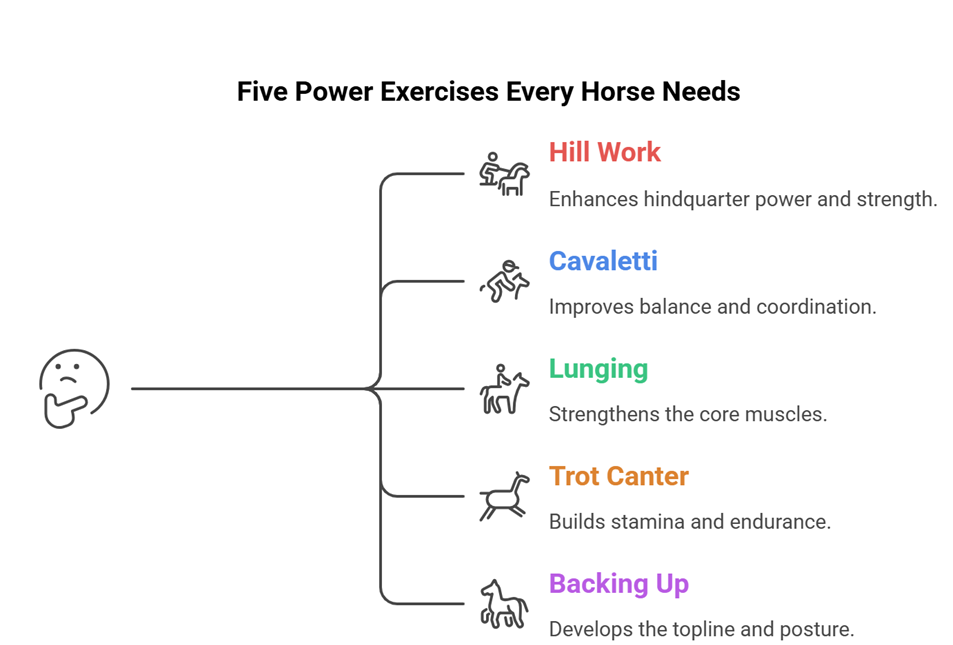
The most effective exercises target multiple muscle groups while building balance and aerobic capacity. You do not need fancy equipment. You need consistency, varied terrain, and the patience to progress slowly. The five drills below cover hindquarter power, core stability, and lasting stamina, and together they form the backbone of a complete strength program.
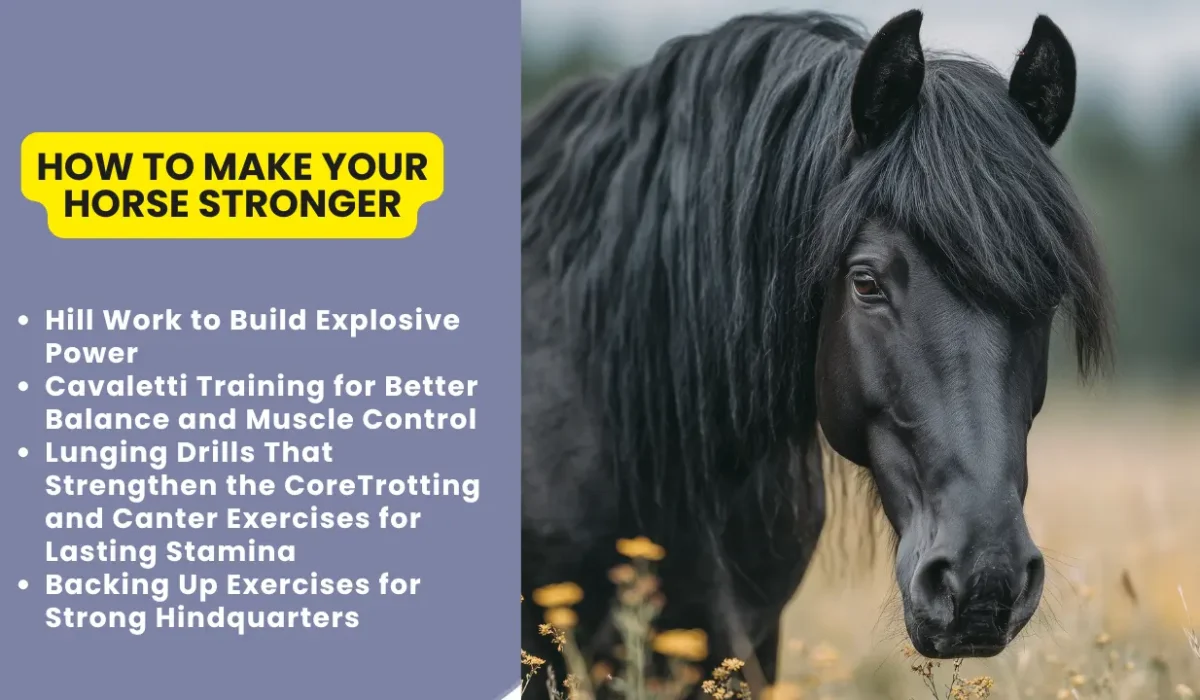
Hill Work to Build Explosive Power
Hill work is the single most efficient way to develop hindquarter strength and cardiovascular fitness. Walking up a moderate incline forces your horse to engage the gluteals, hamstrings, and core in ways flat ground simply cannot replicate.
Start with five minutes of uphill walking, two or three days each week. Build gradually toward longer climbs and short trotting sections. Always cool down on the flat afterward, allowing the heart rate to settle before returning to the barn.
No hill nearby? Use wedge ramps or uneven trail terrain. Even a gentle slope produces measurable gains over time. A horse new to hill work should never exceed two consecutive uphill days, since soreness builds quickly when introduced too fast.
Cavaletti Training for Better Balance and Muscle Control
Cavaletti, the small ground poles set in patterns, sharpen coordination and build the stabilizing muscles around the spine. They also force the horse to lift the legs higher, recruiting deeper muscle fibers in the shoulders and hindquarters.
Set four to six poles at distances suited to your horse’s stride. Walk through them first, then trot calmly. Three sessions per week of about ten minutes each deliver strong results within a month.
Vary the layout often, using straight lines, fans, and L shapes. Each new arrangement challenges different muscle groups and keeps the horse mentally engaged. Avoid raising poles too quickly. Most horses benefit from at least four weeks at ground level before progressing.
The German training pyramid, taught by the FN, places cavaletti within the suppleness and contact phases for very good reason. They build a confident, balanced, and powerful horse without the joint stress of repetitive jumping. Many top dressage riders rely on cavaletti work as their core conditioning tool throughout the competition season, swapping pole heights and patterns to keep both body and mind progressing.
Lunging Drills That Strengthen the Core
Lunging on a circle, done well, develops the abdominal and longissimus dorsi muscles that support the back. Avoid endless tight circles, which can stress the joints. Instead, use larger circles with frequent transitions.
Mix walk, trot, and canter in short intervals of two to three minutes. Change direction often. Keep total lunging time to around twenty minutes per session. Never lunge a young horse on small circles, as growing joints need protection.
Add side reins, a chambon, or a Pessoa system only if you have proper instruction. These tools encourage the horse to round and engage, but they can also cause harm when used incorrectly. Start without aids, and add them only once your horse moves freely.
A simple rule applies. The horse should finish each session breathing harder but moving smoothly, never staggering or hanging off the line. That balance signals real, sustainable strength gains. If your horse loses rhythm after the first few minutes, shorten the session and revisit the basics of voice commands, ground manners, and balanced contact before adding intensity.
Trotting and Canter Exercises for Lasting Stamina
Long, steady trot sessions strengthen the legs and improve cardiac efficiency. Short canter intervals develop fast twitch fibers and respiratory power. Together, these two gaits form the cardio backbone of any horse workout routine.
A simple weekly plan might include one long trot day, one interval canter day, and one easy hack. This rotation prevents overuse injuries while building real fitness. Use a heart rate monitor if you have one, aiming for recovery to under sixty beats per minute within ten minutes after work.
Vary your terrain. Soft footing builds tendon strength, while firmer ground sharpens hoof and bone development. Both have a place in a balanced program.
If your horse hollows the back or pins the ears during canter work, stop and reassess. These signs often point to saddle fit issues, muscle pain, or fatigue. Strength built on top of discomfort never lasts. Schedule a one week active recovery block every five or six weeks of focused canter conditioning to allow tendons and ligaments to catch up with the gains in muscle and aerobic capacity.
Backing Up Exercises for Strong Hindquarters
Backing up under saddle or in hand is one of the most underused strength tools. The reverse motion activates the hindquarter and abdominal chain, helping round the topline and protect the back.
Ask for ten to fifteen steps of slow, controlled backing, two or three times per session. Reward the horse for stepping straight and engaging the hind end. Avoid pulling on the reins. Instead, sit lightly, ask gently, and let the horse find the movement on its own.
For added challenge, back up small hills or back over poles spaced about three feet apart. Both versions force greater engagement and improve coordination. Always quit while the horse is still working well, rather than pushing until quality breaks down. Even three or four crisp reps at the end of a session can produce more topline change over two months than many longer, sloppier attempts.
But here is where most horse owners go wrong. They chase volume without watching posture. Volume without quality builds tension, not strength.
Best Breeds Known for Strength and Stamina
Genetics shape what kind of strength a horse can develop most easily. Some breeds excel at explosive power, others at endurance, and a few at sheer pulling capacity. Knowing your breed’s natural strengths helps you train with the grain rather than against it.
This does not mean that a mixed breed or pony cannot become strong. Almost any healthy horse can build remarkable strength with the right plan. It simply means that you should match your training emphasis to what your horse naturally finds easy and what it finds harder.
The table below summarizes how four classic breeds compare in strength and stamina profile. Use it as a quick reference when matching your training plan to your horse’s natural gifts.
| Breed | Primary Strength | Best Disciplines | Stamina Level |
| Quarter Horse | Explosive power | Reining, ranch work | Moderate |
| Arabian | Endurance and recovery | Distance, trail | Very high |
| Thoroughbred | Speed and lean muscle | Racing, eventing | High |
| Draft Horse | Pulling power | Driving, heavy work | Moderate |
Quarter Horse
The Quarter Horse is the gold standard for short burst power and quick acceleration. Bred originally for racing the quarter mile, these horses pack dense fast twitch muscle across the hindquarters. They respond exceptionally well to hill work and short sprint intervals.
To bring out a Quarter Horse’s natural strength, combine sprint based conditioning with deliberate slow work. Lateral exercises like leg yield and shoulder in develop balance and supple power. The American Quarter Horse Association recommends progressive resistance training rather than long, slow distance for this breed’s muscle profile. Aim for short, focused sessions that respect their explosive build and quick recovery time.
Arabian Horse
Arabians lead the world in endurance disciplines because of their efficient cardiovascular system and lean, durable build. Their strength shows in repeated efforts and quick recovery rather than raw bulk. Long, steady distance work and varied terrain develop their natural gifts further.
If you ride an Arabian, focus on building aerobic stamina with low intensity, long duration sessions. Add interval days once a fortnight to sharpen power output. Their dense bone and elastic tendons make them remarkably resilient, but they still need balanced electrolytes and quality forage to support sustained efforts. Endurance riders often pair Arabians with structured heart rate monitoring, since recovery times reveal more about true fitness than any visible measure.
Thoroughbred
Thoroughbreds combine lean muscle with high stamina, making them ideal for racing, eventing, and many sport horse disciplines. They thrive on structured interval training, but they also need careful management to avoid overtraining and stress fractures.
Build a Thoroughbred’s strength with a mix of trot sets, canter intervals, and cavaletti. Add hill work cautiously, starting with gentle inclines and short durations. Their high metabolism demands abundant calories, quality protein, and steady access to forage. Without those inputs, even the best training plan stalls. Ulcer prevention also matters greatly in this breed, so feed small, frequent meals and consider hindgut buffers during heavy training cycles.
Draft Horses
Draft breeds such as Percherons, Belgians, and Clydesdales develop their strength through pulling and weight bearing tasks. Their slow twitch fibers handle steady, heavy loads better than any other group, and they remain remarkably calm under pressure.
Keep a draft horse strong with light cardio plus practical work such as log dragging, sled pulling, or driving in harness. Avoid prolonged sprint work, which strains their joints. Focus instead on consistent, moderate sessions, generous warm ups, and joint supportive nutrition. Pay extra attention to hoof care, since their large body weight magnifies any imbalance in the foot or limb.
Horse Nutrition for Muscle Gain and Recovery
Nutrition decides whether exercise builds muscle or breaks the body down. Even the best workout plan fails if your horse lacks protein, energy, and the right minerals. The bottom line is this: you train the muscle in the arena, but you build it at the feed tub.
The National Research Council, in its Nutrient Requirements of Horses, sets clear targets for protein, calories, vitamins, and electrolytes for working horses. Use these as your baseline, then refine with the help of a certified equine nutritionist.
Use this checklist to build a horse nutrition plan that genuinely supports muscle gain:
- Provide forage as the foundation, at least one and a half percent of body weight per day in good hay or pasture.
- Add a balanced concentrate or ration balancer to meet protein and mineral needs.
- Include quality protein sources such as alfalfa, soybean meal, or specialized amino acid blends.
- Offer free choice salt and ensure clean water is always available.
- Supplement with omega three fatty acids if your horse trains hard or has stiff joints.
- Add electrolytes during heavy sweating or long sessions in hot weather.
- Adjust calories upward only as workload genuinely increases.
Protein quality matters more than total quantity. Lysine and methionine are the limiting amino acids in most equine diets. Without enough lysine, your horse cannot synthesize new muscle even if you feed extra grain. Most adult horses in light to moderate work need at least twenty seven grams of lysine per day, while harder working horses need significantly more.
Timing matters too. Feed concentrates within an hour of finishing exercise to support muscle repair. Forage should always be available during rest periods, as continuous fiber intake maintains a healthy hindgut and steady energy flow.
Avoid the trap of supplementing without testing. Many owners stack joint products, hoof formulas, and muscle blends on top of an already fortified feed. This often creates costly imbalances. Ask your veterinarian or nutritionist to review the full ration, including pasture, before adding more.
Horse nutrition for muscle gain is the practice of feeding adequate protein, calories, and essential minerals to support repair and growth after exercise. Quality forage, balanced concentrates, and key amino acids like lysine and methionine drive lean muscle development without weight gain or digestive upset.
Hydration deserves equal attention. A working horse can lose ten to fifteen gallons of water in a single hot day, taking essential electrolytes with it. Always provide fresh water before, during, and after exercise, and consider adding a measured electrolyte supplement on heavy training days. Even mild dehydration sharply reduces muscle output and recovery speed.
Watch for body condition shifts. A horse losing topline despite increased feed often has parasites, dental issues, or hindgut problems. Run a fecal egg count twice a year and schedule a dental check annually.
How to Keep Your Horse Strong Year Round
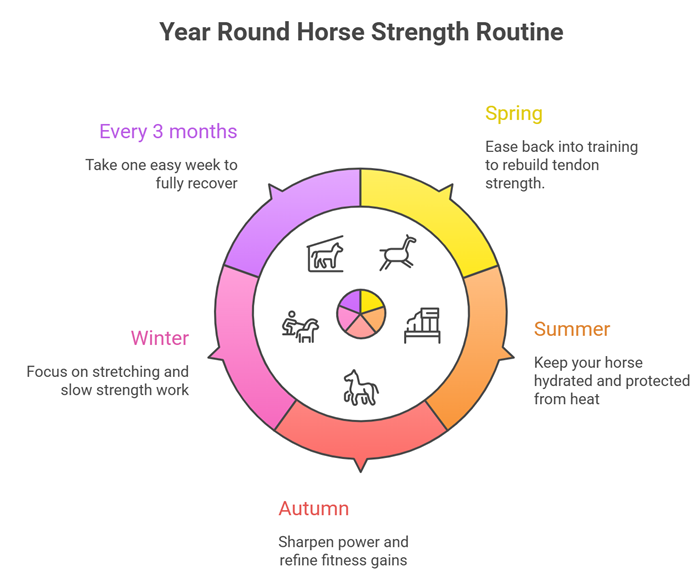
Year round strength means adapting your training to the seasons rather than pausing in winter or pushing too hard in summer. Smart owners adjust workload, feed, and turnout to match the weather, which keeps muscle on the horse and protects joints during temperature extremes. Plan each season as a distinct training block, with its own goals, recovery markers, and feed adjustments. Horses that train consistently year round outperform those that follow seasonal stops and starts, both in fitness and long term soundness.
Seasonal Conditioning Tips
Begin every season with a ramp up phase of about two weeks. Reduce intensity but keep frequency steady. This rebuilds tendon resilience and prevents the sudden spikes that cause soft tissue injuries.
Track body condition every month using the Henneke Body Condition Scoring system, developed by Dr. Don Henneke at Texas A&M University. Aim for a score between five and six for most working horses. Anything outside that range signals that you should adjust feed or workload before the issue grows.
Plan four training blocks per year, each about three months long, with one easier transition week between blocks. This mirrors the natural cycles that elite equine athletes follow.
Use seasonal vet checks to catch small issues early. Spring dental work, autumn vaccination updates, and quarterly hoof assessments all support consistent training across the year.
Adjust feed to match each season. Horses burn more calories in winter for warmth and in summer for thermoregulation, so fine tune forage volume by ten to fifteen percent across the year.
Winter Exercise Ideas
Winter is where most horses lose muscle, but they do not have to. Indoor arena work, brisk lead line walks on cleared paths, and pole work in a covered area all keep muscle active. Avoid sudden sprint work on frozen ground, which sharply increases injury risk.
Lengthen warm up times in cold weather. Cold muscles tear more easily, so a ten minute walk before any trot work is essential. Blanket appropriately based on coat thickness, turnout time, and barn temperature, but resist the urge to over blanket horses who grow strong winter coats naturally.
Use this season to focus on flexibility, suppleness, and slow strength work. Long, low stretches, lateral bending, and slow rein back drills all keep the topline engaged without the impact of fast work. By spring, your horse will be ready for higher intensity gains.
At barns without indoor arenas, lead line walks and ground work puzzles like cone weaving keep your horse engaged. Even fifteen minutes of focused groundwork in a snowy paddock contributes more than many owners expect.
Summer Hydration and Recovery
Summer training demands extra hydration and shorter, smarter sessions. Train in the cooler morning or evening hours. Offer water before and after every workout, add electrolytes, and watch for early signs of heat stress such as rapid breathing or dull eyes.
Reduce session length during heatwaves, even if you ride more frequently. Two short workouts spaced through the day are kinder than one long, draining session. Rinse your horse after exercise, especially under the saddle area, to clear sweat and salt that can irritate skin and dull coat color.
Pasture management changes in summer too. Limit grazing on rich spring grass, which can spike insulin in metabolically sensitive horses. Provide shade, free choice water, and salt at all times. These small adjustments protect strength gains made earlier in the year.
Insects drain strength too. Stomping, tail swishing, and head tossing tire your horse and disturb rest. A fly mask, fly sheet, and good barn fly control keep your horse calmer and stronger.
Recovery, Rest, and Common Mistakes to Avoid
Recovery is when muscle actually grows. Skip rest days, and you erase the gains from every workout. Most strength problems come from training too often, not from training too little. The horse that gets a full rest day, free of demanding work, comes back to the arena visibly stronger.
Here is the key thing. Muscle fibers, tendons, and the nervous system all repair at different speeds. Tendons take the longest, sometimes weeks. That is why at least one rest day per week, and at least one easy hack day, are essential for any working horse.
Sleep also matters. Horses need around five hours of total sleep per day, including a small amount of REM sleep while lying down. Make sure your horse has a quiet, safe space to lie down, especially after intense sessions.
Avoid these top mistakes that limit horse strength:
- Increasing intensity and duration in the same week.
- Feeding extra grain without confirming the actual workload.
- Ignoring saddle fit, which causes muscle compensation and back pain.
- Skipping warm up and cool down phases of every session.
- Treating supplements as a replacement for proper training and feed.
- Pushing through obvious lameness or stiffness rather than calling the vet.
Saddle fit deserves a closer look because it sits at the root of so many strength problems. A poorly fitted saddle bridges, pinches, or rocks across the back, forcing the horse to compensate with hollow movement and uneven muscle use. Schedule a professional fitting at least twice a year, especially during muscle building phases when the topline changes shape.
Watch for these warning signs that your horse is not recovering well: dropped energy, dull coat, mild lameness on the first stride of trot, refusal to engage the back, or rising heart rate without a clear cause. Any one of these may signal overtraining, mineral imbalance, or a minor injury that needs attention before it becomes serious.
Build at least one full week of reduced load into every quarter. Lower intensity, shorter sessions, and longer turnout give the body deep recovery time and prevent the slow accumulation of micro injuries. Many top trainers call this a deload week, and it dramatically improves long term progress.
Bodywork also supports recovery. Regular massage, controlled stretching, and warm therapy reduce soreness and improve circulation. A grooming session paired with simple carrot stretches makes a real difference over time. Talk with a certified equine bodyworker if your horse holds tension in specific areas.
Horse Strength FAQs
These quick answers address the most common questions about how to make your horse stronger, from feeding to age limits to topline development.
What is the fastest way to make a horse stronger?
The fastest way to make a horse stronger is consistent hill work combined with balanced nutrition and proper rest days. Most horses show clear improvement in topline, muscle tone, and stamina within four to six weeks when you follow a steady plan and avoid sudden spikes in intensity. The key is steady progression rather than heroic single sessions. Track your horse’s recovery, posture, and energy weekly, and adjust upward only when each marker improves. Quick results without proper recovery usually lead to setbacks within two months, so treat patience as part of the speed equation.
What foods help horses build muscle?
Quality forage forms the base of any muscle building diet, then add protein rich feeds such as alfalfa hay, soybean meal, and a ration balancer with adequate lysine. Many owners also use whey protein concentrates or fortified senior feeds for older horses that struggle to maintain topline. Healthy fats like flaxseed or rice bran add steady energy without unwanted sugar spikes. Consult a certified equine nutritionist for tailored portion amounts based on your horse’s body weight, workload, and metabolic profile. Generic feeding plans rarely deliver the precise amino acid balance needed for visible muscle gain.
How often should I exercise my horse to build strength?
Most healthy horses build strength best with four to five structured sessions per week, mixing hill work, lunging, cavaletti, and easy hacks. Include one or two rest days every week, and always allow longer recovery after intense or extended sessions, especially during hot weather. Avoid working hard two days in a row. Instead, alternate intensity, pairing each hard day with a lighter or skill based session. This pattern keeps muscles loaded enough to grow without the chronic fatigue that stalls progress. Track session quality, not just frequency, because two excellent rides outperform five mediocre ones every time.
Can older horses still build muscle and strength?
Yes. Older horses can absolutely build muscle and strength with patient conditioning and adjusted nutrition. Focus on shorter, more frequent sessions, supportive joint nutrition, and consistent topline exercises. Many horses in their late teens regain noticeable muscle within three months when training and feed are well matched. Pay special attention to warm up time, which often needs to double for senior horses. Soft footing, supportive shoeing, and joint friendly drills like cavaletti at walk make a major difference. A retired racehorse or a senior pleasure horse can still surprise you with renewed strength.
What exercises strengthen a horse’s hindquarters?
The best exercises for strong hindquarters include hill work, backing up under saddle, transitions between gaits, pole work, and lunging on large circles with frequent gait changes. These movements activate the gluteals, hamstrings, and stifle muscles, leading to a rounder, more powerful hind end over time. Lateral exercises such as leg yield and shoulder in also engage the hind end in unique ways, building both strength and suppleness. Add three to five hindquarter focused drills to every other ride for clear improvement in the shape and power of your horse’s rear engine.
How do I improve my horse’s topline naturally?
Improving a horse’s topline naturally requires consistent core work, correct posture under saddle, and adequate dietary protein. Long, low stretching exercises, hill walking, and slow rein back drills all encourage the back to lift and the hindquarters to engage, which builds visible topline within two to three months. Adequate lysine and methionine in the feed are essential, because without them the body cannot rebuild back muscle even with perfect training. Avoid riding with tight, restrictive reins that block the back from lifting. Work in a long, low frame for the first ten minutes of every session, then collect gradually.
How long does it take to see results from horse strength training?
Most owners see visible results within four to six weeks of consistent strength training. Topline changes, hindquarter definition, and improved stamina are usually the first markers. By twelve weeks, your horse should move with noticeably more power, better posture, and quicker recovery between efforts. Deeper changes, including tendon strength and cardiovascular efficiency, take longer, often three to six months of steady work. Track progress with monthly photos taken from the same angle, body condition scores, and recovery heart rate. Real strength is built slowly, then it locks in for years.
Building real, lasting strength in your horse is not a fast process, but it is a deeply rewarding one. With smart exercise selection, year round conditioning, careful nutrition, and respect for recovery, you can transform your horse’s power, posture, and confidence in just a few months. Every horse, regardless of breed or age, has untapped potential to grow stronger when given the right inputs, and learning how to make your horse stronger pays back in soundness, willingness, and long term health.
Start small this week. Add one new strength drill, review your forage and protein intake, and schedule one extra rest day. These three changes alone often produce visible results within a month.
Remember that every horse is unique. Before starting any new strength program, please consult your veterinarian or a certified equine nutritionist for advice tailored to your horse’s individual needs and conditions.