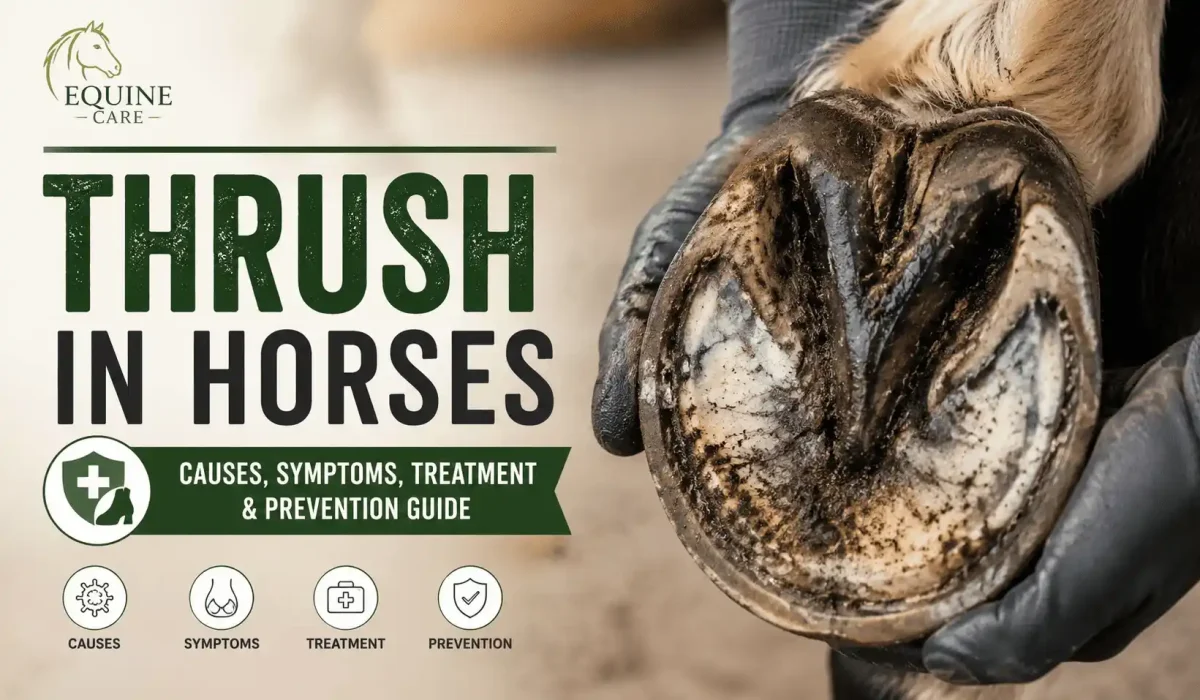
Thrush in horses is a bacterial infection of frog, the soft V shaped cushion on the underside of the hoof. It thrives in wet, dirty footing and announces itself with black discharge and a foul odor you will never forget once you smell it. This guide shows you exactly how to spot it, treat it, and stop it from returning.
Most cases resolve quickly when you catch them early. Neglected cases burrow into deeper tissue, cause lameness, and demand veterinary care. The gap between those two outcomes usually comes down to one habit: picking hooves every single day.
Everything below is practical and barn tested, from the first black smear on your hoof pick to a prevention routine that survives a wet winter.
KEY TAKEAWAYS
- Thrush is a bacterial infection of the frog driven by moisture, manure, and lack of oxygen, not by mud alone.
- Black, foul smelling discharge in the frog grooves is the defining sign you should never ignore.
- Daily hoof picking prevents more thrush than any product on the shelf.
- Most surface cases clear within two weeks of cleaning, drying, and topical treatment.
- Call your veterinarian when your horse is lame, when the frog bleeds, or when the infection reaches the central sulcus.
What Is Thrush in Horses?
Thrush is a bacterial infection of the hoof frog. Anaerobic bacteria, meaning bacteria that grow without oxygen, colonize the grooves of the frog when packed manure and moisture seal the tissue away from air. The bacteria digest frog horn and produce the black, foul smelling discharge that owners recognize instantly.
The organism most often blamed is Fusobacterium necrophorum, an opportunistic bacterium described in the Merck Veterinary Manual as a common inhabitant of soil and manure. It does not attack a healthy, clean, dry hoof. It waits for conditions that suit it.
Here is the key thing to understand. Thrush is an environmental disease wearing a bacterial costume. The bacteria are already present in every barn on earth. What changes is whether your management gives them the dark, damp, oxygen starved pocket they need.
The Frog and Why It Matters
The frog is the wedge of rubbery tissue that runs down the center of the sole. It absorbs concussion, supports blood circulation in the foot, and provides traction. Healthy frog tissue feels firm, looks broad, and sheds naturally through the year.
Three landmarks matter for thrush. The central sulcus is the groove running down the middle of the frog. The collateral grooves run along each side of it. The sole is the flat surface surrounding the frog, and the hoof wall forms the outer rim your farrier trims.
Horse hoof thrush lives in those grooves. They are narrow, they trap debris, and they hold water. When the central sulcus is deep and tight, which happens in horses with contracted or underrun heels, the groove becomes a sealed tunnel. Deep central sulcus thrush is the version that reaches sensitive tissue and causes real pain.
What Thrush Looks and Smells Like
You will smell thrush before you diagnose it. The odor is rotten, sour, and distinctive, and experienced horse owners identify it from several feet away. The discharge is black or dark gray and smears across your hoof pick like axle grease.
Signs of thrush in horses follow a predictable order:
- A foul odor rising from the foot during picking
- Black discharge packed into the central sulcus and collateral grooves
- Frog tissue that feels soft, ragged, or crumbly instead of firm
- Grooves that appear deeper than usual because tissue has eroded
- Flinching or hoof sensitivity when you press the frog with your pick
- Lameness in advanced cases, especially on hard or uneven ground
A firm, dry, evenly textured frog with shallow grooves is your baseline. Anything that departs from that baseline deserves a closer look.
How a Case Develops
Thrush builds in stages, and each stage gives you a chance to intervene. Understanding the sequence tells you how urgent your situation actually is.
It begins with debris. Manure, shavings, and mud pack into the grooves and compress under the horse’s weight into a firm plug. Oxygen stops reaching the tissue underneath within roughly a day.
Bacteria multiply next. They feed on the dead outer layer of frog horn, softening it and releasing the black discharge and odor you recognize. At this point the infection is entirely superficial and your horse feels nothing.
Erosion follows. The grooves widen and deepen as tissue breaks down, which creates a larger reservoir for debris and accelerates everything. Only when erosion reaches living tissue does your horse show pain, and by then you have usually had weeks of warning you could have acted on.
What Causes Thrush in Horses?
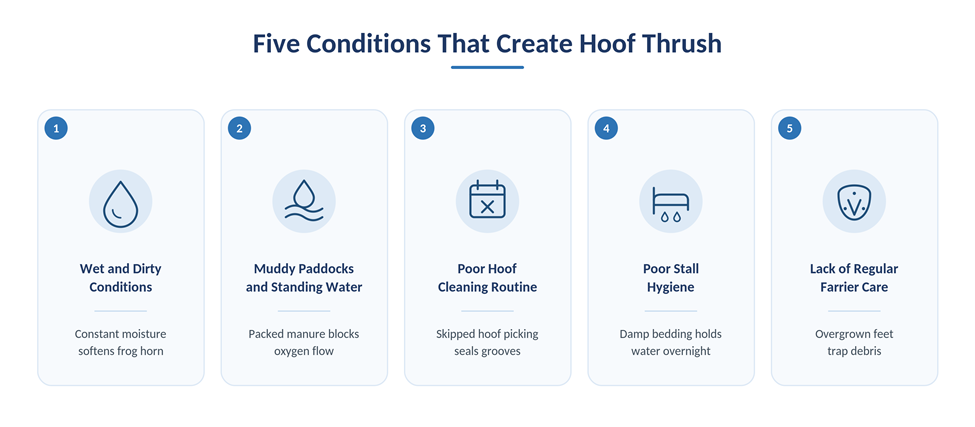
Thrush is caused by prolonged contact between the frog and a wet, manure rich environment that blocks oxygen from the tissue. Every cause below is a variation on that single mechanism. The American Association of Equine Practitioners consistently frames thrush as a management problem rather than an infectious outbreak, and that framing is your fastest route to fixing it.
But here is where most horse owners go wrong. They reach for a bottle before they change the footing. Treatment without environmental change buys you two weeks of improvement and then the same black smear returns.
Wet and Dirty Conditions
Constant moisture softens frog horn and opens the door for bacteria. Water alone rarely does the damage. Water combined with organic matter creates the airless, nutrient rich film that anaerobic bacteria need to establish.
Horses standing in soaked footing for hours each day carry the highest risk. Their hoof horn absorbs moisture, loses structural integrity, and becomes easy for bacteria to break down.
Poor Hoof Cleaning Routine
Skipping days is the single most common cause. Debris packs into the collateral grooves, compresses, and hardens into a plug that seals the tissue from air within a day or two.
Once that plug forms, moisture underneath it cannot escape. You have built the perfect anaerobic chamber without meaning to. A consistent horse hoof cleaning routine removes the plug before it ever becomes one.
Muddy Paddocks and Standing Water
Muddy paddock hoof problems dominate every wet season. Mud sticks, packs, and holds moisture against the frog long after the horse leaves the paddock. Gateways, water troughs, and feeding areas turn to soup first because traffic destroys the ground surface there.
Standing water compounds the problem. A puddle that never drains is a bacterial reservoir your horse walks through several times a day.
Poor Stall Hygiene
A damp stall is worse than a muddy field, because horses stand still in it for hours. Urine soaked bedding pushes ammonia and moisture directly against the sole and frog with no drying period at all.
Manure buildup in the stall corners is the quiet culprit. Horses lie down, stand in it, and pack it into their grooves overnight.
Lack of Regular Farrier Care
Overgrown feet trap debris. When the hoof wall grows long and the frog sits recessed above the ground, the grooves deepen and self cleaning stops. American Farriers Journal has long emphasized that hoof balance and frog contact with the ground are functional parts of hoof health, not cosmetic details.
Neglected trimming also encourages contracted heels, which narrows the central sulcus into the tight crevice where the worst infections hide.
Season, Climate, and Workload
Wet seasons drive most cases, but climate is not destiny. Horse hoof disease in wet conditions spikes during spring thaw and autumn rain, when paddocks stay saturated for weeks and drying windows disappear.
Workload matters more than owners expect. Movement flexes the frog against the ground and pushes debris out naturally, so horses in regular work develop fewer infections than horses standing in stalls or small pens. Stall rest and limited turnout both raise your risk, which is worth remembering when a horse is recovering from an unrelated injury.
Diet and general health play a supporting role. Poor hoof horn quality gives bacteria an easier target, and horses with metabolic conditions often grow weaker horn. That said, no supplement replaces a hoof pick, and you should treat feed changes as a long term investment rather than a response to an active infection.
Where Does Thrush Usually Appear in the Hoof?
Thrush appears in the frog grooves, specifically the central sulcus and the two collateral grooves. These channels collect debris, hold moisture, and receive the least air of any surface on the foot. That combination makes them the first and often the only site of infection.
Think of it this way. The sole is a flat surface that sheds dirt as the horse moves. The grooves are gutters. Anything that lands in them stays there until you remove it.
Central Sulcus Infections
The central sulcus is the most dangerous location. In a healthy foot it is a shallow dip. In a foot with contracted or collapsed heels, it becomes a narrow slit running deep between the heel bulbs.
Deep central sulcus thrush is difficult to reach with a hoof pick and easy to miss during a routine cleaning. Owners often discover it only when the horse reacts to pressure or when a farrier probes the crevice during a trim. If you can slide a hoof pick tip more than a quarter inch into that groove, treat the foot as infected until proven otherwise.
Collateral Grooves and Surrounding Tissue
The collateral grooves running along each side of the frog are the more common and more forgiving site. Infection here stays superficial in most horses and responds well to cleaning and topical treatment.
Left alone, though, it spreads. Damaged frog tissue erodes, the grooves widen and deepen, and the infection works toward the sensitive laminar tissue underneath. That progression is slow, which is exactly why owners underestimate it.
Barefoot and shod horses both develop thrush, though the pattern differs slightly. Shoes can trap material along the frog margins, while barefoot horses often self clean better on abrasive ground. Neither status protects your horse, and neither excuses skipping a foot.
Which Feet Get It Most
Hind feet develop thrush more often than front feet. Horses tend to manure where they stand, hind feet spend more time in it, and owners frequently rush the hind hooves during picking.
The bottom line is this. If you clean one pair of feet properly, make it the hind pair.
How to Inspect the Grooves Properly
Most owners clean hooves without ever inspecting them. Those are two different jobs, and only one of them catches thrush early.
Start with the hoof pick angled along each collateral groove, working from the heel toward the toe until you reach firm, pale tissue. Then run the tip gently down the central sulcus and note how far it travels. A healthy sulcus stops it almost immediately.
Finish with a hoof brush and a quick sensory check. Look at the color of the material you removed, smell the foot, and press the frog with your thumb to test for hoof sensitivity. Black material, sour odor, or a flinch tells you everything you need to know before any lameness appears.
Record what you find. A note on your phone with the date and a short description turns vague memory into a pattern you can act on, and it gives your farrier and veterinarian something concrete to work from at the next visit.
Do this in good light. A dim aisle at dusk hides exactly the details you are trying to find, and horse hoof odor causes are far easier to identify when you can see what you are smelling.
Is Thrush a Serious Disease?
Thrush is usually mild but genuinely serious when neglected. Caught in the surface tissue, it is a two week nuisance. Allowed to reach sensitive structures, it causes horse lameness from thrush, bleeding, and pain that requires veterinary treatment and sometimes months of rehabilitation.
The honest answer is that severity sits on a spectrum, and your management decides where your horse lands on it.
When Thrush Stays Minor
Surface thrush affects dead frog horn only. Your horse shows no lameness, no hoof pain, and no reaction to pressure. You clean, you treat, you dry the environment, and the tissue regenerates.
Most cases in well managed barns never move past this stage. The University of Kentucky Ag Equine Programs consistently reinforces that early identification and dry footing resolve the majority of hoof infections without escalation.
When Thrush Becomes Dangerous
Advanced thrush penetrates into living tissue. Signs escalate quickly:
- The frog bleeds when cleaned or probed
- Your horse flinches, pulls away, or refuses the foot
- Lameness appears, particularly on gravel or hard ground
- The infection tunnels under the frog rather than sitting on the surface
- Swelling or heat develops in the pastern
At that point you are past home care. Call your veterinarian. Deep infections can reach the digital cushion and, in rare cases, the navicular region, and those are outcomes worth spending money to avoid.
How Thrush Compares to Other Hoof Conditions
Owners confuse thrush with several other hoof problems. Knowing the difference tells you whether to treat at home or pick up the phone.
| Condition | Location | Key Sign | Typical Severity | Who Treats It |
| Thrush | Frog grooves and central sulcus | Black discharge, foul odor | Mild to moderate | Owner, vet if deep |
| White line disease | Hoof wall at the white line | Crumbling, hollow wall | Moderate | Farrier and vet |
| Hoof abscess | Sole or wall, internal | Sudden severe lameness | Acute and painful | Vet or farrier |
| Canker | Frog and sole tissue | Cauliflower growth, bleeding | Severe and rare | Vet, always |
| Bruised sole | Sole surface | Red discoloration, soreness | Mild to moderate | Owner, vet if lame |
The Real Cost of Waiting
Delay converts a cheap problem into an expensive one. Two weeks of daily picking and a bottle of diluted iodine cost you almost nothing. A deep infection costs you veterinary visits, debridement, therapeutic shoeing, and weeks of lost work.
The University of Kentucky Ag Equine Programs and the American Association of Equine Practitioners both stress the same point in their hoof care guidance: early intervention in hoof disease is dramatically cheaper and more effective than late intervention. Thrush is the clearest example of that principle in daily horse management.
There is also a welfare cost that never appears on an invoice. A horse with hoof pain compensates by changing how it loads its feet, and those compensations travel up the limb into the joints, tendons, and back. You may notice a stiff shoulder or a reluctance to pick up a lead long before you connect it to the foot.
Think of it this way. Every day you skip the hoof pick, you are placing a small bet that the environment stayed dry. Most days you win. The days you lose are costly.
Thrush and canker cause the most confusion because both attack the frog. Canker produces raised, ragged, cauliflower textured growths that bleed readily, and it is a veterinary condition every time. Thrush erodes tissue rather than growing it.
Horse Thrush Treatment That Actually Works
Effective horse thrush treatment follows one sequence: clean the foot completely, apply an antiseptic, and keep the hoof dry while tissue regrows. Skip any of the three and the infection returns. There is no product that outperforms a clean, dry environment.
Here is how to treat thrush in horses in a routine you can run yourself:
- Pick the foot thoroughly, clearing both collateral grooves and the central sulcus down to firm tissue.
- Scrub the frog with a stiff hoof brush and water, then dry the foot completely with a towel.
- Apply a diluted iodine or chlorhexidine solution to the grooves using a syringe or a cotton swab.
- Pack deep central sulcus cases with treated cotton so the antiseptic reaches the bottom of the crevice.
- Move the horse to dry footing for several hours daily so the hoof can breathe and firm up.
- Repeat once daily for seven to fourteen days, reassessing odor and discharge each time.
- Book a farrier visit to remove ragged frog tissue and correct any hoof balance issue feeding the problem.
Choosing a Topical Hoof Treatment
Diluted iodine and chlorhexidine remain the two most widely used antiseptic options, and both are inexpensive and effective for surface infections. Commercial thrush horse frog treatment products are also fine choices when used as directed.
Avoid harsh caustic products such as undiluted bleach or full strength formalin. They kill bacteria, but they also destroy healthy frog tissue and slow the recovery you are trying to speed up. No product cures thrush on its own, and any label promising an instant fix deserves your skepticism.
Application matters as much as product choice. Antiseptic that sits on the surface of a packed groove does nothing, because it never reaches the bacteria living underneath. Clean first, dry second, treat third, and use a syringe to drive the solution into the base of any deep crevice.
Hoof drying deserves equal weight in your plan. Bacteria that cause thrush cannot survive sustained exposure to oxygen and dry conditions, which is why moving a horse to a dry lot for a few hours often does more than the bottle in your hand.
Can I Treat Horse Thrush at Home?
Yes, for surface cases with no lameness and no bleeding. Cleaning, drying, and a simple antiseptic resolve the majority of them within two weeks.
Escalate to your veterinarian when your horse is lame, when the frog bleeds, when the infection reaches the central sulcus, or when nothing improves after fourteen days of consistent care. Home treatment has a ceiling, and pushing past it costs your horse comfort.
How Long Recovery Takes
Expect visible improvement within three to five days and full resolution in two weeks for surface cases. The odor fades first, then the discharge lightens, and finally the frog firms up and the grooves shrink back toward normal.
Deep central sulcus infections take longer, often four to eight weeks, because the tissue has to regrow from the bottom of the crevice outward. Your veterinarian may debride damaged frog tissue to open the area to air, which speeds the process considerably.
Here is the mistake that costs people a second round. They stop treating the day the smell disappears. The bacteria are still in the grooves at that point, and the tissue has not rebuilt. Finish the full course, then keep picking daily and let the environment carry the result.
Recurrence almost always signals an environmental problem rather than a treatment failure. If the same horse gets thrush twice in a season, stop evaluating products and start evaluating drainage, bedding, and your picking schedule.
How to Prevent Thrush in Horses
Preventing thrush in horses comes down to two variables you control: hoof hygiene and moisture. Manage both consistently and thrush largely disappears from your barn, regardless of climate. Manage them occasionally and you will fight it every wet season for the rest of your horse’s life.
The routines below are the ones that hold up in real barns with real schedules. None of them require special equipment or a change of property, and every one of them pays back the time you invest.
Pick Hooves Daily
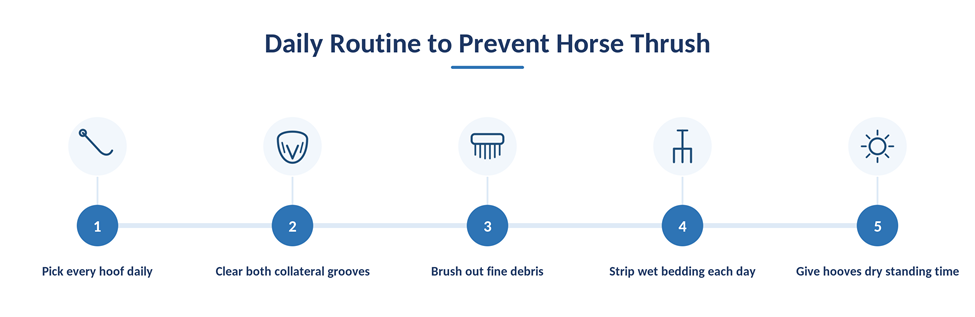
Pick every foot every day, without exception. This one habit prevents more thrush than every product on the shelf combined, because it removes the packed debris that creates the anaerobic pocket.
Clear the collateral grooves completely and run your pick gently down the central sulcus. Use a hoof brush afterward to sweep out the fine material a pick leaves behind. The whole job takes about three minutes.
Keep Stalls Clean and Dry
Strip wet bedding daily and add fresh absorbent material such as wood shavings or pellets. Damp stalls hold moisture against the frog for eight or ten hours overnight, which is longer exposure than most pastures deliver.
Airflow helps as much as bedding does. A stall with poor ventilation keeps the floor damp long after you have stripped it, so open windows and doors whenever weather allows.
Watch the corners and the spot where your horse stands to eat. Those areas soak first and get skipped most.
Improve Muddy Paddock Areas
Fix drainage rather than fighting mud season by hand. Crowned surfaces, French drains, and gravel pads in high traffic zones cut standing water dramatically.
Focus your money on gateways, troughs, and feeding areas. These small footprints carry the heaviest traffic and cause most of the exposure your horse gets.
Remove Manure Frequently
Manure is the fuel source. Removing it from stalls, paddocks, and run in sheds cuts bacterial load and improves horse hoof hygiene at the same time.
Pick paddocks at least twice weekly. High density turnout needs daily attention, because manure buildup concentrates fast in small areas.
Schedule Regular Farrier Visits
Book a routine farrier visit every four to eight weeks depending on growth rate and workload. Regular trimming maintains hoof balance, keeps grooves shallow, and preserves the frog contact that lets the foot clean itself as the horse moves.
Ask your farrier to check the central sulcus at every visit. They see the crevice from an angle you never will.
Avoid Prolonged Wet Conditions
Give every horse access to dry standing ground for part of each day. Continuous wet weather hoof care means rotating turnout, using dry lots during storms, and drying feet after baths or hosing.
Horse hoof care in mud is not about eliminating mud. It is about making sure the hoof gets dry hours between wet ones.
Hoof Care Tools Worth Owning
Good horse hoof maintenance needs four inexpensive items, and most owners already own two of them. The gap is usually the brush and the light.
Buy a hoof pick with an integrated stiff brush, since the brush removes the fine material your pick leaves behind in the grooves. Add a small wire brush for stubborn packed debris, a headlamp or barn light for genuine hoof inspection, and a syringe without a needle for driving antiseptic into a deep central sulcus.
Keep the kit at the barn, not in your truck. Tools you have to fetch are tools you skip on the days you are tired, and the days you are tired are exactly when thrush establishes itself.
Replace picks when the tip dulls. A worn pick skims the surface instead of reaching the base of the groove, which lets you believe the foot is clean when it is not.
FAQs About Thrush in Horses
What does thrush look like in horses?
Thrush looks like black or dark gray discharge packed into the grooves of the frog, paired with a strong rotten odor. The frog tissue feels soft and ragged rather than firm, and the grooves look deeper than normal because tissue has eroded. Advanced cases show bleeding, hoof sensitivity, and visible tunneling under the frog. Compare the foot to your horse’s other hooves, since a healthy frog gives you an immediate reference point for texture and depth.
What causes thrush in horse hooves?
Thrush is caused by anaerobic bacteria that colonize the frog when moisture and manure block oxygen from the tissue. The main contributors are wet bedding, muddy pasture, standing water, infrequent hoof picking, and overdue farrier care. Bacteria are always present in the environment, so your management determines whether they get the conditions they need to establish an infection.
Can thrush make a horse lame?
Yes. Surface thrush rarely causes lameness, but infection that reaches sensitive tissue beneath the frog produces real pain, particularly on gravel or hard ground. Deep central sulcus thrush is the most common source of horse lameness from thrush. If your horse is short striding or reacting to hoof pressure, treat the situation as urgent and call your veterinarian rather than waiting to see whether it improves.
How often should I clean hooves to prevent thrush?
Clean every hoof once daily, and twice daily during wet weather or when your horse is already recovering from an infection. Daily hoof cleaning removes the packed debris that creates the oxygen starved pocket bacteria need. Horses in dry climates with clean turnout can sometimes stretch to every other day, but daily picking remains the reliable standard and takes only a few minutes per horse.
Can I treat horse thrush at home?
You can treat surface thrush at home when your horse is sound and the frog is not bleeding. Clean the grooves fully, apply diluted iodine or chlorhexidine, keep the foot dry, and repeat daily for one to two weeks. Contact your veterinarian if lameness appears, if the frog bleeds, or if you see no improvement after fourteen days of consistent care.
Is thrush caused by mud?
Mud contributes to thrush but does not cause it alone. The real driver is the combination of moisture and organic matter that seals oxygen away from the frog, which is why a clean wet pasture produces far less thrush than a manure packed paddock. Horses living in muddy conditions with daily hoof picking and dry standing time often stay completely clear through a wet season.
What is the best bedding for horses with thrush?
Choose a highly absorbent bedding such as kiln dried wood shavings or compressed pellets, and strip wet material daily. The goal is a stall floor that pulls moisture away from the hoof rather than holding it against the frog. Straw works only when you remove soiled sections aggressively, since it holds urine far longer than shavings and keeps the sole damp overnight.
When should I call the vet for horse thrush?
Call your veterinarian when your horse shows lameness, when the frog bleeds during cleaning, when the infection sits deep in the central sulcus, or when fourteen days of consistent treatment produce no change. Swelling, heat in the pastern, or any cauliflower textured growth warrants an immediate call, since those signs point toward canker or a deeper infection that home care cannot reach.
Thrush in horses is one of the few equine health problems you can almost entirely prevent with a hoof pick and a habit. The bacteria are always there, waiting for a wet, dirty, airless groove to settle into. Deny them that groove and they never get started, no matter how much rain your region delivers.
Watch for the black discharge and the foul odor, treat surface cases promptly with cleaning and a simple antiseptic, and fix the environment that created the problem in the first place. Escalate quickly when lameness or bleeding appears, because deep infections punish delay and reward early action.
For advice tailored to your horse’s individual needs, consult your veterinarian or a certified equine nutritionist, and keep your farrier in the conversation. They know your horse’s feet, your footing, and your climate better than any general guide can.