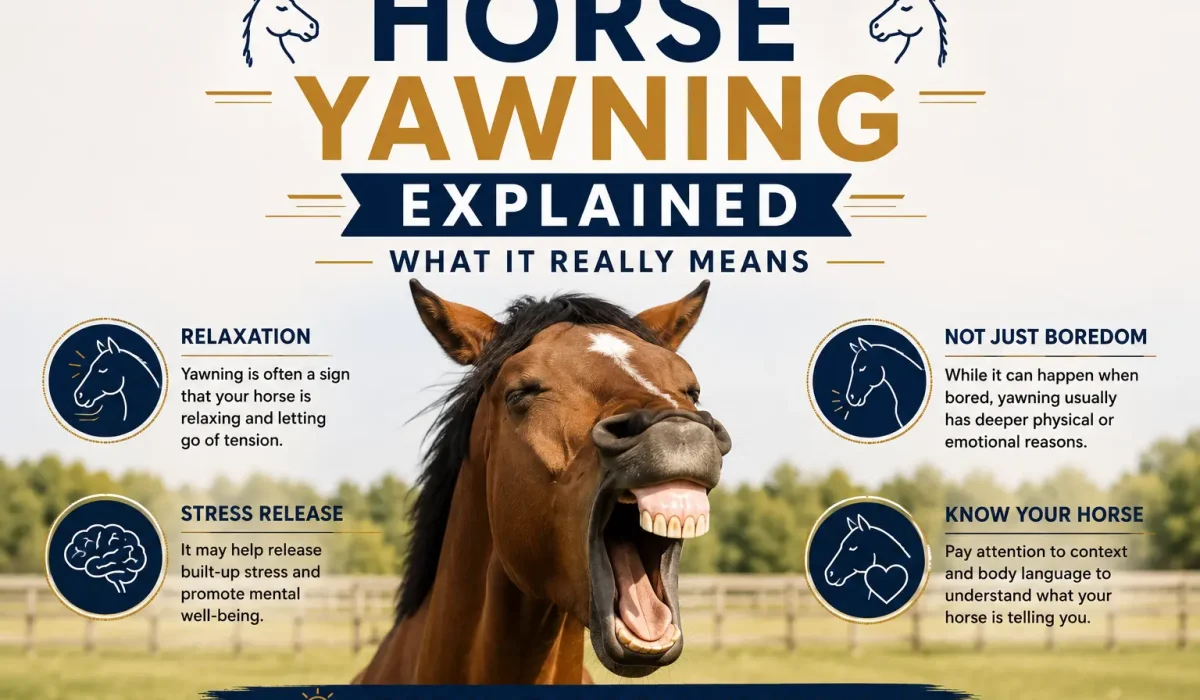
Horse yawning is one of the most misread signals in the barn. A wide, slow yawn can mean your horse feels calm and content, yet the same behavior can also hint at stress or a hidden health problem. This guide explains what horse yawning means, when it is perfectly normal, and when it deserves a closer look.
You will learn the main reasons horses yawn, how yawning fits into horse body language, and the warning signs that point to pain or illness. We also cover practical steps you can take at home and the moment it makes sense to call your veterinarian.
By the end, you will be able to read a yawn the way an experienced horse person does. You will know how to weigh frequency, context, and the signals around the yawn so you can respond with confidence rather than guesswork.
Horse yawning is a normal jaw stretching behavior because it helps your horse release tension, regulate arousal, and communicate emotional state. Most yawns signal relaxation or a shift in mood, yet a sudden rise in frequency can flag pain, digestive trouble, or dental problems that deserve your attention.
Key Takeaways
• Most horse yawning is normal and often signals relaxation or a release of tension.
• Context matters more than any single yawn, so always read the surrounding body language.
• A sudden spike in frequency is the real warning sign worth tracking.
• Excessive horse yawning can point to gastric ulcers, dental pain, or other discomfort.
• Call your veterinarian when yawning pairs with appetite loss, colic signs, or distress.
Why Do Horses Yawn?
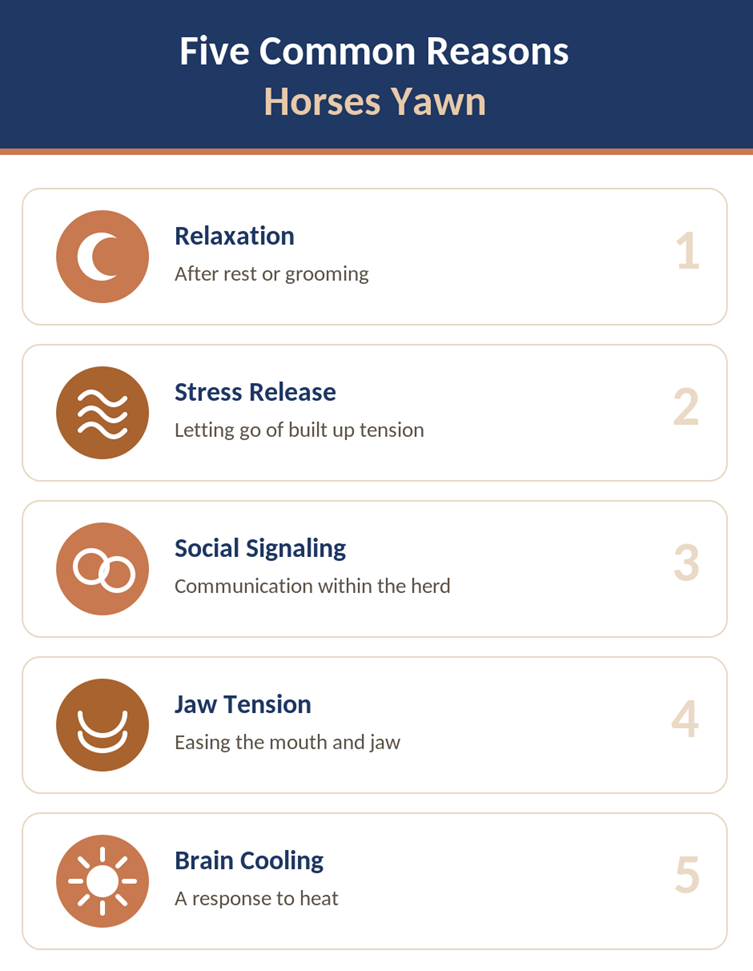
Horses yawn for several normal reasons, and most of them are nothing to worry about. The most common causes are relaxation, the release of built up tension, social signaling, and a reaction to mild physical sensations. Context is what tells you which reason applies.
Here is the key thing. A single yawn during grooming or after a nap is healthy. A pattern of repeated yawns in a tense moment is the part worth watching. Understanding these everyday triggers is the foundation for spotting anything unusual later.
Relaxation and Comfort
A relaxed yawn usually appears when your horse feels safe and settled. You will often see it after a nap, during a gentle grooming session, or once the saddle comes off at the end of a ride. This is the most common and most reassuring form of equine yawning.
Researchers studying horse relaxation have recorded yawning alongside other calming signs such as head dropping and ear drooping. In one pilot study on manual therapy, yawning appeared in about a third of treated horses as their muscles released tension. That pairing of yawns with soft, loose posture is a strong clue that your horse is winding down.
Think of it this way. When your horse yawns while half asleep in the sun, the yawn is simply part of relaxing. There is no cause for concern, and the behavior is a healthy horse relaxation sign that you can welcome rather than question.
Over time you will learn your own horse’s relaxed rhythm. Many horses yawn at predictable moments, such as after their morning feed or once they settle into the cross ties. Those familiar, calm yawns become a useful baseline for everything that follows.
Stress Release
Yawning also helps horses discharge stress. A horse may yawn as anxiety builds or right after a tense moment passes, using the yawn to reset its nervous system. This kind of yawn is a self calming behavior rather than a sign of pure contentment.
Trainers often notice a horse yawn after a difficult exercise or once a frightening object is removed. In these cases the yawn marks the release of pressure. Reading the moment around the yawn helps you separate a calm yawn from a stress yawn, since the two can look almost identical.
The distinction lives in the timing. A yawn that follows a startle, a hard transition, or a new demand is usually the body letting go of tension. When you see this, give your horse a beat to settle before asking for more, and the behavior often eases on its own.
Social and Behavioral Factors
Some yawning is social. Horses living in groups sometimes yawn in sequence, and research in the journal Current Zoology has explored how synchronized yawning may support social cohesion within a herd. This mirrors contagious yawning in animals and people.
Sex and hormones also shape how often horses yawn. A 2016 study in the journal The Science of Nature by Gorecka Bruzda and colleagues found that yawning was rare in mares and geldings, at roughly 0.07 occurrences per hour, while entire males yawned far more often. So a stallion that yawns frequently may simply be following a natural pattern.
Boredom can play a role too. A horse with little to do may yawn more in a bare stall, which is why mental stimulation and regular turnout matter. Enriching a dull environment often reduces bored horse behavior, including idle yawning.
Simple changes can make a real difference here. More turnout, a companion within sight, slow feed hay nets, and safe stall toys all give a horse more to do. When the environment becomes more engaging, restless habits like repetitive yawning frequently fade.
Response to Physical Discomfort
Sometimes a yawn is a reaction to a physical sensation. Stretching the jaw can relieve tension in the temporomandibular joint, the hinge that connects the lower jaw to the skull. Horses may also yawn after the bit comes out or when pressure on the mouth eases.
Occasional discomfort yawning is normal and harmless. A steady increase, on the other hand, can be an early behavioral cue that something physical needs attention. This is the bridge between a casual yawn and a possible horse health symptom.
Pay attention to what surrounds these yawns. A horse that yawns and then chews oddly, tilts its head, or resists the bridle may be telling you the mouth or jaw is uncomfortable. Noticing the pattern early gives you a head start on solving it.
Heat and Brain Regulation
Temperature may also influence yawning. One often cited observation watched horses with free access to sunny, shaded, and water cooled paddocks. The horses yawned more in the sunny field, which supports the idea that a yawn can help move air and cool the brain.
This brain cooling hypothesis suggests that a deep yawn draws in cooler air and boosts blood flow, gently lowering brain temperature. It is one more reason a relaxed horse might yawn on a warm afternoon without any sign of trouble at all.
You do not need to act on a warm weather yawn. Simply make sure your horse has shade, fresh water, and good airflow. Basic comfort handles the heat and keeps this normal type of equine yawning firmly in its harmless place.
Reading the Horse Yawning Meaning
Understanding horse yawning meaning comes down to one habit, which is reading the yawn in context. The same stretch of the jaw can signal calm, stress, or discomfort, so the situation around the yawn carries most of the real message.
This is where understanding horse behavior truly pays off. Over weeks of watching, you start to recognize your horse’s equine behavior patterns and the settings that produce each kind of yawn. That knowledge turns a confusing signal into a clear one you can trust.
Keep building that picture every single day. The more you observe grooming, turnout, feeding, and work, the faster you will read the horse yawning meaning in front of you and respond in a way that fits what your horse truly needs in the moment.
Is Horse Yawning a Sign of Happiness?
Horse yawning often signals contentment, but it is not a guaranteed sign of happiness. A yawn shows a shift in your horse’s arousal level, which can move from tension toward calm or from calm toward tension. The surrounding body language tells you which direction your horse is heading.
But here is where many horse owners go wrong. They read every yawn as joy and miss the tense signals around it. Reading horse facial expressions in context is the skill that separates a quick guess from an accurate read of your horse’s emotional state.
Signs of a Happy, Relaxed Yawn
A content yawn travels with soft, loose body language. When you see these signs together, your horse is very likely calm and comfortable:
- A soft, blinking eye with no white showing
- A lowered head and neck
- A relaxed, drooping lower lip
- Weight resting on one hind leg
- Slow, even breathing and quiet ears
These horse relaxation signs are the same cues you want to see during grooming, hand grazing, or quiet stall time. A yawn in this setting is a welcome sight and reflects a calm horse emotional state.
When several of these signals appear together, you can relax too. Your horse is telling you it feels safe in the moment, and that trust is exactly what you want to build through daily handling and consistent, gentle routines.
Signs of a Tense Yawn
The same yawn paired with tension signals means something very different. Pinned ears, a swishing tail, a tight muzzle, or a raised head alongside a yawn point to stress rather than joy. In that case the yawn is your horse trying to cope, not celebrate.
The lesson is simple. Never judge a yawn on its own. Judge it next to the rest of the body, because the same behavior can carry opposite meanings depending on the horse behavior signs that surround it.
When you spot a tense yawn, scan the whole horse before you react. A clamped tail, a wrinkled muzzle, or a hard stare changes the message completely. Reading the full picture keeps you from mistaking a worried horse for a happy one.
Why Context Beats the Yawn Itself
Context beats the single behavior every time. A yawn during a calm grooming session means something very different from a yawn at a busy, noisy show. The same action carries the opposite message, and only the setting tells the two apart.
So train yourself to pause and scan. Note where your horse is, what just happened, and which other signals appear at the same time. This quick mental checklist keeps you from reading happiness into a yawn that is really about stress or strain.
With practice this becomes second nature. You will glance at the ears, eye, lip, and tail, weigh the moment, and know almost instantly whether the yawn in front of you is a happy one or a worried one that needs your help.
Can Yawning Indicate Stress in Horses?
Yes, yawning can be a clear stress signal in horses. When a horse faces pressure, the body releases tension through behaviors such as yawning, licking, chewing, and repeated blinking. These horse stress signals often cluster together, so a stress yawn rarely travels alone.
A stress yawn is a yawn that appears during or right after a tense situation because the horse is using it to self regulate and lower arousal. It commonly travels with other equine stress indicators such as licking, repeated blinking, tail swishing, and a tight, worried facial expression.
Recognizing stress early protects both your horse and your training progress. A horse that learns to cope calmly will work with you, while a horse pushed past its limit may shut down or react. Yawning is one of the gentle early hints that the pressure is rising.
Common Stress Triggers
Certain situations reliably raise stress and the yawning that comes with it. Knowing these triggers helps you predict and manage them. Frequent culprits include:
- Weaning and separation from companions
- Travel and unfamiliar environments
- Isolation or social instability in the herd
- Demanding or confusing training sessions
- Pain, hunger, or an uncomfortable routine
When a yawn appears the moment one of these triggers begins, the trigger itself is often the real issue to address. Adjusting the routine usually does more good than focusing on the yawn alone.
Try to introduce big changes gradually. Short, positive trailer sessions, a slow introduction to new pasture mates, and clear, consistent training all lower stress. As anxiety drops, the yawning that signaled it tends to settle as well.
How a Stress Yawn Looks
The bottom line is this. Stress yawns appear in stressful contexts and travel with other tension signs. You might see a horse yawn repeatedly while tied near a noisy area, or right before a routine it dislikes.
If you notice frequent yawning whenever a specific event starts, treat the pattern as feedback. Your horse is telling you that the situation feels hard, and small changes can lower its anxiety and the yawning that signals it.
Keep a mental note of the setting each time. Does the yawning cluster at feeding, at loading, or during a particular exercise? Once you pinpoint the moment, you can change the approach and watch whether the stress yawns fade in response.
Medical Conditions Linked to Excessive Yawning
Excessive horse yawning can point to a medical problem, especially when it appears suddenly or far more often than usual. The most common health related causes involve the digestive system, the teeth, and ongoing pain. Each one deserves a closer look.
Excessive horse yawning is repeated yawning that happens far more often than your horse’s normal baseline because an underlying stressor or medical problem is present. Common triggers include gastric ulcers, dental pain, colic, and chronic discomfort, so a clear rise in frequency warrants a veterinary exam.
Digestive Problems
Digestive discomfort is a leading medical reason for frequent yawning. Gastric ulcers are very common in horses, and yawning can appear among the early behavioral signs. Horses with stomach ulcers may also show a poor appetite, mild recurring colic, girthiness, and a dull coat.
Colic symptoms in horses such as pawing, flank watching, rolling, and restlessness alongside yawning call for prompt veterinary attention. Kentucky Equine Research has also reported links between dental disease and gastric ulcers, which shows how closely the mouth and the gut are connected. Horse digestive discomfort rarely stays in one place.
Management plays a large role in gut health. Frequent forage, limited grain, steady turnout, and reduced stress all help protect the stomach lining. If yawning appears with any digestive warning sign, your veterinarian can confirm whether ulcers or another gut issue is driving it.
Dental Issues
Dental pain is another frequent trigger for excess yawning. Sharp enamel points, an uneven bite, or a problem tooth can make chewing painful and prompt repeated jaw stretching. The yawn becomes a way to ease pressure in a sore mouth.
Horse dental problems often show up as dropping feed, head tossing, quidding, or resistance to the bit. Regular dental exams and floating, which is the gentle filing of sharp points, help prevent this discomfort. Most horses benefit from a dental check at least once a year.
Young horses and seniors may need closer dental attention. Growing teeth and aging mouths both change quickly, so more frequent exams catch trouble early. A comfortable mouth supports better eating, better performance, and fewer pain driven yawns.
Pain and Discomfort
General pain anywhere in the body can also raise yawning frequency. Chronic pain, jaw and head injuries, and in rare cases severe liver disease have all been associated with increased yawning. Because a yawn is a nonspecific sign, it is most useful when you read it next to other signs of discomfort in horses.
Think of it this way. One yawn is a single word, but a cluster of signs is the full sentence. Yawning plus a hunched posture, a tense face, or reluctance to move tells a clearer story than yawning alone, and that story may include horse pain symptoms worth investigating.
Trust changes from your horse’s normal self. A horse that suddenly yawns far more while also acting dull, stiff, or withdrawn is worth a careful look. Pain is often easier to treat when you catch it before it settles into a long term problem.
Could It Be Something Else?
Not every spike in yawning has an obvious cause. Tiredness, a recent change in medication, or simple fatigue after hard work can all raise the count for a short time without signaling any disease at all.
Honesty matters here. Science still has gaps in fully explaining equine yawning, so no one can promise a single tidy answer for every horse. That is exactly why a veterinary exam, rather than guesswork, is the right call whenever you are unsure.
Avoid quick fixes and bold cures. Be cautious of any product that claims to stop excessive yawning overnight, since real relief comes from finding and treating the underlying reason rather than masking the behavior itself.
When Should You Be Concerned About Horse Yawning?
You should be concerned when yawning becomes frequent, sudden, or paired with other warning signs. Occasional yawning is part of normal horse behavior, so a few yawns a day are nothing to fear. A clear jump above your horse’s usual baseline is the real signal.
The table below shows how the same behavior can read very differently depending on its context and company.
| Yawning Context | Likely Meaning | What To Do |
| After a nap or grooming | Relaxation and comfort | Enjoy the calm moment |
| Right after a tense event | Stress release | Review what caused the tension |
| In a bare stall, often | Boredom or low stimulation | Add turnout and enrichment |
| With colic or appetite loss | Possible illness | Call your veterinarian promptly |
| Sudden spike with head tossing | Possible dental or pain issue | Book a dental and health exam |
Warning Signs to Watch
A yawn becomes a concern when it keeps the company of other red flags. Watch closely if yawning arrives with poor appetite, weight loss, pinned ears, repeated head tossing, or any colic behavior. These combinations move a yawn from harmless habit to a possible horse health symptom.
Frequency and timing matter just as much. Many yawns within a few minutes, or yawning that suddenly starts during a routine your horse used to accept calmly, both deserve a second look.
When in doubt, compare today against your horse’s normal week. If the behavior is new, rising, or attached to other symptoms, treat it as meaningful. A short note in your phone helps you track whether the pattern is fading or growing.
Should You Monitor Frequent Yawning?
Yes, you should monitor frequent yawning, but you do not need to panic. Tracking when and how often your horse yawns turns a vague worry into useful information. A simple log helps you and your veterinarian spot patterns quickly.
- Note the date, time, and exact location of each yawning episode.
- Record what was happening just before the yawn.
- Count how many yawns occur within a short window.
- List any other behaviors, such as pawing or pinned ears.
- Track appetite, manure, and general energy each day.
- Share the log with your veterinarian if the pattern grows.
This kind of record protects against both overreacting and missing a real problem. It gives you facts instead of guesses about your horse wellness indicators.
A clear log also saves time at the exam. When your veterinarian can see exactly when and how the yawning occurs, the path to a diagnosis becomes shorter and the right care begins sooner.
How to Tell the Difference Between Normal and Excessive Yawning
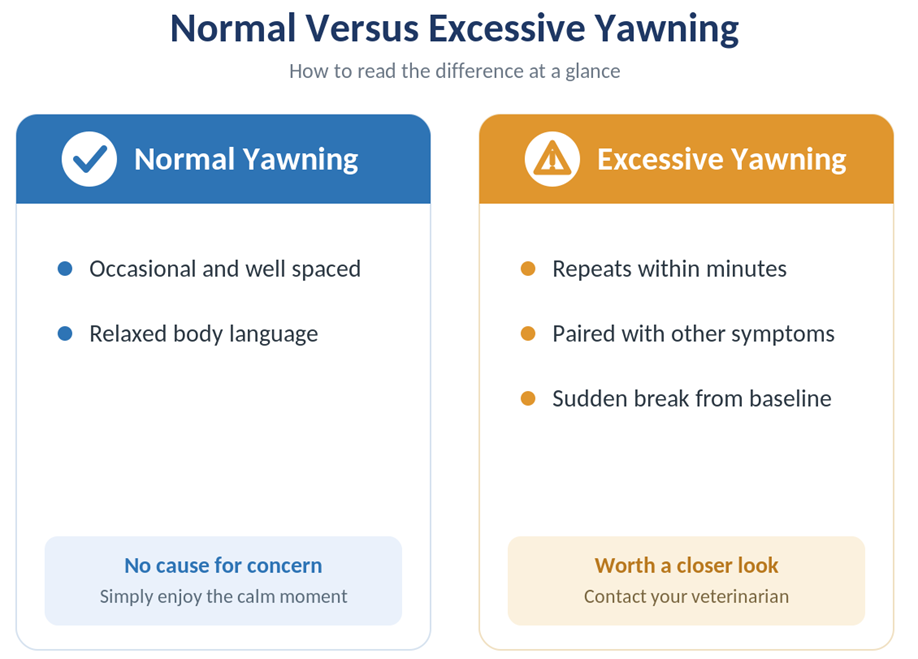
The difference between normal and excessive yawning comes down to frequency, context, and accompanying signs. Normal yawning is occasional and fits a relaxed or transitional moment. Excessive yawning is repeated, often clustered, and shows up with other horse health symptoms.
What Normal Yawning Looks Like
Normal yawning tends to appear after rest, during grooming, or as the saddle comes off. It is spaced out across the day and arrives with relaxed body language. You will not see other distress signals attached to it.
In this setting a yawn is a healthy part of horse communication behavior. It reflects a calm shift in mood and needs no response beyond enjoying your horse’s relaxed state.
Most horses settle into a recognizable yawning rhythm. Once you know that rhythm, the occasional relaxed yawn becomes background noise, the kind of small, normal behavior you barely have to think about.
What Excessive Yawning Looks Like
Excessive yawning shows up at odd times, repeats within minutes, and travels with signs such as poor appetite, pinned ears, head tossing, or colic behavior. It often appears suddenly and breaks from your horse’s normal pattern.
Here is the key thing. Frequency and company matter more than any single yawn. A relaxed horse yawning once looks nothing like a stressed or sore horse yawning over and over with worried body language.
If a yawn count that used to be a few times a day climbs to many times an hour, treat that change seriously. A sharp rise in equine yawning is one of the clearest cues that your horse may need help.
When to Contact a Veterinarian
Contact your veterinarian when yawning is sudden, frequent, or joined by signs of pain or illness. Trust your knowledge of your horse’s normal patterns, because you are usually the first to notice a change. Early action often makes treatment simpler and faster.
Red Flag Combinations
Call promptly if you see yawning alongside colic signs, a sharp drop in appetite, weight loss, repeated head tossing, or obvious distress. These combinations can point to gastric ulcers, dental disease, or other conditions that need a professional diagnosis.
A veterinarian can use tools such as a gastroscope, a thin flexible camera, to look inside the stomach and confirm or rule out ulcers. Reaching a clear diagnosis protects your horse from prolonged discomfort and guides the right treatment.
It is always better to ask than to wait. A quick phone call to your veterinarian, paired with your yawning log, helps the clinic decide whether your horse needs an urgent visit or simply closer monitoring at home.
Prevention and Routine Care
Routine veterinary horse care prevents many of the problems that drive excessive yawning in the first place. Regular dental exams, a steady feeding schedule, plenty of forage, and ample turnout all support a calm, healthy horse.
Good management also lowers stress, which reduces stress driven yawning. When you combine attentive daily observation with regular professional care, you catch issues early and keep your horse comfortable. As resources such as Equus magazine often note, consistent observation is one of the most valuable tools an owner has.
Build a simple care calendar and stick to it. Annual or twice yearly dental checks, routine wellness exams, parasite control, and a consistent feeding plan form a strong foundation. Healthy daily habits keep both anxiety and unexplained yawning to a minimum.
What to Tell Your Veterinarian
Give your veterinarian a clear picture when you call. Describe how often the yawning happens, when it first started, and what else you have noticed, such as appetite changes, colic signs, or shifts in your horse’s mood and energy.
Your monitoring log makes this easy. With dates, times, settings, and companion behaviors written down, you hand the clinic real data instead of a vague worry, which helps them judge how urgent the visit truly needs to be.
Mention any recent changes too. New feed, a different routine, travel, dental work, or a fresh source of stress can all matter. The fuller the story you share, the faster your veterinarian can connect the yawning to its true cause.
Horse Yawning FAQs
Do horses yawn when they are tired?
Horses can yawn when they are drowsy or transitioning toward rest, much like people do. A yawn during a quiet, sleepy moment is normal and usually signals relaxation. As long as it is occasional and your horse seems comfortable, there is no cause for concern, and the behavior simply reflects a horse winding down.
Why is my horse yawning all the time?
If your horse is yawning all the time, look first at frequency and context. Constant yawning can reflect boredom, stress, or a medical issue such as gastric ulcers or dental pain. Track the pattern, note any other symptoms, and contact your veterinarian if the yawning keeps rising or pairs with other warning signs.
Can horses yawn because of stress?
Yes, horses often yawn to release stress and self regulate. Stress yawns usually appear during or right after a tense situation and travel with other signs such as licking, blinking, or tail swishing. Reducing the stressor, whether it is travel, isolation, or a hard routine, typically reduces this type of yawning.
Is frequent yawning normal in horses?
Occasional yawning is normal, but frequent yawning that breaks from your horse’s usual pattern is worth watching. A sudden increase, especially with other symptoms, can signal stress or a health problem. Monitoring frequency over a few days helps you decide whether a veterinary exam is needed.
Does yawning mean a horse is relaxed?
Yawning often means a horse is relaxed, but not always. The same behavior can signal stress release or discomfort. Read the surrounding body language, because a soft eye and lowered head suggest calm while pinned ears and a tight muzzle suggest the opposite emotional state.
Can health problems cause excessive yawning in horses?
Yes, health problems can cause excessive yawning in horses. Gastric ulcers, dental disease, chronic pain, and in rare cases severe liver disease have all been linked to increased yawning. When yawning spikes alongside other symptoms, a veterinary diagnosis is the safest and fastest route to relief.
Is contagious yawning real in horses?
Some research suggests horses may show a mild form of contagious yawning, especially within a bonded group. Studies on synchronized yawning point to a possible social function tied to herd cohesion. The evidence is still limited, so this remains an area of ongoing study rather than a settled fact.
Should I worry if my horse yawns after riding?
A yawn after riding is usually normal and reflects relief as pressure from the bit and saddle eases. It often signals relaxation at the end of work. Only worry if the yawning is excessive, repeats constantly, or comes with signs of pain, girthiness, or distress that suggest a deeper issue.
Horse yawning is usually a normal and even reassuring part of equine behavior, yet it always deserves to be read in context. Most yawns reflect relaxation, a release of tension, or simple communication between horses, and learning to read them well makes you a more confident owner.
The yawns worth watching are the ones that spike in frequency or arrive with other warning signs. By learning your horse’s normal patterns and pairing what you see with the rest of its body language, you can tell an easy yawn from a meaningful one. When in doubt, consult your veterinarian or a certified equine health professional for advice tailored to your horse’s individual needs.


2 comments on "Horse Yawning Explained – What It Really Means"
Good day! I know this is somewhat off topic but I was wondering if you knew where I could get a captcha plugin for
my comment form? I’m using the same blog platform as yours and
I’m having problems finding one? Thanks a lot!
BACKLINKS EVERY DAY
We are Using ELementor Plugin.
Hammad Asghar