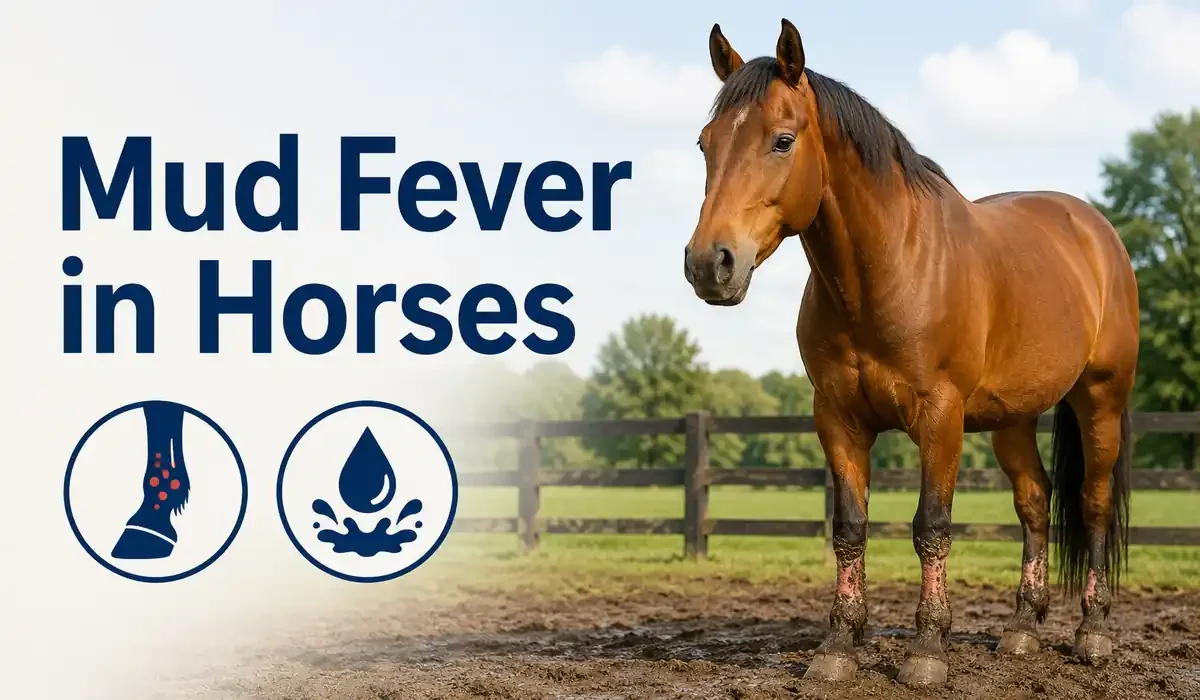
Mud fever in horses is one of the most common skin problems you will meet during wet weather, and it can turn a healthy leg into a sore, crusty mess within days. This guide explains exactly what the condition is, how to spot it early, how to treat it safely, and how to stop it coming back. You will learn the real signs, the true causes, and a clear management plan you can start using today.
Most cases are manageable at home when you catch them early. The trouble starts when owners miss the first scabs or scrub the skin too hard. Get the basics right and you protect your horse from pain, swelling, and long recovery time.
Key Takeaways
• Mud fever is a painful skin infection on the lower legs caused by wet conditions.
• Early signs include scabs, redness, and matted hair on the pastern and heel.
• Keeping legs clean and dry is the single most powerful prevention step.
• Never rip scabs off, because forced removal slows healing and spreads infection.
• Call your vet when you see heat, marked swelling, lameness, or spreading sores.
What Is Mud Fever in Horses?
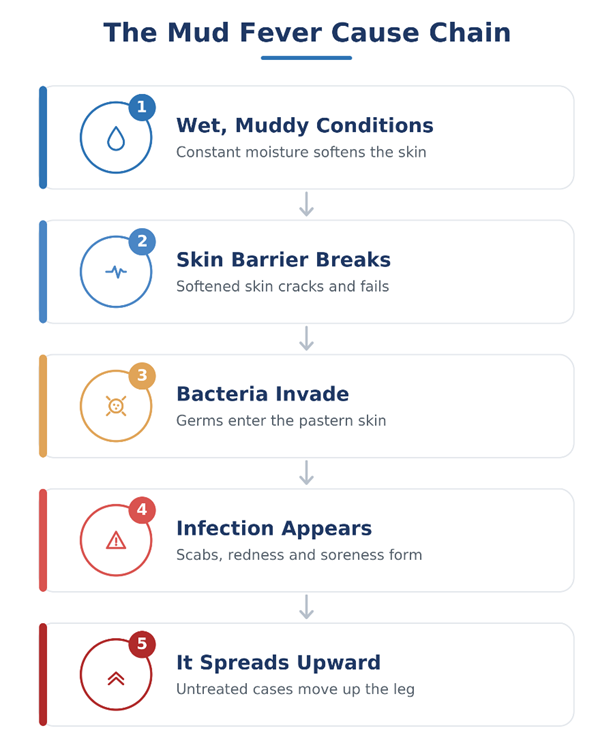
Mud fever in horses is a painful inflammation of the skin on the lower legs, usually around the pastern and heel, that develops because constant moisture breaks down the skin barrier and lets bacteria invade. The result is redness, scabs, and soreness that can spread up the leg if you leave it untreated.
Vets often call this condition equine pastern dermatitis. You may also hear the names greasy heel in horses, mud rash in horses, or cracked heels in horses. These terms all describe the same basic problem in the same area, the pastern and fetlock.
The condition is not a single disease with one cause. It is a reaction of damaged skin to a mix of moisture, bacteria, and sometimes fungi or mites. Think of it this way. The wet weather does the damage first, and the germs move in second.
Why the Lower Leg Is So Vulnerable
The lower leg sits closest to mud, water, and dirty bedding all day long. Skin in the pastern area is thin, and it folds at the back of the heel where moisture collects. Once that skin softens and cracks, bacteria find an easy way in.
Horses with white legs or pink skin often show worse reactions in these spots. The Royal Veterinary College notes that pale skin on the lower limbs can be more prone to irritation and photosensitivity, which adds to the risk during long wet spells.
The heel bulbs and the crease at the back of the pastern are the classic starting points. These folds stay damp long after the rest of the leg dries, so check them first every time. A quick daily feel of these hidden spots catches most cases before they spread.
How Mud Fever Differs From Rain Scald
Rain scald is the same type of infection on the back and body rather than the legs. Both usually involve the bacterium Dermatophilus congolensis, and both flare in wet weather. The key difference is location, which changes how you manage each one.
Knowing the difference helps you treat the right area. When you see scabs along the spine and quarters, you are likely dealing with rain scald, while scabs on the pastern and heel point to classic mud fever.
What Causes Mud Fever in Horses?
Mud fever causes in horses almost always start with prolonged wet conditions that weaken the skin. The most common bacterium involved is Dermatophilus congolensis, which thrives in damp, muddy ground. Once the skin barrier fails, this organism and others multiply and trigger the sore, scabby reaction you see.
Here is the key thing. Moisture alone rarely causes the problem. It is the combination of soft, damaged skin and opportunistic bacteria that turns a wet leg into an infected one. Understanding each trigger helps you break the cycle.
Kentucky Equine Research points out that several bacteria, including Staphylococcus and Streptococcus species, can join the infection once the skin is compromised. That is why some cases turn nasty quickly and need veterinary care.
Wet and Muddy Conditions
Constant exposure to mud and standing water is the number one trigger. Wet skin softens, swells, and loses its protective outer layer. This process is called maceration, and it leaves microscopic gaps that bacteria slip through with ease.
Wet weather horse skin problems peak in autumn and winter, when paddocks stay soggy for weeks. Horses standing in churned gateways or flooded fields face the highest risk of all. Even a few hours of daily mud contact, repeated over weeks, adds up to serious skin damage.
Summer cases happen too, often from wet grass, morning dew, or river crossings on long rides. The pattern is the same wherever the moisture comes from. Any source that keeps the pastern damp for hours at a time can set the problem in motion.
Damaged or Cracked Skin
Any break in the skin gives bacteria a doorway. Small cuts, insect bites, chafing from boots, or existing dry cracks all count. The pastern flexes with every stride, so tiny splits open and close constantly throughout the day.
But here is where most horse owners go wrong. They assume the skin must look badly broken to be at risk. In reality, invisible micro damage from repeated wetting is often enough to start an infection.
Rough grooming and harsh scrubbing can add to the damage. Vigorous brushing of muddy legs scratches the surface and opens new entry points for bacteria. Handle the lower legs gently, especially when the skin is already wet and soft.
Long Feathers and Trapped Moisture
Heavy feathers, the long hair on the lower legs of many draft and cob types, look beautiful but hold water against the skin. Damp hair keeps the pastern warm and wet for hours, which is exactly what bacteria want.
Feathered breeds such as Cobs, Clydesdales, and Shires need extra vigilance. The thick hair hides early scabs, so problems often grow unseen until the leg is already sore and swollen.
Dirty Bedding or Poor Stable Hygiene
Bringing a horse into a dirty stable does not solve the moisture problem, it simply moves it indoors. Wet, soiled bedding soaked with urine keeps the legs damp and adds ammonia that irritates skin further.
Muddy paddock horse care and clean stabling go hand in hand. A horse that stands in a wet field by day and a dirty box by night never gets the dry time its skin needs to heal.
Mites, Fungi, and Underlying Conditions
Not every case is purely bacterial. Feather mites, ringworm, and photosensitivity can all cause or worsen pastern dermatitis, which is why stubborn cases deserve a proper diagnosis. A horse with weak immunity or a hormonal disorder such as Cushings may also struggle to fight infection.
This is why some horses get mud fever again and again while their field companions stay clear. When a case refuses to heal with good basic care, your vet can look for a hidden cause underneath the surface.
Which Horses Are Most at Risk from Mud Fever?
Some horses catch mud fever far more easily than others, and knowing your horse’s risk level helps you plan ahead. Breed, coat, skin colour, and living conditions all play a part. If your horse ticks several of the boxes below, tighten your prevention routine early in the season.
The bottom line is this. Risk is not random, and you can predict most cases before they happen. Watch the horses described below with extra care once the ground turns wet.
Feathered and Draft Breeds
Horses with heavy feathers face the highest risk because the long hair traps water against thin pastern skin. Cobs, Gypsy types, Clydesdales, and Shires all fall into this group. The dense feather also hides early scabs from view.
Owners of feathered breeds should part the hair and check the skin beneath by hand. What looks like a clean, dry leg on the surface can hide sore, weeping skin underneath.
Feather also traps mud that stays wet for days. Some owners choose to keep the feather short through winter and let it grow back for the show season. That balance often gives the skin the best chance while keeping the traditional look for summer.
White Legged and Pink Skinned Horses
Pale legs with pink skin tend to react more strongly to mud and moisture. The lack of pigment makes the skin more sensitive to irritation and to sunlight in some cases. These legs often flare first and heal slowest.
If your horse has one white sock, you may notice mud fever appears on that leg alone. Give pale limbs priority when you carry out your daily leg checks.
The reason often comes down to pigment. Darker skin carries more natural protection against sun and irritation, while pink skin sits exposed. This does not mean pale legged horses are doomed, only that they reward a little extra daily attention.
Horses With Wet Winter Turnout
Living conditions matter as much as breeding. A hardy native pony on well drained ground may sail through winter, while a stabled horse turned out in a boggy field struggles badly. Constant standing in mud is the single biggest environmental risk.
Horses that stay out day and night through wet spells need the most careful management. Rotating fields and creating dry standing areas can dramatically cut their risk.
Stabling for part of the day can help, but only if the stable stays clean and dry. A horse swapped from a muddy field to a wet, dirty box gains nothing. The goal is real dry time for the skin, wherever that happens on your yard.
Horses With a History of the Condition
Once a horse has had mud fever, it often returns in the same spot each wet season. Scar tissue and thinner skin in the healed area make that leg more vulnerable next time. Treat any past case as a warning sign for the future.
Keep notes on which horses reacted and when. A horse with a clear history needs prevention started before the mud arrives, not after the first scab appears.
Mud Fever Symptoms in Horses
Mud fever symptoms in horses usually begin with matted hair and small scabs on the back of the pastern or the heel bulbs. As it progresses you see redness, crusty skin, hair loss, and a sticky discharge underneath the scabs. Severe cases bring heat, swelling, and even lameness.
Early detection changes everything. A mild case caught in two days may clear in a week, while a neglected one can drag on for months. Run your hands down every leg daily so you feel scabs your eyes might miss.
The sooner you spot horse leg scabs from mud, the easier the fight. Below is a simple guide to reading severity so you know when home care is enough and when to call for help.
How the Infection Progresses
Mud fever tends to move through predictable stages if you leave it alone. It starts with mild redness and a few scabs, then spreads into larger crusted patches with weeping skin underneath. Left longer, the leg can swell, crack deeply, and grow painful.
Understanding this progression helps you act at the right moment. Catching the condition at the redness stage is far easier than treating a hot, swollen limb two weeks later.
Reading the Severity
| Severity | Common signs | Recommended action |
| Mild | A few small scabs, slight redness, matted hair | Clean gently, keep dry, monitor daily |
| Moderate | Widespread scabs, weeping skin, hair loss, tenderness | Home care plus a vet call if no improvement in a few days |
| Severe | Hot swollen leg, deep cracks, discharge, lameness | Contact your vet the same day for treatment |
Use this table as a guide, not a diagnosis. When you feel unsure, the safest choice is always a quick call to your veterinary practice. They would rather hear from you early than late.
Signs You Should Never Ignore
Certain signs point to a deeper problem such as cellulitis, a serious infection of the tissue under the skin. Watch closely for a leg that feels hot, looks markedly swollen, or makes your horse reluctant to move.
Horse leg swelling mud fever cases can escalate fast. If the whole lower limb puffs up or your horse turns lame, treat it as urgent and phone your vet without delay.
How to Prevent Mud Fever in Horses
Knowing how to prevent mud fever in horses comes down to one goal, keeping the lower legs clean and dry as much as possible. You cannot control the weather, but you can control exposure, drainage, hygiene, and daily checks. These four levers do most of the work.
Prevention is far easier than cure. A few minutes of daily leg care saves you weeks of scrubbing sore skin later. Here is a practical set of habits that protect your horse through the wettest months.
Follow these core prevention steps every day during wet weather:
- Check both hind and front legs for scabs, heat, or tenderness.
- Remove your horse from the muddiest gateways and poached ground.
- Let wet legs dry fully before you apply any product or wrap.
- Keep bedding deep, clean, and dry to give overnight recovery time.
- Rotate grazing so the ground gets a chance to recover.
- Groom feathers gently and dry them completely after washing.
- Use a barrier product only on clean, dry skin, never over mud.
Keep Legs as Dry as Possible
Dry legs resist infection, so drying is your first line of defense. After riding or turnout in mud, let the legs dry naturally, then brush the dried mud off rather than washing every day. Repeated washing keeps skin wet and makes things worse.
If you must rinse, towel the pasterns and heels until they feel dry to the touch. Damp hair left overnight is an open invitation to bacteria, so never rug up and walk away from a wet leg.
Improve Paddock Drainage
Standing water is the enemy, so tackle the ground itself. Move feeders and water troughs regularly to stop churned, boggy patches forming in high traffic spots. Hardcore or matting at gateways gives horses a dry place to stand.
Horse pasture mud fever prevention often starts with simple field management. Fencing off flooded corners in winter can spare your horse weeks of wet legs and cut your workload too.
Provide Clean, Dry Bedding
A dry stable lets skin recover overnight. Muck out fully, use plenty of absorbent bedding, and keep the bed banked and clean. Ammonia from wet bedding irritates skin and quietly undoes your good field work.
Think of the stable as a healing space. Twelve dry hours each night can be enough to keep a vulnerable horse clear right through winter.
Check Legs Daily
Daily inspection catches trouble before it spreads. Run your hands firmly down each leg, feeling for scabs, heat, or flinching. Do this at grooming time so it becomes an automatic habit.
Horse mud fever prevention tips all rely on this one routine. Nothing beats early detection for keeping small problems small and cheap to treat.
Avoid Leaving Wet Boots or Wraps On
Boots and bandages trap heat and sweat against the skin. Left on too long, they create the warm, damp conditions that bacteria love. Remove them promptly and let the legs breathe and dry.
Always fit boots on clean, dry legs. Grit trapped under a boot rubs the skin raw and opens the door to infection.
Use Barrier Creams Correctly
Barrier creams can help, but only when you use them properly. Apply a thin layer to clean, dry skin to repel water and shield the pastern. Slathering cream over wet or muddy legs simply seals moisture and bacteria against the skin.
Choose a product your vet or supplier recommends for prevention. Reapply after washing, and stop using it if the skin looks irritated rather than protected.
Clip Heavy Feathers If Needed
Clipping divides opinion, so weigh it up for your own horse. Removing heavy feathers makes the skin easier to inspect, clean, and dry, which helps many prone horses. Others keep the natural protection against rain scald and rubbing.
The British Horse Society suggests that for horses with recurring problems, careful clipping can make daily leg care far more effective. Discuss the choice with your vet or a trusted farrier.
How to Treat Mud Fever in Horses Safely
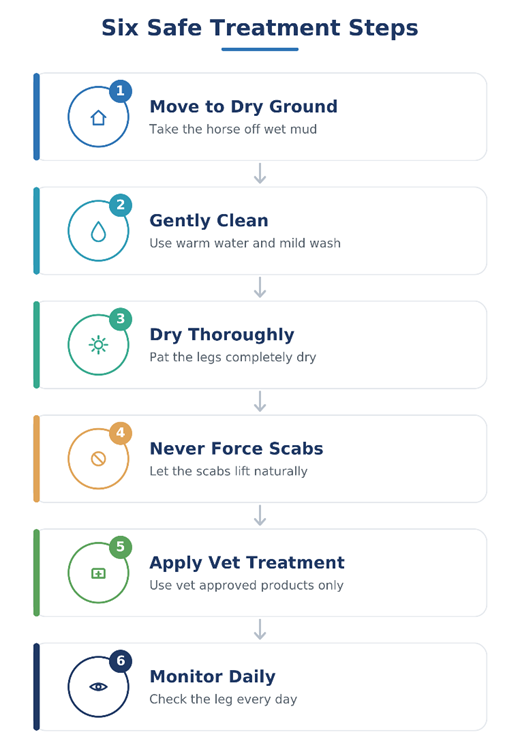
Effective horse mud fever treatment follows a clear order, move the horse to dry ground, clean gently, dry fully, protect the skin, and monitor daily. Knowing how to treat mud fever in horses safely means being patient with scabs and firm about keeping the area dry. Rushing or scrubbing sets healing back.
Here is the key thing to remember. Healing needs dry skin above all else. No cream or wash works while the leg stays wet and muddy. Follow these six steps in order for the best results.
Step 1: Move the Horse to a Clean, Dry Area
Start by taking your horse off wet ground. Stable the horse or move it to a dry, well bedded area so the affected skin can begin to dry out. Continued exposure to mud will cancel out every other effort you make.
This first move is the foundation of horse mud fever home care. Without a dry environment, the skin cannot rebuild its natural barrier.
Step 2: Gently Clean the Affected Area
Clean the skin softly to lift dirt without causing damage. Use warm water and a mild veterinary skin wash, working gently around the scabs rather than forcing them. Ask your vet which antibacterial wash suits your horse.
Learning how to clean mud fever scabs is about patience, not pressure. Soften the crusts with warm water and let the loose ones come away on their own.
Step 3: Dry the Skin Thoroughly
Drying is the step people rush, and it matters most. Pat the legs completely dry with a clean towel, paying attention to the folds at the back of the pastern and heel. Any trapped moisture restarts the whole cycle.
Use a fresh towel for each leg to avoid spreading bacteria. Some owners use a clean, cool setting on a dryer, but only if the horse stays calm and comfortable with it.
Step 4: Do Not Forcefully Pick Scabs
Leave scabs to lift naturally, because ripping them off harms healing skin. Forced removal is painful, causes bleeding, and spreads bacteria to fresh areas. Softened scabs will release gently over several days.
But here is where most horse owners go wrong. They believe pulling every scab speeds recovery. In truth it reopens wounds and invites secondary infection, the bacterial complication that turns a mild case severe.
Step 5: Apply Treatment Recommended by a Vet
Use only products your vet advises for the stage of infection. Depending on severity, your vet may suggest a topical antibacterial cream, a barrier ointment, or, in stubborn cases, oral antibiotics. Never guess with random creams from the tack room.
The best way to manage mud fever is to match the product to the problem. Mild cases often clear with cleaning and a barrier cream, while deeper infections need proper prescription support.
Step 6: Monitor Daily
Check progress every single day. Look for less redness, drier skin, and scabs that are shrinking rather than spreading. Photograph the leg so you can compare and spot subtle change over time.
Knowing when to call vet for mud fever comes from this daily watch. If the leg worsens, swells, or your horse turns lame, phone your practice straight away.
When to Call the Vet for Mud Fever
Call your vet whenever mud fever spreads quickly, involves heat and swelling, or makes your horse lame. These signs suggest the infection has moved deeper into the tissue and needs prescription treatment. Home care alone will not resolve a serious case.
The Royal Veterinary College and many equine hospitals stress that early veterinary input shortens recovery and prevents complications. There is no prize for waiting, and delay only lets the infection dig in deeper.
Your vet can also take a swab or skin scrape to find the exact cause when a case keeps returning. That targeted diagnosis is the fastest route to lasting relief for a horse that suffers every winter.
| Situation | Manage at home | Call the vet |
| A few small scabs, no swelling | Yes, clean and keep dry | Not yet, but keep watching |
| Weeping skin, mild soreness | Try home care first | If no better in a few days |
| Hot, swollen, or painful leg | No | Yes, the same day |
| Lameness or spreading sores | No | Yes, treat as urgent |
Trust your instincts alongside this guide. You know your horse better than anyone, and a worried owner who calls early is doing exactly the right thing.
Mud Fever Aftercare and Long Term Management
Aftercare decides whether mud fever stays gone or returns the moment the ground turns wet again. Once the skin has healed, your job shifts from treatment to protection. The horses that suffer every single winter are usually the ones whose owners stop caring the day the last scab drops off.
Here is the key thing. Healed skin is fragile skin for several weeks. Treat that new skin gently and keep guarding it, and you break the cycle of repeat infection for good.
Rebuild the Skin Barrier Slowly
Newly healed skin is thinner and weaker than normal skin. Reintroduce turnout gradually, and keep the horse off deep mud while the pastern toughens up again. A sudden return to a boggy field can undo weeks of careful healing in days.
Support the skin with gentle care rather than heavy products. Keep the area clean and dry, and only use a light barrier cream once the surface is fully closed and no longer weeping.
Support Skin Health From the Inside
A balanced diet gives skin the building blocks it needs to stay strong. Kentucky Equine Research highlights the role of quality protein, key minerals, and fatty acids in maintaining a healthy skin barrier. A horse in good general condition simply copes better with wet weather challenges.
Do not expect any feed or supplement to work like a cure. Nutrition supports the skin, but it never replaces dry legs, clean conditions, and daily checks. Ask your vet or a nutritionist before adding new products.
Watch for Early Return of Scabs
Recurrence often starts in the exact spot that healed last. Run your fingers over the old site every day and act the moment you feel a fresh scab forming. Catching a relapse on day one is far easier than fighting a full flare again.
Keep a simple record of which leg was affected and when. Patterns across seasons help you and your vet plan smarter prevention for the year ahead.
Manage the Whole Environment
Long term success depends on the environment as much as the horse. Improve field drainage, create dry standing areas, and keep the stable spotless through the wet months. Small permanent changes to the yard protect every horse in your care, not just the one that got sick.
Think of it this way. You are not just treating one leg, you are managing the conditions that caused it. Fix the ground and the routine, and mud fever loses its foothold.
Horse Mud Fever FAQs
What is mud fever in horses?
Mud fever in horses is a painful skin infection on the lower legs, usually the pastern and heel, triggered by wet, muddy conditions. Damp skin breaks down and lets bacteria such as Dermatophilus congolensis invade, causing scabs, redness, and soreness that can spread if left untreated.
What does mud fever look like on a horse?
Mud fever looks like crusty scabs, matted hair, and red, sore skin on the back of the pastern or heel bulbs. You may notice hair loss, weeping skin, and a sticky discharge under the scabs. Severe cases show a hot, swollen lower leg and obvious tenderness when touched.
Can mud fever go away on its own?
Mild mud fever can improve once the legs stay clean and dry, but most cases need active care to heal properly. Leaving it untreated risks the infection spreading up the leg and turning severe. The safest approach is early cleaning, drying, and monitoring rather than hoping it clears alone.
Should you wash mud fever legs every day?
You should not wash mud fever legs every day, because repeated washing keeps the skin wet and slows healing. Instead, let mud dry and brush it off, and wash only when needed with a mild veterinary wash. Always dry the skin thoroughly afterward to protect the healing barrier.
Should you pick mud fever scabs off a horse?
You should never forcefully pick mud fever scabs off, because this hurts the horse, causes bleeding, and spreads bacteria. Soften scabs with warm water and a gentle wash, then allow loose ones to lift naturally over several days. Patience here prevents secondary infection and speeds full recovery.
Can mud fever make a horse go lame?
Yes, severe mud fever can make a horse lame when the infection causes deep cracks, swelling, or spreads into the tissue as cellulitis. A hot, painful, swollen leg with lameness is a veterinary emergency. Contact your vet the same day, because these cases need prescription treatment quickly.
What is the fastest way to treat mud fever?
The fastest way to treat mud fever is to get the leg dry, clean it gently, and start vet approved treatment early. Move the horse onto dry ground, soften and remove loose scabs without force, dry the skin fully, and apply the product your vet recommends. Speed and dry conditions matter most.
How do you prevent mud fever in horses in winter?
To prevent winter mud fever in horses, keep the legs as dry as possible, improve paddock drainage, and provide clean, dry bedding overnight. Check legs daily for early scabs, avoid leaving wet boots on, and manage heavy feathers so skin stays dry. Consistent daily care through the wet months is the key.
Managing mud fever in horses is common, but it is far from unbeatable when you act early and stay consistent. Keep the lower legs clean and dry, check them every day, and treat the first scabs with patience rather than force. Prevention through good field and stable management always beats treating an established infection.
Remember that every horse is different, and a case that looks mild can hide a deeper problem. When you notice heat, swelling, spreading sores, or lameness, do not wait. For any case that concerns you, or for advice tailored to your horse’s individual needs, always consult your veterinarian or a qualified equine professional.