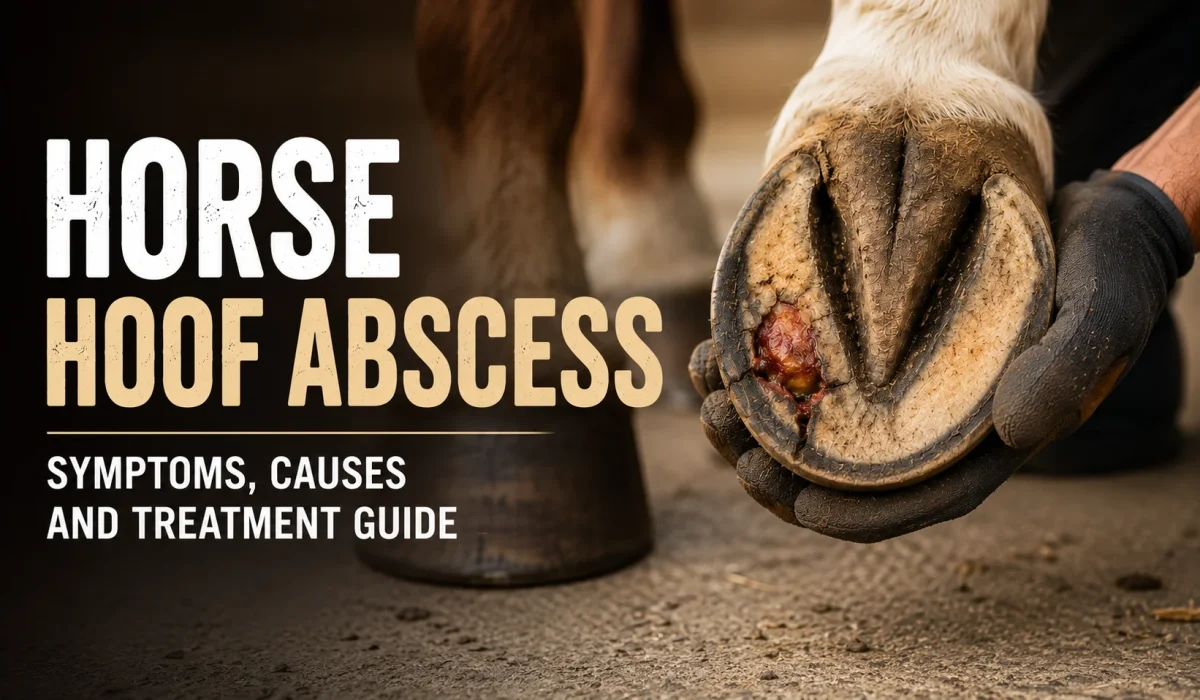
A horse hoof abscess is one of the most common causes of sudden, severe lameness in horses, and this guide shows you exactly how to recognize, treat, and prevent one. If your horse was sound yesterday and can barely walk today, a hoof abscess is the most likely explanation. The good news is that most abscesses resolve quickly once the trapped infection drains.
In the next few minutes, you will learn what a horse hoof abscess actually is, the warning signs that separate it from more serious conditions, the step by step treatment process that veterinarians and farriers rely on, and the daily habits that dramatically reduce the risk of it happening again.
This guide is written for every level of horse owner, from first time owners facing their first scary morning of lameness to experienced barn managers who want a reliable reference.
| Key Takeaways • A hoof abscess is a pocket of bacterial infection trapped inside the hoof that causes pressure, pain, and sudden lameness. • Sudden severe lameness, heat in the hoof, and a strong digital pulse are the three classic warning signs. • Treatment centers on drainage, warm Epsom salt soaks, poultices, and keeping the hoof clean and dry. • Most horses improve within 24 to 48 hours after the abscess drains, and full hoof abscess recovery usually takes one to two weeks. • Call your veterinarian if lameness lasts more than a few days, if swelling spreads up the leg, or if your horse shows fever or refuses to bear weight. |
What Is a Horse Hoof Abscess?
A horse hoof abscess is a localized pocket of infection trapped between the sensitive inner structures and the hard outer hoof capsule. Bacteria enter through a weak point, multiply in the sealed space, and produce pus with nowhere to go, so pressure builds rapidly and causes intense horse hoof pain.
You may see the same condition written as hoof abscess in horses, abscess in horse hoof, subsolar abscess, or gravel in older horsemanship books. All of these names describe one problem, which is trapped infection inside the hoof capsule that needs a path to drain.
Think of it this way. An abscess in a horse hoof behaves like a deep splinter infection trapped under a fingernail. The infection itself is usually small, but the rigid structure around it turns a minor problem into an extremely painful one. That pressure explains why a tiny pocket of pus can make a large, healthy horse suddenly appear three legged.
The Merck Veterinary Manual describes subsolar abscesses, meaning abscesses that form under the sole, as one of the most frequent reasons for acute lameness in otherwise healthy horses. The condition affects horses of every age, breed, and discipline, whether shod or barefoot.
How Bacteria Get Inside the Hoof
Bacteria almost always enter through a breach in the hoof’s natural defenses. The white line, which is the junction between the hoof wall and the sole, is the most common entry point because it can stretch and open in wet or unhygienic conditions.
Here is the key thing. The entry wound is often invisible by the time lameness appears. The bacteria may have entered days or even weeks earlier through a crack, a bruise, a puncture, or a nail hole, and the infection developed slowly until pressure reached a painful threshold.
Common entry routes include:
- Hoof cracks that reach the sensitive inner tissue
- Puncture wounds from nails, stones, or debris
- Bruised soles that create damaged tissue where bacteria thrive
- Stretched or diseased white line, including white line disease
- Nail holes from shoeing, sometimes called a hot nail or close nail
- Sole penetration from rough, frozen, or rocky ground
Why Wet and Dry Cycles Matter
Repeated swings between wet and dry footing are a leading cause of hoof abscesses in horses. Moisture softens the hoof and opens tiny fissures, then dry conditions cause the horn to contract and crack. Bacteria from mud and manure move into those openings with ease.
According to guidance from Penn State Extension, muddy paddocks and soiled bedding create the perfect environment for the bacteria that cause both abscesses and thrush. Managing footing and hoof hygiene is therefore your first line of defense, and we will cover prevention in detail later in this guide.
Hoof Bruise or Abscess?
A hoof bruise and an abscess often look similar at first, and the two are closely related. A bruise is bleeding and inflammation in the sensitive tissue after impact, usually from rocks, hard ground, or repetitive concussion. The damaged tissue is painful on its own, and it can also become the seed bed for infection.
The practical difference lies in severity and progression. A simple hoof bruise typically causes mild to moderate soreness that improves steadily with rest over several days. An abscess usually worsens rapidly until it drains, and it brings the telltale heat and bounding pulse. If a suspected bruise suddenly becomes much more painful, assume an abscess is forming and involve your farrier or veterinarian.
Symptoms of a Horse Hoof Abscess
Horse hoof abscess symptoms usually appear suddenly and can look alarming. Many owners find their horse hobbling or refusing to move and immediately fear a fracture. In reality, an abscess is far more common, and the pattern of signs below will help you tell the difference.
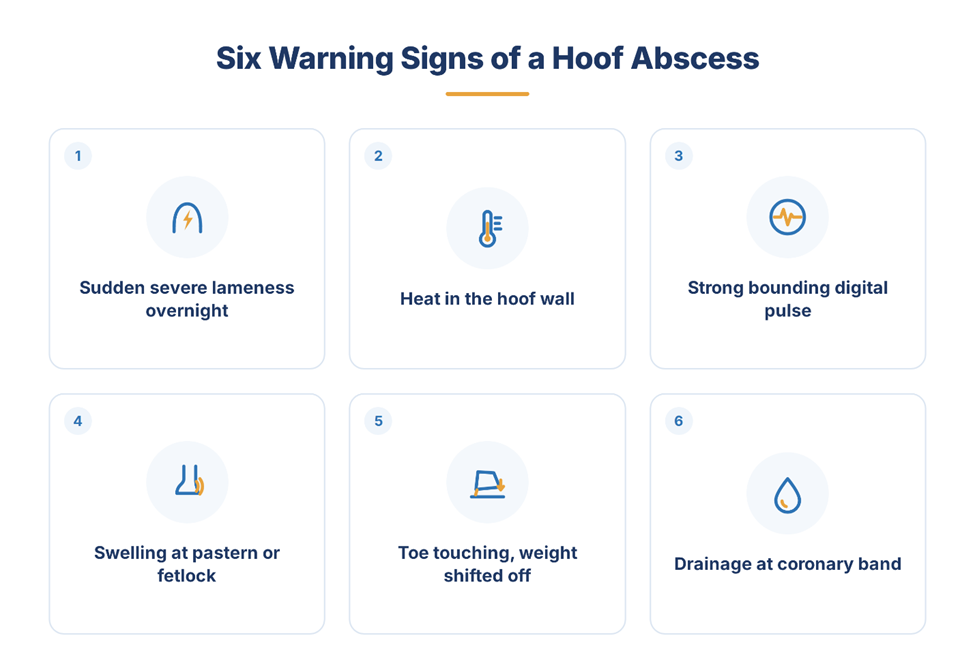
The bottom line is this. The combination of sudden severe lameness in one leg, heat in the hoof, and a pounding digital pulse points strongly toward a horse hoof abscess. Check for these three signs first, then look for the supporting clues that follow.
Sudden severe lameness
Lameness from an abscess typically appears overnight or within hours. Your horse may have seemed completely sound at evening feed and then barely able to walk by morning. The lameness is usually confined to one limb and often looks worse than lameness from many chronic conditions.
Severity ranges from a subtle head bob at the trot to a horse that holds the foot off the ground entirely. The American Association of Equine Practitioners notes that abscesses are among the most dramatic causes of acute lameness, precisely because pressure inside the hoof capsule is so painful.
Heat in the hoof
An infected hoof often feels noticeably warmer than its partner on the opposite side. Rest the back of your hand against the hoof wall of both front feet or both hind feet and compare. Heat is a sign of active inflammation as blood flow increases to fight the infection.
Check heat at a calm moment, ideally before exercise. Work, sun exposure, and warm bedding can raise hoof temperature in all four feet, so a difference between one hoof and the others matters more than warmth alone.
Strong digital pulse
A strong or bounding digital pulse is one of the most reliable clues. You can feel the digital pulse in horses along the back of the pastern or just above the fetlock, where the digital arteries run close to the skin. In a healthy resting horse the pulse is faint or hard to detect.
But here is where many horse owners go wrong. They check the pulse only on the painful leg and have no baseline for comparison. Practice finding the digital pulse on your horse’s healthy legs during routine grooming so that you recognize an abnormal, throbbing pulse the moment it appears.
Swelling around the pastern or fetlock
As infection builds, inflammation can travel upward and cause soft, warm swelling around the pastern or fetlock. Some horses develop a filled or puffy lower limb that owners mistake for a tendon injury, so check the hoof for heat and pulse before assuming a soft tissue problem.
Swelling that keeps climbing up the leg deserves prompt veterinary attention. It can signal that the infection is spreading through soft tissue rather than staying contained within the hoof, and that changes the treatment plan.
Reluctance to bear weight
A horse with a painful abscess will often stand with only the toe touching the ground, or will point the affected foot forward to unload it. Some horses lie down more than usual. Others shift weight constantly or resist picking up the opposite foot because that forces full load onto the painful one.
Complete refusal to bear weight is a red flag that requires a veterinarian the same day. While abscesses can cause this level of pain, a fracture or a serious joint infection can look identical, and only an examination can rule those out.
Drainage near the coronary band or sole
Pus escaping at the coronary band, the soft band of tissue where hair meets hoof, is a strong sign that an abscess has traveled upward and burst. Owners often see a small moist spot, a gray or black discharge, or a break in the skin at the hairline. Drainage can also appear at the sole or along the white line after a farrier opens the site with hoof testers guiding the search.
Drainage usually brings rapid relief. The pressure releases, the horse abscess drainage continues for a day or two, and lameness improves dramatically. Even after natural rupture, the site still needs cleaning and protection, which we cover in the treatment section next.
How to Treat a Horse Hoof Abscess
Horse hoof abscess treatment has one central goal, which is to help the trapped infection drain and then protect the site while it heals. Once drainage happens, most horses feel better within a day or two. The steps below follow the approach recommended by equine veterinarians and professional farriers.
Before you begin, a word of caution. Never dig into the sole yourself with a hoof knife. Aggressive carving by an untrained hand can damage sensitive structures, create a larger wound, and introduce even more bacteria. Your job as an owner is soaking, poulticing, bandaging, and monitoring. Leave cutting to the professionals.
Timing also matters. An abscess that has not yet matured may not drain even when opened, so your vet or farrier may ask you to soak and poultice for a day or two first. That waiting period feels frustrating, but it softens the horn and pulls the pocket toward the surface, which makes drainage cleaner and far less invasive.
Drain the Abscess (Veterinarian or Farrier)
Locating and opening the abscess is a job for your veterinarian or an experienced farrier. They will use hoof testers, a tool that applies gentle pressure across the sole, to pinpoint the painful spot. A focused pain response tells them where the pocket sits.
Once located, the professional pares a small opening through the sole or white line so pus can escape. Relief is often immediate and dramatic. You may see dark gray, black, or yellowish discharge under pressure, followed by a visibly happier horse within hours.
Sometimes the pocket cannot be reached safely. In that case, your vet or farrier will recommend soaking and poulticing to soften the hoof and encourage the abscess to rupture on its own, usually at the coronary band. Patience matters here, because forcing the issue causes more harm than waiting a day or two.
Soak the Hoof
Warm water soaks soften the hoof horn and draw infection toward the surface. Hoof soaking is the most widely used home treatment, and your veterinarian will usually recommend it once or twice daily while the abscess is maturing or draining.
Follow this simple routine:
- Fill a shallow rubber tub or soaking boot with warm water, comfortable to your touch rather than hot.
- Dissolve one to two cups of Epsom salt into the water, which helps draw fluid from tissue.
- Clean the hoof thoroughly with a hoof pick and stiff brush before soaking.
- Place the hoof in the tub and keep it submerged for 15 to 20 minutes.
- Dry the hoof completely with a clean towel after every soak.
- Repeat once or twice daily for two to three days, or as your veterinarian directs.
- Stop extended soaking once drainage is established, because prolonged moisture weakens the hoof.
Here is the key thing. More soaking is not better. Days of continuous soaking make the hoof soft and crumbly, which invites new problems, including repeat infection. Most veterinarians advise limiting the soaking phase to a few days.
Apply a Poultice
A poultice for horses is a soft, moist dressing that continues drawing infection out between soaks. Commercial poultice pads are convenient and effective. Traditional options include Epsom salt paste and clay based products designed for hooves.
Apply the poultice over the sole or the suspected exit point, cover it with a hoof bandage or diaper, and seal the package with a waterproof outer layer. A hoof boot over the bandage adds protection for turnout. Change the poultice daily, and check each time for fresh drainage, odor, or changes in the amount of discharge.
Keep the Hoof Clean and Dry
Once the abscess has drained, your priority shifts from drawing out infection to keeping new bacteria away from the open tract. A clean, dry environment is now the most powerful medicine available. Move the horse to dry footing, clean bedding, and a mud free paddock if at all possible.
Keep the drainage hole covered with a light bandage or hoof boot until the opening hardens over, which typically takes several days. Pick out the hoof daily, and apply an antiseptic such as dilute iodine to the area if your veterinarian recommends it. Good hoof hygiene during this window prevents the frustrating cycle of repeat abscesses in the same foot.
Pain Management
Most horses need little or no medication once drainage occurs, because removing pressure removes most of the pain. Your veterinarian may prescribe a nonsteroidal drug such as phenylbutazone, often called bute, to ease inflammation during the most painful phase.
But here is where many horse owners go wrong. They give bute early and mask the pain before the abscess has matured. Reduced pain can slow the process of the abscess coming to a head, and it can hide the very signs your vet needs to track. Always ask your veterinarian before giving any medication, and never combine drugs without guidance. Antibiotics are usually unnecessary for a routine abscess and are reserved for infections that spread beyond the hoof.
Hoof Abscess Recovery: What to Expect
Hoof abscess recovery is usually fast once drainage is established. Most horses show major improvement within 24 to 48 hours and return to soundness within one to two weeks. The exact timeline depends on how deep the pocket sat, how long the infection built before draining, and how cleanly the site heals.
Expect a steady pattern. Dramatic relief in the first two days, mild residual soreness for several more days, then a gradual return to normal movement. The drainage tract fills with new horn over the following weeks, and your farrier will simply trim out the old defect as the hoof grows.
Think of it this way. The hole in the hoof is like a gap in a fingernail. It does not heal shut. It grows out. Hoof wall grows slowly, roughly six millimeters to ten millimeters per month according to the UC Davis Center for Equine Health, so you may see the old abscess track descending toward the ground for months after your horse is sound.
Caring for the Drainage Site
Keep the drainage opening clean, covered, and dry until it hardens over. Change bandages daily at first, inspect the site for fresh discharge or foul odor, and flush gently with dilute antiseptic only if your veterinarian recommends it. A hoof boot is a practical way to protect the foot during turnout without constant rebandaging.
Resist the urge to seal the hole too early. The tract needs to drain fully before it closes, and packing it tightly or covering it with an airtight product can trap remaining infection inside. Your farrier can advise when the site is ready to be left open to the air, which usually happens within the first week.
Returning to Work Safely
Keep your horse on stall rest or small paddock turnout until lameness resolves and the drainage site stays clean and dry. Most veterinarians recommend waiting until the horse walks and trots sound before resuming light work, then building back gradually over a week.
Watch for setbacks during the first two weeks. Returning heat, a bounding pulse, or fresh lameness suggests the pocket resealed before draining completely. Recurrent pressure needs another visit from your vet or farrier, not more days of hopeful waiting.
Hoof Abscess vs Thrush
Hoof abscess and thrush are both common bacterial problems, but they behave very differently. An abscess is a sealed pocket of infection inside the hoof that causes sudden, often severe lameness. Thrush is a surface infection of the frog, the rubbery triangular pad on the underside of the hoof, and it rarely causes obvious lameness in its early stages.
Confusing the two leads to the wrong treatment, so the comparison below shows exactly how they differ.
| Feature | Hoof Abscess | Thrush |
| Location | Sealed pocket inside the hoof, under sole or wall | Surface of the frog and its grooves |
| Onset | Sudden, often overnight | Gradual, develops over weeks |
| Lameness | Moderate to severe, usually one foot | Rare early, mild unless advanced |
| Smell | Little or none until drainage | Strong foul odor is the classic sign |
| Discharge | Gray, black, or yellow pus under pressure | Black, tarry material in frog grooves |
| Heat and pulse | Hoof heat with strong digital pulse | Usually absent |
| Treatment | Drainage, soaking, poultice, protection | Cleaning, topical antiseptic, dry footing |
| Main prevention | Hoof hygiene, dry footing, regular farrier care | Daily picking, clean bedding, trimmed frog |
The two conditions do share one root cause, which is bacteria thriving in wet, dirty footing. A horse standing in mud and manure is a candidate for both. If you smell a strong odor while treating a suspected abscess, ask your farrier to evaluate the frog for thrush at the same visit.
The bottom line is this. Sudden severe lameness with heat and a strong pulse points to an abscess, while a smelly, crumbly frog with little or no lameness points to thrush. Treat each condition on its own terms, and fix the wet, dirty footing that allowed either one to start.
When to Call a Veterinarian
Call your veterinarian whenever you are unsure, and always in the situations listed below. Most hoof abscesses are simple, but the same signs can hide much more serious problems, including fractures, joint infections, and laminitis. A phone call costs nothing, and an early exam can save weeks of complications.
Contact your vet promptly if you see any of the following:
- Lameness so severe that the horse refuses to bear any weight on the limb
- No improvement after two to three days of soaking and poulticing
- Swelling that spreads above the fetlock or up the cannon
- Fever over 101.5 degrees Fahrenheit, dullness, or loss of appetite
- A puncture wound with an object still in place, which should stay in until radiographs are taken
- An abscess in a horse with laminitis, Cushing disease, or another condition that complicates healing
- Repeated abscesses in the same hoof over weeks or months
Here is the key thing. Deep punctures near the center of the sole or frog are an emergency, not a wait and see situation. Objects that reach the deeper structures can infect the coffin joint, the navicular bursa, or a tendon sheath. The American Association of Equine Practitioners urges owners to leave a penetrating object in place, protect the foot, and call for radiographs immediately, because the object’s path tells the vet exactly which structures are at risk.
Recurring abscesses also deserve investigation rather than repeated home treatment. Radiographs can reveal a keratoma, which is a benign growth inside the hoof wall, a diseased piece of bone, or chronic laminitic changes that keep creating pockets where infection collects. Persistent horse hoof infection is a symptom of an underlying problem, and finding that problem is the cure.
When your veterinarian does attend, expect a focused lameness exam. They will watch the horse move, test the hoof with hoof testers, check the digital pulse, and possibly take radiographs to locate the pocket or rule out other causes. This visit usually ends with drainage and a clear home care plan, which takes most of the guesswork off your shoulders.
Preventing Hoof Abscesses in Horses
Prevention comes down to strong, clean, regularly maintained hooves standing on dry footing. You cannot control every factor, and even perfectly managed horses occasionally develop an abscess. You can, however, remove most of the risk with a handful of consistent habits.
Daily attention beats occasional intensive care. A quick daily pick and inspection catches problems while they are still small, keeps bacteria from settling in, and builds your sense of what is normal for each foot. That baseline knowledge is what lets you spot heat, a stretched white line, or early hoof cracks before they turn into infection.
Think of it this way. Every abscess starts with a doorway and an invitation. The doorway is a crack, a stretched white line, or a bruise. The invitation is wet, dirty footing full of bacteria. Close the doorway with regular farrier care, and cancel the invitation with clean, dry conditions.
Build a Simple Prevention Routine
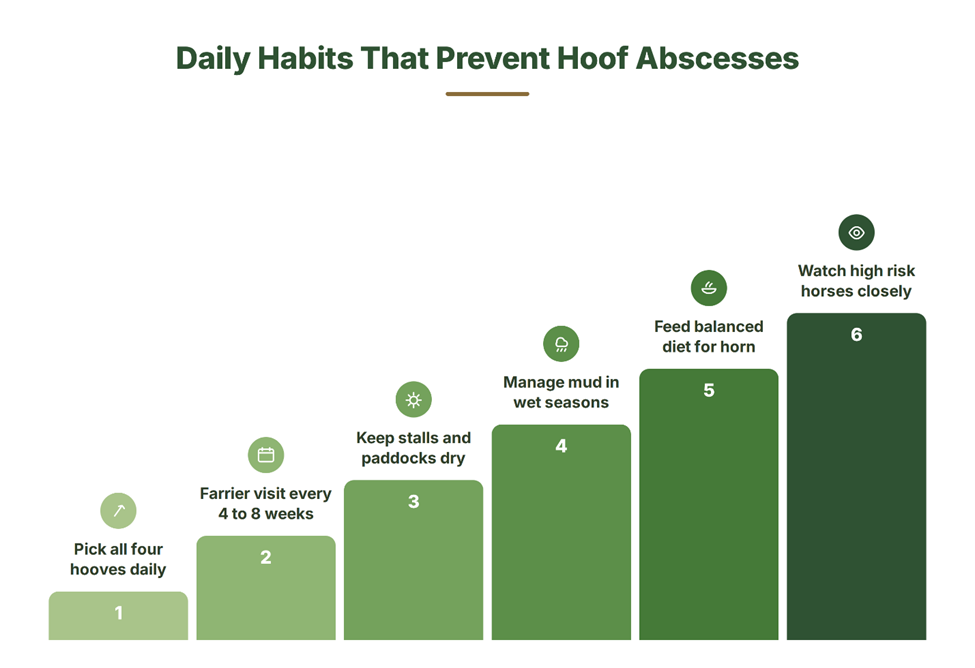
Pick out all four hooves every day, and inspect the sole, frog, and white line while you work. Schedule farrier care every four to eight weeks, because balanced trimming prevents the flares, cracks, and stretched white line that give bacteria a doorway. Equine hoof health depends on this cycle more than on any product you can buy.
Manage the footing your horse stands on. Remove manure from paddocks regularly, keep stalls clean and dry, and provide a dry area where horses can escape mud during wet seasons. Penn State Extension highlights mud management as one of the most effective abscess prevention measures available to owners.
Support hoof quality from the inside as well. A balanced diet with adequate protein, biotin, zinc, and copper supports strong horn growth. Discuss supplements with your veterinarian or an equine nutritionist before adding them, because more is not automatically better, and a good baseline diet covers most horses.
Know Your Horse’s Risk Factors
Some horses need extra vigilance. Horses with laminitis, thin soles, white line disease, or poor hoof conformation abscess more easily. Seniors with Cushing disease, formally called pituitary pars intermedia dysfunction, are more prone to infections of every kind, including hoof abscesses.
Wet spring and fall weather raises risk for every horse. During those seasons, increase inspection frequency, consider protective hoof boots for turnout on soggy ground, and stay strict about clean, dry standing areas. A little extra effort during high risk months prevents the majority of seasonal abscess flare ups.
Shoeing choices matter for high risk horses too. Talk with your farrier about pads or sole support for horses with thin, flat soles, and about pulling shoes seasonally where appropriate. There is no single right answer for every horse, and an honest conversation between your farrier and veterinarian usually produces the best plan for equine hoof health over the long term.
Horse Hoof Abscess FAQs
Can a hoof abscess heal on its own?
Yes, many abscesses eventually rupture and drain without help, often at the coronary band. Waiting is not the best plan, though. The days before natural rupture are extremely painful, and an unopened abscess can travel deeper or spread. Professional drainage shortens the painful period from possibly a week to a day or two, so involving your vet or farrier early is kinder and safer.
How long does a hoof abscess last?
A typical hoof abscess lasts a few days to about a week from first lameness to comfortable soundness, provided it drains properly. Expect dramatic improvement within 24 to 48 hours after drainage begins. Full hoof abscess recovery, including a completely closed drainage tract, takes one to two weeks. If lameness persists beyond a week despite treatment, ask your veterinarian to reevaluate.
Can a horse walk with a hoof abscess?
Most horses can walk, but they do so with an obvious limp, and some are so painful they refuse to bear weight at all. Short, slow walking on soft ground is generally acceptable during treatment. Avoid forced exercise, riding, or work until the abscess drains and soundness returns, because concussion on the hoof increases pain and can drive infection deeper.
What causes hoof abscesses in horses?
Bacteria entering the hoof through a weak point cause abscesses. Common entry routes include a stretched white line, hoof cracks, sole bruises, puncture wounds, and misplaced horseshoe nails. Wet muddy footing, dirty stalls, wet and dry cycles that crack the horn, poor hoof conformation, and infrequent farrier care all raise the risk substantially.
Should I soak a horse’s hoof every day?
Soak once or twice daily only while an abscess is maturing or actively draining, and limit that phase to a few days. Daily soaking as a routine habit is counterproductive. Prolonged moisture softens and weakens the hoof capsule, which makes cracks and future infections more likely. Once drainage is done, switch your effort to keeping the hoof clean and dry.
How do you know when an abscess has drained?
You will usually see discharge at the sole opening or the coronary band, and the change in your horse tells the rest of the story. Lameness improves rapidly, often within hours. Heat fades and the bounding digital pulse quiets over a day or two. If comfort improves but then worsens again, the tract may have sealed too early and trapped remaining infection, so contact your veterinarian for a recheck rather than restarting home treatment on your own.
Can hoof abscesses come back?
Yes, abscesses recur in some horses, either because the original pocket never drained completely or because an underlying cause remains. Chronic laminitis, white line disease, a keratoma, thin soles, and constantly wet footing all set the stage for repeat episodes. If your horse has more than one abscess in the same foot within a few months, schedule radiographs and a thorough workup rather than treating each episode as bad luck.
A horse hoof abscess is painful, dramatic, and stressful to watch, yet it remains one of the most treatable causes of equine lameness. Recognize the classic signs, sudden lameness, heat, and a strong digital pulse, then get professional help with drainage and follow through with soaking, poulticing, and clean dry footing. Add consistent daily hoof care and regular farrier visits, and you will prevent most abscesses before they ever start. Every horse and every hoof is different, so consult your veterinarian, along with your farrier or a certified equine nutritionist where diet plays a role, for advice tailored to your horse’s individual needs.