
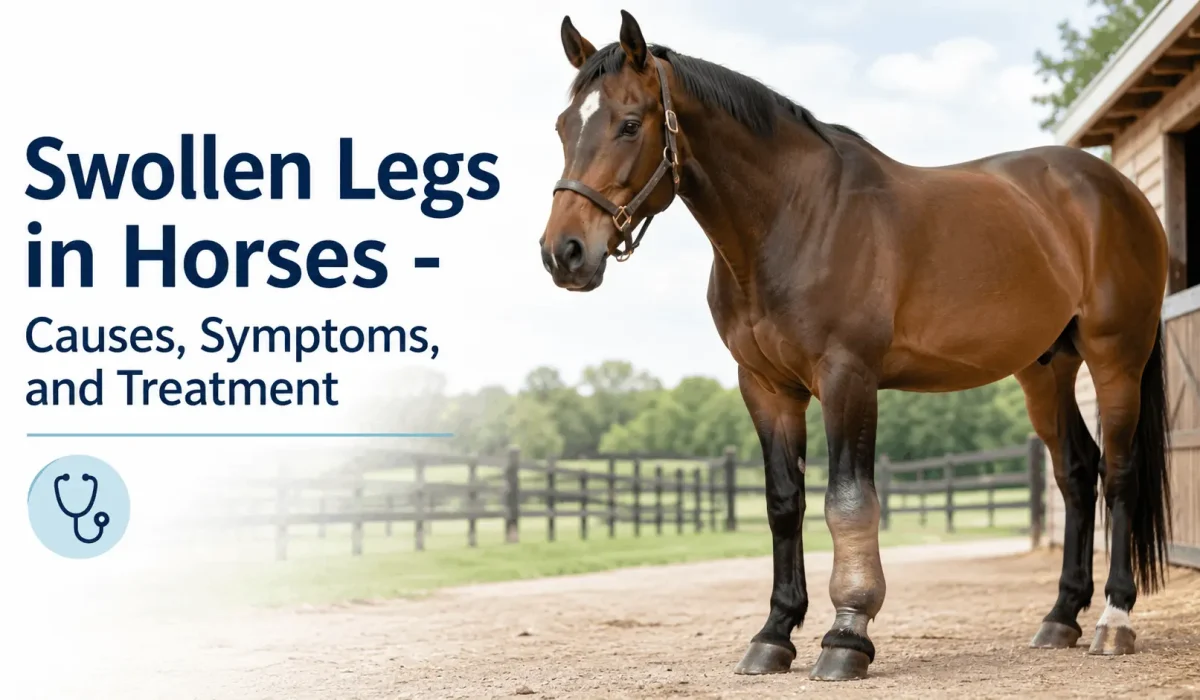
Swollen legs in horses signal that something has changed inside the limb, and your job is to figure out whether it is harmless or serious. This guide explains the most common causes, the warning signs that demand attention, and the treatment and prevention steps that protect your horse. You will learn how to tell mild stocking up from a true emergency, what your veterinarian looks for, and how to keep your horse comfortable and sound for years to come.
Most owners face leg swelling at some point, so you are not alone in worrying about it. The good news is that many cases are manageable once you understand what you are looking at. The challenge is that a few cases are genuine emergencies, and the visible swelling alone does not always tell you which is which.
Equine leg edema is the buildup of fluid in the soft tissues of the limb because circulation, lymphatic drainage, or tissue health has been disrupted. The swelling you see is the visible result of that fluid pooling under the skin. Understanding why it happens is the first step toward fixing it.
| KEY TAKEAWAYS |
- Swelling that comes with heat, pain, or lameness is an emergency that needs your veterinarian right away.
- Mild stocking up from stall rest is common and usually resolves once your horse moves.
- Cellulitis and lymphangitis are infections that worsen fast and require prompt veterinary care.
- Early detection through daily leg checks gives your horse the best chance of full recovery.
- Movement, turnout, and clean management prevent most cases of fluid retention in the legs.
Understanding Swollen Legs in Horses
Horse leg swelling happens when fluid escapes from blood vessels or lymphatic channels and collects in the surrounding tissue. The limb looks puffy, feels soft or firm, and may change the way your horse stands or moves. Knowing how this process works helps you respond correctly instead of panicking or ignoring a real problem.
Swelling is a symptom, not a disease in itself. It is your horse’s body responding to injury, infection, or stalled circulation. Reading that response accurately is the skill that protects your horse.
How Swelling Develops in Equine Legs
Your horse’s lower legs have very little muscle and depend on movement to push blood and lymph fluid back up toward the heart. When that pumping action slows, fluid lingers in the tissue and the leg swells. Injury, infection, and poor circulation all interrupt this normal flow in different ways.
The hoof and lower limb act like a natural pump, squeezing fluid upward with every step. Take away the steps, and the pump stops working. This is why a horse confined to a stall overnight often greets you with puffy legs in the morning.
The bottom line is this: the lower limb is built to move, and stillness or damage causes fluid to stagnate. According to the Merck Veterinary Manual, reduced lymph circulation combined with a lack of normal movement is the classic trigger for swelling in stabled horses.
Common Areas Affected by Leg Swelling
Swollen hind legs in horses appear more often than front leg swelling, especially when both hind limbs puff up evenly after stall time. Swollen front legs in horses tend to point toward a localized problem such as a wound, strained tendon, or joint issue. The pattern of swelling tells you a great deal about the likely cause.
Pay attention to whether one leg or several are affected. Lower leg swelling in horses that involves several limbs at once usually means a body wide cause, while a single swollen leg points to a local injury or infection in that exact spot.
Think of it this way: symmetrical swelling in both hind legs usually means a circulation issue, while swelling in one leg usually means injury or infection. Where the fluid sits, from the fetlock up to the cannon bone, also guides your assessment and your next move.
Differences Between Acute and Chronic Swelling
Acute swelling appears suddenly, often within hours, and frequently follows an injury, infection, or hard workout. Chronic leg swelling in horses develops slowly and lingers for weeks or returns again and again. The two types point toward different causes and different management plans.
Acute cases carry more urgency because they often involve active inflammation or infection. Chronic cases tend to reflect ongoing issues such as old injuries, repeated stocking up, or weakened lymphatic function that needs long term management rather than a quick fix.
Here is the key thing to remember. Acute swelling with heat and pain is urgent, while mild recurring puffiness that disappears with exercise is usually manageable at home with good routines and daily attention.
Common Causes of Swollen Legs in Horses
The causes of swollen legs in horses range from harmless fluid pooling to dangerous infections. Pinpointing the cause matters because treatment differs sharply between a simple case of stocking up and a spreading infection. Below are the four categories you will encounter most often.
Injuries and Soft Tissue Damage
Trauma is one of the leading reasons a single leg swells suddenly. Tendon strains, ligament tears, bruises, kicks, and wounds all trigger inflammation and fluid buildup at the site. Horse tendon and ligament injuries often produce firm, warm swelling along the back of the cannon bone.
These soft tissue injuries are common in performance horses but can happen to any horse that slips, plays hard in the field, or takes an awkward step. The swelling is the body rushing fluid and healing cells to the damaged area.
A veterinarian feels the limb for heat, thickening, and pain to locate the damaged structure. The Horse notes that local swelling from tendon injuries can persist long after the initial injury heals, so patience during recovery is essential and rushing the process invites reinjury.
Infections Affecting the Lower Limbs
Cellulitis and lymphangitis are the two infections every horse owner should know. Cellulitis is inflammation of the tissue under the skin, while lymphangitis is inflammation of the lymphatic vessels. Both cause dramatic swelling, heat, and pain, and both can worsen within hours.
These infections often start when bacteria enter through a small wound, scratch, or skin crack you might never notice. Once established, they can spread alarmingly fast, turning a slightly puffy leg into a hot, hugely swollen limb in less than a day.
But here is where most horse owners go wrong. They wait to see if the swelling settles, when these infections actually demand prompt veterinary care. SmartPak Equine reports that these conditions often look similar but require fast antibiotic treatment to prevent lasting lymphatic damage. A horse leg infection is never something to manage by guesswork.
Fluid Retention and Circulatory Problems
Stocking up is the most common cause of mild swelling in stabled horses. Stocking up is the harmless pooling of fluid in the lower limbs because reduced movement slows lymphatic drainage, and it typically affects both hind legs and disappears once the horse walks for half an hour. This is stagnation edema, and it rarely signals disease on its own.
You will often see it after a horse stands in a stall overnight or after a long trailer ride. The legs feel cool and soft, the horse is sound, and a little exercise makes the puffiness melt away.
Equine circulation problems can also stem from heart issues, low blood protein, or damaged vessels. These deeper causes are less common but more serious, so persistent swelling without an obvious reason deserves a veterinary workup rather than wishful thinking.
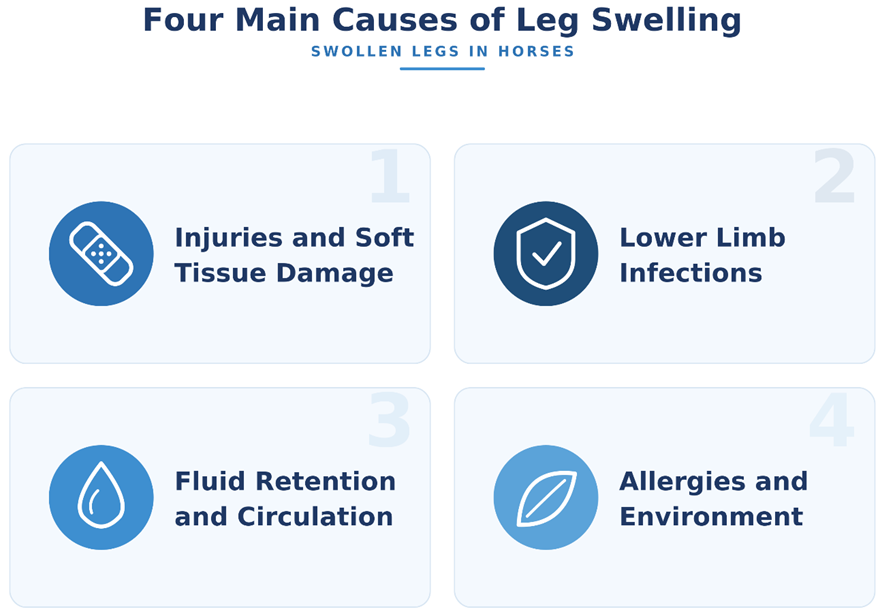
Allergic Reactions and Environmental Factors
Insect bites, contact irritants, and allergic reactions can inflame the skin and soft tissue, leading to swelling and discomfort. Standing in mud, wet bedding, or filthy stalls also raises the risk of skin infection and fluid buildup. Environmental management plays a bigger role than many owners realize.
Wet, dirty conditions soften the skin and create entry points for bacteria, which is how many infections begin. Seasonal factors such as biting insects in summer can also trigger swelling in sensitive horses.
Think of it this way: a clean, dry, well managed environment removes many of the triggers that lead to swollen horse limbs in the first place. Prevention often starts with a broom and a clean stall rather than a medicine cabinet.
Recognizing the Symptoms of Leg Swelling
Equine swelling symptoms go beyond the obvious puffiness you can see. Heat, pain, lameness, and changes in behavior all add vital clues about how serious the problem is. Learning to read these signs helps you decide whether to monitor at home or call your veterinarian.
Visible Changes in Leg Appearance
The first sign is usually a leg that looks larger, rounder, or smoother than normal. You may notice the normal grooves and tendon outlines disappear under the fluid. Comparing the swollen leg to the opposite limb gives you a quick reference point you can trust.
Take a moment to look at your horse from the front and the side. Note whether the swelling is even all the way around or focused in one spot, since localized lumps often mean a specific injury rather than general fluid retention.
Fluid buildup in horse legs can feel either soft and pitting or tight and firm. Soft swelling that dents when you press it often points to simple edema, while hard, hot swelling suggests inflammation or infection that needs closer attention.
Heat and Tenderness Around the Affected Area
Heat is one of the most important signs you can check. Run your hand down both legs and compare temperature, because a warmer leg signals active inflammation. Tenderness, where your horse flinches or pulls away from gentle pressure, raises the concern further.
Make this comparison a habit every time you handle your horse. Your hands are a remarkably sensitive thermometer, and you will quickly learn what normal feels like for your individual horse.
Here is the key thing. Heat and pain together push a case from routine toward urgent, and the Merck Veterinary Manual stresses that swelling combined with heat, pain, or lameness is an emergency that should not wait until morning.
Changes in Movement and Performance
Watch how your horse moves. Horse leg discomfort often shows up as a shortened stride, reluctance to bear weight, or obvious lameness at the walk or trot. A horse that suddenly resists work or stands oddly may be telling you that a leg hurts.
Behavior changes count too. A normally willing horse that becomes grumpy, restless, or unwilling to load weight on one leg is giving you valuable information about pain you cannot see directly.
Horse leg swelling after exercise that fades quickly is usually minor. Swelling that grows worse, spreads upward, or comes with a fever needs professional evaluation without delay, because these patterns suggest something more than simple fatigue.
Diagnosing Swollen Legs in Horses
Diagnosing leg swelling in horses combines hands on examination, imaging, and a careful look at your horse’s history. Your veterinarian works through these steps to separate harmless edema from injury or infection. Understanding the process helps you provide the information that speeds an accurate diagnosis.
Physical Examination Techniques
The exam starts with observation and palpation. Your veterinarian looks at the size, shape, and symmetry of the swelling, then feels for heat, pain, pitting, and firmness. Checking the digital pulse and the range of motion in nearby joints adds further detail.
A strong digital pulse, for example, can point toward inflammation lower in the foot, while pain on flexing a joint suggests the problem lies there. Each hands on finding builds the bigger picture.
This careful assessment often reveals whether the problem sits in the skin, tendons, joints, or lymphatic system. The American Association of Equine Practitioners emphasizes that a thorough physical exam guides every decision that follows and prevents unnecessary or misdirected treatment.
Use of Imaging and Diagnostic Tools
Imaging confirms what the hands suspect. Ultrasound is the most useful tool for soft tissue, because it shows damaged tendons and ligaments and reveals how severe the injury is. Radiographs help rule out bone and joint involvement when the cause is unclear.
These tools let your veterinarian see beneath the swelling rather than guess at it. Ultrasound in particular has transformed how equine soft tissue injuries are diagnosed and tracked over time.
Blood tests and fluid samples may be added when infection or a systemic illness is suspected. Each tool narrows the list of possible causes so your veterinarian can target treatment precisely instead of treating blindly.
Evaluating Medical History and Activity Levels
Your records matter more than you might think. Recent workouts, travel, wounds, changes in turnout, and past episodes of swelling all shape the diagnosis. A horse with a history of repeated stocking up is assessed differently from one with sudden swelling in a single leg.
Keep a simple log of your horse’s routine, injuries, and any previous swelling. These details often reveal patterns that point straight to the cause and help your veterinarian connect the dots quickly.
The bottom line is this: the more accurate detail you provide about your horse’s recent days, the faster your veterinarian can find the cause and start the right treatment.
Conditions Your Veterinarian Will Rule Out
Part of diagnosis is ruling out the conditions that look alike. Your veterinarian works to separate stocking up, cellulitis, lymphangitis, tendon injury, and joint problems, since each demands a different plan. Naming the cause is what turns guesswork into targeted treatment.
This process also catches less common causes such as low blood protein or circulatory disease. These deeper problems can mimic ordinary swelling but need very different care.
Be patient if the first assessment does not give a complete answer. Some cases take repeat exams, imaging, or lab work before the full picture becomes clear.
The table below compares the four conditions you are most likely to face, so you can match what you see to the likely cause.
| Condition | Typical Pattern | Heat and Pain | Usual Action |
| Stocking up | Both hind legs, soft, even | Minimal | Increase movement and turnout |
| Tendon or ligament injury | One leg, firm, localized | Moderate to high | Veterinary exam and ultrasound |
| Cellulitis | One leg, hot, spreading | High | Urgent veterinary care |
| Lymphangitis | One leg, very swollen, painful | High | Urgent veterinary care |
Treatment Options for Swollen Legs in Horses
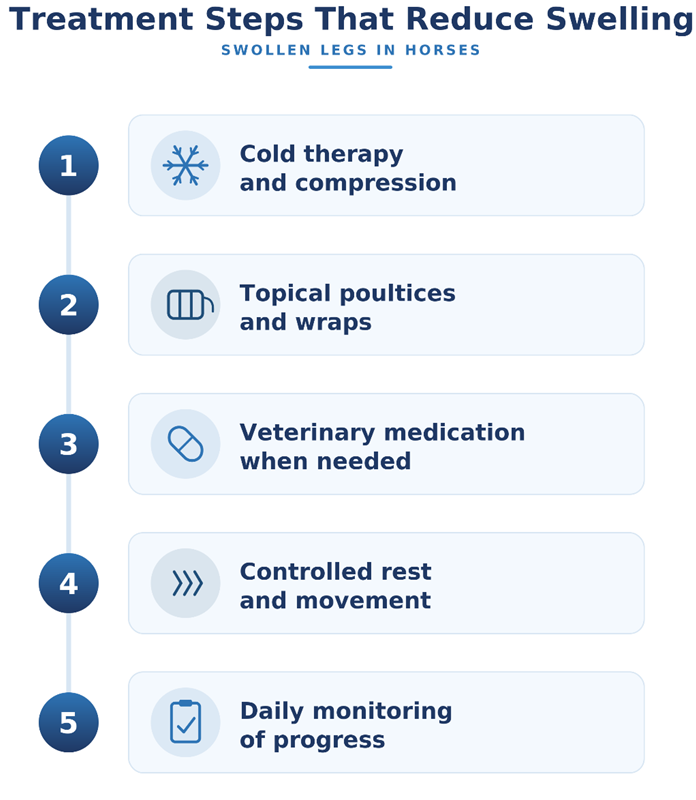
Treatment for swollen legs in horses depends entirely on the cause, ranging from simple movement to antibiotics and rest. The goal is always to reduce fluid, control inflammation, address the underlying problem, and prevent complications. Below are the main approaches your veterinarian may recommend.
No single treatment fits every case, which is exactly why diagnosis comes first. What helps a stocked up horse can be useless or even harmful for a horse with a serious infection.
Cold Therapy and Supportive Care
Cold therapy is the frontline response for many cases of acute swelling. Cold hosing and ice boots reduce inflammation and slow fluid buildup in the early stages. Supportive bandaging then applies gentle compression to limit further pooling while the leg heals.
Cold hosing for fifteen to twenty minutes several times a day is a simple, low cost technique most owners can manage. Just be sure to apply wraps correctly, because a poorly applied bandage can do more harm than good.
US Equestrian notes that cold therapy with compression is especially helpful for cellulitis and lymphangitis, though these treatments work best alongside veterinary care rather than in place of it. Knowing how to reduce horse leg swelling at home buys time, but it does not replace a diagnosis.
Medication and Veterinary Interventions
Medication targets both the swelling and its cause. Nonsteroidal antiinflammatory drugs, often called NSAIDs, reduce pain and inflammation, while antibiotics treat bacterial infections such as cellulitis. Your veterinarian chooses the drugs based on the specific diagnosis.
Never reach for leftover medication or dose your horse on your own. The wrong drug, dose, or timing can mask important signs or harm your horse, so always follow your veterinarian’s instructions exactly.
In stubborn or severe cases, advanced options such as regional limb perfusion deliver medication directly to the affected area. Veterinary care for swollen horse legs always works best when treatment begins early, before the condition becomes entrenched and harder to reverse.
Rest and Controlled Exercise Programs
Rest and movement may sound contradictory, yet both play a role. Painful infections and fresh injuries often need an initial period of stall rest, followed by carefully controlled exercise as healing progresses. Uncontrolled turnout too soon can set recovery back.
The balance between rest and movement shifts as your horse heals. Early on, rest protects fragile tissue, while later, controlled movement rebuilds strength and keeps fluid moving through the limb.
Here is a simple framework many owners follow under veterinary guidance to manage swelling at home:
- Check both legs for heat, pain, and size every morning and evening.
- Apply cold therapy during the first day or two of acute swelling.
- Use supportive wraps only as your veterinarian directs.
- Introduce gentle hand walking once pain allows.
- Track the swelling daily and note any changes.
- Call your veterinarian if heat, pain, or lameness appears or worsens.
- Return to normal work only when the leg is sound and stable.
Managing Recovery and Rehabilitation
Recovery is where many horses either heal fully or relapse, so a steady plan matters. Managing equine leg edema during this stage means monitoring closely, building activity gradually, and guarding against setbacks. Equine rehabilitation for leg injuries rewards patience and consistency.
The recovery phase often lasts far longer than owners expect, especially with tendon and ligament injuries. Committing to the full timeline protects the investment you have already made in treatment.
Monitoring Swelling During Recovery
Daily monitoring is your most powerful recovery tool. Measure or photograph the leg, note its temperature, and watch how your horse moves each day. Steady improvement confirms the plan is working, while a sudden increase in swelling signals a problem.
Keep your daily notes in one place so you can spot trends over weeks rather than relying on memory. A leg that is slowly improving looks very different from one that is quietly getting worse.
For tendon and ligament injuries, repeat ultrasound checks help your veterinarian confirm that the tissue is healing correctly. The Horse recommends scheduling these evaluations through recovery rather than relying on appearance alone, since a leg can look fine outside while the tissue inside is still fragile.
Gradual Return to Regular Activity
Returning to work too quickly is one of the most common recovery mistakes. Increase exercise in small, planned steps, starting with hand walking and progressing only when the leg stays cool and comfortable. Horse leg swelling recovery follows the tissue, not the calendar.
Build a written plan with your veterinarian that maps out each stage, from hand walking to ridden work. A clear plan removes guesswork and keeps you from pushing ahead on a hopeful day.
But here is where most horse owners go wrong. They rush back to full work the moment the swelling looks better, and the injury flares again. Slow and steady protects the gains you have made and prevents the heartbreak of starting over.
Preventing Secondary Complications
A weakened leg is vulnerable to new problems. Compensatory strain on the opposite limb, pressure sores from bandages, and stiff joints from inactivity can all complicate recovery. Smart management keeps these secondary issues from taking hold.
Watch the healthy legs as closely as the injured one. Horses often overload a sound limb to spare a painful one, which can create a brand new injury if you are not paying attention.
Rotate bandages correctly, keep the environment clean and dry, and follow your veterinarian’s timeline. Preventing complications is far easier than treating them after they appear, and it keeps your recovery on track.
Preventing Swollen Legs in Horses
Preventing swollen legs in horses comes down to movement, clean management, and daily attention. Most cases of fluid retention are far easier to prevent than to treat. A few consistent habits protect your horse’s limbs over the long term.
Prevention is not glamorous, but it is powerful. The horses that rarely swell are usually the ones with owners who quietly do the basics well every single day.
Proper Stable and Pasture Management
A clean, dry environment removes many swelling triggers at the source. Wet bedding, deep mud, and dirty stalls raise the risk of skin infection and circulatory stagnation. Good footing and regular cleaning protect the lower legs every day.
Manage mud around gates, water troughs, and high traffic areas where horses stand. These muddy spots are where skin softens and bacteria thrive, setting the stage for infection and swelling.
Equine limb health depends heavily on living conditions. Horses that stand for long hours in poor conditions face a higher risk of both stocking up and infection than horses kept in clean, dry surroundings.
Maintaining Regular Exercise Routines
Movement is the single best defense against fluid buildup. Regular turnout and consistent exercise keep blood and lymph flowing, which prevents the stagnation that causes stocking up. The more your horse moves, the less fluid pools in the legs.
Even on rest days, a short walk or some turnout keeps the limb pump working. Consistency matters more than intensity, so a little movement every day beats one hard session followed by long stretches of standing still.
Think of it this way: a horse standing in a stall is a horse with stalled circulation. Maximizing turnout and minimizing idle stall time is the most effective prevention strategy you can adopt for most horses.
Routine Leg Inspection and Care
Daily leg checks catch problems while they are still small. Run your hands down each leg, feel for heat and swelling, and note anything unusual. Early detection turns a potential emergency into a minor adjustment.
Make the check part of your grooming routine so it never gets skipped. Thirty seconds per leg is all it takes to spot trouble before it becomes serious.
Healthy horse leg care also includes proper hoof trimming, clean wraps when needed, and extra attention after hard work or travel. These small habits add up to strong, sound limbs over a lifetime.
Long Term Leg Health in Horses
Long term leg health is built through circulation, nutrition, and consistent care, not quick fixes. Horses that stay sound into older age usually benefit from owners who think ahead. Common equine leg conditions become far less likely when the foundations are strong.
Think of leg health as a long game rather than a series of emergencies. The choices you make every day shape how comfortable and sound your horse will be in ten years.
Supporting Healthy Circulation
Circulation is the engine that keeps fluid moving and tissue healthy. Regular movement, balanced workloads, and recovery time all support strong blood and lymph flow. Older horses especially benefit from gentle, consistent activity to keep their legs working well.
Avoid the extremes of either constant hard work or long confinement. A steady rhythm of activity and rest keeps the circulatory and lymphatic systems doing their job without overload.
Are older horses more prone to swelling? Often yes, because aging can slow circulation and lymphatic function, making daily movement even more important as your horse matures and the natural limb pump becomes less efficient.
Nutrition for Musculoskeletal Wellness
A balanced diet supports the tendons, ligaments, and tissues that keep legs sound. Adequate protein, key minerals, and proper hydration all contribute to musculoskeletal wellness. Nutrition will not cure swelling, but deficiencies can weaken the structures that resist it.
Fresh water deserves special mention, since good hydration supports healthy circulation and tissue function. A horse that drinks well is better equipped to move fluid through its limbs.
Work with your veterinarian or a qualified equine nutritionist before adding supplements, and be wary of products that promise dramatic results. The best care for horses with swollen legs rests on sound basics rather than miracle claims or expensive shortcuts.
Swollen Legs in Horses FAQs
What should I do immediately when I notice swollen legs in my horse?
Check both legs for heat, pain, and lameness right away, and compare the swollen leg to the others. If the swelling is mild, cool, and your horse moves normally, light hand walking may help. If you find heat, pain, or lameness, call your veterinarian promptly, because these signs can point to a serious problem that needs fast treatment.
Can swollen legs in horses resolve without treatment?
Mild stocking up from stall confinement often resolves on its own once your horse moves and circulation improves. Simple cases of stagnation edema usually fade within about thirty minutes of light exercise. However, swelling caused by injury, infection, or circulatory disease will not improve without proper care and should always be evaluated by your veterinarian.
When should I contact a veterinarian for a horse with swollen legs?
Contact your veterinarian whenever swelling comes with heat, pain, lameness, fever, or a wound. You should also call if the swelling appears suddenly in one leg, spreads upward, or fails to improve with rest and movement. Early veterinary care for swollen horse legs prevents minor problems from becoming serious ones that take far longer to heal.
Can prolonged stall confinement contribute to leg swelling in horses?
Yes, extended stall confinement is one of the most common causes of mild leg swelling. Standing still slows the lymphatic drainage that normally clears fluid from the lower limbs, leading to stocking up. Increasing turnout and adding regular movement usually reduces or eliminates this type of swelling within a short time.
How does regular exercise affect swollen legs in horses?
Regular exercise keeps blood and lymph fluid moving, which prevents the stagnation that causes fluid to pool in the legs. Light, consistent activity such as hand walking, turnout, and riding supports healthy circulation. For horses prone to stocking up, daily movement is often the most effective long term prevention strategy you can use.
Are older horses more prone to developing swollen legs?
Older horses can be more prone to swelling because aging may slow circulation and lymphatic function over time. They may also carry old injuries or joint changes that contribute to fluid buildup. Consistent gentle exercise, clean management, and routine leg checks help senior horses maintain strong, comfortable limbs for longer.
Swollen legs in horses range from a harmless overnight puffiness to a genuine emergency, and your ability to tell the difference protects your horse. Watch for heat, pain, and lameness, keep your horse moving, and maintain clean, consistent management to prevent most cases before they start. When swelling persists, worsens, or comes with warning signs, do not guess. Consult your veterinarian or a certified equine professional for advice tailored to your horse’s individual needs, because the right care at the right moment makes all the difference.

2 comments on "Swollen Legs in Horses – Causes, Symptoms, and Treatment"
You’ve made some decent points there. I looked
on the internet for more info about the issue and found most individuals will go along with your views on this web site.
เช่ารถตู้ VIP