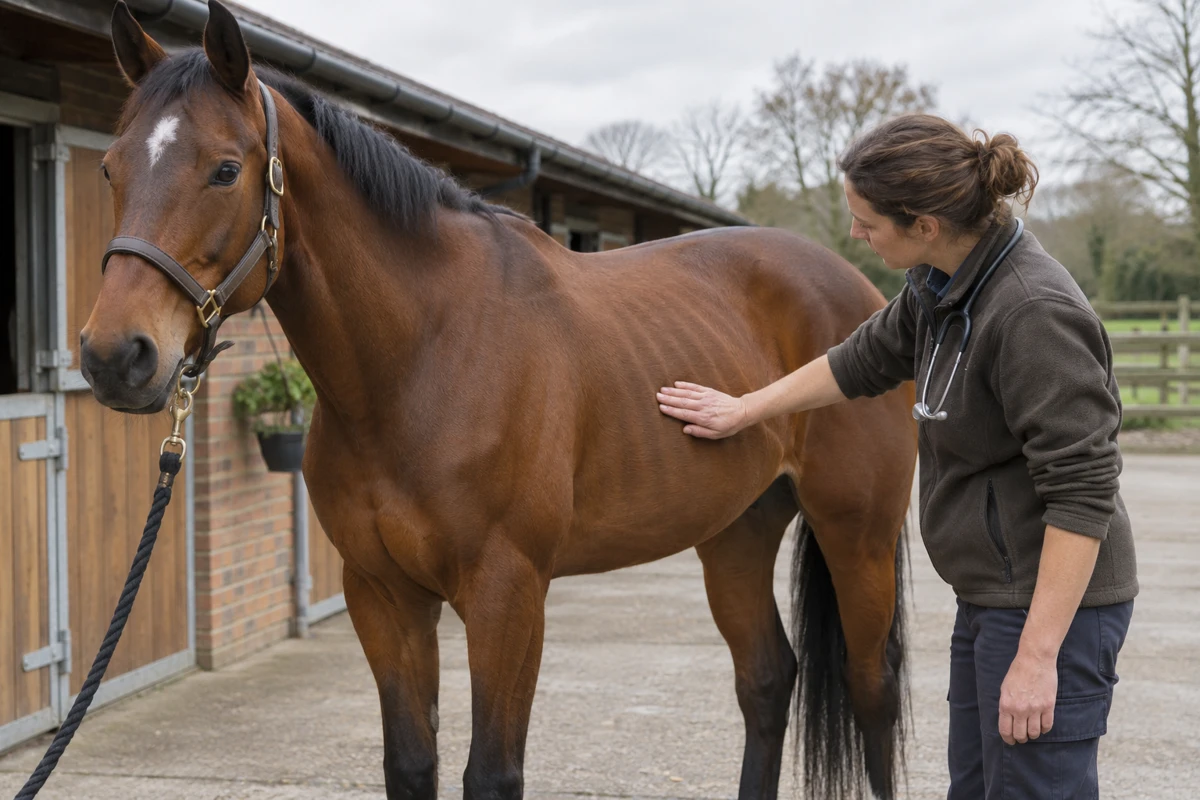
Weight loss in horses is one of the clearest signs that something in your horse's health or management needs attention. Sometimes the cause is simple, such as poor forage or a long cold spell. Other times it points to dental trouble, parasites, or hidden disease that needs a vet.
This guide explains common feeding and medical causes of weight loss, signs to record, and when to involve your veterinarian. Appearance alone cannot reliably distinguish a feeding problem from disease.
You will also see how your veterinarian investigates a thin horse, how to feed for safe weight gain, and how to track recovery with real confidence rather than guesswork.
Key Takeaways
- Check measured feed intake, forage quality, teeth and medical causes.
- Normal appetite does not rule out an inadequate ration or illness.
- Use body-condition scoring and consistent weight measurements.
- Severe weight loss requires veterinary assessment and a supervised refeeding plan.
Common Causes of Weight Loss in Horses
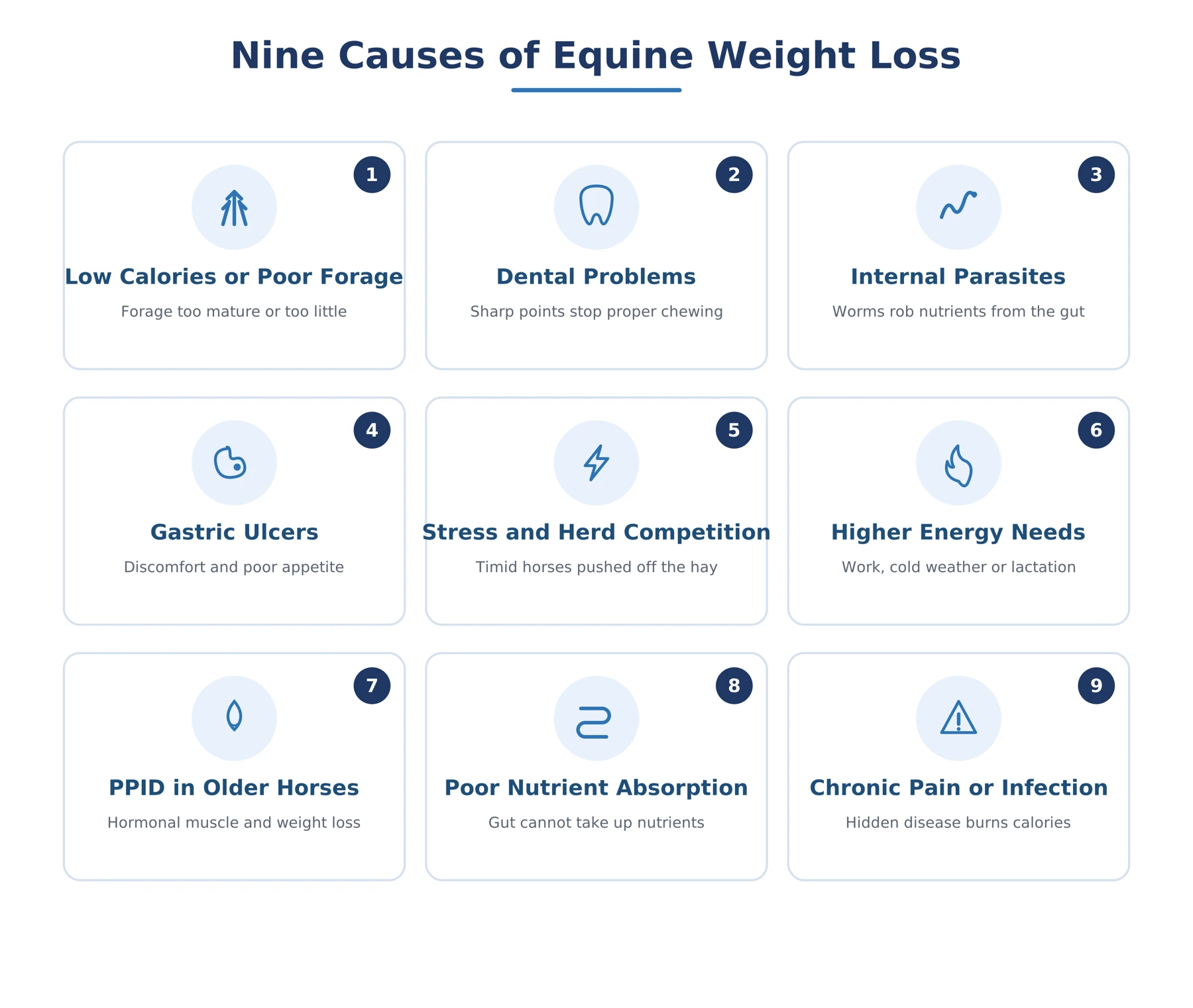
Most weight loss in horses traces back to a short list of root problems. the calories your horse eats must match the calories it burns, and its digestion must actually work. When either side of that balance fails, body condition starts to fall.
Weight loss in horses is a measurable drop in body mass and condition because the horse takes in fewer usable calories than it burns, or because disease blocks normal digestion and nutrient absorption. It shows up as a visible ribcage, a sunken topline, and a steadily falling body condition score.
The table below pairs each common cause with its typical signs and a sensible first step. Use it as a quick map, then read the detail under each heading that follows.
| Common Cause | Typical Signs | First Next Step |
|---|---|---|
| Poor forage or low calories | Ribs show, slow steady loss | Improve hay, add balanced feed |
| Dental disease | Quidding, dropping feed | Book a dental exam |
| Internal parasites | Dull coat, pot belly | Run a fecal egg count |
| Gastric ulcers | Picky eating, girthiness | Ask about gastroscopy |
| PPID in seniors | Long coat, muscle loss | Request a blood test |
Not Enough Calories or Poor Quality Forage
Insufficient usable energy is a common cause of weight loss. Mature, stemmy forage can supply less energy than the horse needs, even when it spends much of the day eating. A forage analysis is more useful than appearance alone for assessing nutritional value.
Both quantity and quality matter. Many adult diets provide around 1.5–2% of body weight daily as forage dry matter, with adjustments for health, workload and condition. Fresh grass contains substantial water, so its fresh weight is not equivalent to the same weight of hay.
Check hay for mold, dust and spoilage. Color alone does not establish its nutritional quality. Use a forage analysis and professional ration review when a horse cannot maintain condition. See our guide to choosing suitable hay for related advice.
Dental Problems That Make Chewing Difficult
Dental pain, missing teeth and abnormal wear can reduce intake or make chewing inefficient. Poorly processed forage may then be harder to digest. Weight loss is a reason for a thorough oral examination, even if the horse still eats.
Watch for quidding, which means dropping partly chewed balls of hay, along with dropping feed, tilting the head while eating, and long fibers showing in the manure. The American Association of Equine Practitioners recommends a full dental exam at least once a year for every horse.
Treatment depends on the dental findings. Floating may help some horses, but missing or severely worn teeth can require a modified forage diet and ongoing care.
Internal Parasites
Internal parasites rob your horse of nutrients and damage the gut wall from the inside. Heavy burdens of small strongyles are a classic cause of a thin horse with a dull coat and a pot belly, a pattern seen most often in young, old, or poorly managed animals.
Fecal egg counts measure egg shedding, not the total parasite burden, and cannot rule out parasite-related disease. The AAEP parasite-control guidelines recommend using testing to inform a veterinary control plan rather than relying on frequent calendar-based treatment.
Work with your vet on a targeted parasite control plan built around regular testing. Overusing dewormers breeds resistance across the herd and still leaves some horses undertreated, losing condition while appearing to be covered. See our guide to strongyles in horses for related advice.
Gastric Ulcers and Reduced Appetite
Gastric ulcers cause weight loss by making eating uncomfortable and by cutting a horse's appetite. Equine gastric ulcer syndrome is very common in performance horses, and research summarized by Kentucky Equine Research reports high rates among horses in active training and competition.
Poor appetite, recurrent mild colic and performance changes can accompany ulcers, but these signs are not specific enough to diagnose them. Gastric ulcer disease affects different regions of the stomach and needs veterinary assessment.
Keep forage in front of your horse through the day to buffer that stomach acid naturally. Diagnosis relies on gastroscopy, and treatment usually combines prescribed medication with lasting changes to feeding, turnout, and workload.
Stress, Herd Competition and Limited Access to Feed
Social stress and herd competition quietly drive weight loss in many yards. A timid horse low in the pecking order can be chased off the hay and never get a fair share, even when the field looks full of feed to the owner walking past.
the feed is clearly present, but real access to it is not. Bullying, crowded feeders, and too few hay stations all cut intake for the very horse that needs the extra calories the most.
Spread hay across several piles set well apart, add more feeding stations than you have horses, and consider separating a bullied horse at mealtimes. A calm, private place to eat often restores lost weight without any change to the ration itself.
Increased Energy Needs From Work, Cold Weather or Lactation
Sometimes the horse is perfectly healthy, but its energy needs have simply outpaced the feed on offer. Hard training, cold weather, and lactation all raise calorie demands sharply, and a ration that was fine last month can suddenly leave your horse short.
A broodmare feeding a foal can need far more energy than usual, and a hard working sport horse burns through its ration quickly. Cold, wet, windy weather also forces a horse to spend precious calories just to keep its body warm through the day and night.
Match the feed to both the job and the season ahead. Extra forage is almost always the safest first step, since the fermentation of fiber in the hindgut produces steady internal heat as well as lasting, slow release energy.
PPID and Other Health Problems in Older Horses
PPID, also called equine Cushing's disease, is a common hormonal cause of weight loss in older horses. It disrupts normal metabolism and muscle maintenance, and it often appears alongside a long curly coat that fails to shed and a topline that quietly melts away.
PPID becomes more common with age. Diagnosis combines clinical findings with appropriate endocrine testing, interpreted for the season and the individual horse. Muscle loss can occur even when body fat remains adequate.
If your senior horse is losing condition and shedding poorly, ask your veterinarian about testing. Treatment and dietary management should be tailored to the findings, including any concurrent insulin dysregulation.
Intestinal Disease and Poor Nutrient Absorption
Some horses lose weight because the gut simply cannot absorb nutrients, a problem known as malabsorption. Inflammatory bowel disease and other intestinal conditions damage the delicate lining that normally takes up energy and protein from digested feed.
These horses often eat completely normally yet keep dropping condition week after week. Low blood protein, a rough staring coat, fluid swelling under the belly, and persistent diarrhea can all be clues that absorption has quietly broken down.
Diagnosis is complex and may require ultrasound, detailed blood work, and sometimes an intestinal biopsy. The Merck Veterinary Manual lists malabsorption among the important causes of chronic weight loss in horses that eat well but fail to thrive.
Chronic Pain, Infection and Other Underlying Diseases
Chronic pain and hidden infection burn calories and suppress appetite at the same time, a double blow to condition. Dental pain, arthritis, laminitis, and deep internal infections all push a horse into a sustained negative energy balance.
Long standing problems with the liver, kidneys, or heart can do the same quiet damage over months. A low grade fever, a dull eye, reluctance to move, and general lethargy sometimes travel alongside the weight loss as useful warning signs.
Here is the bottom line: when feeding and parasite control are clearly sound and weight still falls, a full veterinary workup is essential to find the underlying disease driving it before the horse declines further.
Warning Signs of Weight Loss to Watch For
Catching the signs of weight loss in horses early gives you the best chance of a quick, simple fix. Weight often slips away slowly, so the owner who sees a horse every single day is sometimes the last to notice. Training your eye and your hands helps you spot trouble sooner.
Physical Signs You Can See and Feel
The clearest physical signs are a visible ribcage, a sharp prominent spine, and a sunken topline over the back and hindquarters. Run your hands along the ribs and croup, because fat loss shows under your fingers before it shows to the eye, especially beneath a thick winter coat.
A dull staring coat, a tucked up flank, and jutting hip bones all add to the picture. A hollow appearing above each eye and a thin, narrow neck are common in older horses that are steadily dropping condition.
Check fat cover consistently over the neck, withers, shoulder, ribs, loin and tailhead. Assess topline muscle separately: muscle wasting and loss of body fat are not the same thing.
Changes in Appetite and Eating Behavior
Watch closely how your horse approaches its feed, not just whether the bucket ends up empty. Slow eating, quidding, dropping feed, and turning away from hay all suggest pain or illness rather than simple fussiness or a lack of hunger.
A horse that eats eagerly but loses condition may still receive too little usable energy. Dental problems, parasites or other disease are also possible. Record actual intake and changes in manure, thirst and activity for your veterinarian.
Appetite changes are easy to overlook when several horses share a feed. Watch yours eat alone now and then, so you can be sure it is finishing its ration rather than wandering off or being moved along by a bolder companion.
When Weight Loss Is an Emergency
Call your vet urgently if weight loss is sudden, severe, or paired with other warning signs. Fever, colic, diarrhea, swelling under the belly, or a horse that is dull and completely off its feed all demand prompt professional attention.
Sudden weight loss in horses can signal serious disease, so never adopt a wait and see approach in these cases. Early action often makes the difference between a simple recovery and a long, costly, and distressing illness.
When in doubt, phone your vet and describe exactly what you see. A short conversation costs little and often settles whether your horse needs an urgent visit today or can safely wait a day or two for a routine appointment.
Why Is My Horse Losing Weight but Still Eating?
A horse can lose weight while still eating because the ration supplies too little energy for its needs, because chewing is inefficient, or because illness affects digestion or metabolism. A normal-looking appetite does not rule out either a feeding problem or disease.
The Medical Reasons Behind It
Dental disease, parasites, PPID and intestinal disease are possibilities, but they act through different mechanisms. Compare measured feed intake with energy needs while your veterinarian investigates relevant medical causes.
Unexplained weight loss in horses deserves a vet visit once the simple causes have been ruled out. Track intake honestly as well, because owners very often overestimate how much a horse truly eats across a long day out at grass.
Remember that a horse at pasture can look busy grazing while taking in very little real energy from thin, overgrazed, or weed filled fields. What matters is usable calories absorbed, not the hours your horse spends with its head down.
How Quickly You Should Act
Sudden weight loss in horses is far more urgent than a slow gradual slide. A rapid drop can signal pain, infection, or a serious gut problem, so do not wait weeks hoping it will correct itself before you ask for help.
A slow, steady decline still matters, but it usually gives you more time to work methodically through the possible causes with your vet. Either way, a clear written record of feed and weight makes the pattern far easier to read.
Do not be tempted to keep adding feed while ignoring the cause. Pouring extra calories into a horse with ulcers or worms rarely fixes the problem and can even make some conditions worse, so pair any feed change with a proper diagnosis.
Why Older Horses May Struggle to Maintain Weight
Older horses may face dental wear, PPID, chronic pain or difficulty competing for feed. Weight loss is not an inevitable consequence of age and should be investigated.
The Changes That Come With Age
An older horse losing weight is not simply getting old and fading away. The British Equine Veterinary Association stresses that senior horses can thrive for many years with the right dental care, a suitable diet, and regular health monitoring from an attentive owner.
Digestive function varies between older horses; aging alone does not mean that every senior absorbs nutrients poorly. Assess teeth, diet, access to feed and underlying disease before assuming that digestion has declined.
Senior horses also feel cold and competition more keenly than they once did. A stiff older horse may give way at the hay rather than fight for it, so a quiet feeding spot and a warm rug can protect weight through the colder months.
Feeding and Watching the Senior Horse
Senior feeds are designed for easy chewing and gentle digestion. Soaked feeds, beet pulp, and higher calorie forage all help a horse that can no longer manage to process coarse, stemmy hay with teeth that are badly worn down. See our guide to feeding older horses for related advice.
The signs of weight loss in horses are easy to miss in a woolly senior. Part the coat and feel over the ribs and spine with your hands, since a thick winter coat can hide a shrinking frame for weeks from even a careful owner.
Book your senior for a vet check twice a year rather than once. Regular dental care, PPID testing where needed, and a diet reviewed each season keep small problems small, and they give an older horse the best chance of holding condition.
How Veterinarians Investigate Weight Loss in Horses
Your vet investigates weight loss in horses step by step, starting simple and escalating only as the case demands. The whole aim is to rule out the common, low cost causes first before moving on to more advanced and expensive testing.
Feeding History, Physical Examination and Dental Assessment
The workup begins with a careful feeding history and a thorough hands on physical exam. Your vet weighs the current diet against the horse's real needs and checks body condition, coat, eyes, gut sounds, and general attitude for anything out of place.
A full dental assessment follows next, since mouth pain is extremely common and often simple to treat. Expect detailed questions about hay type, feed amounts, turnout time, worming history, and any recent changes in routine, workload, or companions.
This first stage alone solves a great many cases. A thin horse on poor hay with sharp dental points may need nothing more than better forage and a routine float to turn the corner and start gaining again.
Fecal Testing, Blood Work and Other Initial Tests
Blood work may assess inflammation, protein levels and organ function. Fecal testing helps characterize parasite egg shedding, but a low count does not exclude disease-causing parasite stages.
Initial results help narrow the investigation. Your veterinarian interprets them alongside the examination and feeding history rather than diagnosing from one abnormal value.
Results also guide what should happen next. Entirely normal basic tests in a horse that keeps losing weight tell your vet that a deeper, more detailed look is now fully justified and worth the cost.
When Gastroscopy, Ultrasound or Further Tests May Be Needed
Advanced tests follow when the basic results stay stubbornly unclear. Gastroscopy confirms gastric ulcers, abdominal ultrasound views the internal organs, and further sampling checks for intestinal disease and malabsorption that cheaper tests cannot reveal.
Your vet may also run a specific blood test for PPID in older horses. Each added test narrows the list of possibilities further until the true cause of the weight loss finally comes clearly into focus and a plan can be made.
Not every horse needs the full panel of tests. Your vet chooses each one based on the history and the early findings, so you spend money only where it is genuinely likely to change the treatment plan.
How to Safely Help an Underweight Horse Gain Weight
Knowing how to help an underweight horse starts with treating the cause, not just piling on more feed. Once your vet has addressed any dental issues, parasites, or disease, a careful and patient feeding plan does most of the remaining work over time.
Build the Diet Around Forage First
Good forage is the solid foundation of all safe weight gain. Offer generous access to clean, leafy hay, and choose a higher calorie forage such as alfalfa for horses that need extra energy. Forage keeps the hindgut healthy while it delivers steady, slow calories.
Forage allowances should be calculated on a dry-matter basis and adjusted to the individual. Severely underweight horses need a veterinary refeeding plan rather than immediate unrestricted feeding.
Have your hay analyzed if weight gain stalls on what looks like plenty. A forage test shows the real energy and protein on offer, so you and your nutritionist can add exactly what is missing instead of guessing at the shortfall.
Add Calories the Right Way
When forage alone is not enough, add calories through feeds designed to build condition. Beet pulp, a quality senior feed, and added oil all raise energy without the risks that come with large grain meals. Introduce any new feed slowly over seven to ten days.
Split concentrates into small, frequent meals rather than one big feed. This protects the gut and improves how well your horse uses each ration, which matters most in a thin horse that is working hard to rebuild its reserves.
Add extra calories gradually and give each change time to settle before the next. A hindgut full of healthy fiber bugs copes poorly with sudden loads of starch, so patience here prevents colic and keeps the whole plan on track.
Avoid the Risks of Refeeding Too Fast
A very thin or genuinely starved horse can suffer refeeding syndrome if calories climb too quickly. This dangerous shift in the body's chemistry can prove fatal, so severe cases always need a slow, supervised plan built carefully with your vet.
slow and steady truly wins. Small increases, frequent monitoring, and ongoing veterinary input turn a risky situation into a safe and lasting recovery for your horse over the following weeks.
Keep fresh water and salt available at all times through the process. A horse that is drinking well and eating steadily is far better placed to use its feed and lay down the muscle and fat it has lost.
How to Monitor Your Horse's Progress
Good monitoring turns guesswork into solid evidence. Regular, consistent measurements show you whether your plan is actually working long before any change becomes obvious to the naked eye in the stable each day.
Use Objective Measurements
A body condition score is a standardized rating of a horse's fat cover because it turns a vague impression of thinness into a repeatable number from 1 to 9. Vets and owners use it to track fat over the ribs, back, and tailhead steadily across the weeks.
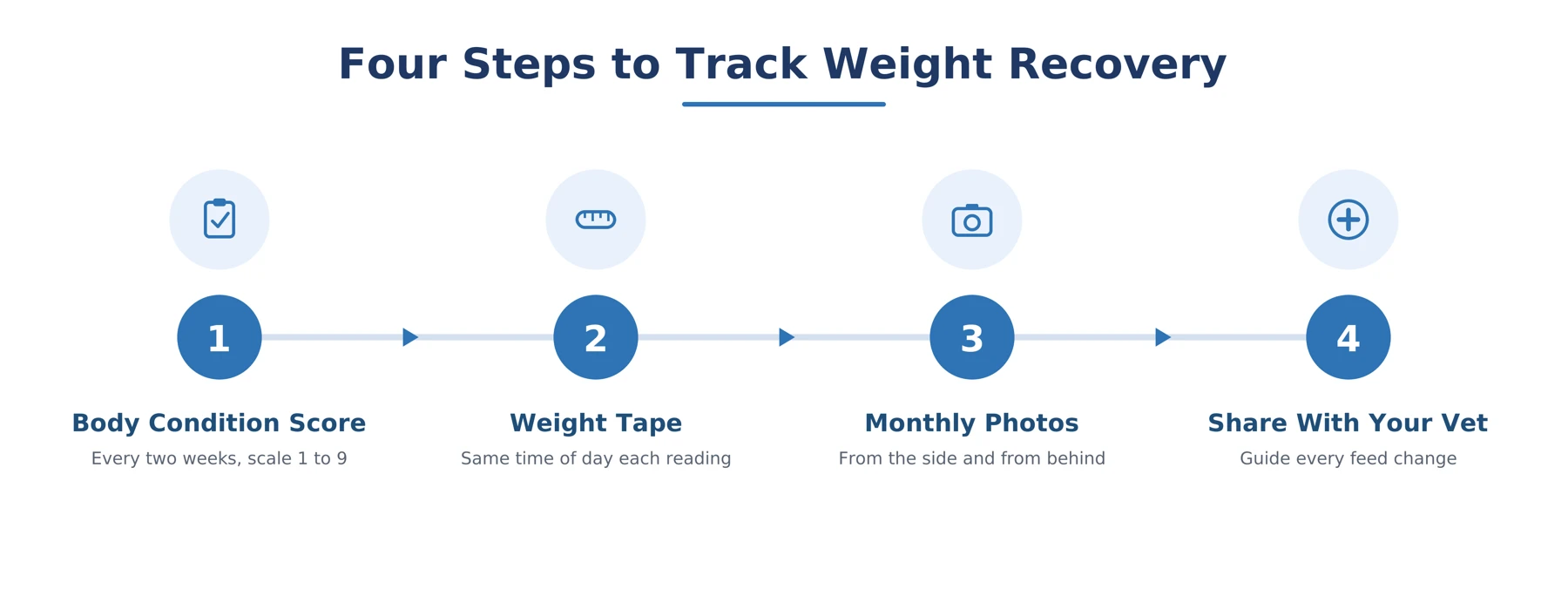
Follow these steps to monitor an underweight horse with real confidence:
- Record a body condition score every two weeks using the 1 to 9 scale.
- Use a weight tape at the same time of day for every single reading.
- Photograph your horse monthly from the side and from directly behind.
- Log all hay and feed amounts so intake is measured, not merely guessed.
- Note coat, energy, and manure changes right beside the numbers.
- Share the full written record with your vet to guide each adjustment.
What the Numbers Tell You
they judge weight by eye alone. A weight tape and a body condition score together catch the slow change that everyday familiarity hides from you without you ever quite realizing it.
Expect gradual gains rather than fast dramatic ones. A safe plan to help an underweight horse rebuilds condition over weeks and months, which protects the sensitive gut from the very real risks of refeeding a horse too quickly.
If the numbers stall for several weeks despite good feeding, treat that as a signal rather than a setback. A plateau often means an untreated cause remains, and it is a clear prompt to go back to your vet for another look.
Horse Weight Loss FAQs
Can a Horse Lose Weight Even If It Eats Plenty of Hay?
Yes. A horse can lose weight on plenty of hay when the hay is poor quality or when disease blocks digestion. Mature, stemmy hay carries very little energy, and dental or gut problems waste much of what the horse does manage to eat. Ask your vet to check the teeth, run a fecal egg count, and assess your hay quality before you simply add more feed.
Can Dental Problems Cause Weight Loss Without Stopping a Horse From Eating?
Yes. Many horses with dental pain keep eating but grind their feed so poorly that nutrients pass through undigested. Quidding, dropping feed, and long fibers in the manure are the key warning signs to watch for. A yearly dental exam, with floating when it is needed, usually restores efficient chewing and steady weight in these horses.
Can Worms Still Be a Problem After Deworming?
Yes. Resistance, inadequate dosing or parasite stages outside a product’s activity can leave problems after treatment. A fecal egg count reduction test assesses treatment effectiveness against egg-shedding parasites; it does not prove that every parasite stage has been eliminated.
Can Gastric Ulcers Cause Weight Loss in Horses?
Yes. Gastric ulcers cause weight loss by reducing appetite and by making eating genuinely uncomfortable. Affected horses may eat slowly, act girthy when tacked up, or show mild recurring colic. Frequent forage, generous turnout, and veterinary treatment guided by gastroscopy all help the stomach heal so that appetite and condition gradually return.
Why Does My Horse Lose Weight in Winter?
Horses lose weight in winter because cold, wet, and windy weather raises the calories they must burn to stay warm. A horse losing weight in winter often needs more forage, since fiber fermentation in the hindgut generates valuable body heat. Add extra hay, provide good shelter, and use rugs for hard keepers or for horses with clipped coats. See our guide to winter horse care for related advice.
How Long Does It Take an Underweight Horse to Regain Weight?
Recovery can take weeks to months depending on the cause, starting condition and response to treatment. There is no universal time to gain one body-condition point. Agree on a monitoring and feeding plan with your veterinarian.
Weight loss in horses is a symptom, not a diagnosis, and the real skill lies in finding the cause behind it. Start with the basics of forage, teeth, and parasites, then watch closely for the signs that point toward a deeper medical problem needing attention.
Track every change with a body condition score and a weight tape so that you can act on clear evidence instead of fleeting impressions. Steady, patient refeeding almost always beats a rushed approach, and it keeps your horse safe at every stage.
Every horse is different, so please consult your veterinarian or a certified equine nutritionist for advice tailored to your horse's individual needs.