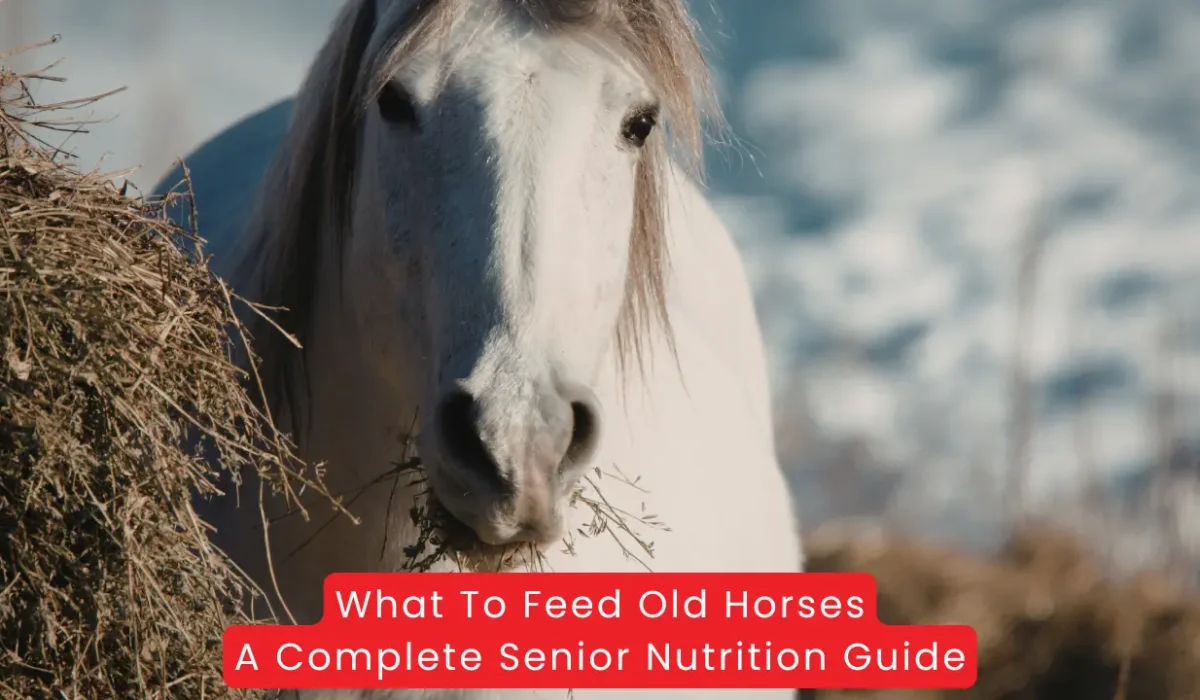
What to feed old horses depends on three things: dental health, body condition, and how well their gut still absorbs nutrients. Senior horses lose chewing strength, ferment fiber more slowly, and often need softer, richer feeds than they did at age ten. This guide gives you a clear, practical plan for feeding aging horses through every stage of their senior years.
You will learn the right feeds, the best schedule, the supplements that matter, and the foods to avoid. Every recommendation is grounded in modern equine nutrition research and tailored for common senior challenges like weight loss, worn teeth, and reduced appetite. By the end, you will have a complete framework you can apply to your own horse starting today.
Key Takeaways
- Senior horses need softer, more digestible feeds with quality protein and added fat.
- Soaked beet pulp and complete senior feeds suit horses with bad or missing teeth.
- Small frequent meals improve nutrient absorption and steady weight gain in old age.
- Hydration matters more in seniors because thirst response declines as horses age.
- Always partner with a veterinarian or equine nutritionist when changing a senior diet.
Nutritional Needs of Old Horses
A horse is generally classified as senior between ages 18 and 20, though some breeds show aging signs earlier. The National Research Council notes that older horses experience reduced protein synthesis, lower phosphorus absorption, and slower fiber fermentation. Their daily ration must adjust to compensate for these changes.
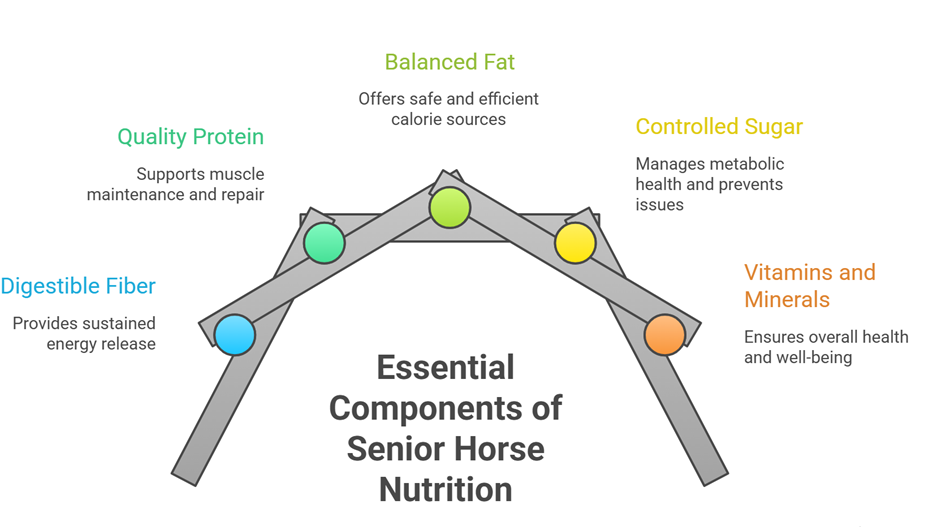
Senior horse nutrition focuses on five priorities: digestible fiber, quality protein, balanced fat, controlled sugar, and complete vitamins and minerals. Each priority targets a specific function in the aging body, from muscle maintenance to immune defense. When even one priority falls short, the senior horse loses condition fast.
Senior horse nutrition is a feeding strategy designed to compensate for reduced digestive efficiency and dental wear in horses aged 18 and older because aging changes how the gut absorbs protein, fiber, and minerals. The goal is to maintain weight, muscle, and topline through softer, nutrient rich feeds.
Here is the key thing to remember. Old horses do not just need more food. They need different food. Quality and form matter more than quantity. Aim for crude protein between 12 and 16 percent, with omega 3 fatty acids and bioavailable amino acids such as lysine, methionine, and threonine. These specific amino acids drive muscle and topline maintenance.
How Aging Changes Digestion
Horse digestion in old age slows down across every part of the gut. Saliva production drops, the stomach empties more slowly, and the cecum ferments fiber less efficiently. Each of these shifts means less energy and fewer nutrients are extracted from the same meal compared to a young horse.
The small intestine also becomes less effective at absorbing protein and minerals. Studies cited by Kentucky Equine Research show that senior horses absorb up to 25 percent less phosphorus and 15 percent less crude protein than horses in their prime. This explains why feed quality and form matter so much more in old age.
To compensate, choose feeds with highly digestible ingredients, smaller particle sizes, and added prebiotics that nurture the microbial population in the hindgut.
Senior horses also lose muscle mass faster due to reduced protein turnover, a condition called sarcopenia. Maintaining muscle requires adequate protein and gentle daily exercise. Even short walks help preserve topline and hindquarter strength.
Liver and kidney function also decline with age. Avoid excess protein, since unused protein burdens the kidneys. Stick to the 12 to 16 percent range and rely on quality. A balanced senior feed will respect this limit.
Many older horses develop pituitary pars intermedia dysfunction, also called Cushing’s disease. The Equine Veterinary Journal estimates that one in five horses over age 15 shows clinical signs. Affected horses need a low sugar, low starch diet with controlled grass intake.
Body temperature regulation also weakens with age. The University of Minnesota Extension recommends increasing forage intake by 15 to 25 percent during winter to support natural heat production through hindgut fermentation.
Best Feed for Old Horses
The best feed for old horses combines soaked forage, a complete senior feed, and a few targeted supplements. Each component plays a role in maintaining body condition, supporting digestion, and replacing nutrients lost to aging. Together they create a balanced ration that respects the limits of an older digestive tract.
But here is where most horse owners go wrong. They keep feeding the same hay and grain their horse ate at age ten. Aging changes the digestive tract dramatically, and stale habits often cause weight loss, muscle wasting, and chronic gut upset.
High Fiber Feed
Fiber drives gut health in every horse, but it becomes critical for seniors. The cecum and colon ferment fiber to produce volatile fatty acids, which fuel up to 70 percent of an older horse’s energy needs. Without enough digestible fiber, weight and topline drop fast.
Soaked beet pulp, alfalfa cubes, and chopped hay are excellent senior fiber sources. Soaking softens the fiber and adds water, making it easier to chew and digest. The University of Minnesota Extension recommends soaking beet pulp for at least 30 minutes before feeding, and longer in cold weather to ensure full hydration.
Always introduce new fiber sources gradually over 7 to 10 days. Sudden changes can trigger gas colic, even with healthy ingredients. Watch manure consistency closely during the transition.
Easy to Digest Feed
Easy to digest feed minimizes the work the senior gut must do to extract nutrients. Look for processed forms like pellets, cubes, or extruded feed that have been heat treated to break down starch and fiber bonds before the horse even chews them.
Highly digestible options include senior pellets soaked into a mash, alfalfa or timothy cubes, rice bran, and oat hulls. These soft feeds bypass the chewing problem common in horses with worn teeth and pass through the gut with less risk of impaction or gas.
Avoid coarse grains, stemmy hay, or whole oats if your horse drops feed, quids, or coughs while eating. These signs almost always point to dental pain that needs immediate veterinary attention.
Soft soaked mashes also reduce the risk of esophageal choke, a serious emergency in older horses. Wet feed makes safe swallowing much easier for slow chewing seniors.
Senior Horse Feed Products
Senior horse feed products are commercial complete diets designed for horses over 16 years old. They contain a forage replacer, fortified vitamins, balanced minerals, and added fat for steady energy. The best ones can fully replace hay if your horse cannot chew long stem forage.
Trusted options recommended by Kentucky Equine Research include Purina Equine Senior, Triple Crown Senior, Nutrena SafeChoice Senior, and Buckeye Senior Balancer. Each has been formulated with the senior horse’s reduced digestion and dental wear in mind.
Read the label carefully. Look for crude protein near 14 percent, fat above 6 percent, and added prebiotics or probiotics that support the senior hindgut. Avoid feeds with corn or molasses listed in the top three ingredients.
Hay and Forage Selection
Forage remains the foundation of every senior diet, even when teeth are worn. The trick is matching forage type to chewing ability. Soft second cut grass hay, leafy alfalfa, and chopped forage products are usually easier for old horses to manage than coarse first cut hay.
Have your hay tested through a local extension service or commercial lab once a year. A simple forage analysis reveals protein content, sugar levels, and mineral balance. This data lets you build a targeted supplement plan rather than guess at what your horse needs.
If pasture is part of the diet, monitor grass growth and sugar spikes during spring and fall. High sugar grass can trigger laminitis in seniors with metabolic issues.
Senior Horse Supplements
Senior horse supplements fill specific gaps that even a balanced senior feed cannot always address. Common targeted additions include joint support blends, hindgut buffers, vitamin E, omega 3 oils, and probiotic packets.
Glucosamine, chondroitin, and methylsulfonylmethane support joint comfort in arthritic seniors. The American Association of Equine Practitioners notes that combination joint supplements show modest but real benefits when fed daily for at least 90 days.
Stick to one supplement at a time when introducing changes. This makes it easier to identify what works for your individual horse. Always discuss new supplements with your vet to avoid duplications.
Feeding Old Horses for Weight Gain
A senior horse diet for weight gain must increase calories without overloading the gut with starch or sugar. Fat is the safest and most efficient calorie source for older horses because it digests cleanly and reduces metabolic strain on the liver and pancreas.
The bottom line is this. Most underweight seniors regain condition fastest with added fat, soaked complete feed, and steady forage rather than large grain meals. Patience matters too. Aim for a weight gain of half a pound to one pound per day, never faster, since rapid gain stresses the heart and joints.
High Calorie Feed
High calorie feed should deliver energy through fat and digestible fiber rather than grain. Each gram of fat provides 2.25 times the energy of carbohydrate, with no risk of starch overload in the hindgut. This makes fat the ideal calorie source for thin seniors.
Pair complete senior feed with soaked alfalfa cubes and a top dressing of stabilized rice bran. This combination delivers steady, safe weight gain for most thin seniors. Adjust the daily amount based on weekly body condition scoring rather than gut feel.
If progress stalls after three weeks, consult a vet. Stalled weight gain often signals an underlying problem like ulcers, parasites, or kidney disease.
Fat Based Supplements
Fat based supplements include rice bran, ground flaxseed, vegetable oil, and commercial weight gain blends. These add concentrated calories without bulk, which suits horses that cannot eat large volumes due to dental issues or reduced appetite.
A typical starting amount is one quarter cup of vegetable oil or one cup of rice bran per day, increased gradually over two weeks. Dr. Sarah Ralston of Rutgers University notes that older horses tolerate fat well when introduced slowly and paired with vitamin E supplementation, since added fat raises vitamin E demand.
Watch the body condition score weekly. Aim for a score of 5 to 6 on the Henneke scale, where ribs are easily felt but not visually prominent. Seniors carrying a score of 4 or lower need active intervention from a veterinarian.
Monitoring Progress and Adjusting
Tracking weight gain in old horses takes more than a quick glance. Use a weight tape or livestock scale every two weeks and record the numbers in a feeding journal. Visual inspection alone misses small changes that add up to big shifts over months.
Photograph your horse from the same angles each month. Compare images side by side to spot topline filling, rib coverage, and muscle return. Combined with weight tape data, photos give you a clear picture of progress.
If the horse plateaus for more than three weeks, increase fat by 25 percent and recheck dental health. Stalled gain often points to undiagnosed pain, ulcers, or parasites rather than a feed problem.
Stress also blocks weight gain. Keep the environment calm and predictable while building condition. A stable routine paired with steady nutrition produces better results than any single feed change.
Cold temperatures further increase calorie demand. Each drop of 10 degrees Fahrenheit below 45 degrees raises a senior horse’s energy needs by roughly 15 percent. Plan ahead of cold snaps rather than catching up after weight loss appears.
Deworming and dental care must be current before any weight gain plan can succeed. Schedule a fecal egg count and full dental exam at the start of any new feeding plan.
Feeding Schedule for Senior Horses
Feeding old horses properly means smaller, more frequent meals rather than two large ones. This pattern matches how horses evolved to graze and reduces the load on each digestive cycle. The senior gut handles small loads far better than large ones.
Most senior horses thrive on three to four feedings per day, spaced four to five hours apart. Continuous access to clean forage between meals is ideal. The American Association of Equine Practitioners recommends a minimum of 1.5 percent of body weight in forage daily for healthy gut function, and many seniors do better at 2 percent.
Here is a sample daily feeding schedule for a 1,000 pound senior horse maintaining a healthy weight:
- 6:00 AM: Soaked senior feed mash with rice bran top dressing
- 10:00 AM: Free choice timothy or grass hay, or soaked alfalfa cubes
- 2:00 PM: Soaked alfalfa cubes with a vitamin and mineral supplement
- 6:00 PM: Soaked senior feed mash with ground flaxseed
- 10:00 PM: Small forage offering or low sugar nibble net for overnight grazing
Adjust portions based on weight, activity, and body condition score. Always weigh feed on a kitchen scale rather than rely on volume scoops, since density varies widely between products and even between batches of the same product.
Think of it this way. Consistency builds digestive rhythm. Sudden changes in timing or amount can trigger colic, especially in seniors with reduced gut motility. If you must change the schedule, shift it by no more than 30 minutes per day across a week.
Avoid leaving the senior gut empty for more than four hours during the day. Long gaps without forage raise stomach acid, increase ulcer risk, and disrupt the steady fermentation that fuels older horses.
Slow feeders and small mesh hay nets help stretch forage across more hours when free choice grazing is not possible. They also slow the eating pace, which reduces choke risk.
Group housed seniors need careful management at meal times. A dominant horse can chase an older companion away from feed. Separate feeding stations or individual stalls protect intake and keep weight steady.
Travel and competition require special planning. Pack the usual feed and a measured amount of clean water from home, since sudden changes in brand or schedule can trigger colic or appetite loss.
Importance of Water and Hydration
Hydration for senior horses is more than a comfort issue. It is essential for digestion, joint lubrication, kidney function, and temperature regulation. Older horses drink less voluntarily and lose water more easily through urine and manure.
Provide warm water during cold months. Studies summarized by the American Association of Equine Practitioners show that horses drink up to 40 percent more when water is heated to between 45 and 65 degrees Fahrenheit in winter. Cold water suppresses thirst and contributes to impaction colic, the leading winter colic type in seniors.
Soaked feeds add another 1 to 3 gallons of water to the daily intake. This extra hydration protects against impaction and supports the slow, fiber heavy digestion of an aging gut. Add a salt block or one tablespoon of plain table salt to feed daily to encourage drinking.
Check water buckets twice a day, even in winter. A senior horse drinks 8 to 12 gallons daily depending on temperature, diet, and workload. Frozen, dirty, or stagnant water will cut intake fast and threaten gut function within hours.
Pay special attention during summer heat. Sweating losses rise sharply in seniors, and electrolyte balance becomes harder to maintain. A daily electrolyte supplement designed for older horses can help prevent dehydration during hot weather, trailering, or travel to shows and clinics.
Skin pinch tests offer a quick at home check. Pinch the skin on the neck and release. If it returns flat in less than two seconds, hydration is normal. Anything slower signals fluid loss and needs veterinary attention.
Multiple water sources help too. Place at least two clean buckets or troughs in the paddock and stall area. Older horses with stiff necks or poor vision sometimes avoid a single water source if access feels uncomfortable, which silently reduces daily intake.
Track water consumption when you can. A sudden drop in intake of more than 25 percent over two days warrants a vet call, since kidney issues, dental pain, or fever can all start with reduced drinking.
Water quality matters as much as quantity. Test well water annually and clean troughs at least once a week. A heated bucket in cold climates encourages steady drinking through winter.
Common Feeding Problems in Old Horses
Aging horses face three common feeding problems: loss of appetite, digestive issues, and difficulty chewing. Each requires a specific intervention to prevent rapid weight loss and decline.
These issues often appear together. A horse with bad teeth may stop eating, lose weight, then develop secondary digestive trouble. Identifying the root cause is essential before adjusting the diet, since treating the wrong issue wastes time the senior horse cannot afford.
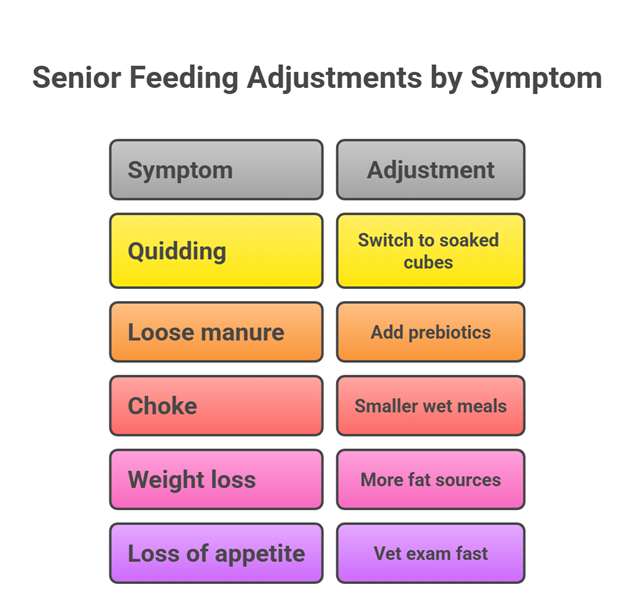
Below is a quick comparison of common senior feeding problems and the recommended response for each:
| Problem | Likely Cause | Feeding Adjustment | Vet Action |
| Loss of appetite | Pain, infection, or dental disease | Warm soaked mash with added flavor | Full health and dental exam |
| Quidding | Worn or missing molars | Replace hay with soaked cubes | Dental float every 6 months |
| Loose manure | Poor fiber fermentation | Add prebiotics and soaked beet pulp | Fecal test for parasites |
| Choke episodes | Eating too fast or dry feed | Small frequent wet meals | Esophageal exam if recurring |
| Rapid weight loss | Multiple causes possible | Increase fat and digestible fiber | Bloodwork and dental check |
Loss of Appetite
Loss of appetite in senior horses often signals dental pain, gastric ulcers, or systemic illness. Schedule a vet exam within 48 hours if your horse refuses feed for more than one day. Do not wait, because seniors lose condition quickly when intake drops below maintenance.
Try warming the feed to body temperature, adding a splash of unsweetened applesauce, or mixing in a teaspoon of crushed peppermint. These simple tricks can restart eating in many cases without the need for medication.
If appetite remains poor, request bloodwork to check kidney and liver function. Both organs decline with age and can quietly suppress hunger long before other symptoms appear.
Digestive Issues
Older horses commonly suffer from sluggish gut motility, gas, and impaction colic. The Equine Veterinary Journal reports that horses over 20 are roughly three times more likely to experience colic than horses aged 5 to 15.
Support digestion with daily prebiotics, plenty of soaked fiber, and a consistent feeding schedule. Avoid sudden diet changes, and never withhold forage for more than four hours during the day. Small steady meals beat big infrequent ones every time.
A daily probiotic with live yeast cultures such as Saccharomyces cerevisiae has been shown to improve fiber digestion in older horses by up to 12 percent. Choose products with guaranteed colony counts on the label.
Difficulty Chewing
Difficulty chewing is the single most common reason senior horses lose weight. Dental wear, missing molars, and tooth root abscesses all reduce chewing efficiency and nutrient extraction.
For horses with no teeth, replace all hay with soaked complete senior feed and forage cubes formed into a soft mash. The British Equine Veterinary Association recommends a soup like consistency for horses with severe dental loss. Have a vet float teeth at least once a year, or every six months for horses over 20.
Watch for quidding, the habit of dropping half chewed balls of hay from the mouth. Quidding is a clear sign that hay is no longer suitable and the diet must shift to soft alternatives immediately.
Soft feed for old horses also benefits horses recovering from oral surgery, tooth extractions, or jaw injuries. A vet can guide you on transition timing and texture during recovery to protect healing tissue while keeping nutrition steady.
Even horses without major dental loss benefit from softened feed in cold weather. Warm soaked mashes are easier to chew, encourage water intake, and provide a comforting routine that supports steady appetite during temperature swings. Many barn managers serve a daily warm mash through winter to keep older horses eating consistently.
Track manure quality every day as a window into gut health. Healthy senior manure forms moist balls that break apart slightly when they hit the ground. Loose, dry, or unevenly digested manure all signal problems that need feed adjustments or veterinary attention.
Behavioral cues also reveal feeding issues. A horse that pins its ears at meal time, walks away from familiar feed, or paws repeatedly while eating may be telling you something hurts. Pay attention to these small signs, since seniors rarely show pain dramatically until problems are advanced.
Foods to Avoid for Old Horses
Some feeds that work fine for younger horses become risky for seniors. Avoiding these protects against colic, laminitis, choke, and metabolic disease.
Steer clear of dry pelleted feeds offered without water, moldy or dusty hay, large grain meals, and high sugar treats. Each one stresses the aging digestive tract in a different way and can undo weeks of careful feeding in a single bad meal.
Sweet feed and molasses heavy mixes spike blood glucose and insulin, raising the risk of equine metabolic syndrome and laminitis in older horses. The University of Kentucky equine program recommends keeping nonstructural carbohydrates below 12 percent of total diet for seniors with insulin concerns or a history of laminitis.
Whole apples, carrots, and large hard treats can cause choke. Cut treats into thumb sized pieces or replace them with soft commercial senior treats designed for older horses. Even small treats add up, so limit total daily treats to about 1 percent of the diet.
Avoid feeding cold water immediately after a heavy meal, since it can slow digestion and contribute to colic. Offer water before feeding instead, or warm it gently in winter when intake naturally drops.
Finally, skip moldy hay at any cost. Even small amounts can cause severe colic, respiratory disease, or liver damage in an older horse with reduced detoxification capacity. Inspect every flake before feeding, and store hay in a dry, ventilated area off the ground.
Limit access to lush spring pasture for seniors with metabolic disease. Use a grazing muzzle, restricted turnout hours, or a dry lot during peak grass growth to control sugar intake. Slow gradual introduction to new pasture also reduces colic and laminitis risk for older horses returning to grass after winter.
Skip raw bran mashes too. The old tradition of weekly bran mashes was meant to clean the gut, but research from Kentucky Equine Research shows that sudden bran feeding actually disrupts gut bacteria and increases colic risk. Stick to consistent daily feeding instead.
Avoid feeding from the ground in dusty paddocks. Senior horses with poor dental seal swallow more dirt and sand when they eat off bare ground, which raises the risk of sand colic over time. Use rubber feed pans or low troughs in clean areas instead, and rinse them daily to prevent mold growth.
Horse Senior Feeding FAQs
What is the best type of feed for senior horses?
The best feed for senior horses is a commercial complete senior pellet combined with soaked forage and a fat supplement. Look for crude protein near 14 percent, fat above 6 percent, and added prebiotics. Pair it with soaked beet pulp or alfalfa cubes for digestible fiber, plus a small scoop of rice bran or ground flaxseed for omega 3 fatty acids.
How do you feed an old horse with no teeth?
Feed a toothless old horse with soaked complete senior feed and soaked forage cubes mixed into a soft mash with a soup like consistency. Replace all long stem hay. Offer four to six small meals per day, soaking each for 20 to 30 minutes before serving. Always confirm the dental issue with a vet first.
How can you help an old horse gain weight safely?
Help an old horse gain weight safely by adding fat and digestible fiber rather than grain. Begin with one cup of stabilized rice bran or one quarter cup of vegetable oil daily, increased gradually over two weeks. Pair this with a complete senior feed and free choice forage. Always rule out dental disease, parasites, and ulcers first.
What feeding schedule works best for aging horses?
The best schedule for aging horses is three to four small meals per day with continuous forage access between meals. Space main meals four to five hours apart and keep timing consistent. Sudden changes in schedule can trigger colic in seniors. Add a fifth evening meal if the horse struggles to maintain weight.
Do older horses need more water than younger horses?
Older horses do not always drink more than younger horses, but they need water more urgently because the thirst response weakens with age. A senior horse needs 8 to 12 gallons of clean water daily. Provide warm water in winter, add salt to feed, and check buckets twice a day to ensure steady hydration.
What are the signs of poor nutrition in senior horses?
Signs of poor nutrition include rapid weight loss, dull coat, muscle wasting along the topline, loose manure, low energy, and slow wound healing. Hoof quality often suffers too. If you notice any of these signs, schedule a veterinary exam, request bloodwork, and review the daily ration with an equine nutritionist.
Caring for an aging horse takes patience, observation, and a willingness to adjust the diet as needs change. Start with the principles in this guide, then track your horse’s body condition, manure, and energy weekly so you can fine tune the plan. Every senior horse responds slightly differently to feed changes, and what works for one may not suit another. Keep a simple feeding journal so you can spot trends early and act before small problems grow into serious ones.
Remember that senior nutrition is a moving target. The diet that worked at age 18 may need updating at 22, and again at 25. Plan a full nutrition review with your vet at least once a year, and any time you notice a sudden shift in weight, coat quality, energy, or appetite.
For the safest results, work with your veterinarian or a certified equine nutritionist to build a feeding plan tailored to your horse’s individual age, health, dental condition, and activity level. Their guidance will help you give your senior horse the comfort, nutrition, and quality of life it deserves in its later years.