Yes, horses can swim, using coordinated paddling movements while keeping their nostrils above the surface. Natural ability does not mean every horse is comfortable or medically suitable for swimming. This guide explains the movement, potential exercise benefits and practical limits, with safety and professional supervision at the center of any swimming plan.
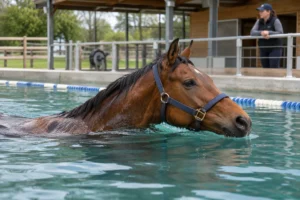
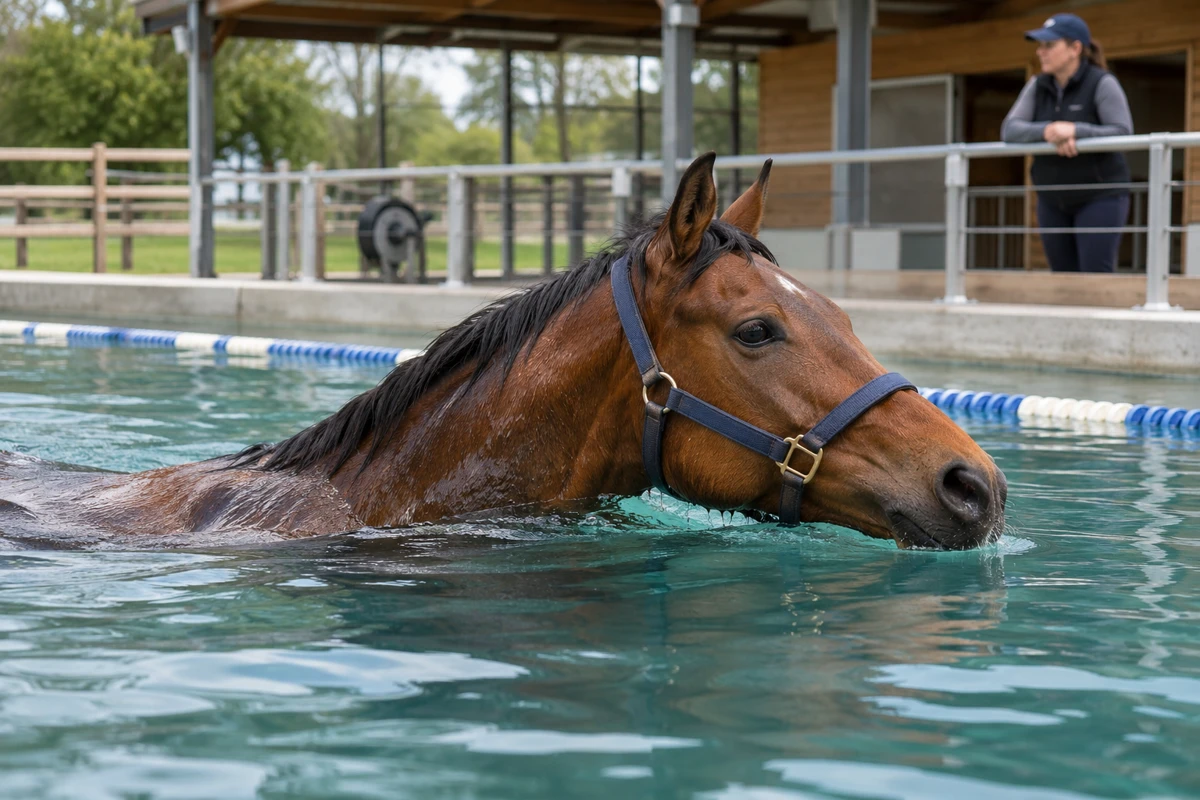
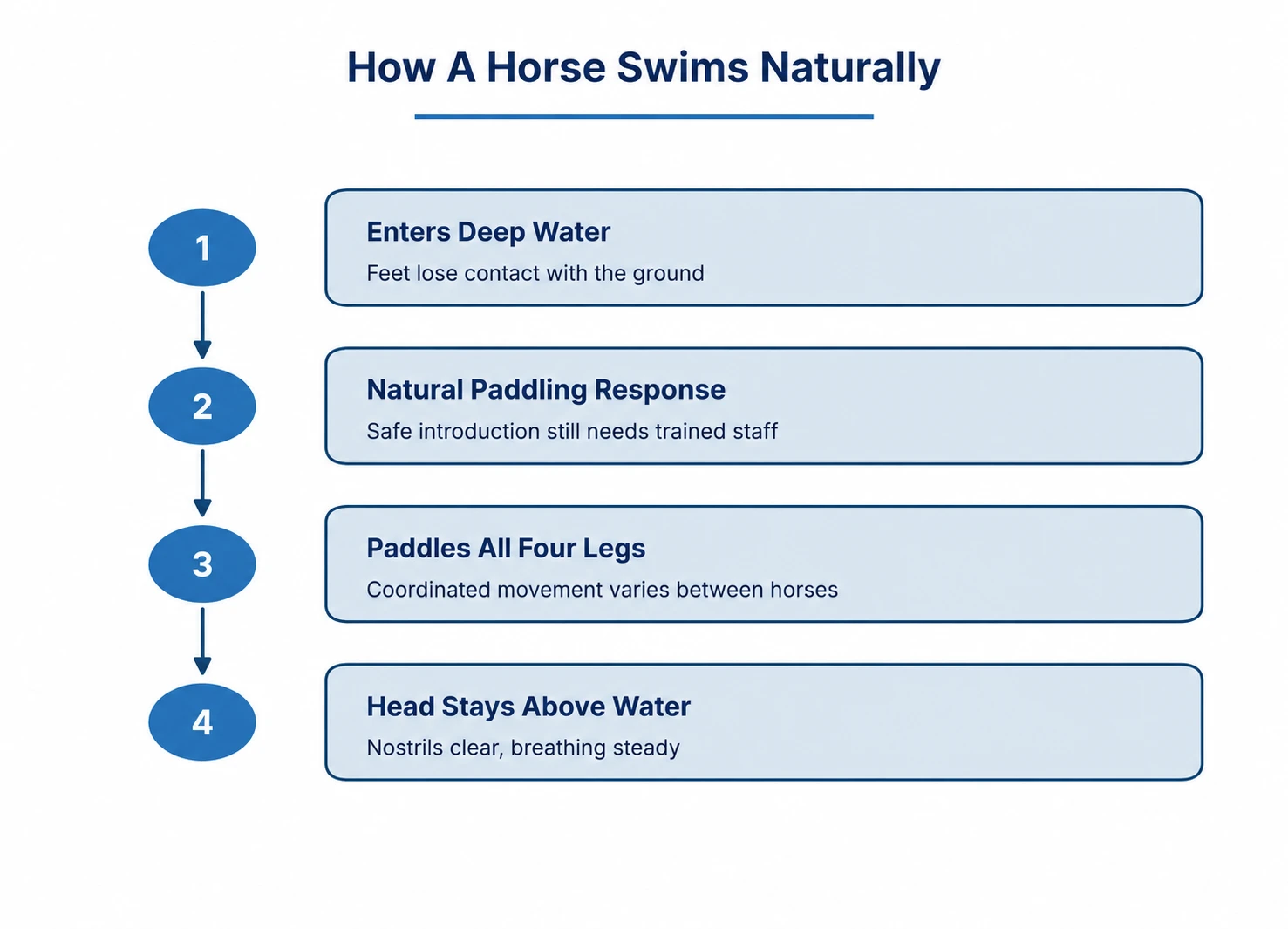
Swimming is an instinctive equine behaviour because a horse automatically paddles with all four legs once the water is too deep to stand in. The body stays submerged while the head remains above the surface, which lets the horse breathe, see, and move forward through open water with power.
Key Takeaways
- Many horses paddle instinctively, but suitability and confidence vary.
- Swimming technique is not identical in every horse.
- There is no universal safe swimming duration.
- Use trained staff and keep personnel out of the water.
How Do Horses Swim?
Horses swim through a coordinated paddling motion that drives all four limbs at once. When the water grows deep enough that the hooves lose contact with the bottom, the body shifts into a floating posture and the legs begin to cycle in a steady rhythm. The movement can look almost effortless from the bank, yet it demands real muscular strength, careful balance, and controlled breathing. Understanding how do horses swim helps you read your horse in the water and respond calmly to whatever it does.
The Natural Swimming Instinct
Many horses begin paddling instinctively when they lose contact with the bottom. However, coordination and confidence differ between individuals. A careful introduction by trained staff remains essential.
Think of it this way. Your horse does not learn a brand new skill the first time it enters deep water. It simply adapts a familiar pattern of leg movement to a setting where the usual footing has vanished beneath it, and the body takes over almost on its own.
The Swimming Gait and Leg Movement
Swimming movements do not follow one identical pattern in every horse. Research describes variation in limb coordination, so swimming should not simply be described as a trot performed underwater.
The limbs move against water resistance to propel the horse. Posture and movement should be monitored by trained staff; frantic or poorly coordinated paddling is a reason to stop and reassess.
How Horses Stay Afloat and Breathe
Water provides buoyant support, while paddling maintains forward movement and position. Air in the lungs contributes to buoyancy, but it does not make a horse incapable of drowning. The nostrils must remain clear of the water.
Keeping the nostrils above water is the key to safe, steady breathing. In deep water the body sits almost fully submerged while the muzzle stays clear of the surface, so the horse can draw breath, watch its surroundings, and stay alert all at the same time. This natural posture is exactly why calm, flat water is always safer than choppy waves.
What Swimming Looks Like From the Bank
From the bank, a swimming horse shows only its head, the top of its neck, and a smooth wake trailing behind. The powerful leg movement happens entirely out of sight below the surface, which is why the effort can look so deceptively gentle. In reality the horse is working hard with every stroke, and the calm appearance can tempt owners into letting a session run far too long.
Reading that hidden effort is part of good horsemanship. Watch the breathing, the set of the ears, and the pace of the paddling rather than simply enjoying the view. The surface tells you only part of the story, so let the clock and the horse's expression guide you instead.
Do All Horses Like Swimming?
Not all horses enjoy swimming, and not all are suitable for it. Confidence, health, coordination, experience and the environment all matter. A refusal to enter water should not be treated as proof of stubbornness or overcome by force.
Confidence and Temperament
A horse raised near water usually shows far more water confidence than one kept only in a barn or a dry paddock. Trainers who specialise in nervous horses often find that fear, rather than any lack of ability, is the real barrier at the water line. The encouraging news is that most reluctant horses can be taught to accept the water, and many eventually come to enjoy it once the fear fades.
Do not assume a hesitant horse will be safe once it enters deep water. Stop and seek help from an experienced professional rather than forcing it forward.
Signs Your Horse Is Comfortable in Water
A relaxed horse in the water keeps a soft eye, steady ears, and an even, unhurried stride. It breathes calmly and responds to gentle guidance rather than fighting the handler. These quiet signals tell you the horse feels safe and that you can slowly build on the session with confidence. Many horses will even show a little curiosity, dropping the nose toward the surface or stepping forward willingly, which is a strong sign the experience feels positive to them.
Warning signs look very different. A high head, flared nostrils, wide eyes, and frantic movement all mean the horse has tipped into stress. The moment you see them, ease back toward shallow footing and let the horse settle before you try anything more.
Are Some Breeds Better Swimmers Than Others?
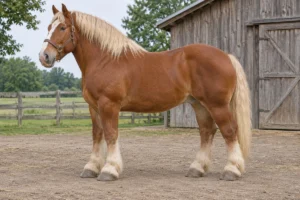
No single breed holds a monopoly on swimming, because the instinct sits in the species rather than the pedigree. That said, exposure and temperament vary, so a bold, well handled horse of any breed usually takes to water more readily than a sheltered or anxious one. Experience in varied environments matters far more than breeding when it comes to water confidence.
Some hardy pony and native types raised on open ground near coasts or wetlands do tend to meet water calmly, simply because they have seen it all their lives. The lesson for owners is clear. Early, positive exposure shapes a willing swimmer far more than any label on a passport ever could.
Building Water Confidence Gradually
A gradual introduction to water builds lasting confidence far more effectively than a rushed one. Hurrying a frightened horse can create a deep and stubborn aversion that takes months to undo, so calm, consistent, and predictable steps are essential. The sequence below keeps the whole process low in stress and high in positive experiences for your horse.
Steps to introduce a horse to water calmly
- Begin with calm handling and shallow water with verified firm, safe footing under professional guidance.
- Let the horse follow a calm, experienced companion into the shallows for quiet reassurance.
- Reward every forward step with your voice or a scratch so the water feels safe and familiar.
- Keep early confidence work shallow; let trained swimming staff decide whether and how to progress.
- Stop while the horse is still relaxed so that each visit ends on a clear positive note.
- Return to the water often, because short frequent visits build trust far faster than rare long ones.
How Long and How Far Can Horses Swim?
There is no universal safe swimming time for horses. Fitness, health, swimming technique, water conditions and the purpose of the session all affect workload. A qualified professional should set the duration, rests and progression for the individual horse.
How far a horse can swim is far harder to pin down than how long it can swim. A fit, confident horse can cover a meaningful distance in calm water, yet current, cold, and anxiety all shorten that range very quickly. In practice, distance matters much less than control, because a tired horse stranded in deep open water faces a genuine and immediate danger.
Do not use a fixed five- or ten-minute target as permission to keep a horse swimming. Closely supervised, individually planned sessions are more useful than general endurance claims. The table below summarizes how to approach different situations without prescribing an arbitrary time limit.
| Situation | Planning priority |
|---|---|
| First-time swimmer | Professional assessment and gradual introduction |
| Conditioning | Individual workload, rest and recovery monitoring |
| Rehabilitation | Veterinarian-prescribed exercise plan |
| Distress or abnormal breathing | End the session and seek veterinary assessment |
Pattern and recovery matter far more than raw endurance ever will. Many conditioning programmes use several short swims with full rest between each one rather than a single long effort, which keeps the horse working hard while protecting it from the sudden exhaustion that leads to trouble in the water. A fit horse may repeat a handful of brief swims across one session, but each burst stays short and every rest is honoured in full before the next one begins.
Why Horses Tire So Quickly in Water
Water resistance makes swimming demanding even when movement looks slow. Monitor breathing, coordination, behavior and recovery as well as elapsed time. A horse’s willingness to continue is not a reliable measure of safe workload.
How Far Can a Horse Realistically Swim?
No distance is automatically safe. Currents, temperature, panic and access to an exit can turn even a short crossing into an emergency. Do not test a horse’s maximum swimming distance.
Avoid unfamiliar open-water crossings. A purpose-built facility with trained staff offers more control than estimating whether a horse can reach a distant bank.
Is Swimming Good Exercise for Horses?
Swimming is excellent low impact exercise for many horses because buoyancy removes most of the load from the limbs. The water supports the body weight, so the horse can work the heart and muscles hard without the pounding of hoof against firm ground. This unusual blend of serious effort and physical relief is exactly what makes swimming so valuable for both building fitness and aiding recovery, and it answers why so many owners ask whether swimming is good for horses.
Swimming for Fitness and Conditioning
Swimming may support cardiovascular conditioning without hoof impact. The specific muscular demands differ from land exercise, so it should complement an appropriate overall program rather than be assumed to strengthen every part of the back or limbs.
Water resistance is the natural drag a horse pushes against while swimming, and it is useful because it raises the effort of every stride without adding impact. This lets a horse develop real strength and aerobic capacity while the limbs and joints stay protected from concussion.
The British Equestrian swimming guide describes potential benefits for fitness and range of movement, while emphasizing individual suitability, trained personnel and monitoring.
Swimming offers several clear advantages when it is used wisely and in the right cases. The main benefits that draw owners and veterinary teams to the water include the following.
- Builds heart and lung fitness with almost no joint impact.
- Provides muscular work against water resistance.
- May support selected rehabilitation plans when prescribed by a veterinarian.
- Helps manage weight in horses that struggle with ground exercise.
- Adds variety that many horses find mentally refreshing.
Swimming for Rehabilitation and Recovery
Swimming may help selected rehabilitation cases, but flotation does not remove all strain from injured tissues. Some back, pelvic or other conditions can make swimming unsuitable. A veterinarian should decide whether swimming or another exercise is appropriate.
The two methods are not identical, though. A swimming pool offers complete flotation and a harder cardiovascular workout, while the underwater treadmill keeps the hooves on a surface and allows precise control of depth and speed. The right choice depends entirely on the injury and the stage of healing.
Swimming Compared to Other Equine Exercise
Swimming fills a gap that ground work cannot, but it is a partner to other exercise rather than a replacement. Flat work, hill work, and controlled trotting all build the specific strength and coordination a horse needs for its job, while swimming adds fitness without the pounding. The smartest programmes blend the two so the horse gains stamina and stays sound. See our guide to building horse fitness for related advice.
There is a limit worth remembering, though. Because swimming does not load the limbs, it does little to prepare bones and tendons for the stresses of fast work on firm ground. A horse returning to competition still needs measured land work to ready those tissues for what lies ahead.
When Swimming May Not Be Suitable
Swimming is not suitable for every horse or injury. Breathing, back and pelvic problems, poor swimming technique and anxiety may affect suitability. Veterinary assessment should precede rehabilitation swimming.
Open wounds and skin disease also require assessment because immersion can expose tissue to infection and interfere with healing. Never swim a sedated horse.
Can Horses Swim in the Ocean, Rivers and Lakes?
Horses can swim in the ocean, in rivers, and in lakes, and many of them clearly relish open water swimming in a natural setting. Each type of water brings its own rewards along with its own hazards, so the location shapes how safe a given swim really turns out to be. Calm, clean, and familiar water is always the safest possible starting point for any horse new to the experience. A gentle lake on a still day asks far less of a horse than a tidal beach or a moving river, so it makes sense to begin where the conditions are kindest.
Freshwater and Saltwater Differences
Saltwater is more buoyant than freshwater, but neither is automatically safe. Salt, pollution, microbes and algae can affect skin or health. Do not use natural water as a treatment for skin irritation; rinse the horse appropriately afterward.
Here is the key thing about natural water. You cannot see the bottom or judge the current the way you can in a purpose built pool, so hidden drop offs, soft mud, tangled weed, and submerged debris all raise the risk in ways that are easy to underestimate from the bank.
Choosing a Safe Natural Location
A safe natural location has a gentle slope, firm footing, and a slow, predictable flow. Avoid strong currents, steep crumbling banks, and crowded swimming areas where other people, boats, or dogs could suddenly startle the horse. Always scout the entry and exit points carefully before the horse ever sets a hoof into the water.
Have an experienced professional assess access, water quality, footing and exit routes. Do not enter unfamiliar water yourself to test its safety.
Natural water hides several hazards that a quick glance from the bank will never reveal. Keep this short list in mind every time you scout a new spot.
- Strong or hidden currents that can sweep a tired horse off line.
- Sudden drop offs where the footing vanishes without warning.
- Soft mud or deep silt that traps and panics the legs.
- Submerged branches, wire, or litter that can cut or snag.
- Cold water that saps strength and shortens a safe swim quickly.
Horse Swimming Safety: What Owners Should Know
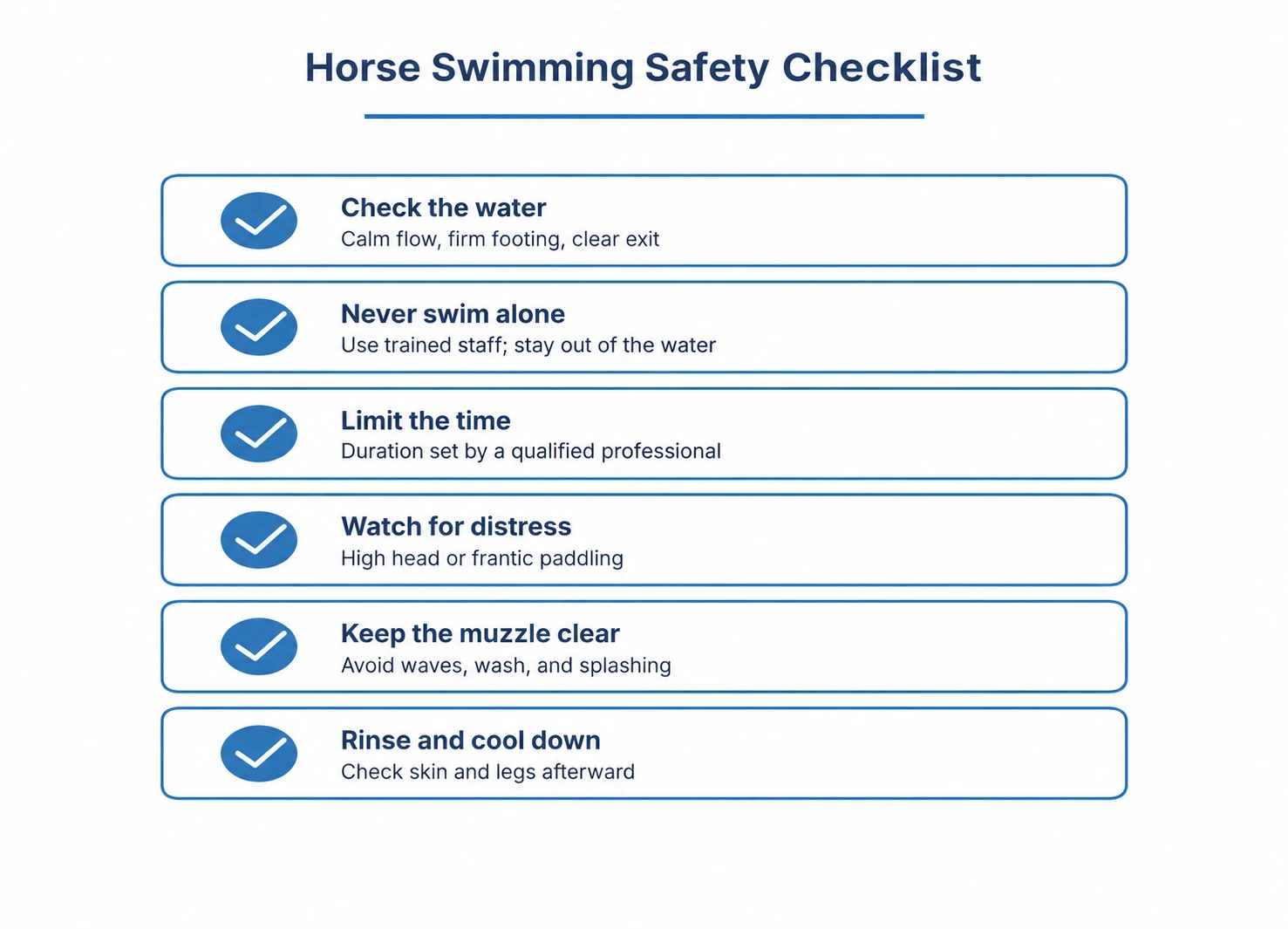
Good preparation and supervision reduce risk but cannot eliminate it. Choose a suitable horse, trained staff, safe facilities and an emergency plan before swimming begins.
Before Swimming: Suitability, Supervision and Location
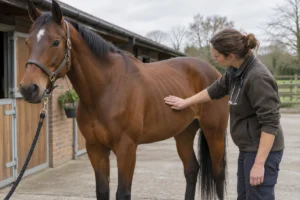
Check medical suitability and use trained staff with an additional person available nearby. Pool personnel should remain out of the water and follow the facility’s handling and emergency procedures.
Equine swimming pools offer the most controlled setting of all, because the depth, temperature, and cleanliness are all carefully managed. In natural water you take on that responsibility yourself, so check the footing, the current, and the exit route in person before you begin rather than trusting how the water looks from a distance.
During Swimming: Fatigue, Distress and Breathing Difficulties
Watch the horse constantly for the very first signs of tiredness or fear throughout the swim. Flared nostrils, frantic paddling, a rigidly high head, or wide rolling eyes all signal real distress. If any of them appear, guide the horse calmly toward shallow footing straight away instead of pushing for a few more minutes in the water.
If the horse coughs, struggles to keep its nostrils clear or develops abnormal breathing, staff should end the swim promptly and arrange veterinary assessment. Suspected inhalation of water requires urgent veterinary advice, even if the horse initially appears to recover.
Simple Preparation That Keeps Swims Safe
Use a professionally assessed location, appropriate handling equipment and a clear exit. Avoid loose equipment that could entangle the horse or a handler, and follow the facility’s procedures.
Match the plan to the individual horse as well. A first timer needs shorter, shallower sessions and a steady companion, while a seasoned swimmer can handle a little more. The goal is always the same, which is to end every swim with a horse that is calm, sound, and happy to return next time.
After Swimming: Recovery and Observation
Allow a monitored cooldown, rinse when appropriate and inspect skin and legs. Offer drinking water. Coughing, unusual fatigue, fever or difficult breathing after a swim warrants prompt veterinary contact. Dry and manage the horse according to the weather without overheating it. See our guide to early signs of illness in horses for related advice.
Think of recovery as a real part of the exercise, never an afterthought to rush through. A calm, unhurried cooldown helps the muscles relax and release tension, and it also gives you a quiet window to spot any small problem early, long before it has a chance to turn into something serious.
Horse Swimming FAQs
How Fast Can Horses Swim?
Most horses swim at a slow and steady pace rather than a quick one. How fast horses can swim depends on fitness and the water, but swimming is far slower than any land gait because the body must push against constant resistance with every stroke. A relaxed, controlled speed is always safer than a rushed dash across deep water, and it lets the horse hold its breathing and balance throughout.
Do Horses Need to Be Taught to Swim?
Many horses paddle instinctively, but safe introduction, confidence and coordinated movement still require careful supervision. Do not use instinct as a reason to put an inexperienced horse into deep water.
Can Horses Breathe Underwater?
No, horses cannot breathe underwater, and they depend entirely on keeping the muzzle above the surface at all times. Their large lungs hold air and help with flotation, yet the airway must stay clear for the horse to breathe. This is precisely why calm, flat water and close supervision matter so much, and why rough, choppy conditions are never worth the risk during any swim. Water drawn into the airway can lead to serious complications, so protecting the nose and mouth is the single highest priority from the first stroke to the last.
Can Horses Swim With a Saddle On?
A saddle may restrict movement or create entanglement risks. Follow a qualified facility’s equipment rules; do not assume that tack used for riding is suitable for swimming.
Can Horses Swim With a Rider on Their Back?
Some organized activities involve riders, but this adds risks to both horse and person. It is not a suitable do-it-yourself exercise. Do not improvise dismounting beside a swimming horse’s moving legs; follow trained professionals and site-specific safety procedures.
Is Swimming Good for Horses Recovering From Injury?
Sometimes, depending on the injury and the horse. Swimming and underwater treadmill work are different exercises with different loading and movement patterns. Only a veterinarian-led rehabilitation plan can determine which is appropriate.
Horses can swim, but ability alone does not establish safety. Prioritize the individual horse’s health, a suitable facility, trained supervision and close monitoring. A veterinarian or qualified equine rehabilitation professional can help determine whether swimming belongs in your horse’s program.