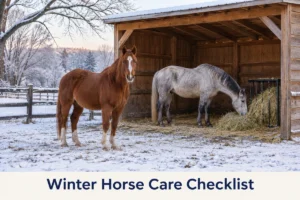
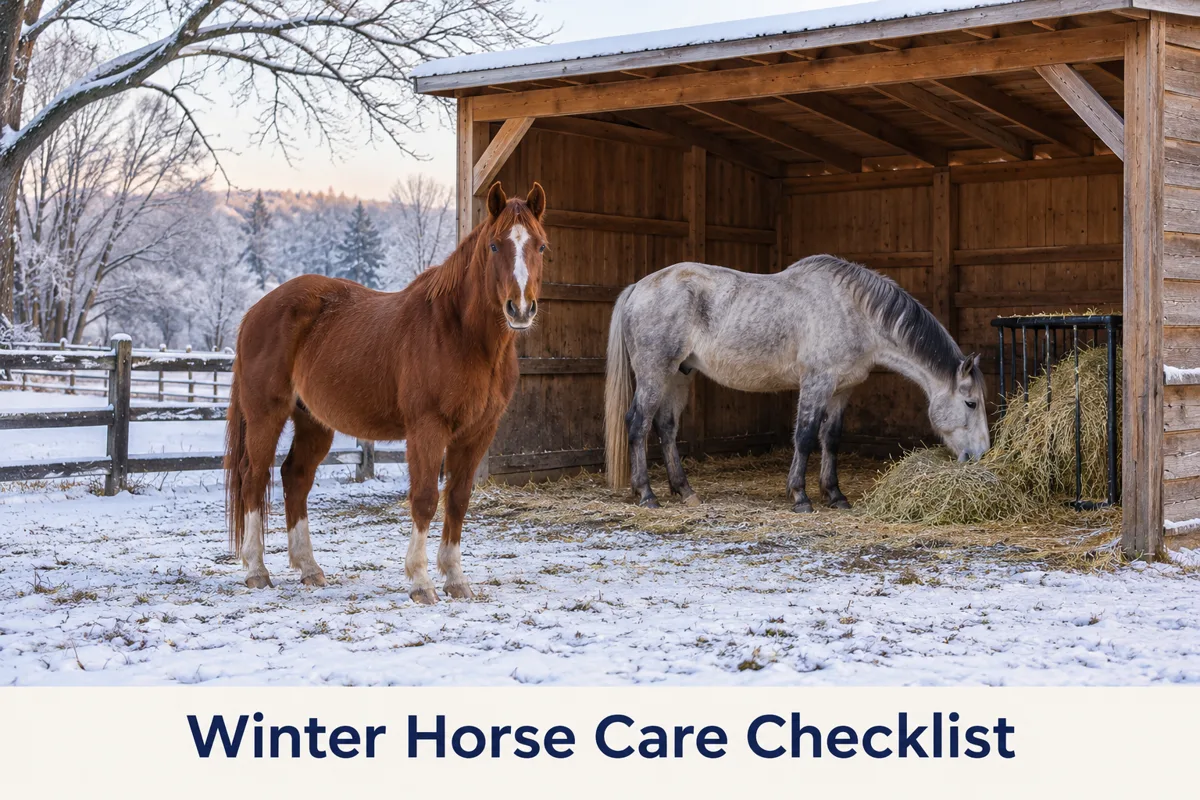
Winter horse care comes down to six daily jobs: keeping water drinkable, adjusting hay, keeping shelter dry, deciding on blankets, managing turnout and hooves, and preparing for storms. This guide gives you a clear checklist for each one. Use it to reduce avoidable risks and spot changes early.
Winter horse care is the daily routine of checking water, forage, shelter, coat, footing and weather because cold air raises your horse's energy needs while frozen troughs, wet coats and icy ground make those needs harder to meet. Small daily checks help detect problems early.
Key Takeaways
- Check and thaw water every day, because horses drink less when water is icy cold.
- Feed extra hay as the weather drops, and judge weight by hand, not by eye.
- Provide a dry, wind protected place where every horse can get under cover.
- Blanket based on coat, clip, condition and wet weather, not on the calendar.
- Pick out hooves, test footing and call your vet early when you see colic, shivering or lameness.
Check Drinking Water in Freezing Weather
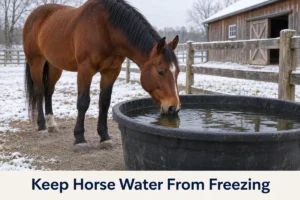
Fresh drinking water is the first thing to check every winter morning. Horses drink less when water is icy cold, and reduced intake raises the risk of impaction colic, a blockage in the intestine.
References such as the Merck Veterinary Manual list reduced water intake in cold weather as a common colic risk factor. Cold weather hydration problems start quietly, so build a simple routine now.
Good winter horse care starts with water, because every other task depends on it. A horse that drinks well digests hay well, stays warmer and keeps its gut moving. Check water before you feed, and check it again at night.
For equipment and backup options, see how to keep a horse water trough from freezing.
Make Sure the Trough or Bucket Is Usable
Break ice at least twice a day, and more often during a hard freeze. Scoop out slush and loose chunks so your horse finds open, clean water. Many extension services note that horses tend to drink more when water sits above freezing, roughly 45 to 65 degrees Fahrenheit.
A heated trough or bucket solves most of this problem. Choose equipment rated for livestock, and inspect every cord for chewing, cracks and exposed wiring. A damaged cord can shock your horse or start a barn fire, so replace it at once.
Placement matters too. Set troughs away from wind, off the ice and out of low spots where meltwater pools. Clean them weekly, because algae and old feed turn water sour and discourage drinking. Fresh drinking water that looks and smells clean gets drunk, while stale water does not.
Watch for Changes in How Much Your Horse Drinks
An adult horse on dry winter feed may need around 10 to 12 gallons of water daily, with substantial individual variation. Measure intake where practical and provide more than the expected requirement rather than limiting access.
Also watch for dry, tacky gums, dull eyes and a skin pinch over the shoulder that is slow to flatten. These signs are not perfect, especially in thin or older horses, so call your vet if your horse stops drinking.
If your horse drinks less, try these steps to support cold weather hydration:
- Warm the water slightly.
- Soak hay to add moisture.
- Offer loose salt, but never as a replacement for water.
- Ask your vet before you add electrolytes.
Keep a Backup for Frozen Troughs and Power Outages
Plan for the day your heater fails or the power goes out. A backup plan keeps your horse from going hours without water.
- Keep two or three spare rubber buckets that you can flex to release ice.
- Store filled water jugs in a heated space so they stay liquid.
- Drain and coil hoses after each use, because a frozen hose cannot fill a tank.
- Know your closest thaw spot, such as a heated tap or a neighbor with working power.
- Keep a headlamp and spare batteries where you fill water at night.
If you cannot guarantee a heater, plan to fill water by hand several times a day.
Test your backup before you need it. Fill a bucket from your thaw spot and time a full round for every horse. If it takes more than 30 minutes, ask a neighbor or helper to join your plan.
Adjust Hay and Track Body Condition
Hay is your horse's furnace. When your horse digests fiber, bacteria in the hindgut, which includes the cecum and colon, ferment it and release heat. That is why forage intake matters more than grain when the temperature drops.
The National Research Council's Nutrient Requirements of Horses reports that energy needs rise once temperatures fall below a horse's lower critical temperature, the point where the horse must burn extra energy to stay warm. Cited guidelines place that point for a dry horse with a full winter coat at roughly 5 to 20 degrees Fahrenheit, and much higher when the coat is wet.
In practice, your horse's feed needs depend on the coat, the weather and the work it does. Watch each horse, not only the thermometer.
Review the Hay Supply as Winter Grazing Declines
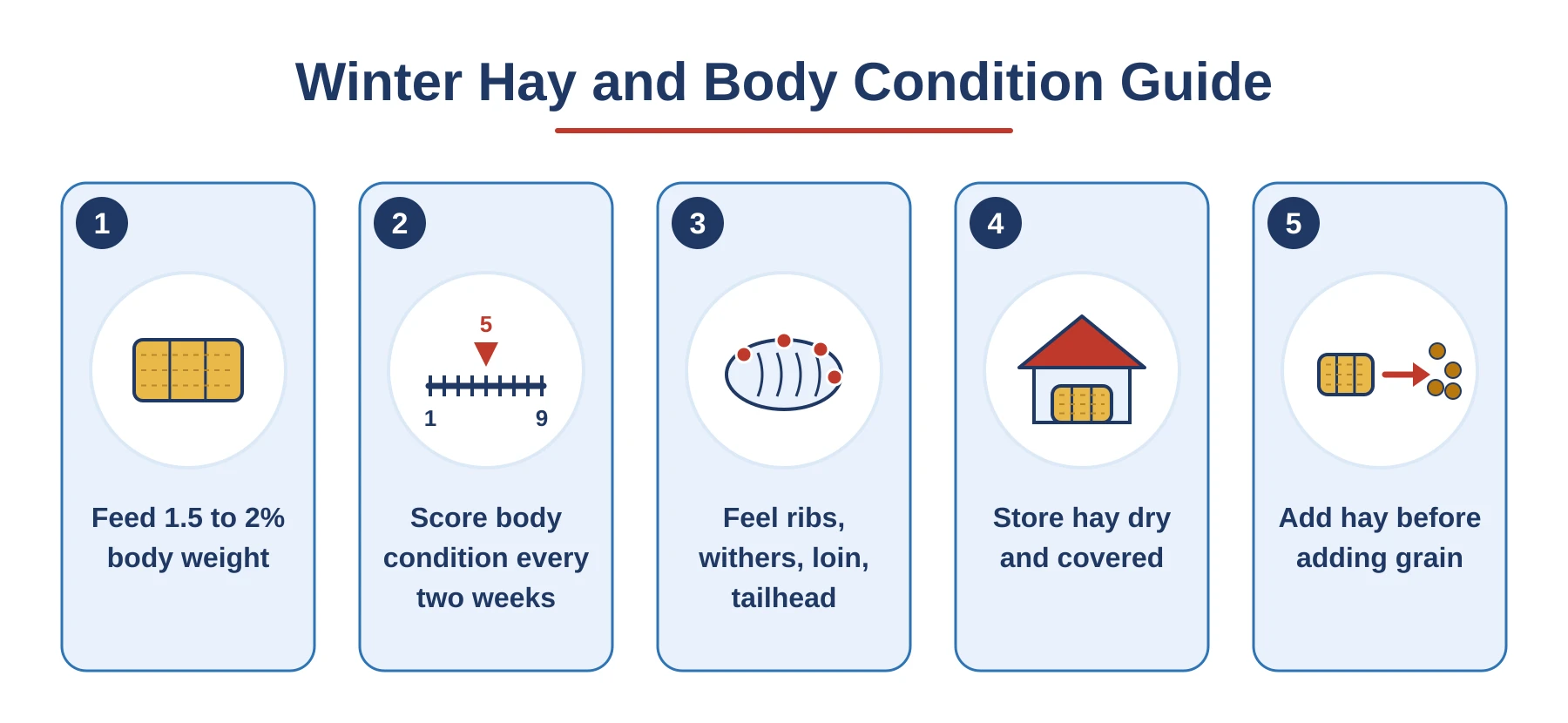
Most adult horses eat about 1.5 to 2 percent of their body weight in forage each day. For a 1,000 pound horse, that is roughly 15 to 20 pounds of hay. Weigh a few flakes so you know what your horse really eats. The University of Minnesota winter-care guidance explains how water, forage and body condition work together.
Now count your supply. Multiply daily hay by the number of horses and the days until spring grass, then add a margin for storms. In a hard cold snap, many owners add extra hay before grain. Ask your vet or a certified equine nutritionist before you change the ration of any horse with health concerns.
Protect and judge your hay with these steps:
- Store bales off the ground, under cover, with air flowing around them.
- Reject musty or dusty hay, because mold can cause respiratory disease and colic.
- Choose clean hay suited to the horse’s needs; use a forage analysis rather than color alone to assess nutrition.
- Introduce a new load gradually over several days, and request a forage analysis when possible.
- Treat dormant or frosted pasture as exercise, not a meal, and ask your vet before turning out sensitive horses on it.
Feel for Weight Changes Under the Winter Coat
A body condition score is a rating from 1 to 9 that describes fat cover over your horse's ribs, withers, loin, tailhead, neck and shoulder because a thick winter coat hides weight loss that your eyes cannot see, while your hands can feel it.
The Henneke body condition scoring system, developed at Texas A&M University, is the standard tool. Use your hands, not your eyes. Press flat fingers along the ribs, then check the withers, loin and tailhead. A score of 5 is moderate and suits most horses.
Score your horse every two weeks, not once a season. Write down each result, and take dated photos from the side and rear every month, so you spot a slow slide early. Use these cues as a checklist:
- Ribs: easy to feel, not easy to see.
- Withers and shoulder: smooth, not bony.
- Tailhead: padded, not sharp.
- Neck: blends into the shoulder.
- Crest or tailhead: soft fat deposits suggest weight gain.
Make a Plan for Horses That Lose Weight Easily
Seniors, hard keepers and low ranking herd members lose weight fastest in winter. Feed them separately so a dominant horse cannot steal their hay, and put out more piles than you have horses.
Make feed changes slowly over 7 to 10 days to protect gut health. If a horse loses weight despite plenty of hay, ask your vet to check teeth, parasites and hormonal conditions before you add more feed.
Give older or hard keeping horses a chewable option, such as soaked hay pellets or a forage based senior feed, if your vet agrees. Warm mashes encourage drinking and are easy to chew. Avoid sudden grain increases, because large starch loads raise the risk of colic and laminitis.
Keep Shelter Dry and Accessible
Wind and wet chill a horse faster than cold air alone, because a soaked coat loses its insulation. A run in shelter, a three sided building your horse can enter at will, and a windbreak, a solid barrier that blocks wind, often protect better than a closed stall.
Equine Guelph, the horse care education centre at the University of Guelph, recommends wind protection and dry footing as the basics of winter housing. Start by checking the shelter itself.
Check the shelter at least once a month in winter and after every major storm.
Check Where the Wind and Rain Enter
Stand inside your shelter during the next storm and note every leak, draft and puddle. Face open sides away from the prevailing wind, and fix gaps that let rain blow onto resting horses.
They seal the barn tight. Closed, stuffy buildings trap ammonia and moisture, which irritate the lungs. Keep ridge or upper vents open for fresh air, even in the cold.
Use your nose as a test. If you smell strong ammonia when you walk into the barn, or see condensation on the walls, air is not moving enough. Open vents, clean stalls more often and keep hay dust down.
Check That Every Horse Can Get Under Cover
A shelter only works if every horse can use it. Dominant horses often block doorways and push lower ranking horses back into the weather.
Allow roughly 12 by 12 feet per horse as a starting point, and use wide or multiple entrances. Watch the herd at feeding time for any horse that stays outside.
Place hay and water in more than one spot, so a bossy horse cannot guard everything at once. Remove sharp corners, loose boards and protruding nails, because horses in tight spaces can kick and scrape. If one horse keeps getting chased out, consider a separate shelter for that animal.
Keep the Resting Area Dry
Dry bedding gives your horse a warm, comfortable place to rest and protects hooves and skin. Pick out wet spots daily and add fresh shavings or straw as needed. Straw, shavings and pelleted bedding all work if they stay dry, so choose the one that suits your horse's lungs and your budget, and avoid dusty products.
Outside, fix mud at gates and under shelters with gravel, stall mats or coarse sand. For drainage options, see our horse paddock mud management guide. Mud contributes to skin infections such as scratches and makes footing unsafe. Good drainage matters more than any amount of bedding, so direct roof runoff away from resting and feeding areas.
A dry horse standing in wind keeps more heat than a damp horse standing in the same wind. Dry bedding, a windbreak and a run in shelter do most of the work together, and a blanket then fills only the gaps.
Decide Whether Your Horse Needs a Blanket
Many healthy horses with a full winter coat, good body condition and access to shelter do not need a blanket. The right choice depends on the horse, not the calendar. This section shows how to prepare your horse for winter with the right layers, if any.
A turnout blanket is a waterproof, breathable cover worn outdoors because it keeps rain and snow off your horse's skin and protects the loft of the winter coat, the fluffed hair that traps warm air close to the body, when wind and wet weather arrive.
Blankets have downsides. They hide body condition, they can cause rubs and sweating, and they cannot replace hay, water and shelter. Think of a blanket as a tool for specific situations, not a default setting.
Start With the Horse's Coat, Clip and Body Condition
Begin with three questions. Does your horse have a full coat? Is it clipped? Is its body condition healthy? Use the table as a starting point, then adjust for your own horse.
A winter coat grows in response to shorter days, not only cold, so most horses carry one by December. Clipping removes that natural insulation. Clip only horses that work hard enough to sweat under a full coat, and plan to blanket every clipped horse from the first cold day.
| Horse situation | Blanket needed? | What to do |
|---|---|---|
| Healthy horse, full coat, shelter available | Usually not | Skip the blanket and monitor body condition |
| Clipped horse | Yes | Match blanket weight to temperature and wind |
| Senior, thin or ill horse | Often | Blanket earlier and add hay, with your vet's input |
| Cold rain or wind, no shelter | Often | Use a waterproof turnout blanket with enough fill |
| Warm spell or sweating horse | No | Remove the blanket and dry the coat |
| Young or underweight horse | Often | Blanket and track weight every two weeks |
Check the Forecast for Wind and Wet Weather
They blanket by the calendar, not the forecast. Check the forecast each evening for wind, rain and sharp temperature swings. Wet wind is the real problem, because it flattens the coat and strips away heat.
Blanket fill is measured in grams of insulation. Typically, light blankets have little or none, medium blankets have about 150 to 250 grams, and heavy blankets have about 300 grams or more. Choose the lightest option that keeps your horse comfortable.
Change the blanket when the weather changes. A heavy blanket on a mild day causes sweating, which leads to chilling later. These winter horse care tips apply all season, so keep backups ready:
- At least one spare blanket for each horse that wears one.
- A dry spot indoors to dry wet blankets.
- A quick check of seams and buckles before each reuse.
- A repair shop visit for tears before wet weather returns.
Check Under the Blanket During Daily Rounds
Unbuckle the blanket every day and look underneath. Feel the shoulders, chest and flank for sweat or damp patches, and look for rubbed hair, sores and weight loss.
A good fit lies flat, covers the withers without pressure and lets your horse move freely. Replace a wet blanket with a dry spare, because a soaked blanket chills your horse instead of warming it.
Check these fit points every time you buckle up:
- The blanket sits flat across the withers without pinching.
- The chest closure leaves about two fingers of space.
- Adjust leg straps according to the blanket manufacturer’s guidance so they do not rub, hang dangerously low or catch a hoof.
- The blanket fits the horse’s body length and permits free movement without excessive hanging fabric.
Manage Winter Turnout and Check Hooves
Turnout keeps your horse moving, which supports circulation, digestion and mood, so keep it going whenever the footing is safe. Winter turnout needs a little more planning than summer turnout, starting with the route your horse walks.
Even a short daily turnout helps. A horse that stays in all day needs more exercise and mental stimulation, so use slow feeders, hay nets and a nearby companion to reduce boredom.
Walk the Route From the Gate to Water and Hay
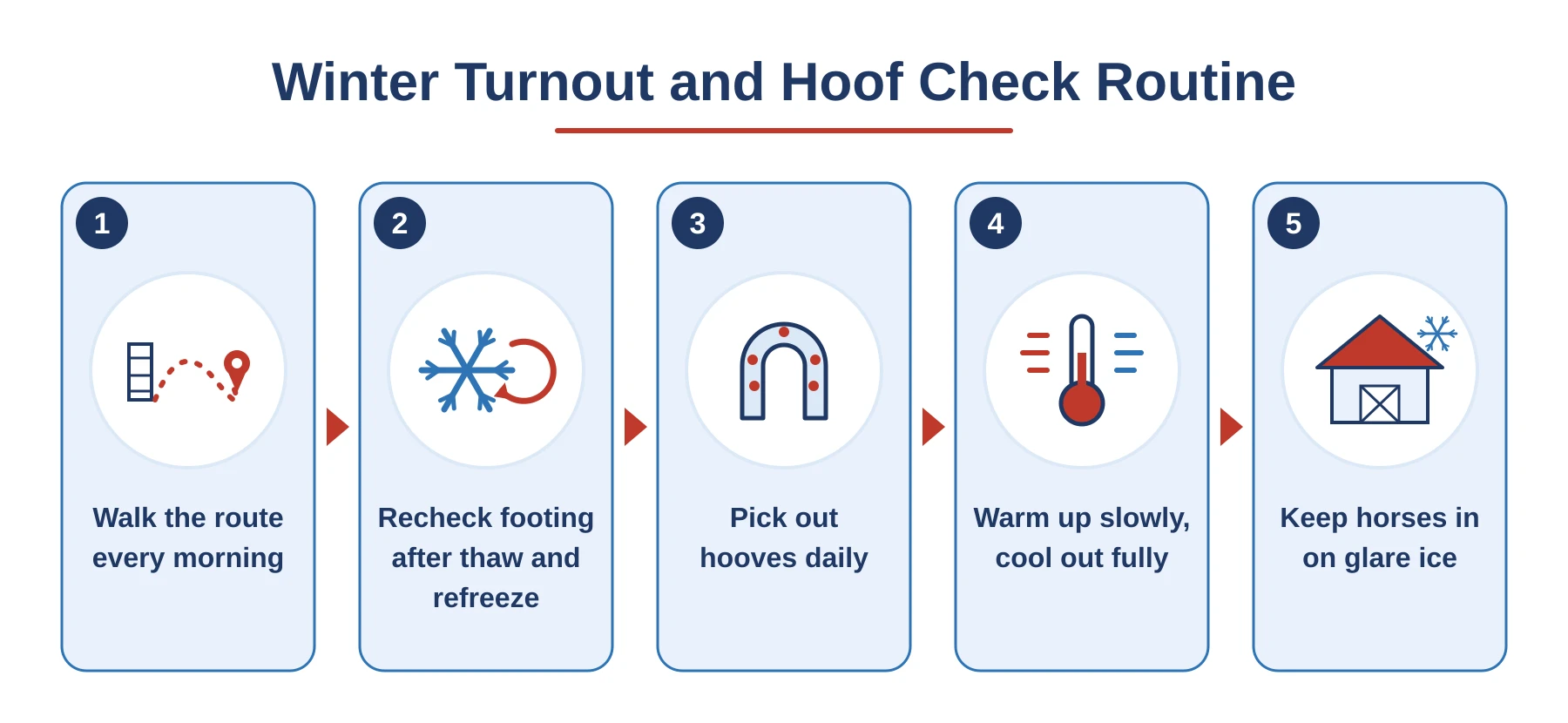
Walk the path yourself every morning. Look for icy patches, frozen ruts, deep drifts and frozen latches between the gate, the water and the hay.
Spread sand or wood shavings on slick spots. Remember that snow hides holes, and deep drifts can bury low fence wires and weaken electric fencing.
Keep gates, latches and feeders clear of ice with a stiff brush. Keep the route wide enough for horses to pass each other safely. Narrow, icy lanes cause slips, slams and kicks, especially when hungry horses hurry toward hay.
Recheck Footing After a Thaw and Refreeze
Footing is most dangerous after a thaw and a refreeze. Wet ground turns into rock hard ruts and sheets of ice, often hidden under a thin layer of water or snow.
They check footing only once. Check again at midday and in the evening, not only in the morning. If you find glare ice, keep your horse in or limit turnout to a small, safe paddock until conditions improve.
Icy footing often looks harmless from the gate, so test it on foot. Watch your horse's movement on the first day of slick conditions. Short, careful steps, a stiff back or slipping hind feet all tell you the ground is too slippery.
Pick Out Hooves and Look for Packed Snow
Daily hoof checks matter more in winter. Snow can pack into the sole and form ice balls, which lift your horse onto uneven stilts and strain tendons and joints.
Pick out each hoof every day with a sturdy hoof pick, and look for these problems:
- Packed snow or ice balls in the sole.
- Heat or a strong pulse near the pastern.
- Cracks, chips or loose shoes.
- Bruises, or thrush, a foul smelling infection of the frog.
- Stones or frozen manure wedged beside the frog.
If a hoof is hot, tender or lame, do not wait for it to pass. Contact your farrier or vet, because winter abscesses often start with small changes in how your horse moves. Hoof growth slows in cold weather but does not stop, so keep your farrier on schedule and ask about pads or traction studs.
Plan Exercise Around Safe Footing
See our winter riding guide for more on planning safe cold-weather exercise.
Exercise only on footing you trust. Cold muscles and tendons are less forgiving, so warm up for longer than you would in summer and avoid fast work on ice, frozen ruts or deep snow.
A cooling out routine matters as much as the warm up. Walk until your horse is dry and breathing normally, then blanket if needed. If you cannot ride safely, add hand walking or extra turnout.
Warm up and cool down also protect your horse's lungs and tendons. Cold, dry air irritates the airway during hard work, so keep the pace slower for the first 10 minutes. After work, rub damp spots with a towel or use a cooler, so your horse does not chill.
Prepare for Storms and Know When to Call the Vet
Caring for horses during a winter storm is mostly preparation. Get ready a full day before the storm arrives, check your horses often during it, and inspect everything again afterward. Wind chill, drifting snow and power cuts make routine tasks harder, which is why a written plan helps.
Write a one page storm plan and keep a copy in the barn. Include contact numbers, feeding instructions and the location of water and power shutoffs, so anyone can help if you cannot.
Set Up Before the Storm Arrives
Use this numbered checklist the day before a storm.
- Fill every tank and spare bucket, and confirm that heaters work.
- Move at least three days of hay under cover.
- Check the shelter, fences and any tree limbs or power lines nearby.
- Charge your phone, stock flashlights and batteries, and know how to run a generator safely outdoors.
- Attach your phone number to each horse's halter or keep recent photos for identification.
- Save your vet's and farrier's numbers and clear the path for your trailer.
- Tell a neighbor or friend your plan and when you will check in.
Every task you finish before the storm is one less task in the dark and the wind.
If the power fails, plan for water first. Allow roughly 10 to 12 gallons per adult horse per day as a starting reserve, with extra capacity for larger horses, waste and individual needs. Store clean, food-safe containers where they will not freeze.
Repeat the Checks After the Weather Clears
Walk the property before you let any horse out. Look for downed power lines, broken fence, fallen limbs and snow loaded roofs. Report downed lines to the utility company and keep horses away.
Then repeat the basic checks: water, hay, shelter, blankets, footing and hooves. Check each horse's legs and body for cuts, swelling and signs of stress. Storms are hard on horses, and small injuries are easy to miss.
Give horses time to settle. Reintroduce turnout slowly, because a stall bound or storm stressed horse can bolt or slip. Offer hay first, check manure output and note any horse that seems off. Stress and changed routines raise colic risk after storms.
Know the Signs That Need a Vet Call
Learn your horse's normal vital signs so you can spot trouble. A resting adult horse typically has a temperature of 99 to 101.5 degrees Fahrenheit, a pulse of 28 to 44 beats per minute, and 8 to 16 breaths per minute.
Call your vet promptly if you see any of these signs:
- Colic signs, such as pawing, rolling, looking at the flank or passing no manure.
- Choke signs, such as feed or saliva at the nostrils, repeated coughing or a stretched neck.
- Shivering that continues after your horse is dry and sheltered.
- Refusing food or water, or unusual dullness.
- Lameness, a hot hoof or a strong pulse at the pastern.
Keep a simple log of temperature, water intake and body condition. When you call, tell your vet what you see, when it started and what you have done. This guide cannot diagnose a problem, so when in doubt, call early, because most cold weather emergencies are easier to treat when caught fast.
Winter Horse Care FAQs
How Do I Know If My Horse Is Too Cold?
Shivering can indicate cold stress, especially when it persists. Posture and behavior changes may also warrant attention, but cold ears or a cold nose are unreliable measures. Check whether the body and coat are dry, assess shelter and body condition, and call your vet for persistent shivering or illness signs.
Those areas should feel warm and dry. If your horse is cold, move it to shelter, add hay and dry it with towels. Call your vet if shivering continues. Here is the key thing: also check body language. A horse that hunches, pins its ears or refuses to leave shelter may be struggling.
Can Horses Live Outside All Winter?
Yes, many healthy horses live outside all winter if they have the right setup. They need steady access to hay, unfrozen water, a windbreak or run in shelter, and good body condition. That is how to keep horses comfortable in cold weather without a barn. Seniors, thin horses, clipped horses and very young horses often need extra protection, so adjust for each animal.
Check the whole group daily, because one horse may look comfortable while another struggles. Most horses handle cold better than wet and wind, so shelter and a dry coat matter more than a warm barn.
Can Horses Eat Snow Instead of Drinking Water?
No, snow is not a reliable water source. Snow holds only a small fraction of water by volume, so a horse would need to eat a large amount to drink enough. Eating that much cold snow also costs body heat and energy. If your horse eats snow, fix the water supply instead of relying on snow.
Provide continuous access to clean, unfrozen water. Heated or insulated equipment and frequent water replacement may help, but twice-daily warm-water offerings alone do not ensure water remains available between checks.
Do Horses Need More Hay in Winter?
Usually yes. Cold, wet and windy weather raises energy needs, and forage is the best fuel because fermenting fiber creates heat. Many owners increase hay during cold snaps and storms. Watch body condition and manure, and change feed gradually. If you are unsure how to care for horses in winter without overfeeding, ask your vet or a certified equine nutritionist for a ration that fits your horse.
Rules of thumb vary, so a body condition score every two weeks gives the clearest signal. The bottom line is this: weigh the hay and compare it to the forage intake your horse needs, rather than guessing by flakes.
How Does Winter Care Change for Senior Horses?
Senior horses need earlier and closer attention. They lose weight faster, feel stiff in cold weather and may chew poorly. Blanket them sooner, offer soft or soaked feed, provide dry footing and check their teeth before winter. Horses with PPID, a hormonal disorder, may keep a long, shaggy coat, so ask your vet about clipping.
A daily winter care routine for horses of any age should still include water, hay and hoof checks. Review the plan with your vet each autumn and adjust it as your horse ages. Think of it this way: senior horses need softer feed, easy access to water and shorter turnout in harsh weather.
What Should I Check Before Turning My Horse Out After Freezing Rain?
Check footing first. Walk the route to look for glare ice, then inspect gates, fences and water. Spread sand on slick areas, and pick out your horse's hooves. Start with a small, safe area for a short time rather than a large pasture, and watch how your horse moves.
If footing is unsafe, keep the horse in a safe enclosure. Hand-walk only on a verified nonslip surface; do not lead a horse across ice as a substitute for turnout.
Winter horse care is a daily routine, not a one time task. Check water, adjust hay, keep shelter dry, blanket only when your horse needs it, walk the footing, pick out hooves and prepare for storms before they arrive. Use this winter horse care checklist and these winter horse care tips each day, and you can spot small problems before they worsen. Your horse cannot tell you when it is cold, thirsty or sore, so your routine speaks for it.
Start this week. Walk your turnout route, test your water supply, score your horse's body condition and inspect your shelter. Then write down your daily winter care routine for horses, so everyone who helps in your barn follows the same steps.
Every horse is different, so consult your veterinarian or a certified equine nutritionist for advice tailored to your horse's individual needs.