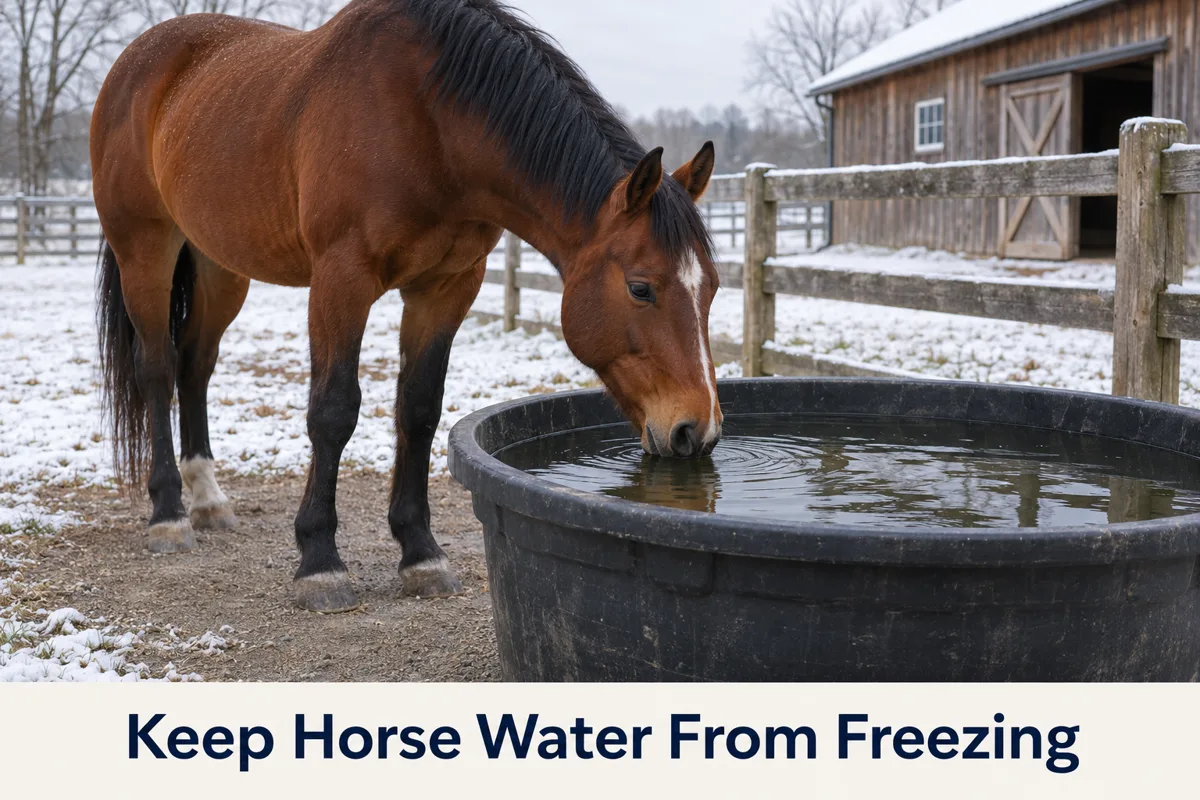
Knowing how to keep a horse water trough from freezing is one of the most important winter skills any horse owner can master. When temperatures drop below freezing, standing water turns to ice within hours, and a horse that cannot drink enough water faces a real risk of impaction colic. This guide walks you through every reliable method, from simple insulation tricks to heated equipment, so your horses always have access to clean, liquid water no matter how cold the night gets.
For the wider daily routine, use our winter horse care checklist.
Horses need plenty of water in winter, often around 10 to 12 gallons per day for an adult horse on dry winter feed. Cold weather does not reduce that need. In fact, horses eat more dry hay in winter, which actually increases their water requirement. The strategies below are proven, practical, and arranged so you can match them to your barn, your budget, and your climate.
Water access is a core part of winter care alongside forage, shelter, hoof care and monitoring. Keep water available continuously and check what each horse actually drinks.
KEY TAKEAWAYS
- Plan for around 10 to 12 gallons daily for an adult horse on dry winter feed; individual needs vary.
- Insulation, sunlight, and larger tanks slow freezing without any electricity.
- A floating or submersible deicer keeps a trough liquid during hard freezes.
- Reduced water intake in cold weather increases impaction colic risk.
- Always keep a backup water plan ready before the first deep freeze arrives.
Choose a Winter Water Setup for Your Barn or Paddock
Your winter water setup should match your climate, your power access, and the number of horses you keep. There is no single best answer. A mild climate with occasional frost calls for very different gear than a region that stays below zero for weeks. Start by deciding whether you have safe access to electricity at the water source, because that one factor shapes every other choice.
The goal is not just to stop ice. The goal is to guarantee that your horse can drink enough liquid water every single day. A frozen trough with a thin skim of ice on top is a very different problem than a trough frozen solid overnight.
Think of your options as a ladder. At the bottom are no cost habits like checking water often and siting the tank well. In the middle are passive upgrades like insulation and larger tanks. At the top are powered solutions like deicers and heated automatic waterers. Most owners end up combining methods from more than one rung.
Match Your Setup to Your Climate and Power Access
Winter horse hydration depends heavily on where you live. In a region with light frost, a well placed tank and daily ice checks may be all you need. In a harsh climate, you will almost certainly need a heated solution and a backup plan for power outages.
Consider these factors before you buy anything:
- How cold your coldest nights typically get in a normal winter.
- Whether you have a grounded, outdoor rated electrical outlet near the trough.
- How many horses share the water source and how much they drink.
- Whether the trough sits in sun or shade for most of the day.
- How often you can realistically check and break ice each day.
- Your budget for equipment, electricity, and ongoing maintenance.
A good setup is one you can actually maintain all season. A fancy system that fails during a power outage is worse than a simple system you check twice a day without fail.
Plan for Your Coldest Night, Not Your Average Day
Build your winter water plan around the worst night you expect, not the typical afternoon. A setup that works at thirty degrees Fahrenheit may fail completely at ten below zero. If you size your equipment and habits for the hardest freeze of the season, every milder day becomes easy by comparison.
Many owners get caught out by the first severe cold snap because their gear was sized for mild frost. Check historical low temperatures for your area and choose a deicer wattage and backup plan that match those extremes. It is far cheaper to overprepare than to haul warm water at midnight in a blizzard.
How to Keep a Horse Water Trough From Freezing Without Electricity
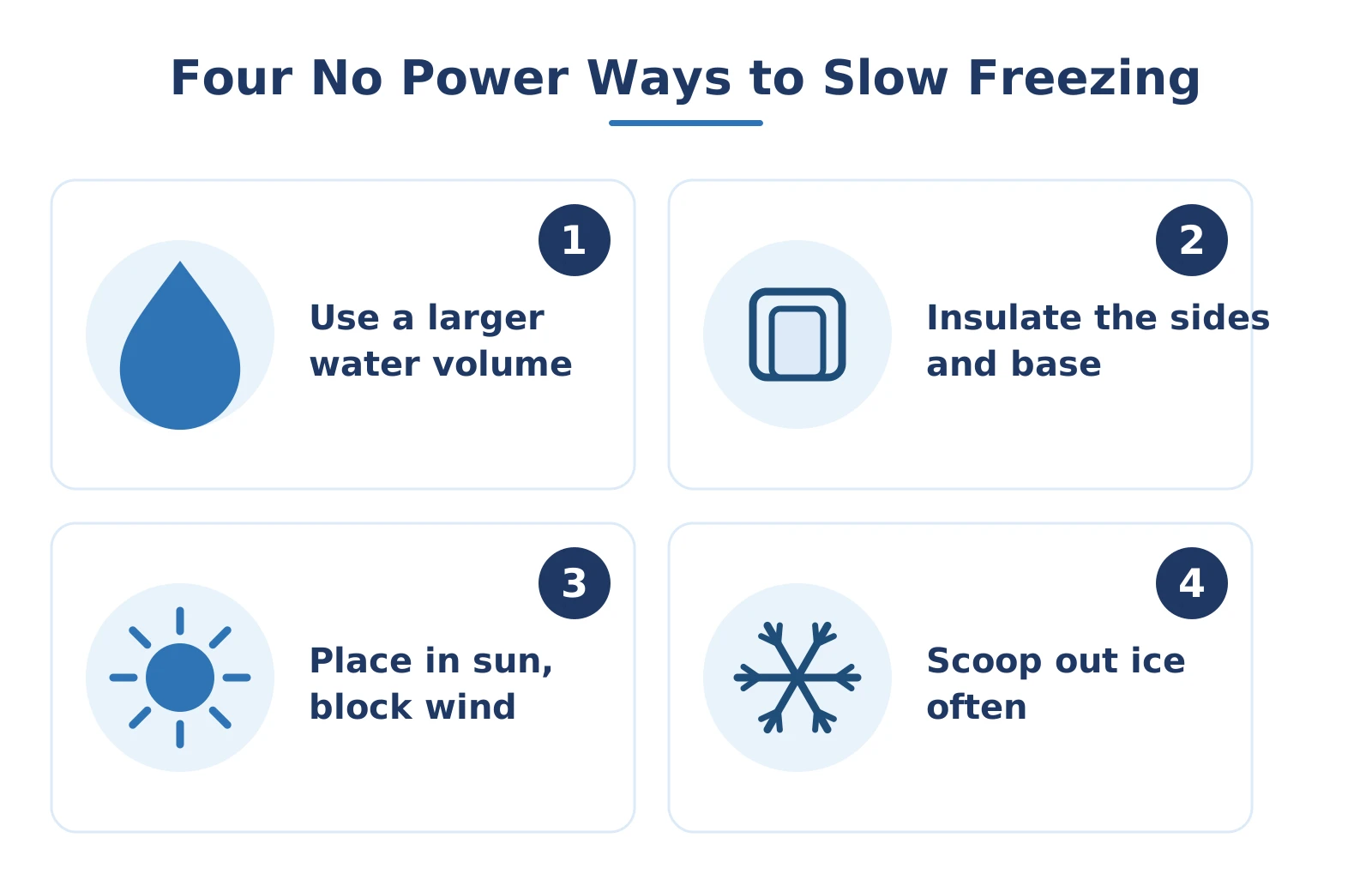
You can keep a horse water trough from freezing without electricity by combining insulation, smart placement, a larger water volume, and frequent ice checks. These passive methods will not perform miracles in extreme cold, but they can delay freezing by many hours and keep water drinkable through a mild to moderate freeze.
A larger body of water freezes more slowly than a small one. This is simple physics. A 100 gallon stock tank holds far more stored heat than a shallow bucket, so it resists freezing much longer. If you rely on passive methods only, bigger is almost always better for keeping water liquid overnight.
They assume one trick alone will do the job. In reality, passive methods work best stacked together. Insulation plus sun plus volume plus frequent checks is a system, and the system is what keeps the water open.
Insulate the Sides of the Trough
Learning how to insulate a horse water trough for winter slows heat loss and keeps water liquid longer. Wrap the sides and base of the tank with rigid foam board, spray foam, straw bales, or a purpose built insulated jacket. The goal is to trap the water's own warmth and slow the transfer of cold from the surrounding air and ground.
An insulated trough still loses heat from its open top. Use only a purpose-designed livestock-safe cover or insulated waterer that permits easy drinking. Avoid improvised small holes, loose lids or materials that can trap a muzzle or leg, and confirm that every horse will use the opening.
The water starts each day holding warmth from the ground and any afternoon sun. Insulation simply slows how fast that warmth escapes. The slower the heat leaves, the longer the water stays open for your horse.
If you build an insulated enclosure, fully contain insulation behind a durable, chew-resistant outer shell. Keep foam, straw, sharp edges and fasteners inaccessible, support the tank securely, and keep electrical equipment clear of combustible materials.
Follow the trough manufacturer’s instructions for a stable, level base. If adding insulation below the tank, it must support the full water weight and remain inaccessible to horses. Avoid exposed pallets, tires or gaps that could trap a hoof. Ground-water heat exchange varies by installation, so insulation alone does not guarantee frost protection.
Place the Trough in a Sunny Spot Sheltered From the Wind
Location is free, and it matters more than most owners expect. Place the trough where it catches the most winter sun and sits sheltered from prevailing wind. Sun adds warmth during the day, and a windbreak slows the rapid heat loss that wind causes at the water surface.
A dark colored tank absorbs more solar heat than a light one. If you are buying a new plastic stock tank for a cold climate, choose black or a dark shade. Position it against a south facing barn wall or solid fence to soak up sun and block the coldest winds.
Wind is a hidden enemy in winter. Moving air strips heat from the water surface far faster than still air, so an exposed trough in an open field freezes long before a sheltered one. Even a simple plywood windbreak on the windward side can slow freezing noticeably. Combine a windbreak with afternoon sun and you have a location that works for you around the clock.
Check for Ice More Often During a Hard Freeze
Frequent checking is the simplest method of all, and it costs nothing but your time. During a hard freeze, visit the trough several times a day to break and remove any ice that forms. Removing the ice, rather than just cracking it, keeps the surface open and the water accessible.
Breaking ice and leaving the chunks floating does not help much. The floating ice refreezes quickly and can seal the surface again. Scoop the broken ice out so warmer water stays exposed to your horse.
Loose balls and jugs do not reliably prevent freezing and may become chewing or obstruction hazards. Prioritize safe insulation, suitable heated equipment and frequent checks instead.
How to Choose and Use a Stock Tank Deicer
A stock tank deicer is the most reliable way to keep a large trough liquid through a hard freeze. A deicer is a thermostatically controlled electric heater that sits in the water and switches on only when the temperature nears freezing. It keeps the water just warm enough to stay liquid without heating it to an uncomfortable level for drinking.
A stock tank deicer for horses is designed for safety around livestock, with guards that keep the heating element away from the tank wall and the animal's muzzle. Never use a household heater or an unrated device in a horse trough. The combination of water, electricity, and a curious horse demands equipment built specifically for the job.
A correctly sized deicer actively adds heat, but power loss, damage or thermostat failure can still leave water frozen. Check it regularly and keep a backup water supply.
Choosing the right deicer comes down to three questions. What style fits your tank, what wattage matches your trough size and climate, and how will you protect the cord from damage. The sections below answer each one in turn.
Floating Versus Submersible Deicers
Floating and submersible deicers both work well, but they suit different situations. A floating tank deicer rests on the water surface and heats from the top, which is where ice forms first. A submersible tank deicer sinks to the bottom and heats the whole volume, which suits deeper tanks and horses that paw or play with floating objects.
Here is a quick comparison to help you decide.
| Feature | Floating Deicer | Submersible Deicer |
|---|---|---|
| Heating position | Surface, where ice forms | Bottom, heats full volume |
| Best tank depth | Shallow to medium tanks | Medium to deep tanks |
| Horse interference | Can be nudged or flipped | Stays out of the way |
| Cord exposure | Floats near the surface | Runs along the tank base |
| Typical use | Open stock tanks | Deep tanks and large troughs |
If your horses leave floating objects alone, a floating deicer is simple and effective. If they paw, bite, or play, a submersible model stays safely out of reach and is harder to disturb.
Match the Deicer to Your Trough Size and Material
Match the deicer wattage to your trough size and your climate. A small tank in a mild climate may need only a low wattage unit, while a large tank in a severe climate needs far more power. Check the manufacturer's sizing chart, because an undersized deicer will struggle and an oversized one wastes electricity.
Material matters too. A plastic stock tank requires a deicer that is rated as safe for plastic, often one with a guard or a floating design that keeps the hot element away from the tank wall. A metal tank tolerates more heat but conducts cold quickly, so insulation still helps.
Can you use a stock tank deicer in a plastic trough? Yes, but only a model clearly labeled as safe for plastic. An unrated deicer can melt or warp the tank and create a serious hazard. Always confirm the rating before you drop a heater into any plastic tank.
Protect Cords and Check the Heater for Damage
Use a properly installed, grounded, weather-protected GFCI outlet and follow the deicer manufacturer’s instructions. Route and protect cords so horses cannot reach them. Have a qualified electrician assess the installation; do not assume an improvised hose provides adequate cord protection. Avoid extension cords unless the equipment manufacturer specifically permits them.
Inspect the heater and cord regularly through the season. Look for cracked insulation, frayed wire, corrosion, or a damaged element. A worn deicer can deliver a shock through the water, which will stop horses from drinking and can cause injury. Replace any damaged unit at once rather than risking it.
If horses suddenly avoid a heated trough, stop using it and provide a separate water supply. Disconnect power safely at the source and have a qualified electrician or service technician inspect the equipment. Never test for stray voltage by putting a hand in the water or touching an energized heater.
Store your deicer carefully in the off season too. Drain it, dry it fully, and keep it somewhere rodents cannot chew the cord. A deicer that spent the summer in a damp shed is a common cause of failure on the first cold night. Test every heated unit before the season starts, while you still have time to replace a dead one.
How to Keep Horse Water Buckets and Automatic Waterers Working
Buckets and automatic waterers freeze faster than large tanks because they hold less water. Keeping a horse water bucket from freezing takes either a heated bucket, frequent swapping, or insulation, while automatic waterers rely on heating elements and protected supply lines to stay open in the cold.
A heated water bucket is the simplest stall solution. It plugs into a protected outlet and holds the water just above freezing, so your stalled horse always has a drink. As with any heated gear, run the cord safely and use a ground fault protected outlet to guard against shock.
A bucket is a small, fast freezing problem, so the fix is either added heat or added attention. If you cannot provide heat, plan to swap frozen buckets for fresh warm water several times a day.
Keep Stall Buckets Liquid Without a Heated Bucket
If you do not use a heated bucket, you can still keep stall water liquid with a few habits. Fill buckets with warm water at each check, because warm water takes longer to freeze. Insulated bucket holders and smaller rubber tubs that flex when ice forms also make clearing ice far easier.
Rubber and flexible buckets have a real advantage in winter. When the water inside freezes, you can flip the bucket and flex the sides to pop the ice block out without damaging the container. Rigid plastic buckets crack in the same situation, so rubber is the smarter winter choice.
Offer fresh water at every feeding and check, while maintaining access between visits. A few timed drinks are not a replacement for continuous access to unfrozen water.
Keep Automatic Waterers and Supply Lines From Freezing
A frost free automatic horse waterer uses insulation, heating elements, and a deep, protected supply line to deliver liquid water in freezing weather. These units are convenient, but they still demand winter attention. A failed heating element or a frozen water line can leave horses without water and the failure is often hidden inside the unit.
Protect the supply line first. A frozen water line is one of the most common cold weather failures, and thawing a buried line is difficult and expensive. Make sure lines sit below your local frost depth and that any exposed section is insulated and heated to the manufacturer's specification.
Have a qualified installer follow the waterer manufacturer’s guidance and local requirements for frost depth, drainage, backflow protection, electrical supply and any pipe heat cable. Do not add heat tape unless it is approved for the pipe and installation.
Check automatic waterers daily, because their very convenience makes them easy to ignore. Confirm the water is flowing, the bowl is clean, and the heater is working. The University of Minnesota Extension and Penn State Extension both stress daily inspection of automatic systems during freezing weather for exactly this reason.
One more point deserves attention with automatic systems. Because the water refills itself, a horse can stop drinking from a cold or faulty bowl for a day before you notice. Watch your horses' manure and energy, not just the equipment. Dry, firm droppings and a dull attitude can signal low water intake even when the waterer looks like it is working fine.
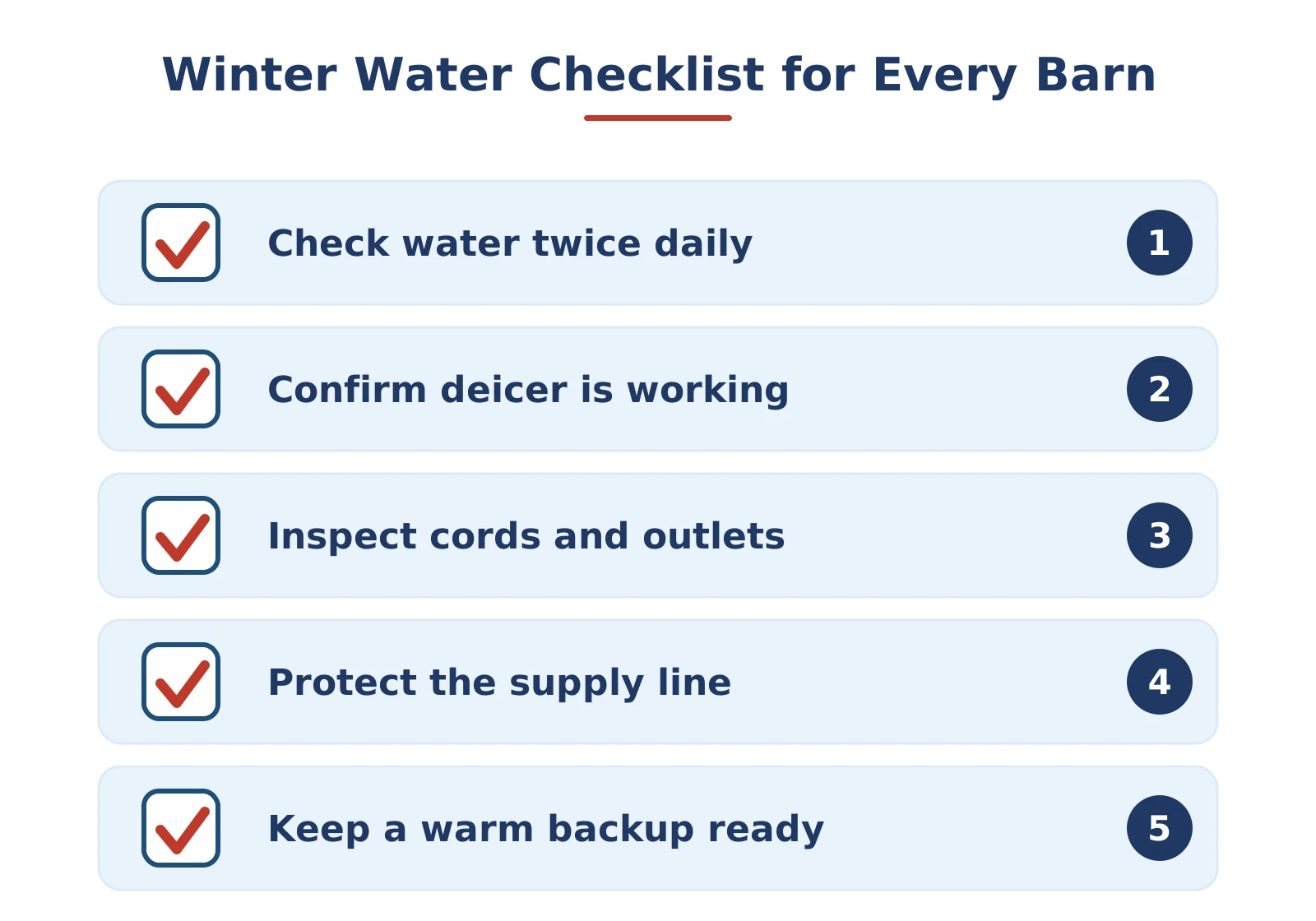
What to Do If the Trough Freezes Overnight
If the trough freezes overnight, provide another source of clean liquid water immediately, then investigate the failure. There is no safe planned period without water; risk depends on the horse, diet, weather and duration of reduced intake.
Reduced water intake increases the risk of impaction colic. Providing unfrozen water supports prevention, but it does not treat an established impaction. Call your veterinarian promptly for colic signs; do not force water or delay veterinary care.
A frozen trough in the morning is a warning, not just an inconvenience. Fix the immediate water problem, then treat the frozen tank as a signal that your system failed somewhere and needs attention before the next freeze.
Keep a close eye on older horses, hard keepers, and any horse recovering from illness. These animals are the most vulnerable to the effects of a missed drink, and they often show problems first. A frozen trough that a healthy young horse shrugs off can push a fragile horse toward colic, so prioritize their water whenever the weather turns severe.
Give Your Horse Another Source of Drinking Water
Your first move is to provide warm, liquid water right away. Carry out buckets of warm water from the barn tap, or haul water in insulated containers, and offer it where your horses can drink freely. Many horses will drink eagerly from warm water after a frozen night, which helps rehydrate them quickly.
Offer water at a comfortable temperature rather than icy cold. Research summarized by the University of Minnesota Extension shows horses drink more when water sits between roughly forty five and sixty five degrees Fahrenheit. Slightly warm water encourages the larger intake your horse needs to stay safe.
Watch how much each horse actually drinks after a frozen night. A horse that refuses water or drinks very little needs closer monitoring, since reduced intake is the first step toward colic. Offer water again within a couple of hours, and contact your veterinarian if a horse shows signs of discomfort, pawing, or rolling.
Check for a Power Outage, Failed Heater or Frozen Supply Line
Once the horses are drinking, diagnose the failure. Three causes account for most frozen troughs that use powered equipment: a power outage, a failed heater, and a frozen supply line. Work through them in order to find and fix the real problem.
Walk through this quick diagnostic list:
- Confirm power is on at the outlet and the ground fault interrupter has not tripped.
- Disconnect power before inspecting equipment; follow the manufacturer’s test procedure rather than touching a powered heater.
- Look for a frozen or burst water line feeding an automatic waterer.
- Inspect the cord and plug for chew marks, cracks, or corrosion.
- Verify the thermostat on the deicer is actually switching the unit on.
A frozen trough almost always traces back to one of these failures. Finding the cause now stops the same freeze from happening again tomorrow night.
Set Up a Backup Water Supply Before the Next Freeze
Prevention beats emergency hauling every time. After any freeze up, set up a backup drinking water plan so a single failure never leaves your horses dry. Keep spare buckets, a reliable warm water source, and a second deicer on hand before the deep cold arrives.
A simple backup kit makes hard freezes far less stressful. Store a few large insulated jugs you can fill with warm water, keep a spare ground fault protected cord, and know where your water shutoffs are. When equipment fails at night, a ready backup turns a crisis into a minor chore.
Add salt to your routine as a quiet helper. Offering free choice loose salt or a salt block encourages your horses to drink more on their own, which builds a safety margin against dehydration. Rutgers Equine Science Center notes that steady salt access supports healthy water intake through the winter, when horses are most tempted to drink too little.
Horse Water Trough Winter FAQs
Below are clear answers to the questions horse owners ask most about preventing ice and keeping water open through the coldest months. Each answer gives you the direct response first, followed by the practical detail you need to put it into action on your own property.
Will an Insulated Horse Water Trough Still Freeze Overnight?
Yes, an insulated horse water trough can still freeze overnight in a hard freeze, because insulation only slows heat loss rather than adding heat. In mild cold, good insulation plus a large water volume may keep the surface open until morning. In severe cold, you will still need a deicer or very frequent ice checks to guarantee liquid water.
Can You Use a Stock Tank Deicer in a Plastic Trough?
You can use a stock tank deicer in a plastic trough only if the deicer is specifically rated as safe for plastic. These models include a guard or a floating design that keeps the hot element away from the tank wall. An unrated unit can melt or warp the plastic and create a fire or shock hazard, so always confirm the label first.
Is Breaking the Ice Enough to Keep Water Available Overnight?
Breaking the ice helps during the day but is rarely enough to keep water available all night. Floating ice chunks refreeze quickly and can seal the surface again within hours. To prevent ice in a horse water trough overnight without power, scoop the ice out, insulate the tank, and use the largest water volume you reasonably can.
Can You Add Salt to a Horse Water Trough to Prevent Freezing?
No, you should never add salt to a horse water trough to lower its freezing point. The amount of salt needed is unsafe for horses to drink and can cause excessive sodium intake and dehydration. Instead, offer a separate salt block or loose salt free choice, which safely encourages healthy drinking without contaminating the water.
How Do You Keep Horse Drinking Water From Freezing in Very Cold Climates?
In very cold climates, keep horse drinking water from freezing by combining a properly sized deicer, an insulated tank, and a protected power supply. Site the tank in sun and shelter, use a dark colored tank for extra solar gain, and keep a backup warm water plan ready for power outages and equipment failures.
How Often Should You Check Horse Water in Freezing Weather?
Check horse water at least twice a day in freezing weather, and more often during a hard freeze or an extended cold snap. Daily checks let you catch a failed deicer, a frozen supply line, or a tripped outlet before your horses go without water. Many owners check at each feeding and once more before dark.
Conclusion
Keeping your horse's water open in winter comes down to a simple principle: guarantee liquid water every day, and build in a backup for when something fails. Whether you rely on passive methods like insulation and sunlight, or on powered gear like a stock tank deicer and a frost free automatic waterer, the right choice is the one you can maintain reliably all season long. Learning how to keep a horse water trough from freezing protects your horses from dehydration and the serious risk of impaction colic that comes with it.
Start preparing before the first hard freeze rather than during it. Test your deicers, stock your backup kit, insulate your tanks, and confirm your outlets are safe while the weather is still mild. A little preparation in autumn saves you from hauling warm water in the dark when the real cold finally arrives.
Watch your horses closely as the temperature drops, keep your equipment inspected and your backup kit ready, and never assume a heated system is working without checking it yourself. Every horse, barn, and climate is a little different, so for guidance tailored to your horse's individual needs, consult your veterinarian or a certified equine nutritionist before making major changes to your winter watering routine.