
Choosing from the best horse breeds in the world starts with knowing what you want your horse to do. Some breeds excel at speed, others at calm trail rides, and a few shine in the show ring. This guide ranks ten outstanding breeds and explains what makes each one special. You will learn which horse suits beginners, families, and competitors, so you can match the right breed to your goals, your experience, and your budget.
| Key Takeaways The American Quarter Horse is the best all around breed and the most popular worldwide. Arabians dominate endurance riding thanks to their stamina and efficient build. Thoroughbreds are the fastest racers, while Quarter Horses win short sprints. Warmbloods like the Dutch Warmblood and Hanoverian lead dressage and show jumping. Calm breeds such as the Haflinger and Icelandic Horse suit families and beginners. |
How to Choose the Best Horse Breed for You
The best horse breed for you depends on three things: your experience, your riding discipline, and the temperament you can safely manage. A calm gelding suits a nervous beginner far better than a sensitive, high energy racehorse. Match the horse to the rider first, then refine your choice by sport, size, and budget.
Match the Breed to Your Experience Level
Beginners need patience and predictability, not raw power. Gentle breeds like the Haflinger, Morgan, and American Quarter Horse forgive mistakes and stay steady when a rider gets nervous. Experienced riders can enjoy sensitive, athletic breeds that respond to the lightest cue and thrive on daily training.
A beginner friendly horse is a breed known for a calm temperament, a willing attitude, and steady nerves, because these traits keep new riders safe while they learn. Quarter Horses, Morgans, and Haflingers rank among the most forgiving choices for first time owners across the United States.
Match the Breed to Your Discipline
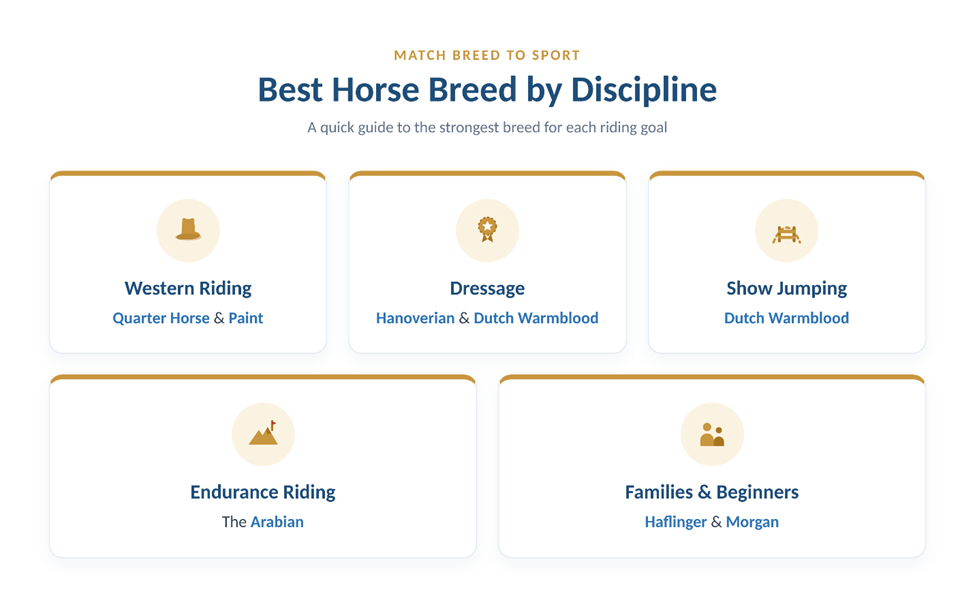
Your sport narrows the field quickly. Show jumping and dressage riders lean toward warmbloods like the Dutch Warmblood and Hanoverian. Racers choose Thoroughbreds, endurance riders pick Arabians, and Western riders favor stock breeds like the Quarter Horse and American Paint Horse. For relaxed trail riding, almost any calm breed works, which is why families often start there. The bottom line is this: pick the breed built for your sport, then judge each horse as an individual.
Set a Realistic Budget
Purchase price is only the start. Feed, farrier visits, veterinary care, and boarding add up every month, and larger breeds like the Shire cost more to feed. Here is where many first time owners go wrong: they spend the whole budget on the horse and leave nothing for its ongoing care.
Match the Breed to Your Size and Height
Your own height and weight matter too. Taller, heavier riders stay more comfortable on larger breeds, so the Thoroughbred and warmbloods are often the best horse breeds for adults who need leg room. Lighter riders and children do well on compact breeds like the Haflinger or Icelandic Horse. A good rule is that a horse should carry no more than about twenty percent of its body weight, including tack. Ponies can still suit small adults, so judge the fit by balance and comfort, not by labels alone.
Understanding the Main Horse Breed Groups
Ask ten riders to name the best horses in the world and you will get ten different answers, because breeds fall into groups built for different jobs. Understanding these groups helps you see why the top horse breeds shine where they do. Most fall into four broad families that share a build and a purpose. Knowing the group a breed belongs to tells you a lot about a horse before you ever meet it.
Hot Breeds
Hot breeds are lean, fast, and energetic, bred for speed and endurance. The Thoroughbred and Arabian lead this group, and they form the backbone of racing horse breeds around the world. They suit fit, confident riders who enjoy a responsive, forward horse that loves to move.
These breeds carry more sensitivity than most, so they read a rider’s nerves in an instant. In the right hands that sensitivity becomes brilliance, but a tense beginner can quickly feel overwhelmed. Think of it this way: a hot horse rewards clear, quiet leadership and punishes mixed signals.
Warmblood Breeds
Warmbloods are athletic sport horse breeds created for Olympic disciplines. The Dutch Warmblood and Hanoverian headline this group, and they are the best horse breeds for competition in dressage, show jumping, and eventing. Their calm power also makes them the best horse breed for English riding at every serious level.
Draft Breeds
Draft horse breeds are the giants of the horse world, bred to pull heavy loads with calm strength. The Shire stands out for size and power, alongside the Belgian and the Clydesdale. Gentle and patient, these horses now star in parades, shows, and heritage farms far more than in the fields.
Their calm wiring makes many drafts surprisingly beginner friendly under saddle, though their sheer size demands more feed, bigger tack, and a farrier used to large hooves. Crosses between a draft and a lighter breed, often called draft crosses, give riders that steady mind in a more manageable package.
Gaited and Pony Breeds
Gaited horse breeds move with extra, smooth gaits that spare the rider from bounce, and the Icelandic Horse is a classic example. Smaller breeds and ponies, including the Haflinger, pack strength and hardiness into a compact frame. Both groups make comfortable, easygoing mounts for long days in the saddle.
Other well loved gaited breeds include the Tennessee Walking Horse and the Paso Fino, both prized for a glass smooth ride. Ponies may be small, but many are clever and bold, which is why they teach so many children to ride. Do not mistake size for weakness, since a sturdy pony can carry a light adult all day.
The 10 Best Horse Breeds in the World
Our top 10 horse breeds list ranks the best horse breeds in the world by popularity, versatility, athletic ability, and temperament. Each profile below explains what the breed does best, so you can find the right match. We start with the most versatile all around breed and finish with a breed famous for its one of a kind gaits.
1. American Quarter Horse: Best All Around Horse Breed
The American Quarter Horse is the best all around horse breed because it blends speed, calm nerves, and versatility better than any other. It is also the most popular horse breed in the United States, with millions registered through the American Quarter Horse Association, the largest breed registry in the world.
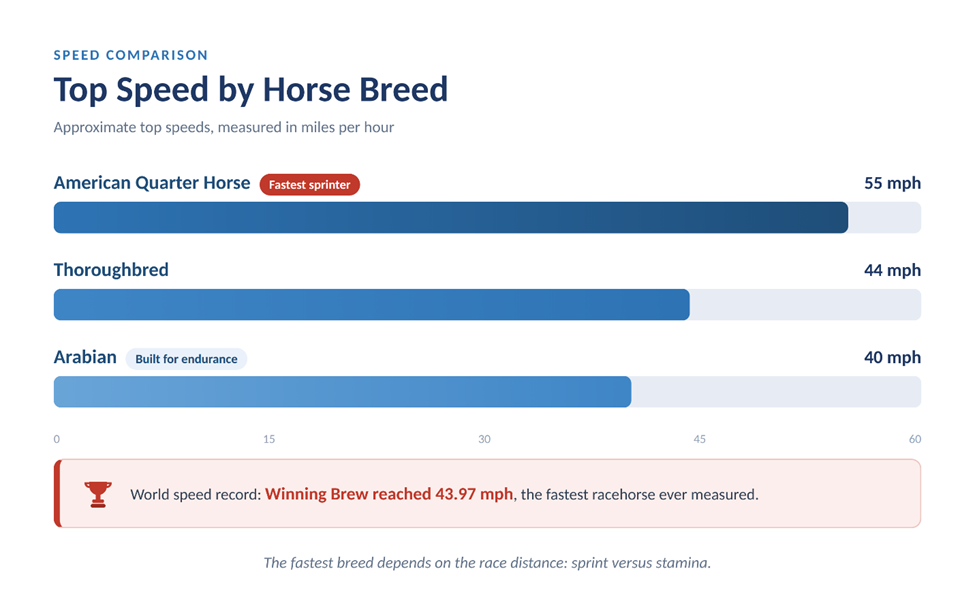
This breed earned its name by winning quarter mile sprints, where it can reach speeds close to 55 miles per hour. Yet the same horse stays gentle enough for a child to groom. That rare mix of power and patience makes it a favorite for ranch work, Western events, trail riding, and first time owners.
Quarter Horses have a compact, heavily muscled body and powerful hindquarters that fire them off the line. Ranchers valued that burst for working cattle, and rodeo riders still rely on it in reining, cutting, and barrel racing. Here is the key thing: few breeds do everything well, but the Quarter Horse comes closest.
The Quarter Horse also dominates recreational riding across North America. Its steady mind and sure feet make it the best horse breed for trail riding for many owners, and its quick reflexes keep it in demand for rodeo, ranch sports, and youth programs.
- Origin: United States
- Height: 14.3 to 16 hands
- Temperament: Calm, willing, versatile
- Best for: Beginners, Western riding, ranch work
2. Arabian Horse: Best for Endurance Riding
The Arabian is the best breed for endurance riding because its stamina, dense bone, and efficient stride let it cover long distances in tough conditions. It is also one of the oldest and most beautiful horse breeds, prized for thousands of years across the Arabian Peninsula.
You can spot an Arabian by its dished face, arched neck, and high tail carriage. Many Arabians carry one fewer pair of ribs and lumbar vertebrae than other breeds, a trait the Arabian Horse Association links to their smooth balance and remarkable endurance.
The Arabian also improved almost every modern breed, adding refinement and stamina to the Thoroughbred, the Morgan, and many warmbloods. These horses are intelligent and spirited, so they bond closely with people but suit confident riders best. They often stay sound and active well into their late twenties or thirties.
For riders who love long days in the saddle, few breeds match the Arabian’s heart and staying power. Its loyalty and courage keep it a favorite for owners who value a deep partnership over raw size, whether on the trail or in a competitive distance ride.
- Origin: Arabian Peninsula
- Height: 14.1 to 15.1 hands
- Temperament: Spirited, intelligent, loyal
- Best for: Endurance riding, experienced riders
3. Thoroughbred: Best Horse Breed for Speed
The Thoroughbred is the best horse breed for speed over classic racing distances, which is why it rules the racetrack. Breeders in 17th and 18th century England created it from three foundation sires: the Byerley Turk, the Darley Arabian, and the Godolphin Arabian.
Every registered Thoroughbred traces to those sires through The Jockey Club. The breed holds the official speed record too. Guinness World Records lists a mare named Winning Brew, who reached 43.97 miles per hour, as the fastest racehorse ever measured.
Thoroughbreds are athletic and sensitive, with a hot temperament that rewards skilled hands. After their racing careers, many move into new sports through retraining programs, where their speed, long stride, and bravery make them strong eventers and jumpers. First time owners should note that this breed needs consistent work and an experienced hand to stay settled.
Off the track, Thoroughbreds excel in eventing, fox hunting, and show jumping. With patient retraining, a former racehorse can become a versatile mount that loves a job and a challenge. Their scope and courage make them a top choice for English riding disciplines that reward boldness.
- Origin: England
- Height: 15.2 to 17 hands
- Temperament: Athletic, sensitive, bold
- Best for: Racing, eventing, competition
4. Dutch Warmblood: Best for Show Jumping
The Dutch Warmblood is the best breed for show jumping because it pairs careful technique over fences with a trainable mind. Bred through the KWPN studbook in the Netherlands, it is one of the youngest yet most successful sport horse breeds.
Its record speaks for itself. The KWPN topped the 2025 rankings from the World Breeding Federation for Sport Horses in both dressage and show jumping, a rare double at the very top of the sport.
Breeders select Dutch Warmbloods with strict performance and health testing before they enter the studbook, which produces horses with sound conformation and reliable temperaments. These powerful, elegant, level headed horses give competitive riders a genuine partner for the highest levels of English riding.
For riders aiming at the show ring, the Dutch Warmblood offers scope, careful footwork, and a genuine will to please. That is why it fills the start lists at elite events and ranks among the best horse breeds for competition anywhere in the sport horse world.
- Origin: Netherlands
- Height: 15.2 to 17 hands
- Temperament: Athletic, trainable, bold
- Best for: Show jumping, dressage, competition
5. Hanoverian: Best for Dressage
The Hanoverian is the best breed for dressage because its powerful, elastic movement scores well in the arena. This German warmblood traces to the State Stud of Celle, founded in 1735, and is guided today by the Hanoverian Verband.
Hanoverians have carried riders to Olympic medals in dressage and show jumping for decades. They combine a strong topline, floating gaits, and a calm, workmanlike attitude. The bottom line is this: if you dream of competitive dressage, few breeds give you a better foundation.
The German breeding system grades young horses on gaits, jumping, and rideability before approving them, which keeps quality high across generations. Hanoverians also make lovely all around sport horses, so amateur riders enjoy them in the arena and on relaxed hacks.
Many judges and trainers regard the Hanoverian as the best horse breed for dressage, because its balance and expressive gaits suit the demands of the arena. The same athletic build also lets it thrive in eventing and show jumping at high levels.
- Origin: Germany
- Height: 15.3 to 17.2 hands
- Temperament: Powerful, steady, trainable
- Best for: Dressage, show jumping
6. Morgan Horse: Best for Versatility
The Morgan is the most versatile horse breed because one compact, muscular type handles driving, saddle, trail, and ranch work with ease. It is also one of the earliest breeds developed in the United States.
Every Morgan traces to a single foundation stallion named Figure, later called Justin Morgan after his owner. The American Morgan Horse Association still records that unbroken line today. Morgans are famous for their kind eye, willing attitude, and stamina.
Morgans played a major role in American history, serving as cavalry mounts, harness horses, and family workhorses across New England. Today the same toughness makes them reliable partners for endurance, driving, and youth riding programs, and a smart pick for families, beginners, and adults.
Versatile and kind, the Morgan is often described as the best horse breed for riding across many disciplines, from saddle seat to trail. One Morgan can school in the arena on Saturday and pull a cart on Sunday without missing a beat.
- Origin: United States
- Height: 14.1 to 15.2 hands
- Temperament: Willing, hardy, friendly
- Best for: Versatility, families, trail riding
7. American Paint Horse: Best for Western Riding
The American Paint Horse is the best breed for Western riding because it offers stock horse athleticism plus eye catching coat patterns. The American Paint Horse Association runs one of the largest registries in the world.
Paints share the calm mind and powerful build of the Quarter Horse. Their coats show bold tobiano or overo patterns, mixing white with any base color. The registry accepts horses with Quarter Horse and Thoroughbred bloodlines that carry the right coat pattern.
Because they stay easygoing and willing, Paints make excellent Western partners and steady family horses. Beginners and adults alike appreciate a horse that is flashy to look at yet sensible to handle on the trail and in the arena.
With cow sense inherited from stock lines, the American Paint Horse is a strong contender for the best horse breed for Western riding. It shines in reining, barrel racing, and ranch classes while turning heads with its bold color patterns.
- Origin: United States
- Height: 14.2 to 16 hands
- Temperament: Calm, willing, friendly
- Best for: Western riding, families, trail riding
8. Haflinger: Best Family Horse Breed
The Haflinger is the best family horse breed because its small size, strength, and gentle nature suit riders of every age. This golden chestnut breed comes from the Tyrol region of Austria and northern Italy.
Every Haflinger traces to a foundation stallion named 249 Folie, born in 1874. All Haflingers share the same chestnut coat with a flaxen mane and tail, giving the breed a striking, uniform look. They are strong enough to carry adults yet calm enough for children.
Haflingers mature slowly and often stay sound and useful well into their twenties. Their steady nature makes them popular for therapeutic riding centers, where calm horses are essential. For families who want one hardy, affordable horse, the Haflinger is a smart first choice.
That gentle, patient nature makes the Haflinger the best horse breed for families who want one horse for children and adults alike. It is small enough to feel safe under a young rider yet strong enough to carry a grown adult with ease.
- Origin: Austria and northern Italy
- Height: 13.2 to 15 hands
- Temperament: Gentle, strong, easygoing
- Best for: Families, children, driving
9. Shire Horse: Best for Strength
The Shire is the strongest horse breed, a gentle giant that can pull enormous loads with quiet power. This English draft breed also ranks among the tallest horses ever recorded.
In the 19th century, a Shire named Sampson, later called Mammoth, stood about 21.2 hands, the tallest horse in recorded history. Despite their size, Shires are calm and affectionate, which is why people call them gentle giants.
Shires once hauled beer wagons, plows, and heavy freight across Britain before engines took over, and a single Shire can pull several times its own weight in harness. Numbers have thinned over the years, so The Livestock Conservancy now lists the Shire as a breed of conservation concern.
Modern Shire owners keep the tradition alive by driving teams at fairs and shows. The breed’s calm strength and willing mind also make it a gentle mount for confident riders who enjoy a big, steady partner with plenty of presence.
- Origin: England
- Height: 16.2 to 18 hands
- Temperament: Gentle, patient, powerful
- Best for: Strength, driving, heavy work
10. Icelandic Horse: Best for Smooth and Distinctive Gaits
The Icelandic Horse is the best breed for smooth, distinctive gaits because it performs two extra movements most horses cannot. It developed in isolation in Iceland for more than 1,000 years.
Beyond the walk, trot, and canter, this breed offers the tolt, a smooth four beat gait, and the flying pace, a fast racing gait. The tolt lets you ride for hours with almost no bounce, which makes long rides a pleasure.
Iceland protects the breed strictly. The country bans imported horses, and once an Icelandic Horse leaves, it can never return. Icelanders have bred these hardy, friendly, sure footed horses since the Vikings arrived, and they ride far bigger than their small frame suggests.
Because the horses live outdoors year round in a harsh climate, they are famously tough and low maintenance. Riders of all ages enjoy them for relaxed trail outings and for the thrill of a smooth, ground covering tolt across open country.
- Origin: Iceland
- Height: 13 to 14 hands
- Temperament: Hardy, friendly, sure footed
- Best for: Smooth gaits, trail riding, all ages
Best Horse Breeds by Rider and Discipline
Sometimes the fastest way to choose is to compare breeds side by side. The table below lines up all ten breeds by their best use, temperament, height, and the rider level they suit. Use it as a quick shortlist, then read the full profiles above before you decide.
| Breed | Best For | Temperament | Height (hands) | Rider Level |
| American Quarter Horse | All around, Western | Calm, versatile | 14.3 to 16 | Beginner to advanced |
| Arabian | Endurance riding | Spirited, loyal | 14.1 to 15.1 | Intermediate to advanced |
| Thoroughbred | Racing, eventing | Athletic, sensitive | 15.2 to 17 | Advanced |
| Dutch Warmblood | Show jumping | Trainable, bold | 15.2 to 17 | Intermediate to advanced |
| Hanoverian | Dressage | Powerful, steady | 15.3 to 17.2 | Intermediate to advanced |
| Morgan | Versatility, trail | Willing, friendly | 14.1 to 15.2 | Beginner to advanced |
| American Paint Horse | Western riding | Calm, willing | 14.2 to 16 | Beginner to advanced |
| Haflinger | Families, driving | Gentle, easygoing | 13.2 to 15 | Beginner |
| Shire | Strength, driving | Gentle, patient | 16.2 to 18 | Intermediate |
| Icelandic Horse | Smooth gaits, trail | Hardy, friendly | 13 to 14 | Beginner to advanced |
Quick Picks for Common Goals
If you want one clear recommendation, start here. For a versatile first horse, choose the American Quarter Horse or the Morgan. For families with children, pick the Haflinger or the American Paint Horse. For competitive dressage or show jumping, look at the Hanoverian or the Dutch Warmblood. For long distance rides, the Arabian is the classic answer, and for a smooth, comfortable trail horse, the Icelandic Horse is hard to beat.
Simple Steps to Choose Your First Horse
Ready to buy? A calm, well trained horse of almost any breed beats a flashy one you cannot handle. Follow these steps to find a safe, suitable first horse and avoid costly mistakes.
- Decide your main riding discipline and your goals.
- Set a realistic budget for buying and monthly care.
- Choose a calm, older, well trained horse over a young one.
- Test ride the horse on several separate visits.
- Book a veterinary prepurchase exam before you pay.
- Bring an experienced trainer or coach to advise you.
Horse Temperament, Health, and Care Basics
Breed gives you a starting point, but every horse is an individual. Two Arabians can differ in temperament, and good training shapes behavior as much as bloodlines do. Still, some useful patterns hold true across the best horse breeds.
Temperament and Trainability
Horse temperament is the natural attitude and reactivity a breed shows toward people and work, because genetics and training together shape how calm or spirited a horse becomes. Hot breeds like Arabians and Thoroughbreds react quickly, while draft breeds and the Haflinger tend to stay relaxed and patient.
Hot breeds need confident, consistent handling, while draft breeds and ponies usually stay calmer and more forgiving. When you shop, watch how a horse behaves in the stable and under saddle, because day to day manners matter more than breed reputation alone.
Feeding and Daily Care
Every horse needs constant access to clean water and plenty of forage, such as grass or good hay. Horses are grazers, so their digestive system works best with small, frequent meals rather than large ones. Larger breeds simply eat more, while easy keepers like the Haflinger and Icelandic Horse gain weight on very little.
Add grain or a ration balancer only when forage alone cannot meet a horse’s needs, such as during hard work or growth. Sudden diet changes can trigger colic, so introduce new feed slowly over a week or more. When in doubt, weigh the ration and ask your vet rather than guessing by the scoop.
Health and Hoof Care
Plan for routine care to keep any breed sound. A farrier should trim or shoe the hooves every 6 to 8 weeks, and a veterinarian should handle vaccinations, dental checks, and yearly exams. The American Association of Equine Practitioners recommends a consistent preventive schedule for every horse, whatever its breed or job.
Signs of a Healthy, Well Matched Horse
Before you commit, look for clear signs of health and temperament. A sound horse moves evenly, holds a healthy weight, and shows bright eyes and clean legs. Watch it in the stable, on the ground, and under saddle across more than one visit. A calm, curious attitude often predicts an easier partnership than any breed label can promise. Trust what the horse shows you in person over any reputation on paper.
Best Horse Breeds in the World FAQs
What is the best horse breed in the world?
The best horse breed in the world is the one that fits your goals, but the American Quarter Horse tops most lists for all around use. It is calm, versatile, and beginner friendly, which is why it is also the most popular horse breed in the United States. For pure speed, choose a Thoroughbred, and for endurance, choose an Arabian. In short, there is no single winner, only the best breed for your riding level and goals.
Which horse breed is best for beginners?
The best horse breeds for beginners are calm, forgiving types like the American Quarter Horse, Morgan, Haflinger, and American Paint Horse. These breeds tolerate rider mistakes and stay steady in new situations. Just as important, pick an older, well trained individual, because a horse’s age and training matter as much as its breed for a first time owner. A seasoned horse in its teens often makes the safest and most patient teacher.
What is the most popular horse breed?
The most popular horse breed is the American Quarter Horse, which has more registered horses than any other breed worldwide. The American Quarter Horse Association records millions of horses across dozens of countries. Its popularity comes from sheer versatility, since the same breed suits ranch work, Western riding, trail riding, and family use. No other breed matches its blend of numbers, temperament, and all around ability.
Which horse breed is the fastest?
The fastest horse breed depends on the distance. Over classic racing distances the Thoroughbred is fastest, and a Thoroughbred named Winning Brew holds the Guinness World Records speed mark at 43.97 miles per hour. Over a short quarter mile sprint the American Quarter Horse is quicker and can reach close to 55 miles per hour. Both records show that the fastest breed truly depends on how far the race runs.
What is the strongest horse breed?
The strongest horse breed is the Shire, a British draft horse that can pull several times its own weight. Shires rank among the tallest and most powerful horses ever recorded. Other strong draft breeds include the Belgian and the Clydesdale, but the Shire’s blend of height, mass, and gentle nature keeps it at the top for raw strength.
Which horse breed is best for show jumping and dressage?
Warmbloods are the best horse breeds for show jumping and dressage. The Dutch Warmblood topped the 2025 World Breeding Federation for Sport Horses rankings in both disciplines, while the Hanoverian holds a long record of Olympic success. These breeds combine powerful movement, careful jumping technique, and the trainable temperament that top competition demands. Other respected sport horse studbooks include the Holsteiner, the Oldenburg, and the Selle Francais.
Which horse breed is best for endurance riding?
The Arabian is the best horse breed for endurance riding, and it wins the majority of long distance competitions worldwide. Its deep chest, dense bone, and efficient stride help it cover many miles without tiring. Arabians also recover quickly and often stay sound and competitive well into their late teens and twenties. No other breed wins as consistently at the sport’s highest levels.
What is the most beautiful horse breed?
Beauty is personal, but the Arabian and the Friesian often top lists of the most beautiful horse breeds. The Arabian is admired for its dished face, arched neck, and floating movement, while the black Friesian is famous for its flowing mane and feathered legs. Among gaited breeds, the golden Haflinger also draws many admirers. The Akhal Teke, with its metallic sheen, rounds out many lists of the world’s most striking horses.
The best horse breeds in the world each earn their spot for a reason, whether that is the Quarter Horse’s versatility, the Arabian’s stamina, the Thoroughbred’s speed, or the Shire’s quiet strength. The right choice always comes back to you: your experience, your discipline, and the bond you want to build. Start with temperament, then match the breed to your goals, your budget, and your riding level. Spend time with any breed before you buy, and ride several horses so you know what truly suits you. Take your time, because the right horse can be a loyal partner for decades. Because every horse is an individual, consult your veterinarian or a certified equine professional for advice tailored to your horse’s health, temperament, and individual needs.