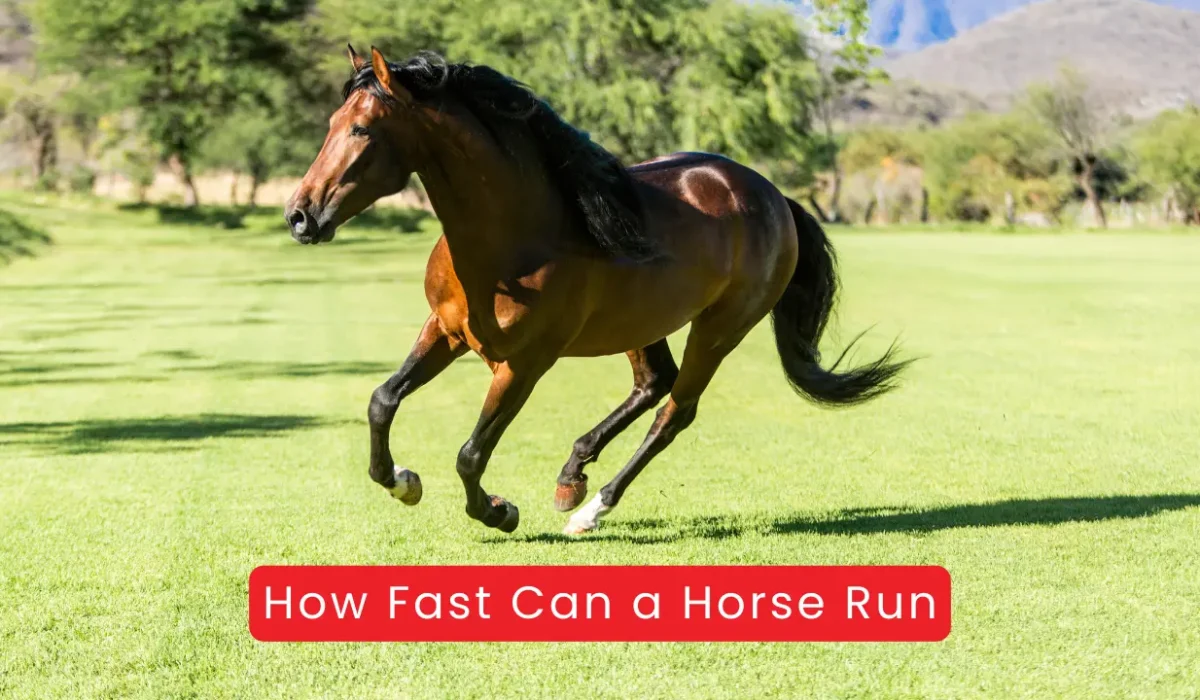
A horse can run between 25 and 30 mph at a full gallop, while elite racehorses reach 40 to 55 mph during a sprint. The exact speed depends on breed, training, distance, and the conditions of the day. If you have ever wondered how fast can a horse run in real life, this guide gives you precise numbers, breed comparisons, and the science behind equine athletic performance.
You will learn how walking, trotting, and galloping speeds compare in both mph and km/h. You will see why Quarter Horses dominate sprint racing while Thoroughbreds rule longer distances. You will also discover how track surface, jockey weight, and conditioning shape final results.
By the end, you will know what speed to expect from your own horse, what records the fastest racers have set, and how horses stack up against the fastest animals on earth. You will also walk away with a working understanding of why two horses of the same breed can produce very different times on the same day, and what trainers do to close that gap.
Key Takeaways
- A galloping horse averages 25 to 30 mph across most breeds and ages.
- The fastest racehorse on record hit 55 mph during a Quarter Horse sprint.
- Thoroughbreds typically race between 40 and 45 mph in flat track events.
- Horses can sustain peak speed for only about a quarter of a mile.
- Track surface, weather, jockey weight, and breed all shape the final result.
Average Speed of a Horse
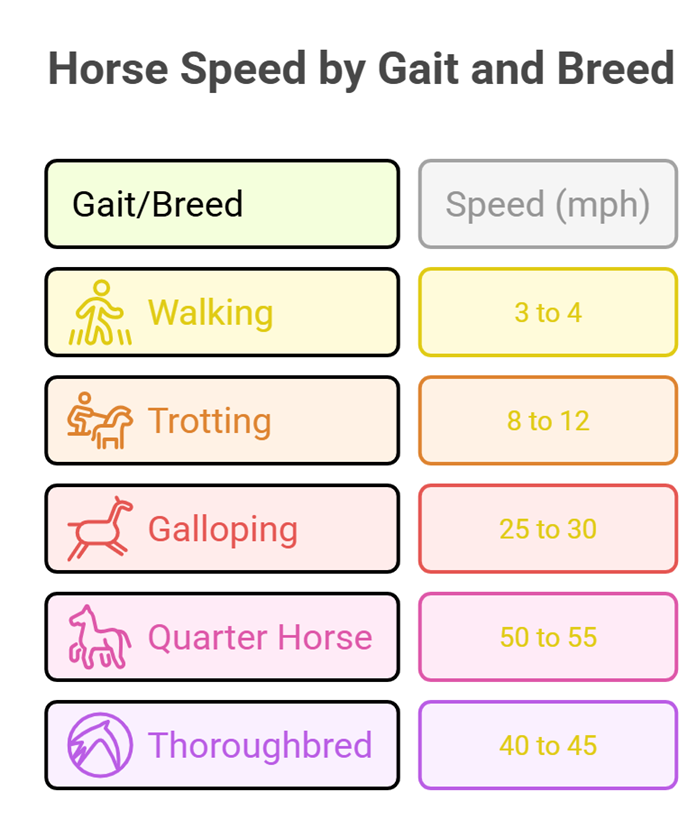
The average speed of a horse depends on which gait the animal is using. A typical adult horse walks at 3 to 4 mph, trots near 8 to 12 mph, canters around 12 to 17 mph, and gallops between 25 and 30 mph. These benchmarks apply to healthy horses in fit working condition and form the foundation of every conversation about equine speed.
Here is the key thing. Speed is not a single number. It changes with gait, conditioning, breed, and terrain, so the same horse may produce very different speeds in different settings. A pleasure horse on a trail will rarely reach gallop, while a conditioned racehorse on a smooth track may exceed 40 mph in seconds.
Think of it this way. The four gaits act like the gears of a car. Each gear suits a different need, and understanding the range of each one helps you recognize what your horse can comfortably do.
Walking Speed
A horse walks at roughly 3 to 4 mph, similar to a fast human walking pace. The walk is a four beat gait where each hoof strikes the ground separately, producing a smooth and energy efficient motion. Most pleasure rides cover ground at this pace, and trail horses often spend hours in this gear without strain.
Walking is the foundation of every ride. Riders use it to warm up muscles before harder work, cool down after exertion, and travel long miles without fatigue. Endurance horses with proper conditioning can walk 5 to 6 mph for sustained periods, which is faster than most people can briskly walk on level ground.
Walking pace also varies by leg length and conformation. Tall warmbloods cover more ground per stride than short ponies, so a 16 hand horse may walk 4 mph while a small pony walks 3 mph at the same effort level. Stride length matters at every gait, and the walk is the easiest place to see this clearly.
Trotting Speed
The trot averages 8 to 12 mph and uses a two beat diagonal gait, where the horse moves diagonal pairs of legs together. This pace is faster, more rhythmic, and ideal for covering moderate distances without exhausting the horse. Many working horses trot for hours each day in ranch and farm settings.
Standardbred horses bred for harness racing reach much higher speeds. The world record for a Standardbred trot is about 32 mph, set on a one mile track in North America. That number is exceptional, not typical, and it reflects decades of selective breeding for trotting performance.
There are also two trot variations worth knowing. The working trot is the standard pace ridden in lessons and trail work, and it sits comfortably between 8 and 10 mph. The extended trot stretches the stride for greater forward reach and pushes pace closer to 14 mph, while the collected trot shortens the stride for control during dressage. Each version produces a different speed without any change in gait.
Galloping Speed
The gallop is the fastest natural gait and reaches 25 to 30 mph for most horses. It is a four beat asymmetrical gait where all four legs leave the ground at one point in the stride. This phase of suspension is what separates the gallop from the canter and gives the gallop its remarkable forward velocity.
But here is where most horse owners go wrong. Many assume any healthy horse can sustain 30 mph for long stretches. In reality, only conditioned racehorses can hold that pace beyond a quarter of a mile, and the demand on the cardiovascular system increases sharply as duration grows.
Horse galloping speed is also affected by stride frequency. A typical horse takes about two strides per second at full gallop, while a top racehorse may reach two and a half strides per second. The slight increase in turnover, paired with longer stride length, is what produces the dramatic difference between a backyard horse at 28 mph and a champion at 50 mph.
Maximum Speed a Horse Can Reach
The maximum speed of a racehorse can reach 55 mph, or about 88 km/h. This record was set in 2008 by a Quarter Horse named Winning Brew over a two furlong sprint at Penn National Race Course. According to Britannica, this remains the highest official speed recorded for any horse in a sanctioned race, and it represents the upper boundary of equine sprint performance.
Maximum speed is the absolute top velocity a horse achieves under ideal conditions. According to research summarized by PetMD and equine sports medicine specialists at the University of Kentucky Gluck Equine Research Center, sprinting speeds taper sharply as distance increases. Energy reserves and oxygen demand limit how long these peaks can last, and few horses ever come close to the 55 mph ceiling.
The bottom line is this. Most horses you ride or watch will never approach the absolute upper boundary. A peak of 55 mph belongs to elite athletes bred and trained for explosive sprints over very short distances. The average racehorse will instead sit comfortably in the 40 to 45 mph range during a competitive event.
Other unofficial sprint records sit close to Winning Brew’s mark. Big Racket, a Mexican Thoroughbred, was once timed at 43.97 mph over a quarter mile in 1945, and modern Quarter Horse champions consistently approach the 50 mph mark across sanctioned tracks. These records are useful reference points, but they reinforce that no horse can break the natural speed ceiling for very long.
The maximum speed of a racehorse is roughly 55 mph, recorded by the Quarter Horse Winning Brew in 2008. Most racehorses peak between 40 and 45 mph during competition because energy reserves limit how long any horse can hold its absolute top speed.
Racehorse Speed in Competitive Racing
Racehorses dominate every conversation about how fast a horse can run because they represent the peak of equine athletic performance. Competitive racing splits into two main categories: short sprints and longer distance flat races. Each demands different physical traits, training programs, and pacing strategies.
Think of it this way. Sprint racers act like 100 meter runners, while distance horses act like middle distance milers. Both excel inside their own range, but the genetic and training profiles that produce sprint power are very different from the ones that produce sustained pace over a mile or more.
Sprint Speed Over Short Distance
Quarter Horses dominate sprint racing because they are built for explosive power. The breed gets its name from racing a quarter of a mile, the distance over which it consistently outpaces every other breed. Quarter Horses regularly clock 50 to 55 mph during these races, with bursts that often exceed Thoroughbred top speeds in the same window.
Sprint races on professional tracks typically last 20 to 25 seconds. The horse accelerates from a standing start, hits peak speed within the first six seconds, and sustains that effort to the wire. The American Quarter Horse Association recognizes a network of sanctioned tracks where these specialists compete every season across the United States.
Horse sprinting speed depends heavily on stride frequency. Top Quarter Horses cover ground with strides of about 25 feet, executed nearly two and a half times per second at full pace. That combination of length and rate is what produces the highest recorded equine velocities ever documented.
Sprint races typically run between 220 and 870 yards. The 350 yard race is a popular distance because it tests both starting speed and finishing power. Quarter Horse futurities like the All American Futurity at Ruidoso Downs offer some of the largest purses in the sport, which keeps breeders focused on producing the next generation of explosive sprinters every year.
Speed in Long Distance Races
Long distance races include events like the Kentucky Derby at 1.25 miles and the Belmont Stakes at 1.5 miles. Average winning speeds for these races sit around 37 to 40 mph. Endurance and pacing matter more than raw top speed, and Thoroughbreds bred for stamina dominate these classics.
Endurance racing represents the extreme end of distance work. Horses cover 50 to 100 miles in events like the Tevis Cup, but average pace falls to 7 to 12 mph because the demand on cardiovascular stamina is enormous. Arabian horses lead this discipline thanks to their lung capacity and lean build.
The Triple Crown series provides the clearest snapshot of long distance speed at the elite level. The Kentucky Derby tests 1.25 miles, the Preakness Stakes covers 1.1875 miles, and the Belmont Stakes stretches to 1.5 miles. Winning times in these classics produce average speeds of about 37 to 38 mph. Secretariat, the 1973 Triple Crown winner, holds the Belmont record at an astonishing average of 37.8 mph across the full mile and a half.
Here is the key thing. Sprint and endurance speed are nearly opposite traits. A horse cannot be elite at both, and the racing industry has spent centuries refining breeding lines to specialize in one or the other.
Thoroughbred Horse Speed and Fastest Horse Breeds
How fast can thoroughbred horses run? Thoroughbreds typically race between 40 and 45 mph, with sustained speeds near 35 mph across a full mile. The breed was developed in 17th century England specifically for speed and stamina across longer race distances, and every modern Thoroughbred traces back to three founding sires from that era.
Thoroughbreds are not the fastest horse breed over the shortest sprints. That title belongs to the American Quarter Horse. However, Thoroughbreds outperform every other breed in races between half a mile and two miles, which is why they dominate the world’s most famous flat racing events.
Here is the key thing. Different breeds excel at different distances. Comparing horse speed without specifying distance creates misleading conclusions, and most published horse speed comparison charts only make sense once you account for the race format.
| Breed | Top Speed (mph) | Best Race Distance | Common Use |
| American Quarter Horse | 50 to 55 | Up to 0.25 mile | Sprint racing |
| Thoroughbred | 40 to 45 | 0.5 to 2 miles | Flat racing |
| Arabian | 35 to 40 | 25 to 100 miles | Endurance racing |
| Standardbred | 30 to 35 | 1 mile harness | Harness racing |
| Akhal Teke | 35 to 40 | Various | Endurance and sport |
| Mustang | 25 to 35 | Varies | Trail and ranch work |
The American Quarter Horse, Thoroughbred, and Arabian make up the three most influential racing breeds worldwide. Each contributes unique traits to the global horse racing industry, and many modern sport breeds carry blood from at least one of these three.
The Akhal Teke, native to Turkmenistan, is one of the oldest and most striking breeds in the world. Its sleek build and metallic coat are paired with strong endurance, making it a respected choice in long distance and sport disciplines.
Modern Thoroughbreds like Frankel and American Pharoah have set widely watched records in flat racing. Frankel retired undefeated in 14 starts, while American Pharoah swept the 2015 Triple Crown after a 37 year drought. Their consistent speeds across varied distances illustrate why Thoroughbreds remain the gold standard for middle distance racing across every continent that hosts the sport.
For owners curious about their own horse’s potential, breed alone offers a strong clue. A backyard Quarter Horse will likely top out around 35 to 40 mph in casual gallops, while a fit Thoroughbred can flirt with 40 mph during a controlled workout. These numbers are starting points, not ceilings, and proper conditioning can raise them noticeably over a season.
How Long a Horse Can Maintain Top Speed
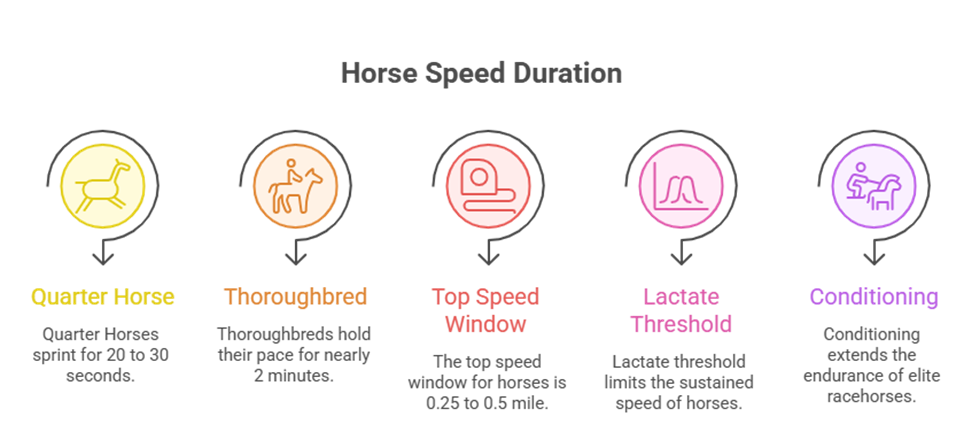
A horse can maintain top speed for roughly 0.25 to 0.5 mile before fatigue forces a reduction in pace. After that point, oxygen debt builds rapidly and muscle glycogen reserves drop. The horse must slow down to recover, which is why no horse can simply hold 50 mph indefinitely.
Sprinters like Quarter Horses sustain peak velocity for only 20 to 30 seconds. Thoroughbreds racing at 40 mph can hold strong pace for closer to two minutes, but speed drops noticeably during the final furlong of most races. Watch any major race finish and you will see horses fade in the last few seconds.
Here is the key thing. Endurance and sprint speed are nearly opposite traits. A horse cannot be elite at both. Genetics, muscle fiber composition, and training all shape which range a horse excels in, and the equine industry has carefully separated these two paths over centuries of breeding.
Equine physiologists describe the limit using lactate thresholds and stride efficiency. Once lactate accumulates in working muscles, stride length shortens and breathing rate climbs, which forces the horse into a slower gait. The Jockey Club tracks these performance curves across thousands of professional races every year, and the data reinforce a clear pattern across all breeds.
Horses also rely on a unique respiratory feature called locomotor respiratory coupling. At the gallop, every stride compresses the rib cage and forces a full breath, which means breathing rate matches stride frequency. This linkage is incredibly efficient at moderate speeds but becomes a limiting factor at very high speeds. The cardiovascular system simply cannot deliver enough oxygen to keep up with peak power output for more than a minute or two.
Conditioning extends the time a horse can spend near top speed. Interval training, hill work, and steady cardiovascular base building all push the lactate threshold higher, allowing the horse to hold near maximum pace longer before fatigue forces a slowdown. This is why elite trainers blend speed work with endurance sessions instead of focusing only on sprints.
Most horses can maintain top speed for only 0.25 to 0.5 mile, which equals about 20 to 60 seconds at full gallop. After this point, oxygen debt and muscle fatigue force the horse to drop to a slower pace, even in elite competition.
Factors That Affect Horse Running Speed
Horse running performance depends on a mix of genetics, conditioning, environment, and rider influence. Even the fastest breed will underperform in poor conditions, and even a modestly bred horse can outperform expectations with the right preparation. Speed is the result of many variables working together, not a single switch you can flip.
Five primary factors shape final speed:
- Breed and bloodline genetics
- Age and stage of physical development
- Track surface and weather conditions
- Rider weight and skill
- Training program and conditioning level
These five factors interact constantly. A Thoroughbred at peak fitness with a skilled jockey on a fast dirt track produces different results than the same horse on a sloppy turf course in summer heat.
Breed and Bloodline
Genetics set the upper limit. A Quarter Horse will never match a Thoroughbred in a 1.5 mile race, no matter how well it is trained. Bloodline shapes muscle fiber type, lung capacity, skeletal structure, and even temperament. These inherited traits define the speed range your horse can reach.
Selective breeding refines specific traits across generations. The Jockey Club registry, which oversees Thoroughbred breeding in North America, tracks pedigrees to support the racing industry. Every champion racehorse carries genetic markers shaped by hundreds of years of selection for speed and stamina.
Track and Weather
Track condition has a measurable effect on speed. Firm dirt tracks produce faster times than muddy or sloppy surfaces. Heat, humidity, and wind also influence final pace by several seconds across a single race, especially in summer events.
According to PetMD and equine sports medicine experts at the University of Kentucky Gluck Equine Research Center, track surface alone can shift winning times by 2 to 4 seconds in a one mile race. Synthetic surfaces sit between firm dirt and turf in their speed profile, and trainers select races based on the day’s weather report.
Wet ground also raises injury risk. Soft footing increases the load on tendons and joints, which is why officials sometimes downgrade race conditions when the track is too sloppy. Keeping speed safe is part of the sport.
Altitude and air density also play a role at certain venues. Tracks at higher elevations like Ruidoso Downs in New Mexico produce slightly faster times because thinner air reduces drag. The effect is small but measurable, and trainers factor it into pre race planning when shipping horses across regions.
Age and Physical Development
Age plays a major role in horse running speed. Most horses reach peak athletic ability between four and six years old. Younger horses still have growing bones and developing cardiovascular systems, which limits their capacity for sustained speed. Older horses past ten typically lose a fraction of their top speed each year as muscle mass and recovery slow down.
The American Quarter Horse Association notes that two and three year old horses can race competitively, but their long term soundness depends heavily on careful conditioning during these formative years. Pushing a young horse too hard can cause injuries that limit speed for life. Patience pays off in this discipline.
Mares and stallions also show small differences in average speed. Stallions tend to carry more muscle mass, while mares often demonstrate stronger stamina across distance races. Geldings typically perform consistently in both categories, which is why they make up a large share of competitive racing fields.
Rider and Equipment
Rider weight is a defined factor in racing performance. Most flat racing jockeys weigh between 108 and 118 pounds, allowing horses to run closer to their maximum potential. A heavier rider reduces speed measurably across longer distances, which is why weight allowances are written into the rules of every major race.
Saddle fit, bridle weight, and shoeing also matter. Even small changes in weight or balance influence stride efficiency and energy use across hundreds of strides per race. Farriers and saddle fitters work alongside trainers to fine tune every detail before race day.
Skill matters as much as weight. A skilled jockey paces the horse correctly, conserves energy for the final burst, and chooses the best line through traffic. The Jockey Club regulates licensing standards in North America to ensure that every rider meets a baseline of competence and fitness.
Training and Conditioning
Training is what turns natural ability into measurable speed. A well structured program blends sprint intervals with longer aerobic gallops to develop both anaerobic power and cardiovascular base. Most racing barns follow a weekly schedule that mixes light walking days, steady gallops, and one or two true workouts at race pace.
Conditioning programs typically span eight to twelve weeks before a major target race. Trainers monitor heart rate recovery, stride length, and breathing patterns to gauge fitness. Modern technology like wearable heart rate monitors and GPS speed sensors has made this process more precise than ever, allowing coaches to push horses to their potential without crossing into overtraining.
Nutrition and hydration round out the conditioning picture. A racehorse may consume 20 to 30 pounds of feed per day, balanced between forage, grains, and supplements. Without proper fuel, even the best bred horse will fall short of its speed potential on race day.
Horse Speed Compared to Other Animals
Horses are among the fastest large mammals on earth. They outpace most domesticated animals and many wild predators on flat terrain. However, they fall short of the absolute top sprinters in the animal kingdom, especially over very short distances where pure acceleration matters most.
The cheetah holds the title of fastest land animal at roughly 70 mph, though only across distances under a quarter mile. The pronghorn antelope follows at about 55 mph for sustained miles, and the racing greyhound reaches 45 mph over similar distances. Horses match the antelope in raw speed but cannot maintain it for as long.
| Animal | Top Speed (mph) | Notes |
| Cheetah | 70 | Sprint specialist, very short bursts |
| Pronghorn Antelope | 55 | Sustained over miles |
| Quarter Horse | 55 | Quarter mile specialist |
| Greyhound | 45 | Sustained distance runner |
| Thoroughbred | 40 to 45 | Up to 1.5 miles |
| Lion | 50 | Short bursts only |
| Human (Usain Bolt) | 27.8 | 100 meter peak |
Horses combine speed, endurance, and trainability in a way few species match. That balance is why they remain central to racing, equestrian sport, and ranch work centuries after the rise of mechanized transport. They are also unique in their willingness to carry a rider at full speed.
The bottom line is this. A horse will not outrun a cheetah, but no other large animal in the world can carry a 110 pound rider at 40 mph for a full mile. That combination is the real reason horse racing has remained a global sport for centuries.
Compared to humans, the gap is enormous. The fastest human ever recorded, Usain Bolt, peaked at 27.8 mph during his world record 100 meter run. A trotting horse already exceeds that pace, and a galloping racehorse nearly doubles it. This contrast helps explain why horses have shaped human transportation, agriculture, sport, and warfare for thousands of years.
The result is that even with modern engines and electric vehicles, horses still hold a unique cultural and athletic role. They remain the only large animal we routinely race in stadiums, ride across continents, and breed across centuries for the pursuit of pure speed.
Horse Running Speed FAQs
What is the speed difference between walking, trotting, and galloping?
Walking averages 3 to 4 mph, trotting reaches 8 to 12 mph, and galloping ranges from 25 to 30 mph for most horses. Each gait uses a different rhythm and energy demand. The walk is energy efficient and easy to sustain. The trot covers ground steadily across long miles. The gallop produces maximum forward velocity with brief moments of full suspension, which is why it is reserved for short bursts.
How does track condition affect a horse’s running speed?
Track condition can change winning times by 2 to 4 seconds across a 1 mile race. Firm dirt and synthetic surfaces produce the fastest times. Wet, muddy, or sandy tracks slow horses by reducing traction and increasing the energy required for each stride. Weather factors like heat and humidity also influence pace, and most major racetracks publish daily condition reports so trainers can plan accordingly.
Can a horse maintain top speed for long distances?
No, a horse cannot maintain top speed across long distances. Most horses sustain peak velocity for only 0.25 to 0.5 mile before muscle fatigue and oxygen debt force a slower pace. Even elite Thoroughbreds drop below their top speed during the final furlong of a 1.25 mile race. This is why pacing strategy is so important and why trainers focus on conditioning to extend time at near maximum speeds.
Do riders affect how fast a horse can run?
Yes, rider weight and skill directly influence horse speed. Professional jockeys typically weigh 108 to 118 pounds to allow the horse to run closer to its physical maximum. Skilled riders also pace the horse correctly, conserving energy for the final burst. A heavier or less experienced rider can reduce speed by several mph over longer distances, which is why all major racing jurisdictions enforce strict weight rules.
Which horse breed performs best in sprint races?
The American Quarter Horse performs best in sprint races. The breed reaches 50 to 55 mph over a quarter of a mile, outpacing every other recognized breed at that distance. Quarter Horses are built for explosive power thanks to a high concentration of fast contracting muscle fibers. The American Quarter Horse Association sanctions hundreds of races each year that showcase this remarkable sprint ability.
How is horse speed measured in races?
Horse speed in races is measured using electronic timing systems and split times at specific track markers. Officials record the time taken to complete each furlong, which is one eighth of a mile. Final race results combine total time, average speed, and split times to compare performances across days and tracks. Modern systems use photo finish cameras and GPS sensors to capture data in real time.
How fast is a horse in km/h compared to mph?
A horse galloping at 30 mph travels at about 48 km/h. The fastest racehorses reach 88 km/h, which equals roughly 55 mph. The conversion factor is straightforward: multiply mph by 1.609 to get km/h. This conversion matters in international racing where speeds are often reported in metric units, and it is also useful for comparing records across countries.
Are wild horses faster than domesticated horses?
No, wild horses are not faster than domesticated horses bred for racing. Mustangs and other feral horses average 25 to 35 mph, similar to typical domesticated horses. Selective breeding has produced racing breeds like the Thoroughbred and Quarter Horse that exceed wild horse speeds by a wide margin. Wild horses prioritize stamina and survival over peak speed, which shapes their natural performance profile.
Horse speed varies widely based on breed, training, distance, and conditions. Most horses gallop between 25 and 30 mph, while elite racehorses reach 40 to 55 mph during competitive sprints. Understanding how fast a horse can run helps you set realistic expectations for your own horse and appreciate the science behind every record book result.
If you want to track your own horse’s progress, start with a simple GPS app and a trusted measured stretch. Record the time, calculate the average speed, and repeat the test every few weeks. You will see real numbers improve as fitness builds, and those measurements will help you set realistic goals based on breed and age.
For advice tailored to your horse’s training, conditioning, or racing potential, consult your veterinarian or a certified equine sports medicine specialist before starting any new program.