Your horse’s hooves carry every step, every stride, and every workload you ask of them. Horse shoes protect those hooves from cracks, bruising, and excessive wear on hard or uneven surfaces. They also give your horse the support and traction needed for daily comfort and athletic work.
This guide explains exactly why horse shoes matter, when they help, and when they are not necessary. You will learn how horse hoof protection works, what types of shoes exist, what happens during the shoeing process, and what risks come with leaving certain horses unshod.
Every section answers a question real owners ask, so you can make informed decisions for your horse. By the end, you will know what to ask your farrier, what to watch for in your horse, and how to balance the costs and benefits of shoeing against barefoot care for the long run.
KEY TAKEAWAYS
- Horse shoes shield the hoof wall from cracks, bruising, and uneven wear on hard surfaces.
- Working horses, sport horses, and horses on rough ground gain the most from shoeing.
- Many pasture horses with strong genetics can stay barefoot under regular farrier care.
- Poorly fitted shoes cause more harm than good, so qualified farriers are essential.
- Reshoeing every six to eight weeks keeps hooves balanced, healthy, and pain free.
What Are Horse Shoes?
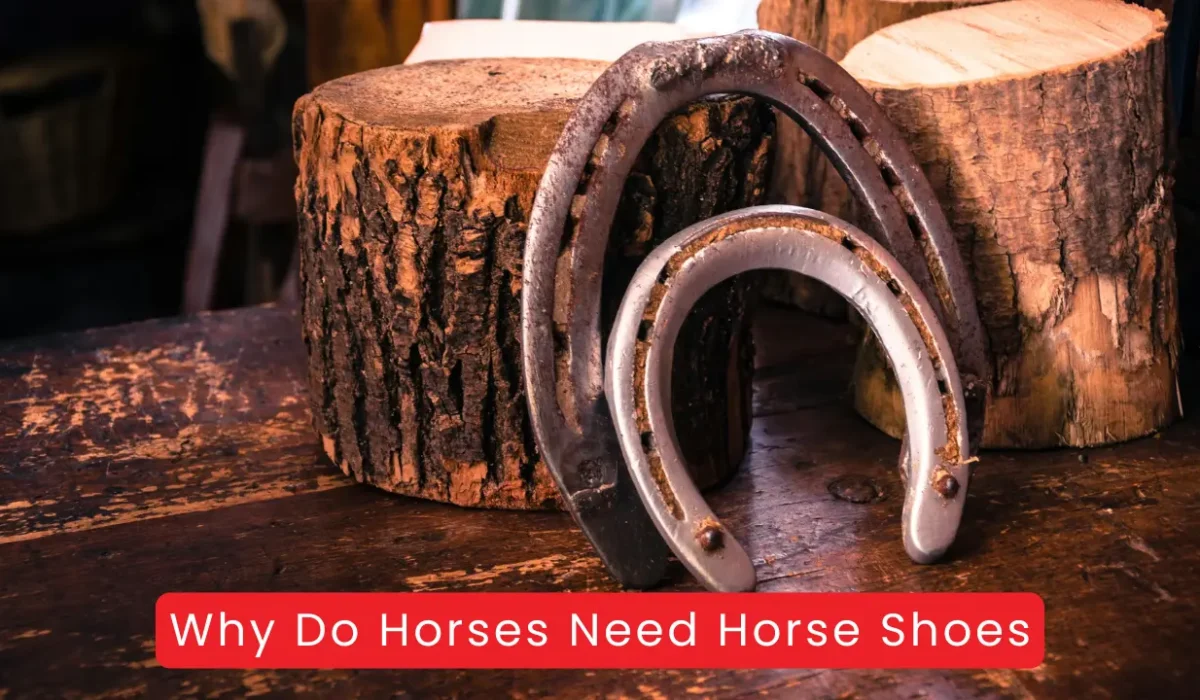
Horse shoes are curved metal or synthetic plates fastened to the bottom of a horse’s hoof. They cover the outer hoof wall, the strongest part of the hoof, and protect it from excessive wear. The horse shoe purpose is simple, even if the craft behind it is not. Steel is the most common material, though aluminum, rubber, and plastic shoes are widely used for specific purposes.
A horseshoe is a U shaped metal or composite rim fitted to the lower edge of the hoof wall to absorb impact, protect against wear, and improve traction. Modern horses need this protection because they routinely walk and work on surfaces their hooves did not evolve to handle.
A Brief History of Horseshoeing
Humans have used horse shoes for over a thousand years. Roman cavalry used a bronze sandal called a hipposandal. By the medieval period, nailed iron shoes had become standard across Europe. The American Farriers Association now sets the professional standards that millions of horses depend on every year.
Horseshoeing is also a regulated trade in many countries. The American Farriers Association offers credentials like the Certified Farrier and Certified Journeyman Farrier, both of which require written exams and live shoeing tests. The United Kingdom legally requires farriers to register with the Farriers Registration Council before they can practice on a paying basis.
Why One Design Does Not Fit Every Horse
There is no single design that fits every horse. The right horse shoe depends on the breed, the workload, the terrain, and the condition of the hoof itself. Think of horseshoes the way you think of running shoes for people. The wrong fit can cause blisters, soreness, and injury, while the right fit can keep a horse moving comfortably for years.
Most horse shoes are still made by farriers who specialize in shaping metal to each horse’s needs. They use a forge, an anvil, and a set of specialized tools that have changed little in centuries. Even with new materials and modern technology, the craft still relies on a careful eye and steady hands.
Breed also plays a role. Thoroughbreds tend to have thinner walls and flatter feet, while Quarter Horses often have shorter, more upright hooves. Draft breeds like the Percheron carry heavy bodies on broad feet that need wide bearing surfaces. A skilled farrier reads these differences before selecting any shoe for the job.
Why Horses Need Horse Shoes
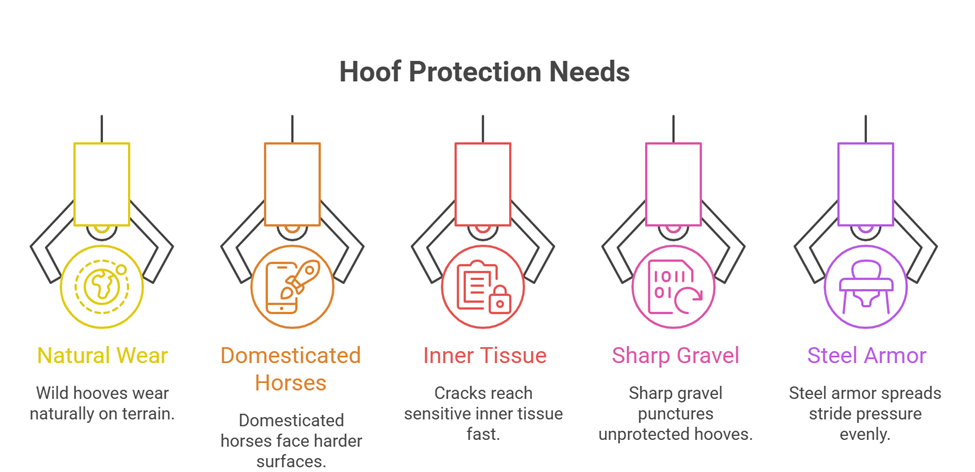
Horses need shoes because human use puts hooves under pressures they were never built for. Wild horses move constantly across varied terrain, which naturally wears and conditions their hooves. Domesticated horses face concrete, gravel, jumps, dressage rings, and trail rides that can exceed natural wear limits. The result is a much higher demand for horse hoof protection, which is why horses wear horseshoes in nearly every kind of work today.
Protection of Horse Hooves
The outer hoof wall is the horse’s first line of defense. Without shoes, this wall can chip, crack, or wear thin under heavy use. Horse shoes shield the wall and distribute weight across a larger surface area, which reduces pressure on weak points.
A study published in the Journal of Equine Veterinary Science showed that shod horses had significantly lower rates of hoof wall cracking under heavy work compared to unshod horses on similar surfaces. The protection also keeps moisture and debris from entering small cracks that can grow into deeper infections.
Sharp gravel, broken glass, and metal debris are common hazards on roads and trails. A barefoot hoof can be punctured or bruised by any of these in a single ride. Steel shoes act as a thin armor that absorbs the worst of those impacts before they reach the live tissue beneath the wall.
Preventing Hoof Wear and Damage
Hoof wear and tear is one of the most common reasons owners shoe their horses. Hooves grow at roughly six to ten millimeters per month, but the rate of wear can exceed growth on hard or rocky ground. When wear outpaces growth, the hoof becomes too short, sore, and prone to bruising.
Horse shoes slow this wear by absorbing the friction that would otherwise grind down the hoof wall. They also prevent uneven wear that can throw off the angle of the hoof and stress the joints above. Owners often notice that shod horses move more confidently across rough or rocky paths.
Concussion is another silent enemy of unprotected hooves. Each step a horse takes on hard ground sends a shock wave through the foot. Over weeks, that shock can cause microfractures in the coffin bone and inflammation in the surrounding tissue. Shoes spread the load and reduce that buildup of stress.
Support for Heavy Workload Horses
Horses that work for long hours, carry heavy riders, or pull loads need extra support beneath the foot. Police horses, ranch horses, carriage horses, and competition horses all fall into this category. The American Association of Equine Practitioners recommends shoeing for any horse whose workload regularly exceeds the natural wear capacity of its hooves.
Without shoes, these animals can develop bruised soles, hoof wall cracks, and lameness within weeks. Properly fitted shoes spread the pressure of each stride across a larger contact area, which helps the horse stay sound through demanding schedules.
But here is where most horse owners go wrong. They wait until the horse is already lame to consider shoes. Prevention is far cheaper, faster, and kinder than rehabilitation.
Draft horses, in particular, benefit from large steel shoes with broad bearing surfaces. A draft horse can weigh more than 2,000 pounds, and every pound puts pressure on a hoof that is only a few inches across. Specialty draft shoes prevent the hoof from spreading too far and cracking under that weight.
Benefits of Horse Shoes
The benefits of horseshoes go beyond simple protection. Shoes can correct gait imbalances, support healing hooves, and improve performance across nearly every equine discipline. Owners who track soundness over time often find that consistent shoeing reduces vet bills and keeps horses in work longer.
The benefits of horseshoes include protection from wear, improved traction on slippery surfaces, support for proper hoof angle, reduced risk of bruising, and corrective help for gait issues. Most performance and working horses gain measurably from regular, well fitted shoes during their working years.
Improved Grip and Traction
Traction is one of the biggest advantages of modern horse shoes. Smooth metal alone can be slippery on wet pavement or icy ground, so farriers add features like studs, caulks, borium, or rubber inserts. These features dig into the surface and give the horse a secure hold on slippery terrain.
Performance horses in disciplines like polo, eventing, or barrel racing rely on traction to make sharp turns at high speed. Without proper grip, the horse risks slipping, falling, or tearing soft tissue in the legs. The University of Kentucky’s Equine Programs note that traction features should match the surface the horse is working on most often.
Winter brings extra challenges. Snow can pack into the hoof and form ice balls that act like skates. Snowball pads or rim pads keep snow from sticking, while studded shoes give grip on icy paths. Many farriers in cold regions adjust their shoeing schedule to match the change of seasons and the work the horse is doing that month.
Reduced Risk of Injury
Horse shoes can dramatically reduce the risk of certain injuries. They protect the sole from sharp stones, prevent the hoof wall from chipping under stress, and keep the foot at the correct angle to support tendons and ligaments. Some shoes are even designed for therapeutic use after an injury.
Bar shoes, heart bar shoes, and egg bar shoes provide extra support to horses recovering from laminitis, navicular issues, or quarter cracks. A skilled farrier working with a veterinarian can choose the shoe that gives the most support for the specific condition.
Therapeutic shoes go even further. Wedge pads can change the angle of the foot to relieve pressure on the deep digital flexor tendon. Glue on shoes can support a hoof that has been damaged so badly that nails would split it further. These tools turn shoeing into a real medical service, not just routine maintenance.
Better Performance on Hard Surfaces
Hard surfaces like asphalt, concrete, or compacted gravel cause more concussion to the hoof than softer ground. That extra impact can lead to bruising, joint stress, and chronic soreness over time. Shoes act as a buffer, absorbing some of the shock and protecting the structures inside the hoof.
Show jumping, harness racing, and police work all involve hard surfaces. Horses in these jobs almost always wear shoes, and many wear pads under the shoes for additional cushioning. The improvement in comfort and consistency is often immediate and measurable.
The bottom line is this. Properly fitted horse shoes pay for themselves in better performance, fewer injuries, and longer working lives. Endurance horses also benefit. A 50 mile ride on rocky desert trails covers terrain that varies from sand to bedrock to creek crossings, and riders who compete in events like the Tevis Cup nearly always shoe their horses for the event.
Do All Horses Need Horse Shoes?
The short answer is no. Not every horse needs shoes, and the decision depends on the horse’s job, hoof quality, and environment. Some horses thrive barefoot, while others need shoes to stay sound. The choice is not one size fits all. Do all horses need shoes? The honest answer is that it varies by case.
Barefoot Horses Explained
Barefoot horses are horses kept without metal shoes, often with regular trims by a farrier or barefoot trimmer. The barefoot movement gained traction in the early 2000s through advocates who argued that natural hoof function improves with consistent unshod movement. Many pasture horses, retired horses, and lightly ridden trail horses do well barefoot.
Hoof boots are a popular alternative for barefoot horses doing occasional rough rides. These boots strap on for the ride and come off afterward, giving protection only when needed. Brands like Easyboot and Cavallo are well recognized in the barefoot community.
Transitioning a shod horse to barefoot is not instant. The hoof needs time to develop a tougher sole, stronger walls, and a better blood supply. This adaptation can take three to twelve months, depending on the horse. During this period, hoof boots are often essential to keep the horse comfortable while the hoof rebuilds its natural defenses.
When Horses Don’t Need Shoes
Many horses can stay sound without shoes if their environment supports it. Horses living on softer ground, with strong hoof genetics, light workloads, and quality nutrition often have hooves that wear evenly without help. Trimming every four to six weeks may be all the maintenance they need.
Here is where most horse owners go wrong. They assume every horse must be shod, even when the horse shows no signs of needing it. The right move is to evaluate hoof quality, workload, and terrain, then decide with input from a farrier and a veterinarian.
Diet plays a major role too. Horses fed balanced rations with adequate copper, zinc, and biotin tend to grow stronger horn. A deficiency in any of these nutrients can leave hooves brittle and prone to cracking, which makes barefoot living harder to sustain. Many barefoot success stories trace back to good farrier work plus targeted nutrition support.
Climate matters as well. Horses kept in dry, arid regions like the American Southwest often grow harder hooves than horses kept in wet, muddy pastures. Wet conditions soften the horn and can lead to thrush and weak walls, while dry conditions can produce stronger hooves but may also cause cracking if not balanced.
Workload matching is the final piece. A horse ridden two or three times a week on grass trails has very different needs from a school horse ridden in lessons every day on a sand arena. The same horse might do well barefoot in one season and need shoes in another. Reassess every few months rather than locking in a permanent answer.
Types of Horse Shoes
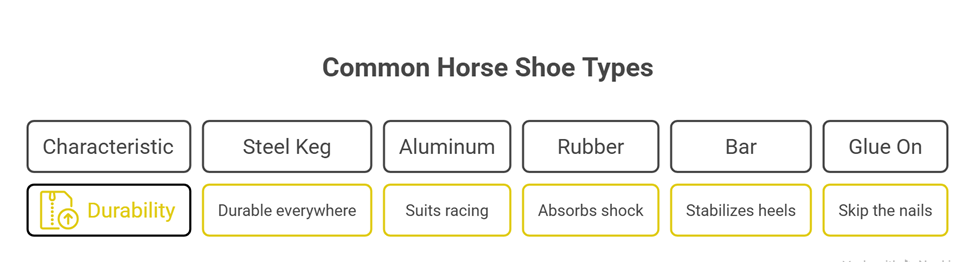
Not all horse shoes are made the same. The type of shoe a farrier chooses depends on the horse’s discipline, conformation, and any specific hoof issues. Below is a quick comparison of the most common types and their typical uses.
| Shoe Type | Material | Best For | Key Feature |
| Steel Keg Shoe | Steel | All around riding, ranch work | Durable, affordable, widely available |
| Aluminum Shoe | Aluminum | Racing, jumping | Lightweight, reduces leg fatigue |
| Rubber Shoe | Rubber composite | Therapeutic, road work | Shock absorbing, quiet on pavement |
| Bar Shoe | Steel or aluminum | Therapeutic, weak heels | Closed back for extra support |
| Heart Bar Shoe | Steel | Laminitis recovery | Frog support and stability |
| Glue On Shoe | Plastic or aluminum | Damaged hoof walls | Attaches without nails |
Each shoe type has horse shoe advantages and disadvantages. Steel shoes are tough and affordable, but they are heavier than aluminum and can be loud on pavement. Aluminum is light and great for performance, but it wears faster. Rubber shoes are quiet and gentle on joints, but they cost more.
Glue on shoes are useful when the hoof wall is too damaged to hold nails. Bar shoes and heart bar shoes are common in rehab work, where the horse needs extra support during healing. The right choice depends on the horse’s needs that month, not last year.
Specialty and Synthetic Shoe Options
Specialty shoes exist for very specific jobs. Racing plates are extremely light aluminum shoes used only on race day. Snowball pads keep snow from packing into the hoof during winter rides. Hospital plates are removable plates that give vets access to a hurt sole while keeping it protected.
Synthetic shoes are gaining ground in many barns. Polyurethane and rubber composite shoes flex with the hoof and absorb shock better than rigid steel. They are gentler on aging joints and on horses recovering from concussion related injuries. The trade off is shorter wear life and higher initial cost per set.
Custom shoes are another option. A farrier can hand forge a shoe to fit an unusual hoof shape, address a specific lameness, or match the demands of an uncommon job. Custom work takes more time, costs more, and requires close coordination with a veterinarian, but for some horses there is simply no off the shelf alternative that works.
Pads sit between the shoe and the hoof for added cushion or coverage. Leather pads provide gentle shock absorption and can be packed with materials like silicone or copper sulfate to support the sole. Plastic pads are firmer and last longer, while pour in pads create a custom fit. Pads are common for horses with thin soles or chronic bruising.
The bottom line is this. The shoe should fit the work and the foot, not the other way around. A skilled farrier evaluates both and selects accordingly.
Horse Shoeing Process
The horse shoeing process is methodical, and a good farrier follows the same routine every time. Each step protects the hoof and keeps the horse comfortable. Here is what to expect during a typical shoeing appointment.
- Removing the old shoes. The farrier carefully pulls off the existing shoes using clinchers and pull offs.
- Trimming the hoof. Excess hoof wall and sole are trimmed to restore proper length and balance.
- Shaping the new shoe. Hot or cold shaping is used to match the shoe to the trimmed hoof.
- Fitting the shoe. The shoe is held against the foot to confirm a snug, even contact across the wall.
- Nailing the shoe in place. Nails are driven through the hoof wall and clinched on the outside.
- Final finishing. The farrier rasps any rough edges and checks the horse’s stance and movement.
A full shoeing typically takes about an hour per horse. Most horses tolerate the process well when introduced to it from a young age. The American Farriers Association recommends a shoeing or trimming cycle of every six to eight weeks for most working horses.
Cost varies by region. In the United States, a full set of standard steel shoes usually runs between 120 and 200 dollars. Specialty shoes for sport or therapeutic work can cost more. Always choose a certified farrier, since poor shoeing can cause real harm.
Hot Shoeing, Cold Shoeing, and Aftercare
Hot shoeing and cold shoeing both have their place. Hot shoeing involves heating the shoe in a forge to shape it precisely, which gives a tighter fit. Cold shoeing skips the forge and shapes the shoe at room temperature. Both can produce excellent results when handled by a qualified farrier.
A good farrier also checks more than just the feet. They watch the horse walk and trot, look at the shoulders and hips, and notice how the horse stands at rest. Those clues guide trimming decisions and shoe choices in ways that pure measurement cannot match.
Choosing the right farrier matters more than choosing the right shoe. Look for certification through the American Farriers Association or a similar body, ask for references from local horse owners, and watch the farrier work before committing. A farrier who rushes, ignores your concerns, or skips the trim is one to avoid for the long run.
After shoeing, check your horse closely for the first 24 hours. Most horses adjust within minutes, but a few may show short term soreness or an uneven gait. Light walking is the best way to confirm comfort. If lameness persists beyond a day, call the farrier back. A small adjustment is normal and easy to fix early.
Problems Without Horse Shoes
Skipping shoes when a horse needs them can lead to serious issues. The hoof is a complex structure of horn, bone, and soft tissue, and damage at the bottom often shows up as lameness or behavior changes. Watch for the following problems if you are deciding whether to keep your horse barefoot.
Hoof Cracks and Damage
Hoof cracks are one of the first signs that a horse may need protection. Small surface cracks can deepen quickly under heavy use, especially on rocky ground. Large cracks weaken the hoof wall and can reach sensitive tissue, causing pain and lameness.
Horseshoes spread the load across the wall and prevent the chipping that leads to cracks. Cornell University’s College of Veterinary Medicine has documented cases where simply adding shoes resolved chronic cracking issues that resisted other treatments.
Prevention is the best treatment. Regular trimming, balanced nutrition, and a clean dry living environment reduce the risk of cracks dramatically. Shoes add a final layer of protection for horses doing demanding work. Once a crack appears, the response should be quick, since small cracks become big cracks faster than most owners expect.
Slipping on Hard Ground
Slipping on hard ground is a real danger for unshod horses doing serious work. Smooth pavement, wet grass, and ice all reduce traction. A horse that slips can pull a tendon, fall, or in extreme cases break a leg.
Shod horses with proper traction features are far safer on these surfaces. Studs and borium are the most common additions for slick conditions, and farriers can adjust them with the seasons.
Slipping risk also rises in winter. Frozen ground, packed snow, and ice all reduce the friction a hoof can find. Many owners pull shoes for the winter to avoid ice balling, but in regions where horses still work outdoors, snowball pads paired with traction studs are often the safer choice for the rider too.
Pain and Discomfort
Pain is the clearest sign that a horse needs help. A barefoot horse working on terrain that is too hard for its hooves will often shorten its stride, drop its head, or refuse to step on rocks. Owners sometimes mistake this for stubbornness or laziness.
In reality, the horse is telling you something hurts. Adding shoes, switching to hoof boots, or changing the workload often resolves the issue quickly. If pain persists, your veterinarian should evaluate the horse for deeper issues like bruising, abscesses, or laminitis.
Think of it this way. A small change in stride is your earliest warning sign. Catching it early can save weeks of recovery time and a lot of money.
Behavioral changes are often the earliest clue. A horse that becomes reluctant to enter the arena, suddenly hates a particular surface, or pins its ears during grooming may be telling you about hoof pain. These signs deserve a careful look at the feet, not punishment for bad behavior.
Horse Shoe FAQs
Why are horse shoes important for horses?
Horse shoes are important because they protect the hoof from excessive wear, support the leg structures, and improve traction on hard or slippery surfaces. They also help correct conformation issues and provide therapeutic support during recovery from injuries. Most horses doing regular work benefit from properly fitted shoes that match their job, hoof condition, and the terrain they live and work on every day.
Can horses live without horseshoes?
Yes, many horses live without horseshoes. The barefoot lifestyle works well for pasture horses, retired horses, and horses with strong hoof genetics doing light work on soft ground. The key is consistent farrier care and matching the horse’s environment and workload to its individual hoof needs. A trained barefoot trimmer plus quality nutrition is often enough to keep these horses comfortable year round.
How often should horse shoes be replaced?
Horse shoes should be replaced every six to eight weeks for most horses. Hooves grow continuously, so the shoes must be reset to maintain proper balance and angle. Performance horses or horses with hoof issues may need shorter cycles, while some calm pasture horses can wait closer to ten weeks. Skipping cycles can lead to long toes, low heels, and joint stress over time.
Do wild horses need shoes?
Wild horses do not need shoes because they cover many miles each day on natural surfaces, which constantly wear and shape their hooves. Their genetics also tend to favor harder, more durable hooves than many domestic breeds. Domesticated horses live very different lives, often standing in stalls or working short bursts on hard ground, which is why most working horses benefit from properly fitted shoes.
What happens if a horse loses its shoe?
If a horse loses a shoe, it can crack the hoof, develop bruising, or pull a clinch that damages the wall. Stop riding the horse, clean the hoof, and call your farrier as soon as possible. A hoof boot can be used as temporary protection until the farrier arrives. Try to find the lost shoe in the field, since a farrier can sometimes reset a recovered shoe.
Is horse shoeing painful for horses?
Horse shoeing is not painful when done correctly. The hoof wall has no nerves in the area where nails are placed, similar to trimming your fingernails. A skilled farrier ensures every nail enters and exits the wall safely without touching sensitive tissue inside the hoof. A horse that flinches consistently during shoeing may have an underlying issue that deserves a veterinary exam. Watch your farrier work the first few times. A calm horse, an attentive farrier, and a comfortable working area are the best signs that the process is being done well.
What is the difference between barefoot and shod horses?
Barefoot horses go without metal shoes, while shod horses wear nailed or glued shoes for protection and support. Both approaches can be healthy when matched to the horse’s job, hoof quality, and overall environment. The difference comes down to fit, not philosophy or fashion. A good farrier can guide owners through the decision based on the horse in front of them, not a one size fits all rule.
Choosing whether to shoe your horse is one of the most practical decisions you will make as an owner. Horse shoes offer real protection, comfort, and performance benefits for horses doing demanding work, but they are not a one size fits all solution. Some horses thrive barefoot, while others stay sound only with regular shoeing. The right path depends on the individual horse, the workload, the environment, and the quality of farrier care you can access in your region.
Pay attention to how your horse moves. Look at the wear pattern on the hoof, watch for any change in stride, and listen when your farrier or vet flags a concern. Small adjustments, made early, prevent the bigger problems that come from waiting too long. Healthy hooves take time, attention, and the right partners to maintain across the seasons.
Talk to other horse owners in your area, too. Local farriers know which approach has worked for horses with similar workloads, breeds, and turnout. That kind of insight is the best second opinion you will find.
If you are unsure what your horse needs, work with a qualified farrier and consult your veterinarian or a certified equine nutritionist for advice tailored to your horse’s individual needs.