If you have ever stood beside a horse and felt something extraordinary, you already sense there is more happening than most people realize. Even devoted horse lovers are often surprised by how little they know about equine biology, intelligence, and social life. The fun facts about horses in this guide reveal a species that is genuinely astonishing in ways most people never fully explore.
Understanding horses more deeply does not require a veterinary degree or years of hands on equine experience. Whether you are a curious beginner, a recreational rider, or a seasoned owner looking to deepen your knowledge, this guide offers something genuinely new. Horses reward curiosity, and every piece of knowledge you gain translates directly into better interactions and better outcomes.
This guide covers twelve astonishing horse facts organized by theme, supported by equine science, and grounded in practical application you can use right away. You will also find clear answers to the most common questions people ask about horses. By the end, you will see horses not just as beautiful animals but as sensory specialists, social beings, and physical wonders with remarkable depth.
| KEY TAKEAWAYS • Horses have the largest eyes of any land mammal, giving them a nearly 350 degree visual field and exceptional sensitivity to movement at long distances and in low light. • Horse memory and intelligence are far more sophisticated than commonly understood, with documented research showing horses remember individual humans after years of separation. • Foal development after birth is astonishingly rapid, with healthy foals standing within two hours and running alongside their mothers within hours of entering the world. • Horses rest primarily while standing using the stay apparatus, yet require brief periods of lying completely flat for the deepest and most restorative stage of sleep. • Learning to read horse body language, social behavior and bonds, and emotional responses transforms the quality and safety of every interaction with a horse. |
Fun Facts about Horses and Their Extraordinary Senses
Horses are sensory powerhouses shaped by millions of years of evolution as prey animals on open plains. Here is the key thing: the same survival senses that once helped wild horses detect predators govern every interaction a domestic horse has with the people around it. When you understand how horses see, communicate, and process the world, your handling approach shifts from guesswork to genuine and informed communication.
Two sensory realities matter most for anyone who spends time around horses. First, horses perceive their environment through a visual system radically different from the human eye, with extraordinary advantages and notable limitations that directly affect every handling interaction. Second, horses communicate enormous amounts of information through physical signals that most people never learn to read accurately or in time to respond appropriately.
Horses Have Nearly 360 Degree Vision
Horse vision and eyesight spans nearly 350 degrees because a horse’s eyes sit on the sides of its head, covering almost the entire surrounding environment simultaneously. Only two blind spots exist in this panoramic field, one directly in front of the nose and one directly behind the tail.
Horses are monocular animals, meaning each eye processes information independently rather than combining images the way human binocular vision does. Think of it this way: when a horse shies at something that appears harmless, it is responding to a visual system built to prioritize breadth of field over depth analysis, an effective survival design on open terrain where threats can approach from any direction.
Researchers at the University of Exeter studying equine visual perception have confirmed that horses process certain movement patterns and contrasts differently from humans. Always approach from the side, move calmly, and avoid sudden actions within the horse’s wide peripheral field. These simple practices align your behavior with the horse’s visual biology and significantly reduce the startle responses that make handling feel unpredictable.
Horses Have Bigger Eyes Than Any Land Mammal
Here is the key thing most casual observers miss: a horse’s eye measures approximately five centimeters in diameter, making it the largest eye of any land mammal on earth. A human eye measures roughly 2.4 centimeters across by comparison. This size gives horses an exceptional capacity to gather light in dim conditions of dawn and dusk, precisely when predators historically posed the greatest risk to grazing herds on open terrain.
The size of a horse’s eye also substantially amplifies sensitivity to movement at long distances. On open plains, detecting a distant threat a fraction of a second sooner than a herd mate could directly determine survival for the individual horse. This sensitivity explains why horses sometimes startle at minor stimuli. Their eyes are built to notice movement first and evaluate whether that movement represents danger second.
Horses Communicate Through Body Language
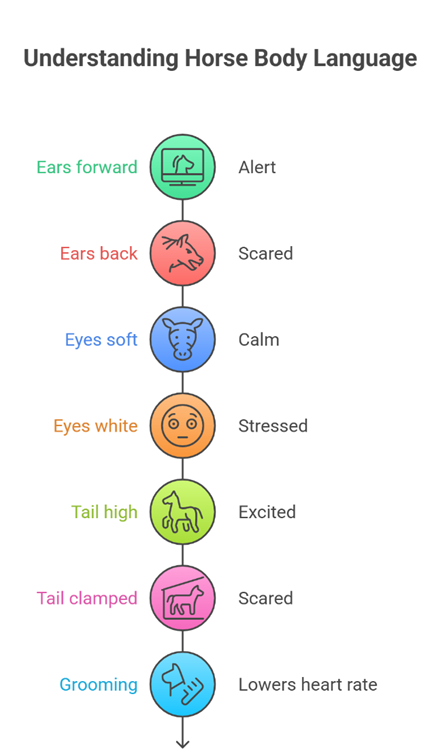
Horse body language is one of the richest communication systems in the animal kingdom. Horses rely on physical signals far more than vocalizations, and every part of the body carries meaning. Ear position, eye tension, head angle, tail carriage, and weight distribution across all four legs carry precise information to another horse and to any handler skilled enough to read these signals accurately and in time.
But here is where most horse owners go wrong: they notice only the dramatic signals and miss the subtle early warnings entirely. By the time a horse pins its ears flat, swings its hindquarters, or kicks out, it has already communicated through quieter signals that went unheeded. The wide eye, subtle muzzle tension, and early back stiffening are the first vocabulary of discomfort that demands immediate attention.
Think of it this way: horse social behavior and bonds are expressed almost entirely through body language, and the same vocabulary applies in every horse to human interaction. Two closely bonded horses, each resting its head across the other’s back during mutual grooming, perform a deliberate social act. Research in Applied Animal Behaviour Science documented that mutual grooming significantly reduces measurable stress indicators, including heart rate and muscle tension, in both animals.
Here are five surprising facts about how horses sense and communicate their world:
- Horses have a specialized organ called the vomeronasal organ, or Jacobson’s organ, which analyzes chemical signals far beyond ordinary smell. When a horse curls its upper lip in the Flehmen response, it directs scent molecules to this organ for deeper chemical analysis. This behavior occurs most commonly in stallions and mares investigating reproductive scents, though horses of any age may perform it when a scent demands closer examination.
- A horse’s ears rotate independently by up to 180 degrees, allowing simultaneous monitoring of sounds from multiple directions without head movement. These positions are also precise emotional indicators. Forward ears signal alertness and interest ahead. Ears pinned flat signal fear, pain, or aggression. Loosely hanging ears angled gently to the side indicate genuine relaxation and comfort, exactly the state any thoughtful handler works to consistently maintain during every interaction.
- The whiskers on a horse’s muzzle serve as active sensory tools rather than cosmetic features. Horses use these tactile hairs to assess edges, texture, and proximity before direct contact, particularly when grazing close to the ground where the large eyes cannot focus. Many European equestrian governing bodies now discourage or ban whisker trimming, recognizing these hairs as part of the horse’s essential sensory system.
- Horses can hear frequencies well beyond human perception, detecting sounds and vibrations entirely inaudible to anyone standing beside them. This explains why horses react to sounds their handlers cannot hear, including approaching storms, distant machinery, or animals moving far beyond the visible horizon. A horse that appears to spook at nothing is almost always responding to something genuinely audible within its much wider hearing range.
- Horse memory and intelligence extend powerfully into scent recognition. Horses identify offspring, longtime companions, and familiar humans by scent alone, and this recognition persists across time and separation. A horse reunited with a familiar companion after months or years apart typically shows recognition through scent investigation before visual confirmation. This olfactory dimension of memory is one reason why horse relationships, once formed, remain remarkably durable.
Horses Can Run Up to 55 mph
The fastest recorded horse speed is 55 miles per hour, achieved by a Thoroughbred named Winning Brew over a two furlong course in 2008 and recognized by Guinness World Records. Quarter Horses are fastest at sprint distances, regularly reaching 45 miles per hour over a quarter mile. These figures represent the outer edge of a speed range that all horses share to varying degrees based on breed and conditioning.
The bottom line is this: horse speed is not simply raw muscular power. At a full gallop, a horse breathes in exact synchrony with its stride, taking one breath per complete stride cycle. This coupling of respiration and locomotion allows working muscles to receive oxygen efficiently and sustain high speeds far longer than the animal’s body size alone would predict in any other comparable mammal of similar weight.
Horses Have Only One Toe (Hoof)
Here is one of the most striking fun facts about horses: despite the forces involved in carrying a rider at 45 miles per hour, each horse leg ends in exactly one toe. The hoof is a single evolved digit made of keratin, the same protein found in human fingernails, enclosing a complex interior of bone, blood vessels, connective tissue, and a natural shock absorbing pad at the heel.
Here is the key thing about the modern horse’s single hoof: its evolution is one of the most thoroughly documented sequences in the fossil record. Approximately 55 million years ago, the ancestor Eohippus had four toes on its front feet. As horses shifted from forests to open plains where speed became the primary survival advantage, lateral toes disappeared over millions of years, leaving the single hoof horses depend on today.
| Breed | Top Speed | Physical Build | Primary Use |
| Thoroughbred | 55 mph | Lean, tall, fine boned | Racing and eventing |
| Quarter Horse | 45 mph | Muscular and compact | Sprint racing and ranch work |
| Arabian | 40 mph | Fine boned and refined | Endurance racing and showing |
| Standardbred | 30 mph | Medium build and sturdy | Harness racing |
| Clydesdale | 20 mph | Heavy and draft built | Draft work and parades |
Horses Can Sleep Standing Up
Horse sleeping habits are shaped by a biological mechanism called the stay apparatus, a system of tendons and ligaments in the horse’s legs that locks the joints in position without muscular effort. This allows a horse to doze upright while remaining fully ready to move the moment a nearby threat is detected.
Horses are polyphasic sleepers, distributing rest across many brief intervals rather than a single continuous session. A healthy adult horse accumulates two to five hours of total sleep daily across these intervals. Light sleep and slow wave sleep occur while standing with one hind leg relaxed and eyes partially closed, a posture horsemen commonly call camped under, which signals genuine comfort rather than illness or injury.
The bottom line is this: rapid eye movement sleep, the deepest and most restorative stage, can only occur when the horse is lying completely flat on its side. REM sleep is essential for cognitive recovery, emotional regulation, and physical restoration. A horse prevented from lying down safely due to stall size, herd pressure, or uncomfortable footing develops a sleep deficit with real consequences for behavior and health.
Horses Have Excellent Memory
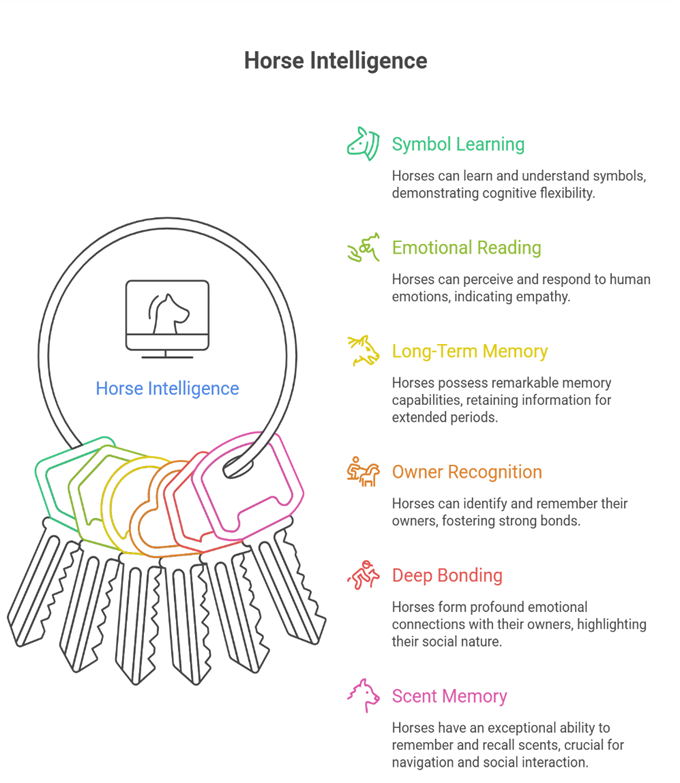
Horse memory and intelligence have become a growing focus of equine behavioral science. Research by Dr. Evelyn Hanggi at the Equine Research Foundation demonstrated that horses can distinguish abstract symbols, solve novel problems, and retain learned information for years without reinforcement. In documented studies, horses correctly identified reward symbols after ten years without intervening exposure, demonstrating a long term memory capacity that rivals primate performance on equivalent tasks.
Think of it this way: when a horse shows nervousness at a location where something frightening happened months or years earlier, it is not being stubborn or difficult. It is expressing exactly the function its memory system evolved to perform. A prey animal that forgets where danger has occurred is a prey animal with significantly reduced survival prospects in any environment where actual predators exist.
The practical implication for trainers and owners is unambiguous. Horses learn and remember from every interaction, not only from formally structured training sessions. A moment of inconsistency, frustration, or poor timing leaves an impression just as clearly as a deliberate lesson. Building positive, consistent associations from the very beginning of a relationship provides the most effective foundation for genuine cooperation and lasting trust over the full course of that partnership.
Horses Can Recognize Human Emotions
One of the most striking fun facts about horses is that they can read and respond to human emotional states in measurable ways. Research published in Biology Letters by University of Sussex researchers found that horses display physiological responses when shown photographs of angry human faces, including elevated heart rate and left gaze bias, a neural response associated with threat evaluation, even when the person photographed was a complete stranger.
But here is where most horse owners go wrong: they attribute this sensitivity to a mystical connection rather than a sophisticated biological capacity. Horses are not magically tuned to human feelings. They are skilled at reading social signals because accurately reading the emotional state of herd members has direct survival implications, and they apply those same skills to every human they encounter as a matter of biology.
The practical application for handlers is immediate. The emotional state you bring to interactions is not invisible to the horse. A calm, clear, and consistent handler creates a predictable and comfortable experience. A tense, rushed, or reactive handler creates a horse that mirrors that energy. Breath rate, posture, muscle tension, and pace of movement are all signals a horse monitors continuously and responds to in kind.
Horses Form Strong Social Bonds
Horse social behavior and bonds are biological necessities, not casual preferences. Horses are herd animals at the deepest evolutionary level, and isolation from others creates measurable and lasting physiological stress. Here is the key thing: a horse without social connection is not simply a lonely animal. It is an animal under chronic stress that affects digestion, immune function, behavior, and learning capacity across every system in the body.
Within a herd, horses develop strong preferential relationships based on compatible temperament, shared history, and mutual investment in grooming and proximity. Research in the Journal of Equine Veterinary Science documented that losing a close companion raises measurable cortisol levels for days or weeks after separation. Even visual contact across a shared fence line provides meaningful social stimulation that measurably reduces stress in horses that cannot be housed together.
Foal Development After Birth and Horse Lifespan Facts
The life cycle of a horse contains biological milestones that are genuinely extraordinary when examined closely. From the developmental readiness of a newborn foal to a lifespan of three decades, understanding what horses need at each stage gives any owner a stronger foundation for every care decision. The bottom line is this: horses at different life stages have fundamentally different needs, and recognizing this is the mark of attentive ownership.
Horse owners who understand the full developmental arc from birth through old age are consistently better equipped to anticipate changing needs early, adjust management strategies at the right times, and prevent the compounding health challenges that arise when care does not evolve alongside the horse as it ages through each decade of life.
Foals Can Stand Within Hours of Birth
Foal development after birth is one of the most compelling demonstrations of survival programming in the animal world. A foal arrives with physical readiness unmatched among domestic animals of similar size. Within 30 to 60 minutes of birth, most healthy foals begin attempting to stand, with the majority succeeding within two hours. Within eight hours, a healthy foal can run alongside its mother, essential to wild survival.
Think of it this way: this accelerated readiness is the direct product of evolutionary pressure on a prey species with no defense other than speed. A foal that cannot keep pace with the herd within hours of birth in the wild faces drastically reduced survival prospects. The musculoskeletal system of a newborn foal is functional from birth in ways a human newborn’s is not, because evolutionary demands required a completely different developmental timeline.
Horses Can Live 25 to 30 Years
Modern horses in well managed domestic settings regularly live to 25 to 30 years of age, and some reach the late thirties with exceptional care throughout their lives. The average equine lifespan has increased meaningfully over recent decades as advances in veterinary medicine, equine dentistry, nutritional science, and management practices have accumulated and become more accessible to the average horse owner across every level of experience.
The bottom line is this: senior horses require specifically adapted management strategies that account for changed metabolic efficiency, progressive dental wear, reduced digestive capacity, and shifting herd dynamics. The American Association of Equine Practitioners recommends that horses over fifteen receive biannual veterinary examinations rather than annual ones, enabling earlier detection of age related changes that respond most effectively to proactive and early intervention before problems compound.
Horses Drink 20 to 50 Liters of Water Daily
A horse’s daily water requirement ranges from 20 to 50 liters under normal conditions, rising substantially during hot weather, heavy exercise, pregnancy, or when the diet relies primarily on dry hay rather than fresh pasture. Water is the most critical nutrient for horses, and even mild dehydration produces measurable negative effects on gut motility, thermoregulation, joint lubrication, and performance at any level of work.
The most critical reason to monitor water intake is its direct relationship to colic risk. Impaction colic occurs when dry feed blocks the intestinal tract, and it becomes far more likely when horses do not drink enough. This risk rises in winter when cold water reduces the motivation to drink. The bottom line is this: providing clean, fresh water consistently is one of the highest impact practices any owner can maintain.
Fun Facts about Horses: Your Most Common Questions Answered
Horses inspire genuine and persistent curiosity in nearly everyone who encounters them. The questions people search for most consistently reveal a widespread desire to understand these animals at a level that goes well beyond the surface. The answers below address the most frequently asked questions about horses with scientific grounding and practical clarity, drawing on current equine research and established veterinary guidance.
Whether you are preparing for your first horse, deepening knowledge you have built over years, or seeking reassurance about something you have observed, these answers are designed to be both accurate and directly useful in your day to day interactions with horses at every level.
How fast can a horse run?
How fast can a horse run depends on the breed, the individual horse, and the distance. At the peak, a Thoroughbred named Winning Brew reached 55 miles per hour over a two furlong course in 2008, setting the world record recognized by Guinness World Records. Quarter Horses are fastest at sprint distances, regularly reaching 45 miles per hour over a quarter mile, the distance that gives the breed its name.
Most horses used for recreational riding operate at far more moderate speeds. A typical pleasure horse walks at approximately 4 miles per hour, trots at 8 to 12 miles per hour, canters at 12 to 17 miles per hour, and gallops at 25 to 30 miles per hour. Even at working speeds, a horse at a full gallop easily outstrips any human runner, reflecting the fundamental difference between equine and human locomotion.
Think of it this way: genetics set a horse’s speed potential, but how close any individual horse gets to that potential depends almost entirely on the quality of care it receives. Correct hoof maintenance, appropriate body weight, cardiovascular conditioning, and good footing all have direct and measurable effects on both speed and soundness. A horse in excellent condition consistently outperforms a genetically similar horse in poor condition.
How long do horses live?
Horses in domestic settings typically live between 25 and 30 years, with many remaining active and comfortable through their mid to late twenties when they receive consistent and appropriate care throughout their lives. This represents a genuine increase from historical averages, driven by advances in equine veterinary medicine, dental care, nutritional science, and growing awareness among horse owners of the specific needs that accompany advancing age in horses.
Breed and body size influence lifespan in ways consistent with patterns seen across mammal species. Smaller horses and ponies tend to live longer than larger breeds. Shetland ponies frequently live into their thirties, while larger warmblood and draft breeds tend toward shorter average lifespans. Individual variation across all breeds is significant, and consistent management has a greater collective impact on longevity than breed or genetics alone.
Can horses sleep standing up?
Yes, horses can and do sleep standing up, and they do so for the majority of their daily rest time. The stay apparatus, a specialized system of tendons and ligaments, locks the leg joints without sustained muscular effort. This allows a horse to enter light sleep and slow wave sleep while remaining upright and capable of immediate movement if any of its highly attuned senses detect a nearby threat.
The deepest and most restorative stage of sleep, known as REM sleep, can only occur when the horse is lying completely flat on its side. REM sleep is essential for cognitive consolidation, emotional regulation, and physical recovery from the demands of work and daily activity. A horse consistently prevented from lying down safely accumulates a measurable sleep deficit with real consequences for behavior, learning capacity, and overall health.
In practice, most healthy horses cycle through standing rest, brief periods of lying on the chest, and short intervals of full lateral recumbency. Total daily sleep for a healthy adult horse is typically two to five hours, distributed across many short intervals rather than a single continuous block. Observing your horse’s resting patterns provides valuable information about its comfort, health status, and social ease within its environment.
What do horses eat?
Horses are hindgut fermenting herbivores built for the continuous consumption of fibrous plant material. The foundation of any healthy horse diet is high quality forage, primarily pasture grass and hay, which fuels fermentation in the cecum and large colon. Horses in their natural environment graze for 16 to 20 hours per day, and the domestic horse’s gut functions best when forage intake mirrors that natural pattern.
But here is where most horse owners go wrong: they rely too heavily on concentrate feeds at the expense of adequate forage volume in the overall diet. A diet high in grain and low in forage disrupts the hindgut fermentation environment and substantially increases the risk of digestive disorders including colic and laminitis, both of which are serious, often preventable conditions when proper forage first feeding management is followed consistently.
How much water does a horse drink daily?
A horse’s daily water intake ranges from 20 to 50 liters under normal conditions, rising substantially during hot weather, intense exercise, or when the diet relies primarily on dry hay. Water is the most critical nutrient in the equine diet, and even mild dehydration produces measurable negative effects on digestion, thermoregulation, performance, and joint health. No nutritional program is effective without adequate daily water intake as its foundation.
Tracking bucket or trough levels daily is one of the most practical health monitoring habits any horse owner can develop. Significant changes in drinking patterns, either a sudden increase or a notable decrease from baseline, can be an early indicator of health changes ranging from dental pain to kidney issues or systemic illness. Consistent observation provides the best opportunity for early intervention before a condition becomes significantly more serious.
Do horses recognize their owners?
Yes, horses recognize their owners, and the scientific evidence is both substantial and consistent. Research at the University of Sussex found that horses can distinguish between familiar and unfamiliar humans using visual and olfactory cues. Horses shown photographs of familiar versus unfamiliar people displayed clear physiological differences, including measurable indicators of comfort and positive anticipation when viewing images of people they had worked with regularly over extended periods.
Here is the key thing: the recognition a horse builds for its owner is shaped directly by the quality of their shared interactions. Consistent, respectful handling builds a genuinely positive association over time. Unpredictable or aversive handling builds a cautious or avoidant association instead. Every interaction is a deliberate opportunity to build the kind of trust that carries forward into every future encounter.
Horses are far more than the powerful, beautiful animals most people see at first glance. The fun facts about horses in this guide reveal sensory specialists refined by evolutionary pressure, emotional beings who read human faces and remember individuals after years apart, social animals with bonds that rival highly intelligent species, and physical wonders built to cover ground at speeds that still astonish every person who encounters them.
Every fun fact about horses in this guide points toward the same truth: horses thrive when the people around them invest in understanding them. Whether applying knowledge about horse sleeping habits to improve stall management, drawing on foal development after birth, or using your understanding of horse social behavior and bonds to make better herd decisions, the outcome is always the same: better lives for horses and the people who care for them.
These fun facts about horses are only the beginning. Consult your veterinarian or a certified equine specialist for advice tailored to your horse’s individual needs and circumstances.