
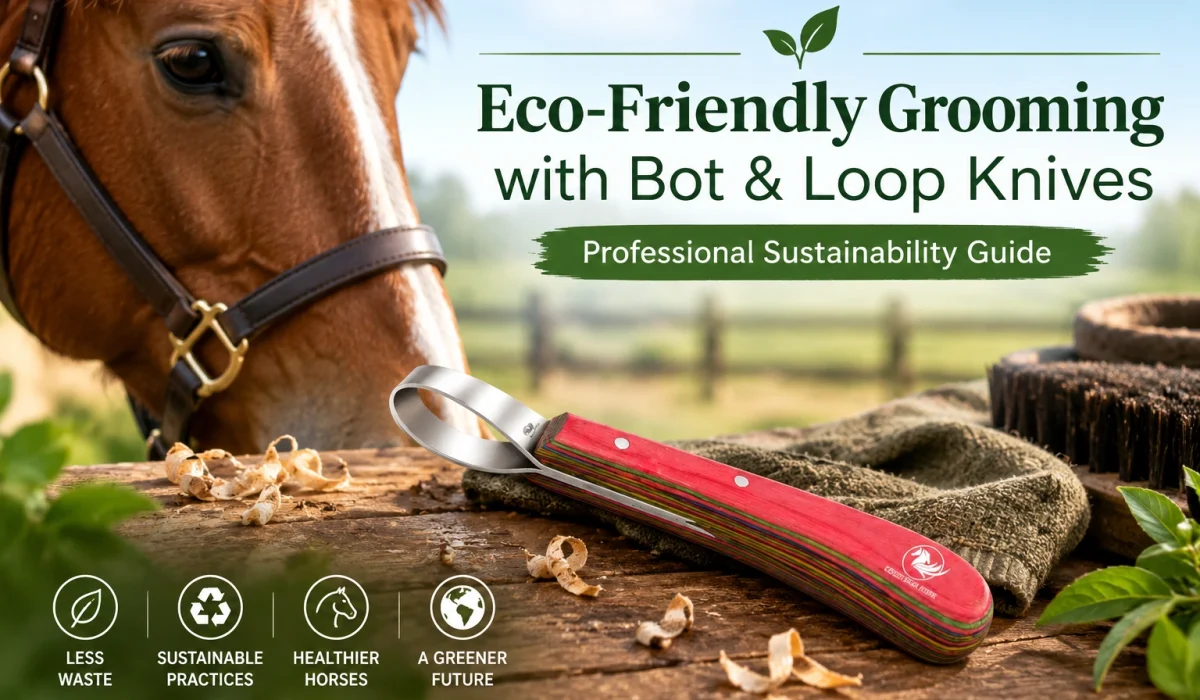
Eco friendly horse grooming means choosing durable tools, cleaning them with safe products, and keeping them in service for years instead of replacing them every season. Bot knives and loop knives fit this approach perfectly. This guide shows you how to use, clean, store, and eventually recycle both tools.
The good news? You will learn how to remove botfly eggs safely, how to use a loop hoof knife without injuring your horse, and how to clean steel tools without harsh chemicals. Every step reduces barn waste and protects your horse’s health at the same time.
Key Takeaways
- Durable steel tools like bot knives and loop knives cut waste because one quality tool can replace dozens of disposable alternatives over its life.
- A bot knife removes botfly eggs from your horse’s coat before your horse can lick them and swallow the hatching larvae.
- A loop knife cleans and pares the hoof, but you should leave major trimming decisions to a qualified farrier.
- Hot soapy water, a stiff brush, 70 percent isopropyl alcohol, and a light coat of oil handle most tool care without harsh chemicals.
- When a tool finally wears out, steel goes to a scrap metal recycler, not the household trash.
What Is Eco Friendly Horse Grooming?
Eco friendly horse grooming is a care routine that lowers waste, avoids harmful chemicals, and extends the life of every tool you own because each replacement costs money, energy, and raw materials. It favors reusable, repairable equipment and cleaning methods that are safe for horses, people, soil, and water.
Here is the key thing: sustainable horse grooming is not about buying new “green” products. It is about using what you already own for longer and caring for it well. The most environmentally friendly horse care tool is usually the one that is already hanging in your tack room.
The Core Principles of Sustainable Horse Grooming
Four simple principles guide every decision in a green grooming routine. You can apply them to brushes, combs, hoof picks, and knives alike.
- Buy once, buy well. Choose solid steel and sturdy handles that you can clean, sharpen, and repair.
- Clean without harm. Use soap, hot water, and products that break down safely.
- Maintain on a schedule. Regular drying, oiling, and sharpening prevent early failure.
- Dispose responsibly. Recycle metal and reuse handles or cloths when a tool retires.
Think of it this way: every grooming tool has an environmental cost that is paid up front, during mining, forging, packaging, and shipping. The longer you keep that tool in service, the smaller that cost becomes per grooming session.
Why Tool Longevity Matters More Than Product Labels
Tool longevity is the single biggest lever you control in green horse grooming practices. A product label that says “natural” tells you little about how long an item will last or where it ends up.
A cheap plastic scraper that snaps after one season creates more waste than a steel tool used for a decade. So when you compare eco friendly grooming tools, look at material quality, ease of cleaning, and whether you can sharpen or repair the tool. Those three traits predict its true environmental footprint.
Common Myths About Green Grooming
Several myths push horse owners toward choices that create more waste, not less. Clearing them up makes your decisions easier.
- Myth: plastic is lighter, so it is greener. Lightweight tools often break sooner and rarely get recycled.
- Myth: natural products are always safe. Some plant oils and homemade mixes irritate skin or damage metal.
- Myth: sustainable tools cost more. A durable tool usually costs less per year than repeated cheap replacements.
The bottom line is this: judge every product by how long it lasts and what happens to it at the end of its life.
How Bot and Loop Knives Support Sustainable Horse Care
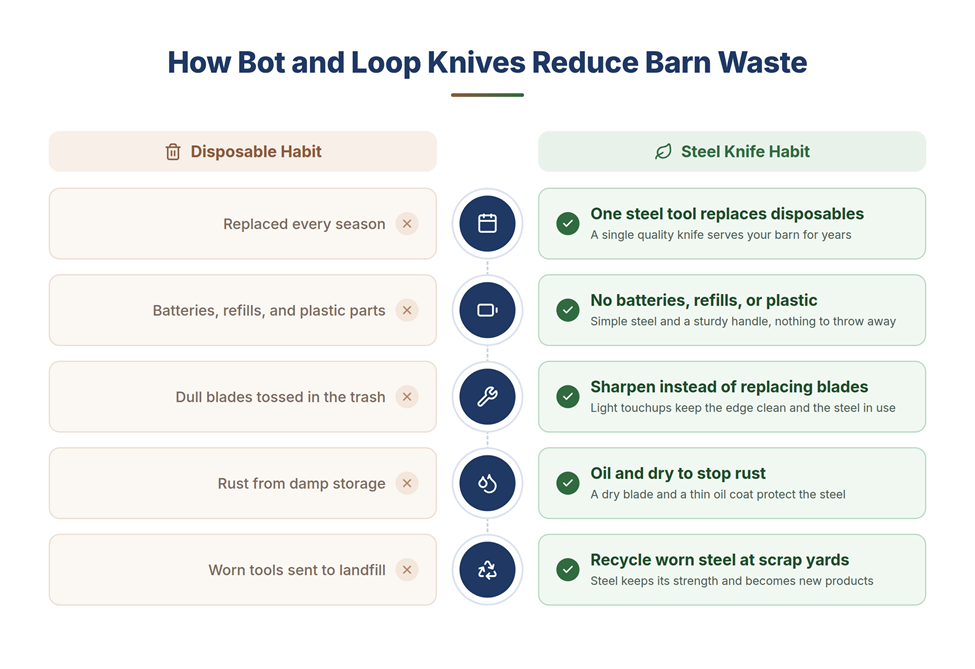
Bot and loop knives support sustainable horse care because they are simple, all steel tools that do a precise job and last for years with basic maintenance. Neither needs batteries, refills, or disposable parts.
Put simply, each tool solves a specific problem. The bot knife handles a seasonal parasite issue on the coat, while the loop knife handles routine hoof cleanup. Used together, they cover two important grooming tasks with minimal waste.
Bot Knife vs Loop Knife: Key Differences
Here is a quick comparison to help you understand where each tool fits in your kit.
| Feature | Bot Knife | Loop Knife |
| Main purpose | Removes botfly eggs from hair | Cleans and pares the sole and frog |
| Blade style | Short serrated or notched edge | Closed loop blade, often sharpened on both sides |
| Where you use it | Legs, shoulders, chest, and jaw | Bottom of the hoof |
| Season of heaviest use | Late summer through first hard frost | All year |
| Who should use it | Any careful horse owner | Owners for light cleanup; farriers for trimming |
| Main care need | Rinse, dry, and oil after use | Clean, dry, oil, and sharpen regularly |
| Typical lifespan with care | Many years | Many years, with periodic sharpening |
Durable Steel Versus Disposable Alternatives
Steel tools outlast almost every disposable option because you can clean, sharpen, and reuse them without losing performance. Disposable razors, single use scrapers, and plastic combs often end up in landfills after a few uses.
But here is where most horse owners go wrong: they buy steel tools and then let them rust in a damp tack trunk. Rust shortens tool life faster than daily use does. The care habits in this guide protect your investment and keep your low waste horse grooming routine on track.
Choosing Quality Steel for Long Service
Stainless steel resists rust better, while high carbon steel usually holds a keener edge and sharpens easily. Both can last for years, but they need slightly different care.
Here is the catch: stainless steel suits bot knives, because they see damp legs and humid summer barns. Carbon steel is popular for hoof knives among professionals, but it rusts quickly if you skip drying and oiling. Choose the steel that matches how carefully you will maintain it, and check that the handle is riveted or molded firmly to the blade.
Building a Minimal Grooming Kit
A minimal kit holds only the tools you use often, which reduces clutter, duplicate purchases, and forgotten items that rust in a corner. Most owners need far fewer tools than they own.
For coat and hoof care, a practical core kit includes a curry comb, a stiff brush, a soft brush, a hoof pick, a bot knife, and a loop knife. Add a few reusable cloths and a small bottle of oil.
Using a Bot Knife for Eco Friendly Grooming
A bot knife removes botfly eggs from your horse’s hair quickly and without chemicals. That makes it one of the simplest eco friendly grooming tools you can own.
Here is what that looks like in practice. The serrated or notched edge catches the small eggs and scrapes them free as you draw the blade along the hair. Used correctly, it does not cut the skin, and a single tool can serve your whole barn for many seasons.
Understanding the Horse Bot Fly Life Cycle
The horse bot fly is a parasite whose larvae live in the horse’s stomach, and you break its life cycle when you remove eggs from the coat before your horse ingests them. Adult flies glue small yellow eggs to individual hairs, usually on the forelegs, shoulders, and chin.
According to the University of Florida IFAS Extension, the common horse bot fly (Gasterophilus intestinalis) lays eggs mainly on the forelegs. The eggs hatch when your horse licks or bites the area, and the larvae travel to the mouth.
From the mouth, the larvae move to the stomach. There, they attach to the stomach lining and remain for months before passing out in manure and developing into new adult flies.
Here is why that matters: every egg you remove is a larva that never reaches your horse’s stomach. Egg removal will not replace a deworming program, but it reduces the number of parasites your horse picks up during fly season.
How Botfly Egg Removal Fits With Deworming
Removing botfly eggs works best as one part of a broader parasite plan, not as a substitute for veterinary care. The American Association of Equine Practitioners (AAEP) publishes internal parasite control guidelines that address bots, and they recommend building a program with your veterinarian.
Those guidelines note that many horses in regions with cold winters receive a treatment targeting bots after the first hard frost, once adult flies stop laying eggs. Your veterinarian can choose the right product and timing for your climate. The bottom line is this: grooming handles the eggs you can see, and your vet handles the larvae you cannot.
How to Remove Botfly Eggs Safely
Removing botfly eggs is simple once you know the correct technique. Follow these steps every few days during fly season.
- Check your horse in good light. Look for tiny yellow or cream specks attached to hairs on the forelegs, shoulders, chest, and jaw.
- Secure your horse calmly. Tie your horse with a quick release knot or ask a helper to hold the lead rope.
- Hold the bot knife at a shallow angle. Keep the blade nearly flat against the hair so the edge catches eggs, not skin.
- Stroke in the direction of hair growth. Use short, light strokes and let the serrations do the work.
- Catch the eggs as they fall. Work over a damp cloth or small tray so the eggs do not drop into bedding or pasture.
- Dispose of the eggs properly. Seal them in a bag or drop them into a covered container before putting them in the trash.
- Clean the knife before storing it. Rinse, dry, and lightly oil the blade so it is ready for your next session.
Now for a helpful tip. Some owners sponge the egg area with warm water first, because warmth and moisture can trigger certain bot eggs to hatch away from the mouth, where the larvae cannot survive. Treat this as a supporting step and always follow up with the bot knife.
Bot Knife vs Bot Block and Other Removal Methods
A bot knife is the most durable and precise option for removing botfly eggs, although other methods have a place. Knowing the alternatives helps you pick the right tool for each horse.
A bot block is a porous, pumice style stone that grinds eggs off the hair. It works well on large flat areas, but it wears down with use and eventually needs replacing. Disposable razors also remove eggs, yet they risk nicking the skin and add plastic waste.
Think of it this way: the bot block wears away, the razor gets thrown away, and the bot knife stays in your kit year after year.
How to Clean and Store a Bot Knife
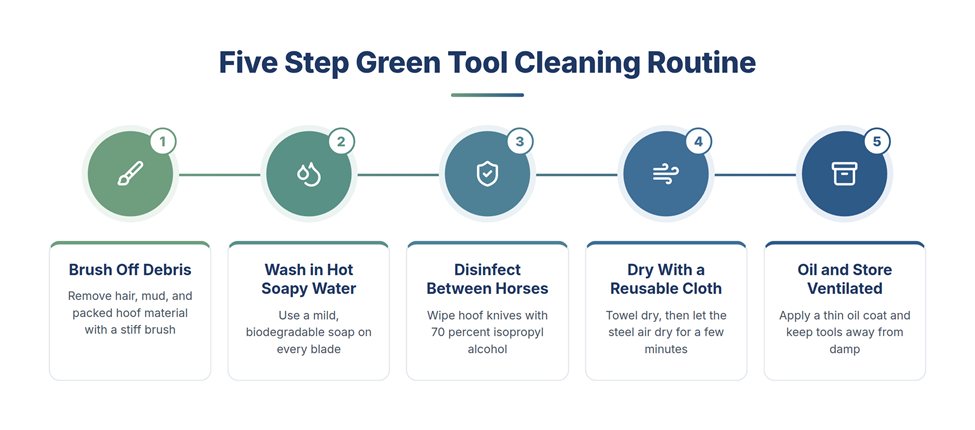
You clean a bot knife by rinsing off hair and egg debris, washing it in hot soapy water, drying it completely, and applying a thin layer of oil. This routine takes about two minutes and prevents rust from dulling the serrations.
Store the knife in a dry drawer, a tool roll, or a hanging rack away from feed and water buckets. Avoid tossing it loose in a grooming box with damp sponges. Humidity trapped in a closed box is the fastest way to ruin good steel.
Consider this: a bot knife that you clean after every session can easily outlast several horses. That is sustainable horse grooming in its purest form, because the most reliable way to cut waste is to never need a replacement.
Using a Loop Knife for Sustainable Hoof Care
A loop knife is a hoof knife with a closed, rounded blade that cleans the sole, trims loose flaps of frog, and clears debris from the grooves beside the frog. Many loop knives cut on both edges, so they work well for right and left handed users.
The sole is the flat underside of the hoof, and the frog is the rubbery, V shaped pad in the center. Farriers pare these areas to remove dead tissue and check for bruises or infection. As an owner, you will use the loop knife mainly for light cleanup between farrier visits.
Let’s be clear about limits: a loop knife is not a trimming tool for beginners. Cutting too deep can cause pain, bleeding, or lameness. Leave shaping, balancing, and major paring to a qualified farrier, and use your knife only for surface cleanup that you feel confident doing.
How to Use a Loop Hoof Knife Safely
Safe loop knife use starts with a clean hoof, a sharp blade, and a steady horse. A dull blade is more dangerous than a sharp one because it slips and forces you to push harder.
Follow these practical safety rules every time:
- Pick the hoof first. Remove mud, manure, and stones with a hoof pick so you can see what you are cutting.
- Cut away from yourself. Always draw the blade away from your body, hands, and legs.
- Take thin slices. Remove only loose, flaky, or ragged tissue from the surface.
- Stop at live tissue. If the sole looks pink, moist, or tender, stop immediately.
- Watch your horse. If your horse flinches or pulls away, pause and reassess.
- Wear gloves. A sturdy glove on your holding hand protects against slips.
Here is a simple rule: if you are unsure whether to cut, do not cut. Take a photo and ask your farrier at the next visit. Good hoof care depends on patience, not on how much tissue you remove.
Building a Simple Hoof Care Routine Between Farrier Visits
A simple daily routine keeps hooves healthy and reduces how often you need the loop knife at all. Most horses benefit from the same basic habits.
Pick out each hoof daily, especially after turnout in wet or muddy conditions. Check the frog for a black discharge or strong smell, which can signal thrush. Keep stalls clean and dry, because standing in wet bedding softens the hoof and invites infection. Use the loop knife only when loose flaps of frog or packed debris hide the grooves.
Write down anything unusual and share your notes with your farrier. This teamwork approach supports eco conscious equine care, because healthy hooves need fewer treatments, fewer products, and fewer emergency visits.
How to Clean and Maintain a Loop Knife
Loop knife care follows the same basic pattern as bot knife maintenance, with one extra step for disinfection. The hoof carries soil bacteria and fungi, so you should clean the blade after every use and disinfect it between horses.
Here is the routine. Rinse the blade under running water and scrub the loop with a stiff brush to remove packed debris. Wash it with hot soapy water, then wipe it with 70 percent isopropyl alcohol if you are moving to another horse. Dry it completely and apply a light coat of oil to the steel.
What does that mean for you? It means thrush, which is a common bacterial infection of the frog, and other hoof problems are less likely to spread from horse to horse through your tools.
Sharpening to Extend Tool Life
Sharpening is the most important habit for extending grooming tool lifespan, because a sharp edge cuts cleanly and wears evenly. A dull loop knife tears tissue and encourages you to apply more force, which increases the risk of slips.
Most loop knives respond well to a small round file, a tapered diamond hone, or a sharpener made for hoof knives. Follow the original bevel, which is the angled surface that forms the cutting edge, and use light, even strokes. If you are unsure, ask your farrier to show you or to sharpen it for you.
The result? You get cleaner cuts with less effort. Sharpen little and often rather than grinding heavily once a year. Light touchups remove very little steel, so your knife lasts far longer. That small habit turns one loop knife into a long term part of your sustainable barn practices.
Eco Friendly Ways to Clean Grooming Tools
The most eco friendly way to clean grooming tools is to remove debris mechanically, wash with mild soap and hot water, disinfect only when needed, and dry everything thoroughly. This approach uses fewer chemicals and still keeps your horses safe.
Cleaning horse grooming tools matters for health as well as sustainability. The Merck Veterinary Manual notes that ringworm, a contagious fungal skin infection, can spread between horses through shared grooming equipment and tack. Clean tools protect your herd and your wallet at the same time.
Where Your Rinse Water Goes
Where you dump your cleaning water matters as much as what you put in it. Rinse water carries soap, hair, manure, and sometimes disinfectant.
Here is what most people miss: pour used water onto a gravel area or a vegetated patch well away from wells, streams, and storm drains. Soil and plants filter small amounts of biodegradable soap naturally. Never pour bleach solutions or large volumes of disinfectant near open water, because even diluted chemicals can harm fish and other aquatic life.
Nontoxic Tool Cleaners That Work
Nontoxic tool cleaners are household products that clean or disinfect metal tools effectively while breaking down into harmless substances or leaving little residue. You probably have most of them in your barn or kitchen already.
This table compares common options so you can choose the right product for each job.
| Cleaner | Best use | Environmental note | Caution |
| Hot water and mild soap | Daily cleaning of all tools | Biodegradable soaps break down safely | Dry tools fully afterward |
| 70 percent isopropyl alcohol | Disinfecting between horses | Evaporates quickly, leaves little residue | Flammable; store away from heat |
| 3 percent hydrogen peroxide | Disinfecting stained surfaces | Breaks down into water and oxygen | Can bleach fabric handles |
| White vinegar | Loosening mineral deposits and light rust | Food grade and biodegradable | Acidic; rinse and dry steel quickly |
| Baking soda paste | Gentle scrubbing of grime | Safe and inexpensive | Rinse thoroughly |
| Chlorine bleach | Outbreak situations only | Harsh; avoid storm drains | Corrodes steel; use sparingly |
Keep this in mind when you shop. When you buy commercial cleaners, look for the US Environmental Protection Agency (EPA) Safer Choice label. The EPA uses this label to identify products that meet its criteria for safer chemical ingredients. It gives you a quick, trustworthy shortcut when choosing biodegradable grooming products.
Preventing Rust on Grooming Tools
Preventing rust on grooming tools comes down to one rule: never store steel wet. Rust forms when moisture and oxygen sit on bare metal, and barns provide plenty of both.
The good news? Rust prevention is quick and cheap. Use these habits after every cleaning:
- Dry each tool with a reusable cloth, then let it air dry for several minutes.
- Apply a thin coat of food grade mineral oil or a plant based oil to the blade.
- Store tools in a ventilated space rather than a sealed plastic tub.
- Add a small bag of reusable silica gel to your tool drawer in humid months.
- Check blades weekly during wet seasons and remove any light surface rust early.
If light rust appears, scrub it with a paste of baking soda and water or a quick vinegar soak, then rinse, dry, and oil the tool. Deep pitting weakens the steel, so catch rust early.
Reusable Cloths and Low Waste Habits
Reusable grooming cloths are cotton or microfiber rags that replace paper towels and disposable wipes in your cleaning routine. They dry tools better, cost less over time, and wash easily with your barn laundry.
Here is where small changes add up. Keep a labeled bin of clean cloths and a second bin for dirty ones. Cut old towels or saddle pads into rags instead of throwing them away. These simple reusable horse grooming supplies can remove hundreds of paper towels from your barn each year.
Other low waste habits help too. Buy cleaners in larger refillable containers, mix only what you need, and avoid aerosol sprays when a pump bottle works just as well. Each choice reduces packaging and supports a broader goal of reducing barn waste.
A Weekly Barn Tool Care Schedule
A short weekly schedule keeps every tool in working order without taking over your day. Try this simple rhythm:
- After every use: Rinse, wash, and dry each blade, then oil the steel.
- Between horses: Wipe hoof knives with isopropyl alcohol.
- Once a week: Inspect edges, handles, and storage areas for rust or damage.
- Once a month: Touch up the edge on your loop knife and wash all cleaning cloths.
Here is the key thing: consistency beats intensity. Ten minutes a week prevents the neglect that sends tools to the trash.
When Should You Replace or Recycle These Tools?
You should replace a bot knife or loop knife when it can no longer be sharpened safely, when the blade is cracked or deeply pitted, or when the handle is loose beyond repair. Until then, proper maintenance keeps it in service.
But here is where most horse owners go wrong: they replace tools too early. A dull blade usually needs sharpening, not replacement. A loose handle often needs a new rivet or a replacement grip. Before you buy anything new, ask whether a repair or a professional sharpening would solve the problem.
Signs Your Knife Needs Replacing
A worn out knife shows clear warning signs that affect safety and performance. Check your tools for these problems at least once each season:
- Cracks in the blade. Any crack can cause the steel to snap during use.
- Deep pitting from rust. Pits weaken the blade and trap bacteria.
- A blade worn too thin. Heavy sharpening over the years can leave too little steel.
- A handle that will not stay tight. A loose handle makes control difficult and unsafe.
- Bent or broken serrations on a bot knife. Damaged teeth can snag skin instead of eggs.
Here is the rule: if your knife shows any of these signs, retire it. Safety must come first, and no sustainability goal is worth injuring your horse or yourself.
Responsible Tool Disposal and Recycling
Responsible tool disposal means sending worn steel to a scrap metal recycler rather than the household trash. Steel keeps its strength through repeated recycling, so an old knife can become new steel products.
The Steel Recycling Institute describes steel as the most recycled material in North America. Most local scrap yards and many municipal recycling centers accept small steel items. Wrap the blade in cardboard or tape it securely so that no one at the facility gets cut.
Remember this: recycling metal grooming tools is the final step in a complete green grooming cycle. Separate wooden or plastic handles if you can, and reuse wooden handles for garden tools or barn projects. That way, almost nothing from your old knife goes to landfill.
Donating Tools That Still Have Life Left
If you upgrade a tool that still works, pass it on rather than letting it sit in a drawer. Think of it this way: a working tool in someone else’s hands is waste avoided.
Many riding schools, therapeutic riding programs, 4H clubs, and horse rescues welcome clean, sharpened grooming tools. Farrier students may also appreciate a spare loop knife for practice under supervision.
Horse Grooming Tool Maintenance FAQs
Are bot knives and loop knives used for the same purpose?
No, bot knives and loop knives serve completely different purposes. A bot knife removes botfly eggs from your horse’s coat, while a loop knife cleans and pares the sole and frog of the hoof. You need both if you want to cover coat care and hoof care with steel tools.
How often should you clean a hoof knife and a bot knife?
You should clean both tools after every use. Rinse, wash, and dry them each time, then disinfect with isopropyl alcohol when you move between horses. Oil the blades after cleaning, and inspect them weekly during wet or humid seasons to catch rust early.
Can you sharpen a loop hoof knife at home?
Yes, you can sharpen a loop hoof knife at home with a small round file, a tapered hone, or a dedicated hoof knife sharpener. Here is a quick rule: follow the original bevel and use light strokes. If you lack experience, ask your farrier for a demonstration before you try it yourself.
What cleaning products are safe for horse grooming tools?
Hot water, mild biodegradable soap, 70 percent isopropyl alcohol, and 3 percent hydrogen peroxide are safe choices for most grooming tools. White vinegar and baking soda help with mineral deposits and light rust. Reserve chlorine bleach for disease outbreaks, because it corrodes steel and harms waterways.
Can old horse grooming tools be recycled?
Yes, most old horse grooming tools with steel blades can be recycled at scrap metal yards or municipal recycling centers. Wrap sharp edges before you drop them off. Plastic parts and brushes are harder to recycle, so check your local program or reuse them for barn cleaning tasks.
When is botfly season for horses in most regions?
Botfly season usually runs from mid or late summer until the first hard frost, although it varies by climate. Warmer regions may see flies for longer periods. Check your horse’s legs every few days during this window and ask your veterinarian when to schedule bot treatment.
Should horse owners trim hooves with a loop knife?
Horse owners should use a loop knife only for light surface cleanup, not full hoof trimming. The reason is simple. Proper trimming requires training to judge hoof balance, sole depth, and angles. Your farrier should handle trimming, while you remove loose frog flaps and packed debris between visits.
How do you stop grooming tools from rusting in a damp barn?
You stop grooming tools from rusting in a damp barn by drying them completely, oiling the steel, and storing them in a ventilated space. Reusable silica gel packs in your tool drawer absorb extra moisture. Weekly checks during wet months let you remove surface rust before it causes damage.
Final Thoughts on Greener Grooming
Eco friendly horse grooming works best when you treat every tool as a long term investment. A well maintained bot knife and loop knife can serve your barn for many years, keep parasites and hoof problems in check, and spare the landfill from a steady stream of disposable products. Clean gently, dry thoroughly, oil regularly, and recycle responsibly when the time comes.
The bottom line is this: small habits create lasting results for your horse and the environment. For advice tailored to your horse’s individual needs, consult your veterinarian, a certified farrier, or a certified equine nutritionist before you change your parasite control, hoof care, or overall management routine.