

You hold out a bright orange segment, and your horse leans in, curious. Before you offer that first bite, you want a clear answer to one simple question: can horses eat oranges without any harm? The short answer is yes, in small amounts. Most healthy horses can enjoy oranges as an occasional treat, and many love the sweet, juicy flavor. This guide walks you through the real benefits, the genuine risks, and the exact way to feed oranges to horses so the experience stays safe and enjoyable for both of you.
Oranges are a safe occasional treat for horses because they contain no compound that is toxic to equines, and they are mostly water with a modest dose of natural sugar. The catch is portion size, since too much fruit can upset a digestive system that evolved to graze on grass and hay. Get the portion right, and an orange becomes a wholesome reward.
| Key Takeaways |
- Oranges are safe for horses in small amounts, never as a daily feed.
- Limit treats to one or two segments a few times each week.
- Wash, remove seeds, and cut oranges into small pieces first.
- Horses with metabolic conditions should skip sugary fruit entirely.
- Always introduce any new food slowly and watch for changes.
Can Horses Eat Oranges? The Honest Answer
Yes, horses can eat oranges in moderation, and they are not toxic to your horse. A few segments offered now and then will not harm a healthy adult horse. The fruit delivers a little vitamin C, some fiber, and plenty of water inside a flavor most horses find irresistible.
Here is the key thing to remember. Oranges are a treat, not a feed. Your horse’s diet should rest on forage, meaning good quality pasture grass and hay, plus any concentrates your veterinarian recommends. Treats of all kinds, oranges included, should make up only a tiny slice of daily intake.
The horse digestive system is the reason moderation matters so much. Horses are hindgut fermenters, which means a huge population of microbes in the cecum and large colon breaks down fibrous plant material. That system thrives on steady forage and reacts poorly to sudden surges of sugar. So while the answer to are oranges safe for horses is a confident yes, that yes always comes with the word “small.”
Why Forage Always Comes First
Your horse evolved as a continuous grazer, built to eat small amounts of fibrous plants for many hours a day. That steady trickle of forage keeps the gut moving and the microbes balanced. Oranges simply do not fit that natural pattern, which is exactly why they belong at the very edge of the diet.
Picture your horse’s daily intake as a large plate. Forage fills almost the entire plate, concentrates take a small corner if your veterinarian recommends them, and treats occupy a sliver barely visible at the rim. Keep that picture in mind and the right amount of orange becomes obvious.
A horse with no treats at all is still a perfectly healthy horse. That fact alone should anchor your thinking. Oranges are a bonus you add for enjoyment, not a building block your horse depends on for nutrition.
How Treats Shape Behavior and Trust
Treats do more than taste good. Offered calmly and consistently, a small reward can strengthen trust and make handling or training more pleasant. Many owners use a slice of orange to mark a job well done or to make a nervous horse easier to work with.
The reward only works, though, when it stays healthy and rare. A horse that expects food every few minutes can grow pushy or nippy, which creates safety problems on the ground. Keep oranges occasional, and your horse stays both polite and genuinely delighted when one appears.
A Quick Word on the Horse Digestive System
The horse digestive system runs in two main stages, and knowing them makes feeding decisions easier. The foregut, which includes the stomach and small intestine, handles early digestion and absorbs sugars and starches quickly. The hindgut then ferments fiber slowly with the help of billions of microbes.
Oranges hit that fast foregut stage first, which is why their sugar reaches the bloodstream rapidly. A small portion passes through smoothly, while a large one floods the system and can spill undigested sugar into the hindgut. That spillover is what triggers gas, loose manure, and discomfort, and it explains every feeding rule in this guide.
Nutritional Benefits of Oranges for Horses
Oranges bring several useful nutrients to the table, even if your horse does not strictly need them from fruit. Understanding the orange benefits for horses helps you see why a segment or two can be a pleasant, mildly nourishing reward rather than empty calories.
Think of it this way. The value of an orange is less about filling a nutritional gap and more about offering variety, hydration, and a low risk flavor your horse enjoys. Still, the nutrients are real, so let us look at what oranges actually provide.
Rich Source of Vitamin C
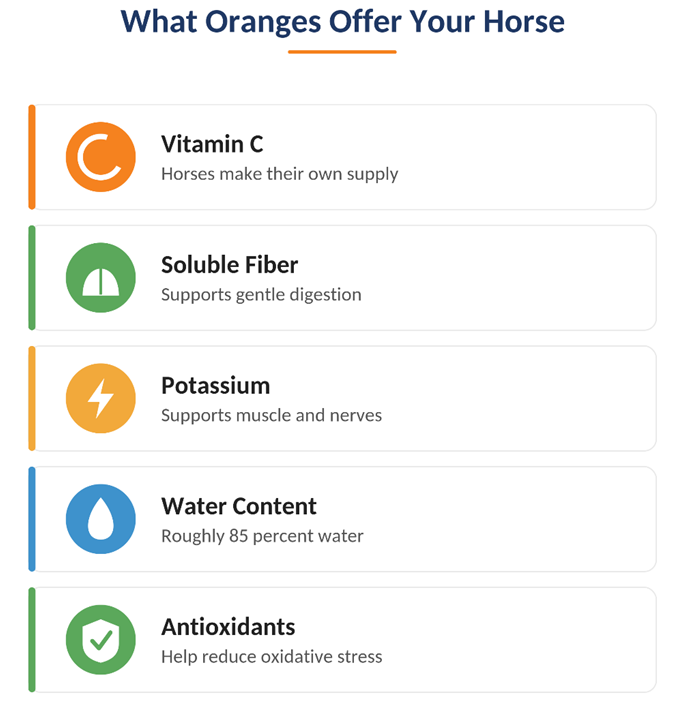
Oranges are well known for vitamin C, and the vitamins in oranges do include a healthy dose of this antioxidant. Vitamin C supports immune function and helps the body manage oxidative stress. For people, it is an essential dietary nutrient, which is part of why oranges enjoy such a healthy reputation.
Horses, however, make their own vitamin C. According to Kentucky Equine Research, a horse synthesizes ascorbic acid from glucose in the liver, producing roughly seventy two grams each day. That means a healthy horse on good forage rarely needs extra vitamin C from food.
There is a useful exception worth knowing. Kentucky Equine Research notes that aged horses, sick horses, and animals under heavy stress may not produce as much vitamin C as they need. In those cases the small amount in fruit will not meet the gap, but it does no harm, and your veterinarian may suggest a proper supplement instead.
Fiber for Healthy Digestion
Oranges contain soluble fiber, including pectin, which supports gentle digestion. Fiber for horses is the cornerstone of equine health, since the entire digestive tract is built to process large volumes of plant fiber every day.
The bottom line is this. The fiber in a couple of orange segments is a nice bonus, but it is a rounding error next to the fiber your horse gets from hay and pasture. Treat the fiber in fruit as a small extra, not a meaningful source.
Potassium, Antioxidants, and Hydration
Oranges supply potassium, an electrolyte that supports muscle and nerve function. Potassium for horses matters most for animals in heavy work or hot weather, though forage already provides generous amounts.
The fruit also carries plant antioxidants such as flavonoids, which help neutralize damaging molecules in the body. And because an orange is roughly eighty five percent water, it adds a touch of hydration on a warm day, especially welcome for a horse that enjoys juicy snacks.
Folate and Other Plant Compounds
Oranges also contain folate, a B vitamin involved in cell growth and the formation of healthy blood. The amounts are modest, and a foraging horse meets its folate needs with ease, yet these micronutrients add to the fruit’s gentle nutritional profile.
Beyond folate, citrus carries plant compounds such as hesperidin, a flavonoid studied for its role in supporting healthy blood vessels. Most of that research focuses on people and laboratory animals, so it is honest to say the benefit for horses is unproven. The sensible takeaway is to enjoy oranges for variety, never as medicine.
A Realistic View of the Benefits
Here is where balance matters. The nutrients in an orange are real, but they are tiny compared with what your horse already gets from a good forage based diet. No horse should be fed oranges to correct a deficiency, and no orange will fix a poorly balanced ration.
Think of the benefits as a pleasant side effect rather than the main reason to feed the fruit. The true value of an orange is the moment of enjoyment and the bond it helps build between you and your horse over time.
Potential Risks of Feeding Oranges to Horses
Feeding oranges to horses carries real risks if you ignore portion size or feed the wrong horse. None of these risks should scare you away from offering an occasional segment, but each one deserves your attention before you reach into the fruit bowl.
But here is where most horse owners go wrong. They assume that because a food is natural and healthy for people, more must be better for horses. With fruit, the opposite is true, and the risks all trace back to too much, too fast.
High Natural Sugar Content
Sugar is the single biggest concern. The sugar in oranges for horses comes mostly as simple sugars, which raise blood glucose quickly. A medium orange holds around twelve grams of sugar, a small amount for a large animal, but one that adds up fast if treats become frequent.
Simple sugars and starches are known together as nonstructural carbohydrates, often shortened to NSC. Diets high in NSC can disturb the delicate balance of microbes in the hindgut, and in sensitive horses they can trigger serious problems. This is why oranges stay an occasional treat rather than a daily habit.
Digestive Upset and Choke Risk
Too much fruit at once can cause loose manure, gas, or colic, which is abdominal pain that ranges from mild to life threatening. The hindgut microbes ferment sudden sugar rapidly, producing gas and acid that can throw the whole system off balance.
Choke is an esophageal obstruction in horses because a large or poorly chewed piece of food lodges in the esophagus and blocks the passage of saliva and feed. It is a veterinary emergency, which is why you always cut orange treats into small pieces and never offer a whole fruit.
Horses That Should Avoid Oranges
Some horses should not eat oranges at all. Horses with insulin dysregulation, equine metabolic syndrome, or pituitary pars intermedia dysfunction, commonly called Cushing’s disease, are highly sensitive to dietary sugar. For these animals, even modest fruit can raise the risk of laminitis, a painful and damaging hoof condition.
There is no single horse breed that must universally avoid oranges, but certain types tend toward metabolic trouble. Easy keeping ponies, donkeys, and breeds such as Morgans, mustangs, and some draft crosses are more prone to insulin problems. If your horse falls into a higher risk group, ask your veterinarian before offering any sugary fruit.
Dental Wear and Acidity
The mild acidity of citrus deserves a brief mention. Frequent exposure to acidic foods can contribute to enamel wear over many years, though an occasional orange poses very little threat. Horses with existing dental problems do better with softer, less acidic treats.
If your horse drops feed, chews oddly, or develops bad breath, book a dental exam. Healthy teeth let your horse chew forage and treats properly, which protects against choke and supports the entire digestive process from the very first bite.
Warning Signs to Watch After Feeding
After any new treat, watch your horse closely for a full day. Loose or watery manure, reduced appetite, restlessness, pawing, or repeatedly looking at the flank can all signal digestive upset. These are early hints that the portion was too large or the food simply did not agree.
Mild signs often pass on their own, but never ignore symptoms that worsen. Colic can escalate quickly, so call your veterinarian whenever something feels wrong. Trusting your instincts here is a core part of protecting your horse health.
How Many Oranges Can a Horse Eat?
A healthy adult horse can safely eat one or two orange segments, two or three times per week. That is the practical answer to how many oranges can a horse eat, and it keeps sugar intake low while still letting your horse enjoy the treat.
Here is the key thing. Treats of all kinds should stay under roughly one or two percent of your horse’s daily diet. For a typical thousand pound horse eating fifteen to twenty pounds of forage a day, a couple of orange segments is well within that limit, while a whole orange every day is not.
Portion size should also scale with body size and workload. The table below offers a simple starting guide, though your veterinarian or an equine nutritionist can tailor it to your individual horse.
| Horse type | Approximate body weight | Suggested orange treat | Frequency |
| Pony or small equine | Under 600 pounds | One small segment | Once or twice weekly |
| Average adult horse | 900 to 1,100 pounds | One to two segments | Two or three times weekly |
| Large or draft horse | Over 1,400 pounds | Two to three segments | Two or three times weekly |
| Metabolic or insulin sensitive horse | Any weight | None | Avoid entirely |
Match the Portion to the Workload
A horse in heavy training burns far more energy than a retired pasture companion, yet that does not mean it needs more sugar. Working horses draw their fuel from forage and balanced concentrates, not from fruit. Keep treat portions steady regardless of workload, and let the proper feed program carry the energy load.
The exception runs the other way. An easy keeping horse or pony that gains weight readily should receive fewer treats, not more. For these animals, even small sugar additions can tip the scale toward metabolic trouble over time.
Why Less Is Genuinely More
It is tempting to spoil a beloved horse with extra slices, especially when those big eyes ask for more. Resist the urge. The pleasure your horse feels lasts only seconds, while the consequences of overfeeding sugar can linger far longer.
A single segment, offered with a calm word and a gentle pat, delivers nearly all of the bonding benefit with almost none of the risk. Your horse will be perfectly healthy with no oranges at all, so in treat feeding, restraint is simply another form of good care.
How to Feed Oranges to Horses Safely
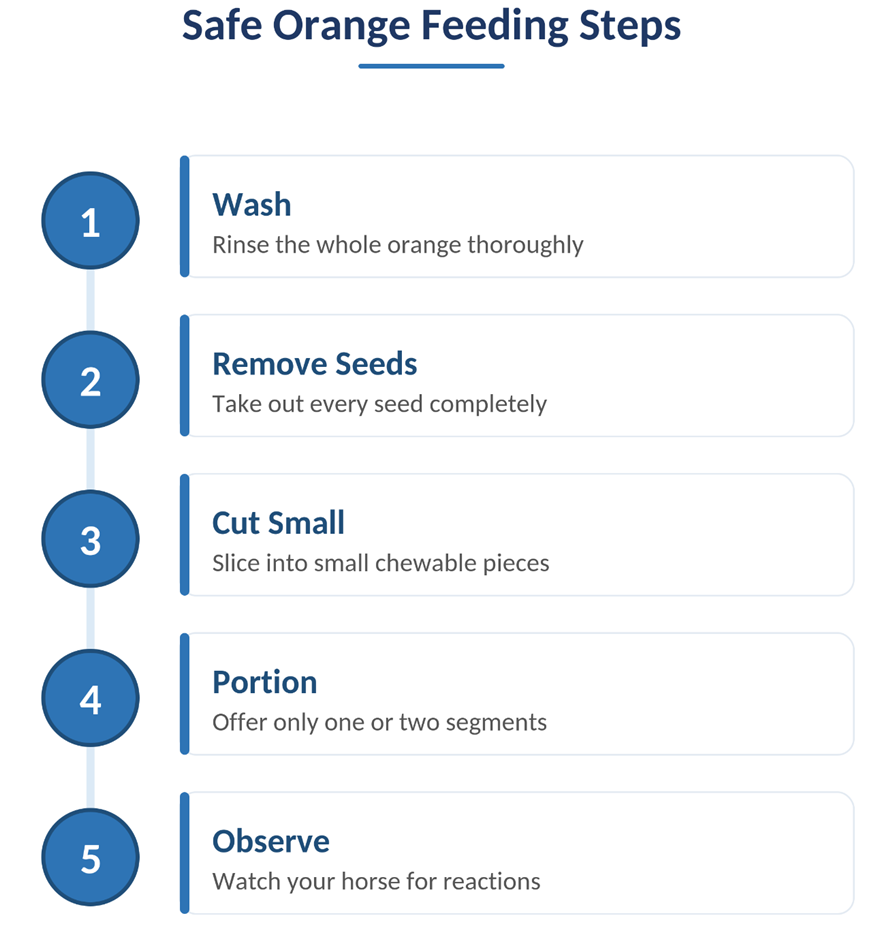
Safe feeding comes down to a short, reliable routine you follow every time. The steps protect against choke, reduce digestive upset, and keep the treat clean and pleasant. Follow them in order and the whole process takes under a minute.
Think of it this way. A few seconds of preparation turns a potential hazard into a simple, happy moment. Here is the routine that keeps oranges for horses both safe and enjoyable.
- Wash the orange thoroughly under clean water to remove dirt, wax, and pesticide residue from the skin.
- Decide on the peel, since horses can eat orange peels, though many owners remove them because the skin is tough and may carry residue.
- Remove all seeds, which can pose a choking risk and contain trace compounds best avoided.
- Cut the orange into small pieces roughly the size of a carrot coin so your horse can chew easily.
- Offer one or two pieces by hand or in the feed bucket, keeping the portion small.
- Watch your horse for the next day, checking manure and appetite before offering the treat again.
Introduce New Treats Slowly
Always introduce any new food gradually. Start with a single small piece and wait a full day to confirm your horse tolerates it well. This careful approach is one of the simplest ways to avoid common horse feeding mistakes.
Sudden diet changes are a frequent cause of digestive trouble, so patience pays off. If your horse shows loose manure or reduced appetite, pause the treat and consult your veterinarian before trying again.
Keep Treats Part of a Balanced Diet
Oranges should complement a balanced equine diet, never replace any part of it. Forage first, then any recommended concentrates, and treats only at the margins. This order keeps the digestive system stable and your horse thriving.
The bottom line is this. A treat is a reward layered on top of a solid foundation, not a substitute for proper nutrition. Keep that hierarchy clear and fruit stays a safe pleasure.
Hand Feeding Versus the Feed Bucket
You can offer orange pieces by hand or drop them into the feed bucket, and each method has merits. Hand feeding builds connection and lets you watch your horse chew, but it can encourage nipping in pushy animals. Bucket feeding is tidier and often safer for horses that lack polished manners.
Whichever you choose, stay consistent. Offer the treat with a flat palm, keep your fingers together, and never tease your horse with food. Calm, predictable feeding keeps both you and your horse safe, relaxed, and on good terms.
Can Horses Eat Orange Peels, Seeds, and Juice?
Owners often ask about the parts of the orange beyond the flesh, and the answers vary by part. Knowing what is safe helps you prepare the treat with confidence and avoid unnecessary worry.
Let us take the most common questions in turn, since each one comes up again and again among horse owners exploring safe fruits for horses.
Can Horses Eat Orange Peels?
Horses can eat orange peels, and the peel is not toxic. The skin actually holds extra fiber and antioxidants compared with the flesh. That said, the peel is tougher to chew and more likely to carry pesticide residue or wax.
If you choose to feed the peel, wash it well and cut it into small strips. Many owners simply remove it for ease and peace of mind, which is a perfectly reasonable choice.
Can Horses Eat Orange Seeds?
It is safest to remove orange seeds before feeding. While a stray seed or two is unlikely to cause poisoning, citrus seeds contain trace amounts of compounds you would rather your horse avoid, and the bigger concern is the small choking risk they add.
Taking thirty seconds to pick out the seeds removes any doubt. This simple step is part of responsible feeding and costs you almost nothing.
Can Horses Drink Orange Juice?
Orange juice is best avoided for horses. Commercial juice concentrates the sugar of several oranges into one serving and strips away the fiber that slows sugar absorption. The result is a sugary liquid that offers little benefit and more risk.
Fresh water should always be your horse’s main drink. If you want to add flavor or encourage drinking, ask your veterinarian about safer, low sugar options rather than reaching for juice.
Can Horses Eat Dried or Candied Orange?
Dried orange and candied citrus are poor choices for horses. Drying concentrates the natural sugar into a much smaller portion, and candied versions pile on even more sugar. What looks like a harmless garnish becomes a sugar dense snack that works against everything a careful feeding routine aims to achieve.
Stick to fresh fruit in small amounts. If you want a treat that keeps well on the shelf, choose a commercial horse treat formulated with controlled sugar, and always read the label before you buy.
Can Horses Eat Citrus Fruits Like Lemons or Grapefruit?
So can horses eat citrus fruits beyond oranges? The answer depends on the fruit. Most horses dislike the sour taste of lemons and limes, and the high acidity makes them a poor choice anyway. Grapefruit is very sour and offers no real advantage, so it is best left out of the feed bucket.
Mandarins and clementines are the friendly exceptions, since they are sweeter and closer to oranges in sugar and acidity. Treat them exactly as you would an orange: wash, remove seeds, cut small, and serve in moderation. When a citrus fruit is unfamiliar, offer a tiny taste first and watch how your horse reacts before giving any more.
Healthy Alternatives to Oranges for Horses
Plenty of other fruits and vegetables make excellent treats, and rotating them keeps things interesting for your horse. These healthy treats for horses give you variety while keeping sugar in check, and several are gentler on metabolic horses than citrus.
Here is the key thing about variety. Offering a small range of safe options spreads out the sugar, reduces boredom, and lets you find the flavors your horse loves most. The table below compares popular choices among the best fruits for horses and beyond.
| Treat | Main benefit | Sugar level | Quick serving tip |
| Apples | Fiber and flavor most horses adore | Moderate | Remove the core, cut into wedges |
| Carrots | Beta carotene and a satisfying crunch | Low to moderate | Slice lengthwise to reduce choke risk |
| Bananas | Potassium and easy to digest | Moderate | Offer a small piece, peel optional |
| Watermelon | High water content for hot days | Low to moderate | Small cubes, rind in moderation |
| Pears | Soft texture and gentle sweetness | Moderate | Remove seeds, cut into pieces |
How to Rotate Treats Through the Week
Variety is easy to build with a simple rotation. Offer carrots one day, a slice of apple another, and an orange segment later in the week. Spreading different treats across the days keeps any single sugar source low while giving your horse a pleasant range of flavors and textures.
Keep a short mental list of what your horse tolerates well. Every horse has its own preferences and sensitivities, so the best rotation is the one you tailor to your own animal through patient observation and a little trial and error.
Fruits and Foods to Avoid
Some foods are genuinely dangerous, so knowing the toxic fruits for horses matters as much as knowing the safe ones. Avocado is toxic to horses because it contains persin, a compound that can harm the heart and other tissues. The pits of stone fruits such as cherries, peaches, plums, and apricots contain cyanogenic compounds and should never be fed.
The ASPCA and the Merck Veterinary Manual both list additional hazards, including rhubarb leaves and the green parts of nightshade plants such as tomato and potato vines. When in doubt about any food, leave it out and check with a professional first.
Building a Smart Treat Routine
A smart routine treats fruit as one small part of a varied, forage based plan. Rotate a few safe options, keep portions tiny, and always anchor the diet in quality hay and pasture. This is the heart of good horse care tips and sound equine nutrition.
Think of it this way. Treats are the seasoning, not the meal. Used wisely, they strengthen the bond between you and your horse without ever compromising health.
Reading Feed Labels and Asking for Help
Smart treat choices extend to anything you buy in a bag. Commercial horse treats vary widely in sugar, so read the label and favor products that list controlled sugar and simple, recognizable ingredients. If a label is vague or the first ingredient is a sweetener, choose something else.
When you feel unsure, ask for help. Your veterinarian knows your horse’s history, and a certified equine nutritionist can review the whole diet to make sure treats fit safely. Good equine nutrition is a partnership, and there is no harm in asking a professional before you add a new food.
Horse Orange Feeding FAQs
Below are the questions horse owners ask most often about feeding oranges and other citrus fruits. These answers round out your horse feeding guide and address the specific worries that come up at the barn.
Can horses eat oranges every day?
No, horses should not eat oranges every day. Daily fruit adds up to a meaningful sugar load over time, which can disturb hindgut balance and raise health risks. Limit oranges to one or two segments a few times per week, and keep the overall diet rooted in forage.
Are mandarin oranges, clementines, and other citrus fruits safe for horses?
Yes, horses can eat citrus fruits like mandarins and clementines in the same small amounts as regular oranges. The question of whether horses can eat mandarins or whether horses can eat clementines has the same answer as for oranges: a segment or two is fine, but prepare them the same way and watch the sugar.
Can horses eat orange peels?
Yes, horses can eat orange peels safely, since the peel is not toxic and even adds fiber. Wash the peel well to remove residue and cut it into small strips. Many owners remove the peel for convenience, which is also perfectly fine.
How many oranges can a horse eat at one time?
A healthy adult horse should eat no more than one or two segments at a time, not a whole orange. Keeping each serving small protects against sugar spikes and digestive upset, and it lets you space treats safely across the week.
Can foals eat oranges?
No, foals should not eat oranges. Young foals rely on their mother’s milk and gradually transition to forage, and their digestive systems are not ready for sugary treats. Wait until a horse is fully weaned and mature, then introduce any treat slowly and in tiny amounts.
What fruits are toxic to horses?
Avocado is the most notable toxic fruit for horses, along with the pits of stone fruits such as cherries, peaches, and plums, which contain cyanogenic compounds. Always remove pits and seeds from any fruit, and when unsure about a food, consult your veterinarian before feeding it.
Can horses with laminitis or Cushing’s disease eat oranges?
No, horses with laminitis, Cushing’s disease, or equine metabolic syndrome should avoid oranges and other sugary fruit. These horses are highly sensitive to dietary sugar, and even modest amounts can worsen their condition. Ask your veterinarian for a list of safe, low sugar treat options instead.
Are fresh oranges safe for horses to eat year round?
Yes, fresh oranges are safe for horses to eat in any season, as long as you stick to the same small portions. Winter does not change the rules, since the sugar content stays the same. Keep treats occasional all year, and remember that a horse eating fresh oranges still needs steady forage as the heart of its diet in every season.
Oranges can be a delightful, safe treat for most healthy horses when you keep the portions small and the preparation careful. Remember the simple rules: wash the fruit, remove the seeds, cut it into small pieces, and offer just one or two segments a few times each week. Watch how your horse responds, anchor the diet in quality forage, and steer clear of fruit entirely for any horse with a metabolic condition. So the next time you wonder can horses eat oranges, you can answer with confidence and feed that bright segment knowing exactly how to do it well. Because every horse is different, please consult your veterinarian or a certified equine nutritionist for advice tailored to your horse’s individual needs.