

Pre pro and postbiotics for horses are three different tools that work together to support a healthy digestive system. Prebiotics feed the beneficial bacteria already living in the gut. Probiotics add new beneficial microbes directly. Postbiotics deliver the active compounds those microbes produce, in a stable form your horse can use right away. Used together, they shape the equine gut microbiome and directly influence feed efficiency, immune function, mood, recovery, and daily performance across every life stage from foal to senior.
This guide explains exactly how each one works, when your horse actually needs them, and how to choose products that deliver measurable results. You will also learn the warning signs of poor gut health, how to compare ingredients across leading brands, how to layer products for specific situations, and what veterinarians recommend for daily equine digestive care from foal to senior.
Key Takeaways
- Prebiotics, probiotics, and postbiotics each support gut health through distinct mechanisms
- A balanced equine gut microbiome drives immunity, performance, and feed efficiency
- Postbiotics offer stable benefits with easy storage and no live bacteria concerns
- Combination supplements help most horses through stress, travel, and feed changes
- Always confirm dosage, ingredients, and timing with your veterinarian before starting
The Equine Gut Microbiome Explained
The equine gut microbiome is the community of trillions of bacteria, fungi, and other microbes living throughout your horse’s digestive tract. This community digests fiber, produces vitamins, trains the immune system, and protects against harmful pathogens. A balanced microbiome is essential for healthy horse digestion at every life stage.
Think of it this way. Your horse’s gut is a working ecosystem, not a passive tube. When the microbiome is balanced, your horse extracts more energy from forage, fights off opportunistic bacteria, and recovers faster from training stress and travel events.
Inside Your Horse’s Digestive Tract
The horse digestive system is built around the hindgut, which includes the cecum and large colon. Roughly seventy percent of the horse’s digestive volume sits in this fermentation chamber, where fiber breaks down into short chain fatty acids that fuel daily work and basic metabolism.
This anatomy is why prebiotics, probiotics, and postbiotics matter so much. They directly support hindgut microbes that turn hay and pasture into usable energy. Without a healthy hindgut, even the best forage delivers less than its full nutritional value to your horse over the long run.
How Fermentation Powers Your Horse
Fermentation produces three primary short chain fatty acids: acetate, propionate, and butyrate. Acetate fuels muscle work. Propionate supports glucose production in the liver. Butyrate feeds the cells of the colon wall and helps maintain a strong intestinal barrier against toxins and harmful bacteria entering the bloodstream.
When fermentation runs smoothly, your horse stays energetic, recovers from work quickly, and maintains a consistent appetite. When fermentation falters, you see weight loss, behavior changes, and digestive upsets that can quickly affect performance and overall comfort.
What Disrupts The Equine Gut Microbiome
Several factors can damage the equine gut microbiome. The most common disruptors include antibiotic treatment, sudden feed changes, large grain meals, travel stress, and prolonged stall confinement without adequate forage. Each of these reduces microbial diversity quickly and creates room for opportunistic bacteria.
Here is the key thing. Even short term disruption can take weeks to fully recover, which is why proactive gut support during these events matters. A planned supplementation strategy keeps your horse comfortable through transitions and reduces downtime.
What Are Prebiotics for Horse Digestion?
Prebiotics are non living fibers and sugars that selectively feed the beneficial bacteria in your horse’s hindgut. They survive stomach acid and reach the cecum and colon, where fiber fermenting microbes break them down. The result is more short chain fatty acids, a more stable gut pH, and a stronger microbial community across the lower digestive tract.
A prebiotic is a specific compound that selectively promotes the growth or activity of beneficial bacteria in the equine gut because it acts as targeted fuel that harmful microbes cannot easily use. This selective feeding gives the beneficial population a clear competitive advantage during fermentation.
Here is the key thing. Not every fiber qualifies as a prebiotic. True prebiotics are selectively fermented and consistently shift the microbiome toward beneficial species across repeated, controlled studies.
Common Prebiotic Ingredients
The most studied equine prebiotics include mannan oligosaccharides, fructooligosaccharides, and short chain fructo oligosaccharides. You may also see yeast cell wall extracts and beet pulp listed across many leading horse gut health supplements. Each ingredient targets slightly different bacterial groups in the hindgut.
According to Kentucky Equine Research, these compounds improve hindgut fermentation patterns and help stabilize the cecum during diet changes. They appear in many commercial equine nutrition supplements designed for daily use, and they pair well with high forage diets that most horses already eat.
When Prebiotics Help Most
Prebiotics shine during transitions. Think of moments when your horse changes pasture, travels to a show, recovers from antibiotic treatment, or moves to a new hay source. They also help senior horses, where microbial diversity naturally declines with age and consistent gut support becomes essential.
But here is where most horse owners go wrong. Prebiotics need consistent daily intake for at least two to four weeks before the gut shows measurable change. One time use rarely produces a noticeable result, and underdosing wastes both money and time for owners trying to support digestion.
Prebiotic Dosage and Timing
Prebiotic dosing depends on body weight and product concentration. Most equine specific prebiotics are fed at one to two ounces per day for an average adult horse. Always follow the label or your veterinarian’s instructions, since exact amounts vary across formulas and bacterial targets.
Mix prebiotics into the main concentrate feed or top dress hay with a small amount of dampened bran to ensure full intake. Consistent timing matters more than perfect dosing, since the bacteria adjust to a steady daily supply rather than occasional bursts of fuel from inconsistent feeding.
Prebiotics For Foals And Senior Horses
Foals and senior horses both benefit strongly from steady prebiotic support. Foals build their microbiome during the first months of life, and prebiotics encourage beneficial colonization while reducing the risk of digestive upsets during weaning transitions and early feed changes.
Senior horses face the opposite challenge. Their microbial diversity naturally drops with age, which slows fiber breakdown and can affect weight maintenance, energy levels, and coat condition across the year, even when forage quality stays the same.
In both life stages, prebiotics work best when paired with quality forage and a steady feeding schedule. Consult your veterinarian for dose adjustments, since foal and senior dosing often differs from standard adult horse feeding rates and depends on body weight.
What Are Probiotics for Horses?
Probiotics are live microorganisms that, when fed in adequate amounts, deliver a measurable health benefit by adding beneficial bacteria to your horse’s gut. The most common equine strains include Lactobacillus, Bifidobacterium, Enterococcus, and the yeast Saccharomyces cerevisiae. Each strain plays a slightly different role in the digestive tract.
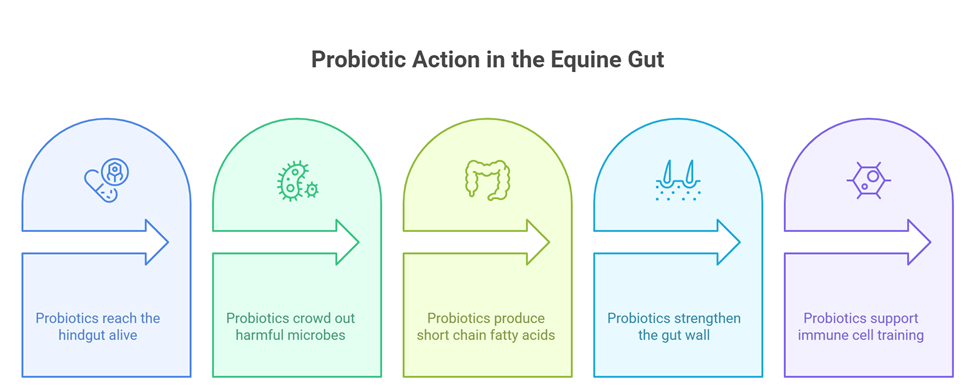
The American Association of Equine Practitioners notes that probiotic strains must survive stomach acid, bile, and feed processing to reach the hindgut alive. Without strong survival rates, the dose written on the label means very little in real conditions, especially during stress events.
Think of it this way. A probiotic is only useful when the bacteria arrive alive at the right place in the digestive tract and remain active long enough to interact with the gut wall and other microbes living there.
How Probiotics Support Equine Digestive Care
Probiotics help in several practical ways. They crowd out harmful bacteria, support immune cells in the gut wall, produce short chain fatty acids, and help maintain a stable hindgut pH. Many of the best probiotics for horses combine two or more strains to broaden coverage and improve real world survival.
Saccharomyces cerevisiae is the most researched yeast strain in equine science. Studies in the Journal of Equine Veterinary Science have shown improved fiber digestion in horses receiving daily live yeast supplementation, particularly on high grain diets where the hindgut is under fermentation pressure.
Probiotic Quality Markers
Not all probiotic products are equal. Look for guaranteed colony forming units at the time of feeding, named strains, expiration dates, and clear storage instructions. A vague claim like contains live bacteria without strain names or counts is a warning sign of weak quality control.
Probiotics also pair well with prebiotics. This combined approach is called a synbiotic, and it feeds the beneficial bacteria while adding new ones at the same time, which is why many horse microbiome support formulas include both ingredient categories together in a single daily dose.
Strain Selection For Specific Needs
Different strains do different jobs. Lactobacillus acidophilus supports lactic acid balance, Bifidobacterium thrives in the lower intestine, and Saccharomyces boulardii is widely used during digestive stress. Reading the strain panel tells you whether the product genuinely matches your horse’s needs.
Avoid products that simply say probiotic blend without naming strains. Quality brands list each species and substrain, the guaranteed count at expiration, the source country, and the recommended feeding rate for different body weights and workloads across the season.
Synbiotic Combinations Explained
Synbiotic products combine prebiotics and probiotics in one scoop. The prebiotic acts as immediate fuel for the live bacteria you are introducing, which improves their survival rate, their settlement in the hindgut, and their visible effect on digestion.
Many leading horse microbiome support products are synbiotic by design. Look for clear ratios of each ingredient on the label and avoid those that simply bury the term synbiotic somewhere inside a long, vague ingredient panel that hides the actual amounts.
Synbiotics work especially well for horses entering a new stress phase, such as the start of show season, weaning, or recovery from illness. The combination delivers both fuel and population at once, which speeds the benefit your horse feels.
What Are Postbiotics for Horses?
Postbiotics are the beneficial compounds produced by gut bacteria during fermentation, delivered to your horse in a stable, ready to use form. They include short chain fatty acids, bacterial cell wall fragments, enzymes, and antimicrobial peptides. Because postbiotics are not alive, they do not need refrigeration or special storage conditions.
A postbiotic is a preparation of inactive microorganisms or their components that delivers a measurable health benefit because the active compounds work directly on gut tissue, immune cells, and harmful bacteria. This category represents the newest layer of equine digestive care.
Here is the key thing. Postbiotics deliver many of the benefits of probiotics without the storage challenges, viability issues, and inconsistent dosing that live bacteria can carry into a feed bag during shipping or warm summer storage.
Why Postbiotics Are Gaining Traction
Postbiotics for horses are growing in popularity because they remain effective through high heat pelleting, long shipping times, and warm storage conditions. Live probiotics often lose potency under these same stresses, which limits how many feed products can reliably carry them on shelves and in trailers.
Research published in Frontiers in Veterinary Science suggests that postbiotic components, such as butyrate and propionate, support the gut lining, reduce inflammation in the colon, and strengthen tight junctions between intestinal cells, which limits leakage and lowers the risk of systemic immune flares.
Practical Uses For Postbiotics
Postbiotics work well for horses that travel often, live in hot climates, or eat feeds that go through extensive processing. They also fit cleanly into senior horse routines, where consistent dosing matters more than novelty or marketing hype around new product launches.
The bottom line is this. If you want a reliable, low maintenance way to support the gut, postbiotics offer a strong, science backed option in modern equine nutrition supplements that pairs well with steady forage and quality hay.
Where Postbiotics Fit In Your Routine
Postbiotics complement, rather than replace, prebiotics and probiotics. Many owners add them when they need a stable product for trailering, a hot summer when probiotics may lose viability, or a long competition tour where feed conditions are unpredictable across multiple venues.
Feeding amounts depend on the product. Always start with the manufacturer’s lowest recommended rate and watch your horse for two to three weeks before adjusting. Consistency matters more than dose chasing, and your veterinarian can confirm the right level for your specific horse.
Postbiotic Safety and Quality Standards
Postbiotic products have a strong safety profile because they contain no live organisms. There is no risk of the bacteria multiplying out of control or interacting badly with other gut microbes already living in your horse’s digestive tract on any given day.
Quality matters even more for postbiotics, since the active compounds must be present at meaningful concentrations to deliver results. Cheap products often dilute these compounds beyond useful thresholds and leave little measurable benefit for your horse over time.
Look for postbiotic products that name the specific compounds, such as butyrate or yeast cell wall fragments, and that share the concentration per scoop or daily dose for clarity. Transparency is the strongest signal of real product quality.
Prebiotics vs Probiotics vs Postbiotics
Prebiotics, probiotics, and postbiotics each play a distinct role in horse gut health. Choosing between them depends on your horse’s age, workload, feeding routine, and current gut status. Many top horse gut health supplements combine all three categories in one daily scoop for simplicity.
Here is a quick reference comparison to use when reading labels or building a routine.
| Feature | Prebiotics | Probiotics | Postbiotics |
| What it is | Fibers that feed beneficial bacteria | Live beneficial bacteria | Compounds produced by bacteria |
| Live organisms | No | Yes | No |
| Storage | Stable at room temperature | Often needs cool storage | Very stable in all conditions |
| Best for | Maintenance and feed transitions | Acute support and antibiotic recovery | Travel, heat, and senior horses |
| Onset | Two to four weeks | One to two weeks | One to three weeks |
| Common ingredients | FOS, MOS, beet pulp | Saccharomyces, Lactobacillus | Butyrate, cell wall fragments |
But here is where most horse owners go wrong. They pick one category and ignore the others. The most resilient gut programs combine prebiotics for fuel, probiotics for active populations, and postbiotics for stable compound support, all in one carefully built daily plan.
Choosing By Use Case
For daily maintenance in healthy adult horses, a prebiotic alone often does the job. For sport horses under travel stress, a synbiotic plus postbiotic blend tends to deliver stronger and more consistent results across competition seasons and longer training blocks.
For horses recovering from antibiotic treatment, colic episodes, or persistent diarrhea, your veterinarian may recommend short term high dose probiotics paired with prebiotics to rebuild the microbiome quickly. Postbiotics can extend the recovery phase comfortably as your horse returns to normal work.
Common Stacking Patterns
The most common stacking pattern is a synbiotic base, fed daily, with postbiotic support layered in during stress windows. Another pattern is a probiotic loading dose at the start of a competition season, followed by prebiotic maintenance through the heart of the year.
These stacking strategies are flexible. Adjust them based on your horse’s response, your veterinarian’s input, and the demands of your training calendar. The goal is steady gut performance, not aggressive supplementation that overwhelms an otherwise healthy digestive system.
Combining All Three In A Daily Plan
A balanced daily plan often layers all three categories. Use a prebiotic base for steady fuel, a synbiotic probiotic blend for active populations, and a postbiotic supplement during stress windows when storage challenges may compromise live bacteria.
This layered approach handles routine maintenance and stress events without constantly switching products on and off across the year. Many sport barn programs use this exact pattern across the full competition season with consistent positive results.
Adjust the layering based on your veterinarian’s input, your horse’s response, and seasonal changes in feed and workload. Flexibility is the strength of a well built program, and small adjustments often work better than drastic changes.
Signs Your Horse Needs Gut Support
Gut imbalance in horses rarely shows up as one dramatic symptom. Instead, you usually see a cluster of small signs that something is off. Catching these early lets you intervene before performance, weight, or comfort suffers in noticeable ways across daily routines.
Here is the key thing. The earlier you address gut imbalance, the easier it is to correct without aggressive treatment, advanced diagnostics, or prolonged downtime that takes your horse out of regular work.
Common Warning Signs
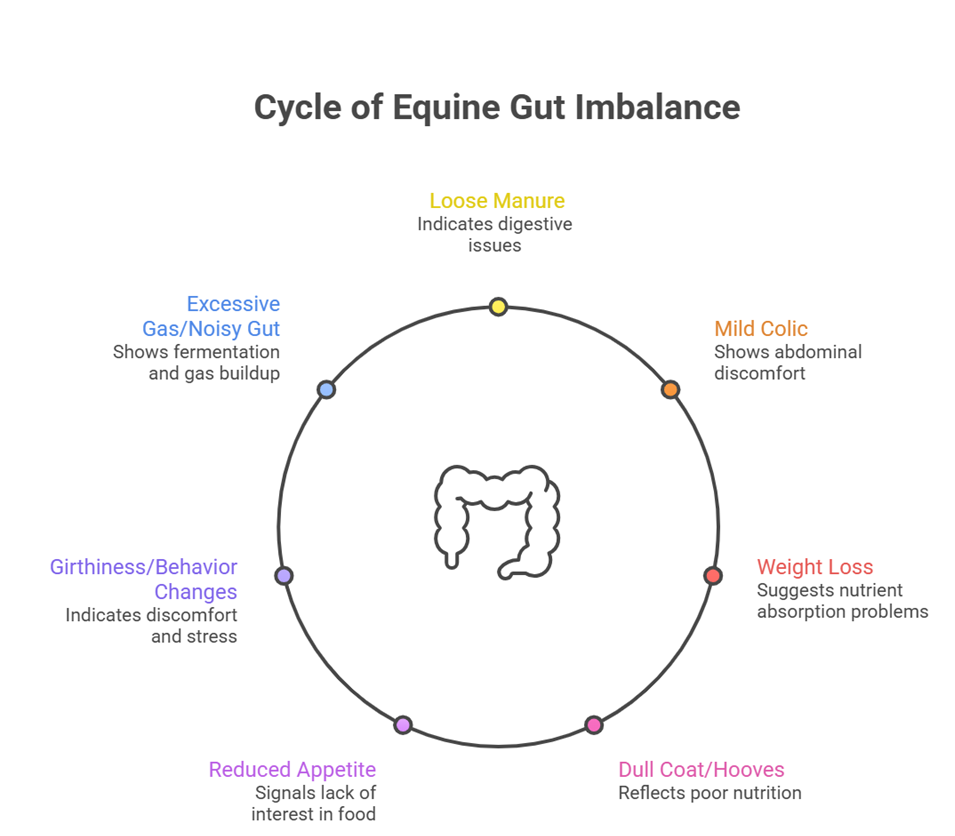
The most common signs of poor equine gut health include the following:
- Loose manure or persistent diarrhea
- Repeated mild colic episodes
- Sudden weight loss despite normal feeding
- Dull coat and weak hoof quality
- Reduced appetite or picky eating
- Girthiness, sensitivity, or behavior changes
- Excessive gas or unusually noisy gut sounds
If you see two or more of these signs for longer than a week, talk to your veterinarian. Some causes are simple, such as feed change or stress, while others may need diagnostic work, bloodwork, or fecal analysis for a clear picture.
When To Act Fast
Some symptoms require immediate veterinary attention. Severe colic, ongoing diarrhea, fever, dehydration, or sudden refusal to eat are emergencies. Gut supplements support recovery, but they do not replace veterinary diagnosis or treatment during any urgent situation that puts your horse at risk.
Stress is a major hidden cause of gut imbalance. Trailering, hauling, schedule changes, hard training blocks, and even changes in turnout companions can shift the microbiome quickly. Plan supplementation around these stressors rather than waiting for visible symptoms.
Tracking Progress Objectively
Track changes objectively. Photograph manure consistency once a week. Note appetite, energy, and behavior in a simple log. Many owners use a small phone notebook to capture changes that are easy to miss in busy daily routines around the barn or training schedule.
This tracking is your early warning system. A two day shift in manure quality often shows up well before colic or visible weight loss. Catching the change early often means a quick supplement adjustment is all you need to restore balance and avoid bigger problems.
Daily Habits That Support Healthy Digestion
Consistent daily habits protect gut health more than any single supplement. Feed forage first at every meal, keep grain rations small and frequent, and make sure clean water is available around the clock in your horse’s paddock or stall.
Turnout matters too. Horses with regular movement and access to varied forage tend to maintain stronger microbial diversity than those kept stalled for long stretches without adequate forage access or social interaction with other horses.
Match your supplement program to these habits rather than expecting products to compensate for an unhealthy routine. Strong basics make every gut supplement work harder and give your horse more comfort over the long run.
Choosing the Best Horse Gut Health Supplements
Choosing the best probiotics for horses or any equine digestive product comes down to ingredient transparency, strain quality, and matching the product to your horse’s actual needs. Avoid vague labels and pick brands that openly share their research and quality control practices.
The bottom line is this. A strong product label clearly names every active ingredient, lists CFU counts where relevant, and explains exactly when and how to use the product across different feeding scenarios and life stages from foal to senior.
Seven Steps To Pick The Right Supplement
Follow these steps before adding any new gut product to your routine:
- Identify your horse’s primary need, such as travel stress, antibiotic recovery, or daily maintenance
- Read the ingredient panel and look for named prebiotics, probiotic strains, and postbiotic compounds
- Confirm guaranteed CFU counts at the time of feeding, not at the time of manufacture
- Look for third party testing or NASC quality seals on the packaging
- Match the feeding rate to your horse’s body weight and current workload
- Start with a lower dose and increase gradually over two weeks of consistent feeding
- Track changes in manure, energy, coat, and appetite to measure real results
These steps work for everything from natural gut support for horses to advanced postbiotic blends. They protect both your wallet and your horse’s gut from poor decisions made under pressure at the feed store or online.
Ingredient Red Flags To Avoid
Watch for products that hide behind proprietary blends, lack strain names, or make exaggerated claims. Phrases like instant relief or guaranteed cure do not belong on a quality equine supplement label, and they often signal weak quality control or thin scientific backing.
Veterinarians at the AAEP advise reading the National Animal Supplement Council database to confirm a brand follows established quality control standards. Reputable brands welcome questions about sourcing, manufacturing, batch testing, and the credentials of their formulators.
Working With Your Veterinarian
According to Dr. Patricia Harris of the WALTHAM Equine Studies Group, consistent feeding and slow introduction matter as much as the product choice itself. Most gut programs need three to six weeks before you see clear, repeatable change in your horse across coat, energy, and manure.
Share your supplement choices and feeding plan with your veterinarian. A simple email with the product label often catches conflicts with medications, redundant ingredients, or dosing concerns before they become real problems in your barn.
Storage and Shelf Life Tips
Storage affects whether probiotics actually reach your horse alive at the right dose. Keep live probiotic products in a cool, dry place, sealed tightly, and away from direct sunlight or heat coming from feed room equipment, water heaters, or sun exposed walls.
Most prebiotic and postbiotic products are very stable, but they still benefit from sealed containers and dry conditions across all four seasons. Moisture is the enemy of any equine supplement, especially during humid summer months in the United States.
Check expiration dates before buying a new bag at the feed store. A product near its expiration date may carry fewer active organisms or compounds than the label suggests, even if the bag still smells and looks completely normal at first glance.
Horse Pre Pro and Postbiotics FAQs
Can horses take prebiotics and probiotics together?
Yes, and they often work better together. This combination is called a synbiotic. The prebiotic feeds the beneficial bacteria, and the probiotic adds new ones at the same time. Many horse microbiome support formulas use both ingredients in one daily scoop, which simplifies feeding and improves results during travel, training, or pasture changes. Always introduce them slowly over a week so your horse adapts comfortably.
Are postbiotics better than probiotics for horses?
Postbiotics for horses are not strictly better, but they offer practical advantages. They are stable, easy to store, and work reliably in extreme climates. Probiotics often deliver faster gut shifts during stress events. Many veterinarians now recommend layered programs that include all three categories to cover daily maintenance, acute stress, and long term resilience throughout the year. Use case and storage setup usually decide which option fits your barn best.
How do I know if my horse has poor gut health?
Watch for loose manure, repeated mild colic, weight loss, dull coat, reduced appetite, and behavior changes. Two or more signs for more than a week point to imbalance. Stress, antibiotic use, and feed changes are common triggers. Your veterinarian can rule out serious causes and suggest targeted equine digestive care based on diagnostic findings. Keeping a weekly note of manure quality often catches problems before they grow serious.
Do probiotics help horses after antibiotic treatment?
Yes, this is one of the strongest documented cases for probiotic use. Antibiotics wipe out beneficial gut bacteria along with the harmful ones. Probiotics, especially synbiotic blends, help rebuild the microbiome. Start within a few days of finishing the antibiotic course and continue for at least three weeks to support the strongest possible restoration. Pair the probiotic with a quality prebiotic for faster results in most cases.
What ingredients should I look for in horse gut supplements?
Look for named probiotic strains such as Saccharomyces cerevisiae and Lactobacillus species, prebiotic fibers such as mannan oligosaccharides and beet pulp, and postbiotic compounds such as butyrate or yeast cell wall fragments. Avoid proprietary blends with no strain names and brands that hide ingredient amounts or sources from their customers. A clear, dated label is the simplest signal of real quality control behind a product.
Can gut supplements improve horse performance?
A balanced gut supports better feed efficiency, calmer behavior, and faster recovery, all of which contribute to performance. Supplements do not replace training, but they remove a hidden drag on energy and consistency. Sport horses under heavy travel and competition stress often benefit most from steady prebiotic and postbiotic support across the season. Match the product to the specific stressor your horse faces for the best outcome.
Are equine gut supplements safe for daily use?
Yes, quality equine gut supplements are generally safe for daily use when fed at the labeled rate. Choose brands with NASC quality seals and check with your veterinarian if your horse takes other medications. Long term use is well documented in scientific literature, and most healthy horses tolerate consistent daily dosing without any negative effects on digestion or behavior. Stop and consult your vet if you notice any new symptoms after starting a product.
How long does it take for horse gut supplements to work?
Most owners see measurable change in two to four weeks. Probiotics may show effects in one to two weeks. Prebiotics and postbiotics often need three to six weeks of steady feeding. Manure consistency improves first, followed by coat quality, energy, and appetite. Keep a simple log to track progress objectively over time as you adjust the program. Patience and consistency almost always beat aggressive dose changes during the first two months.
Pre pro and postbiotics for horses give you three powerful tools to support gut health, and they work best when you understand exactly what each one does. Prebiotics feed the beneficial bacteria already there. Probiotics add new beneficial microbes. Postbiotics deliver the active compounds the microbes produce, in a stable, ready to use form. A thoughtful program built from all three of these categories improves equine digestive care, daily comfort, and steady competition resilience over time and across all four seasons.
Choose products with clear ingredient panels, named strains, and credible quality seals such as the NASC mark. Watch your horse’s manure, coat, appetite, and behavior for early signs of progress over the first few weeks. Every horse responds slightly differently, so consistency, patience, and steady observation matter as much as the specific product itself across the year.
Before starting any new supplement, consult your veterinarian or a certified equine nutritionist for personalized advice tailored to your horse’s individual needs, age, and current workload across the year.