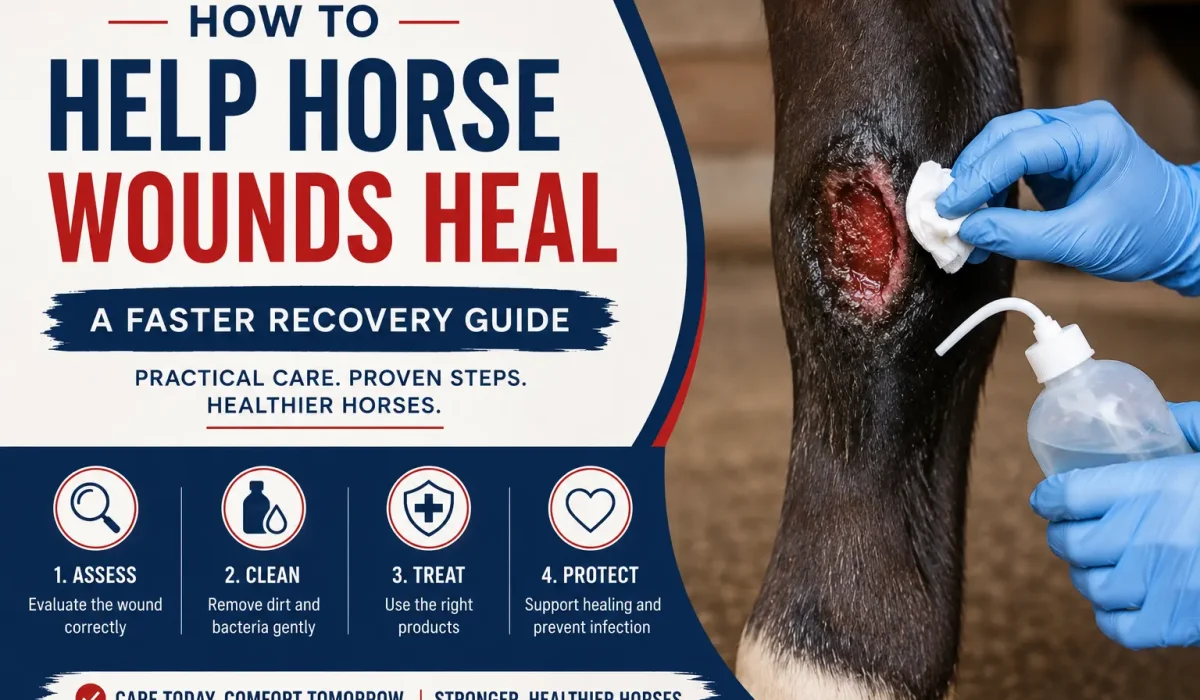
Knowing how to help horse wounds heal starts the moment you find the injury. Fast, calm, and correct action in the first hours protects the tissue, lowers the risk of infection, and sets up clean healing. This guide walks you through assessment, cleaning, bandaging, and recovery so you can act with confidence. You will learn the stages of healing, the warning signs of trouble, and the proven habits that help your horse mend faster and return to work sound.
Key Takeaways
- Clean every wound within the first few hours to cut infection risk sharply.
- Saline lavage and gentle flushing remove debris without harming new tissue.
- Correct bandaging controls swelling and helps prevent proud flesh on legs.
- Watch daily for heat, odor, and discolored discharge as infection signals.
- Call your veterinarian early for deep, large, or joint near injuries.
Understanding Horse Wounds and Why Fast Care Matters
Equine wound care is the practice of cleaning, protecting, and monitoring a horse’s injury so it heals safely, because horses face constant exposure to dirt, flies, and movement that can stall healing, invite infection, and turn a minor cut into a serious problem. The faster you respond, the better the outcome.
Horses injure themselves easily. Fences, gates, buckets, and pasture mates create cuts, scrapes, and punctures almost every season. Your job is to judge the wound, control bleeding, and decide whether home care or a vet visit comes next.
Here is the key thing. Not every wound looks as serious as it is. A small puncture over a joint can be far more dangerous than a long, shallow scrape across the shoulder.
Common Types of Horse Skin Injuries
Different horse skin injuries call for different responses. Knowing the type helps you set the right plan and spot which ones need veterinary wound treatment quickly.
- Incised wounds: clean cuts with straight edges from sharp metal or glass.
- Lacerations: torn, ragged wounds common in fence and wire accidents.
- Abrasions: surface scrapes that remove the top skin layers.
- Puncture wounds: small deep holes that trap bacteria below the surface.
- Avulsions: flaps where skin tears away from the tissue beneath.
Puncture wounds deserve special caution. The surface may close while bacteria multiply deep inside, which is how dangerous infections and abscesses begin. A vet should evaluate any puncture, especially over a joint or the sole of the foot.
Why Horses Heal Differently
Horses heal in a way that creates unique challenges, particularly on the lower legs. The skin there sits tight over bone with very little muscle or fat beneath it, so wounds cannot draw on a deep cushion of soft tissue to close.
Movement makes this harder. Every step flexes the skin around a leg wound and pulls fresh edges apart, which is one reason horse leg wounds heal slower than wounds on the body. Understanding this helps you set realistic expectations.
The True Cost of Delay
Waiting to treat a wound is one of the costliest mistakes an owner can make. A minor cut that might close in two weeks can turn into a months long ordeal once infection or proud flesh sets in.
The expense climbs too. Early home care often costs little, while a neglected leg wound can mean repeated vet visits, surgery, and lost training time. Acting fast protects both your horse and your budget.
The lesson is simple. Treat every wound as if the clock is running, because in equine wound care it always is.
Why Timing Drives Healing
The first six hours after an injury form a critical window for horse injury treatment. During this time, careful cleaning removes most contamination before bacteria settle into the tissue and trigger infection.
Think of it this way. A wound treated in the first hour is a cleaning task. The same wound treated a day later can become an infection problem. Speed protects your horse and your wallet.
How to Help Horse Wounds Heal: A Step by Step Approach
Treating horse wounds follows a clear order that you can repeat every time. Work calmly, keep the horse still, and protect yourself by standing to the side rather than directly behind the legs.
Your first goal is to do no harm. A panicked owner who scrubs hard or sprays strong chemicals can set healing back days. A steady owner who flushes gently and covers the wound gives the tissue its best start.
Follow these seven steps for safe, effective horse wound treatment:
- Assess the severity. Check the location, depth, and bleeding. Note any wound near a joint, tendon, or the eye, since these need urgent veterinary care.
- Stop the bleeding safely. Apply firm, steady pressure with a clean cloth or gauze. Hold it for several minutes rather than lifting it to peek.
- Clean the wound thoroughly. Flush with sterile saline or clean running water to loosen and carry away dirt, hair, and debris.
- Remove remaining debris. Gently pick out grit and foreign material that flushing leaves behind, but never dig into deep tissue yourself.
- Apply an appropriate dressing. Use a nonstick primary dressing that keeps the wound moist and shields it from contamination.
- Protect the wound. Cover leg wounds with a layered bandage, and keep body wounds clean and free of flies as much as possible.
- Monitor daily. Check the wound each day for swelling, heat, drainage, and signs of healthy new tissue.
But here is where many horse owners go wrong. They reach for harsh products or strong antiseptics on the open wound. Full strength solutions damage the very cells your horse needs to rebuild tissue.
Reading the Wound Before You Touch It
Take a few seconds to study the wound before you act. Note how deep it looks, whether it bleeds steadily or in pulses, and whether any structure beneath the skin is visible.
Pulsing, bright red blood suggests an artery and calls for firm pressure and an urgent vet call. Slow, dark oozing is far less dangerous and usually responds well to steady pressure and calm handling.
Keeping You and Your Horse Safe
An injured horse is a frightened horse. Even a gentle animal may pull back, strike, or kick when you handle a painful spot, so safety comes first for both of you.
Halter the horse, have a helper hold the lead, and approach the wound from the side. If your horse will not stand for treatment, stop and call your veterinarian rather than risking injury to yourself.
After the First Treatment
Your work is not finished once the wound is clean and covered. The hours and days that follow decide whether healing stays on track or stalls.
Keep your horse in a clean, dry stall or small paddock so movement and dirt stay limited. Restrict turnout if your veterinarian advises it, since hard play can reopen a fresh wound in seconds.
Write down what you did and when. A simple log of cleaning times, dressing changes, and how the wound looks gives your veterinarian valuable detail at the next check.
Building a Simple Equine First Aid Kit
Good equine first aid, sometimes called horse first aid, depends on having supplies ready before you need them. A stocked kit turns a stressful moment into a calm, routine task.
Keep sterile saline, clean gauze, nonstick pads, cotton padding, self adhesive bandage rolls, blunt scissors, and a clean container for flushing. Add your veterinarian’s phone number and a copy of your horse’s vaccination dates.
Store the kit where you can reach it fast, both at the barn and in your trailer. Check it every few months and replace anything used, expired, or contaminated so it is always ready.
The Stages of Horse Wound Healing
Horse wound healing moves through four overlapping stages, and understanding them helps you read your horse’s progress. The body works in sequence, and each stage builds on the one before it.
Healthy granulation tissue is a key sign that healing is on track, because it shows the wound bed is filling with the new pink tissue and blood supply needed before fresh skin can grow across and close the gap. Smooth, flat, pink tissue is the goal.
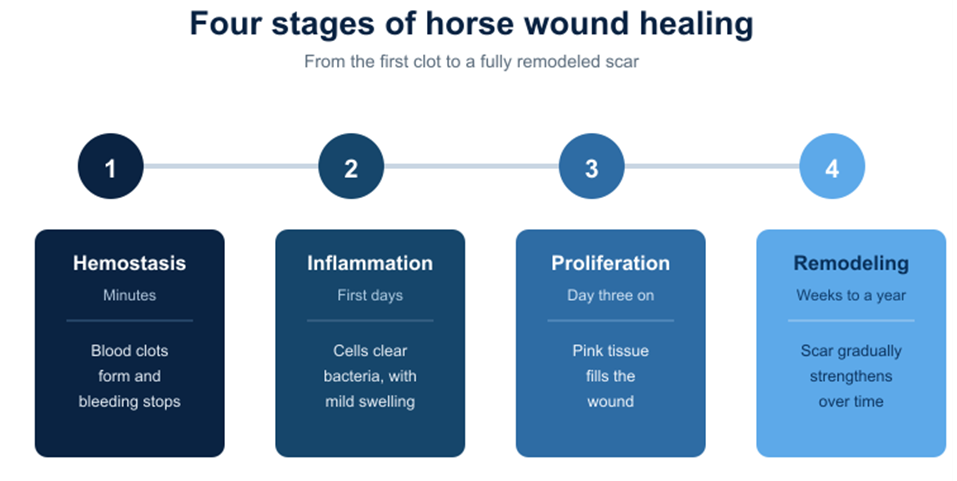
Hemostasis and the Inflammatory Stage
The inflammatory stage begins immediately and lasts several days. Blood clots to stop bleeding, then white blood cells flood the area to clear bacteria and dead tissue. Expect mild swelling, warmth, and some discharge during this normal phase.
This stage is protective, not harmful. Your role is to support it by keeping the wound clean and limiting movement that disrupts the early repair.
Excess movement or contamination can stretch this stage out. A wound stuck in prolonged inflammation often signals infection or trapped debris that needs veterinary attention.
Tissue Repair and the Proliferative Stage
The proliferative stage usually starts around day three, when granulation tissue in horses begins to fill the wound. New blood vessels grow, the wound contracts at the edges, and skin cells start to migrate across the surface.
This is the stage where leg wounds can overshoot and form proud flesh. Steady compression and clean dressings keep the new tissue flat and on track.
Make no mistake. This is the most fragile window for lower limb wounds, and what you do here largely decides whether the wound closes smoothly or develops complications.
Remodeling and Maturation Stage
The remodeling stage begins about two weeks in and continues for many months. Collagen reorganizes, the scar strengthens, and the new skin slowly gains durability. The Merck Veterinary Manual notes this maturation can continue for a year or more.
Patience matters here. A wound that looks closed is still rebuilding strength underneath, so reintroduce work gradually on your veterinarian’s advice.
How to Read Healing Progress
You do not need to be a vet to tell healing from trouble. A few simple signs reveal whether each stage is moving forward as it should.
Healthy progress looks like shrinking wound size, flat pink granulation tissue, and a thin pale rim of new skin growing inward from the edges. Discharge should fade from watery to almost none over the first week.
Trouble looks like swelling that grows instead of shrinks, tissue that bulges above the skin, or discharge that turns thick and discolored. When the picture worsens for two days running, call your veterinarian.
Cleaning and Lavage: The Foundation of Equine Wound Care
Horse wound cleaning is the single most important task you control at home. Removing dirt and bacteria early prevents most complications and gives the tissue a clean base to rebuild on.
Wound lavage for horses means flushing the wound with fluid to wash out contamination. According to guidance shared through the American Association of Equine Practitioners, even tap water lavage is far better than leaving a wound dirty, though sterile saline is the gentlest choice for healthy tissue.
The bottom line is this. Pressure and volume matter more than the exact fluid. A steady stream from a large syringe or a gentle hose flow lifts debris away without driving it deeper.
How to Flush a Wound Correctly
Aim for gentle, generous flushing rather than a hard blast. Too much pressure can force bacteria deeper into the tissue and damage the delicate cells that are trying to heal.
Use a large syringe or a hose set to a soft, steady flow. Direct the stream across the wound, not straight into a deep puncture, and continue until the surface looks clean and free of grit.
Here is what matters most. Repeat the flush over several minutes rather than rushing it. Most contamination comes loose with patience, time, and plenty of clean fluid.
How Much Fluid Is Enough
Owners often stop flushing too soon. As a simple rule, keep going until the fluid running off the wound looks clear rather than cloudy or gritty.
For a fresh, dirty wound, that can mean a liter or more of saline or clean water. Generous flushing is rarely a mistake, since the goal is to physically carry contamination away from the tissue.
Choosing the Right Cleaning Solution
Many owners overdo antiseptics. Strong povidone iodine and concentrated chlorhexidine can kill healthy cells and slow healing, so dilution is essential when you use them at all.
The table below compares common cleaning options and when each one fits best.
| Solution | Best Use | Caution |
| Sterile saline | Routine flushing of most fresh wounds | Gentle and safe for healthy tissue |
| Clean tap water | First aid flushing when saline is absent | Use a steady, low pressure stream |
| Dilute chlorhexidine | Contaminated or higher risk wounds | Always dilute well before use |
| Dilute povidone iodine | Selected contaminated wounds | Full strength harms healthy cells |
| Hypertonic saline | Infected wounds that need debriding | Avoid on clean, healthy tissue |
What to Avoid on an Open Wound
Some popular products do more harm than good. The Horse and other veterinary resources warn against pouring hydrogen peroxide or strong disinfectants into open tissue.
Avoid hydrogen peroxide, full strength iodine, alcohol, and old ointments crusted in the tube. These products damage cells, delay repair, and can raise the risk of proud flesh on the lower legs.
When in doubt, plain saline and a clean dressing beat any harsh product. Simple, gentle care almost always serves your horse better than a cabinet full of strong chemicals.
Bandaging Horse Wounds and Managing Leg Wounds
Bandaging horse wounds protects the injury, controls swelling, and lowers the chance of proud flesh, especially on the limbs. A good bandage keeps the wound moist, clean, and supported while new tissue forms.
Horse leg wounds are the most challenging because the skin sits tight over bone with little padding and constant movement. This combination drives high tissue tension that pushes healing to overshoot.
A bandage does more than cover a wound. It immobilizes the area, reduces swelling, and creates the moist, protected environment that modern wound treatment relies on.
The Three Layer Bandage System
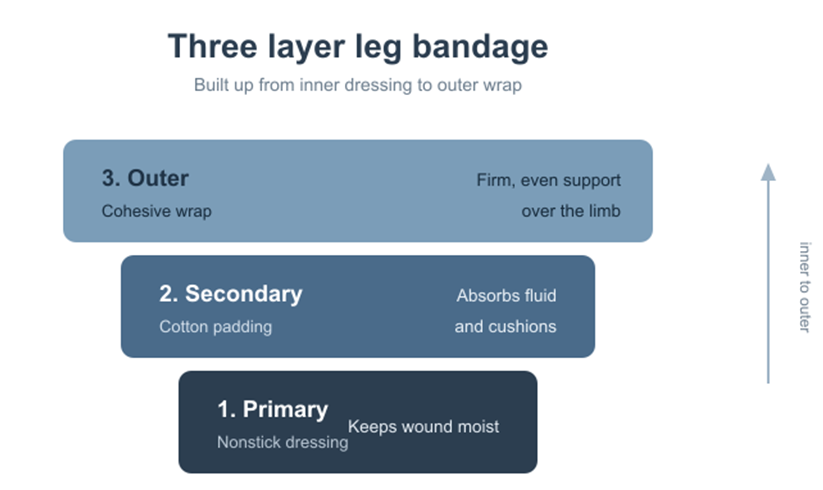
Effective equine bandaging techniques rely on three layers that each do a specific job. Skipping a layer is a common cause of slow healing and pressure sores.
- Primary layer: a nonstick dressing that touches the wound and keeps it moist.
- Secondary layer: cotton or padding that absorbs fluid and cushions the leg.
- Outer layer: a cohesive wrap that holds everything firm without cutting off circulation.
Protect bony points like the back of the knee and the point of the hock with extra padding. The University of Minnesota’s large animal surgery resources warn that pressure over these spots can create sores that are hard to heal.
Common Bandaging Mistakes
Even careful owners make bandaging errors that slow recovery. Knowing the most common ones helps you avoid setbacks and repeat trips to the vet.
Wrapping too tight cuts off circulation, while wrapping too loose lets the bandage slip and rub. Using a dry dressing that sticks to the wound tears away new tissue at every change, which is a frequent trigger for proud flesh.
Think of it this way. A bandage should feel firm and even, like a supportive sock, never like a tourniquet. When you are unsure, your veterinarian can show you the correct tension in minutes.
Choosing the Right Dressing
The dressing that touches the wound shapes how well it heals. Modern wound care favors moist dressings that support new tissue rather than dry gauze that sticks and tears.
Nonstick pads, hydrogel sheets, and honey based dressings keep the surface moist and lift away cleanly at each change. Many veterinarians use medical grade honey products, which help manage bacteria while keeping the wound bed soft.
Match the dressing to the wound and the stage. Your veterinarian can recommend the right product as the wound moves from a raw, draining surface to a closing, healing one.
How Compression Helps Prevent Proud Flesh
Light, even compression is your best tool against proud flesh on legs. The pressure keeps granulation tissue flat so skin can grow across and close the wound.
Change leg bandages on the schedule your veterinarian sets, often every few days at first. Each change lets you flush the wound, check progress, and reapply clean, even pressure.
How Long to Keep Bandaging
There is no single timeline for bandaging, since every wound heals at its own pace. Your veterinarian will guide you on when to reduce or stop wrapping.
As a general pattern, leg wounds stay bandaged through the early proliferative stage, when proud flesh risk is highest. Once the wound is flat, dry, and covering with new skin, your vet may move you to lighter support or open care.
Resist the urge to stop too early. Removing support before the wound is ready is a common reason proud flesh appears late in recovery.
When to Leave a Wound Open
Not every wound needs a bandage. Many body wounds on the chest, shoulder, or hindquarters heal well in the open air once they are clean.
Wounds that heal open rely on what veterinarians call second intention healing, where the body fills and closes the gap on its own. These wounds still need daily cleaning and fly control to stay on track.
Proud Flesh, Infection, and Other Complications
Horse wound complications are most common on the legs, where movement and tension fight against healing. Knowing the warning signs lets you act before a small problem grows.
Proud flesh in horses is excess granulation tissue that grows above the skin surface and blocks healing, because the lower legs have little soft tissue and high movement, which drives the repair process to overshoot and prevents new skin from closing the wound. Early control is far easier than later treatment.
Why Leg Wounds Form Proud Flesh
Proud flesh develops when the proliferative stage runs unchecked. Instead of stopping once the wound bed fills, the tissue keeps growing and rises above the skin edges.
Constant motion, poor blood supply, and irritation all feed this process. That is why lower limb wounds, which flex with every stride, carry a much higher proud flesh risk than wounds on the body.
Recognizing and Managing Proud Flesh
Proud flesh looks like a red, lumpy mass that rises above the wound edges and may bleed easily. Once it rises above the skin, fresh skin cells cannot bridge across it.
The safest fix is veterinary trimming. As the AAEP explains, a veterinarian can remove the excess tissue precisely while protecting the healthy skin edges that healing depends on. Never apply harsh caustic powders without veterinary guidance.
Catching it early changes everything. A small amount of raised tissue is easy to manage, while a large mass may need repeated treatment and a much longer recovery.
Other Complications to Watch
Proud flesh and infection are the most common problems, but they are not the only ones. A few other complications can slow recovery and deserve your attention.
Seromas, which are pockets of fluid under the skin, sometimes form near a wound and may need draining by your veterinarian. Dead or dying tissue at the wound edges can also stall healing until it is removed.
Some leg wounds involve deeper structures like tendons, joints, or bone. These cases always need professional veterinary wound treatment, since hidden damage can threaten your horse’s future soundness.
Signs of Horse Wound Infection
Catching horse wound infection early protects your horse from serious illness. Check the wound daily and learn the signals that healing has stalled.
Watch for these warning signs of infection or delayed healing:
- Excessive heat radiating around the wound margins.
- Persistent or increasing swelling after the first few days.
- An unpleasant or foul odor from the site.
- Thick, discolored, yellow, or green discharge.
- Rising lameness, pain, or reluctance to bear weight.
If you notice these signs, call your veterinarian promptly. Infections that reach a joint or tendon sheath can become emergencies within hours.
When to Call the Vet
Some wounds always need professional veterinary wound treatment. Calling early often saves money, time, and the long term soundness of your horse.
Contact your veterinarian for wounds that are deep, gaping, or longer than your finger, any wound near a joint or tendon, heavy bleeding that will not stop, or any puncture. Also call if your horse is overdue for tetanus protection.
Remember this. There is no penalty for calling too soon, but waiting too long can cost your horse dearly. When in doubt, pick up the phone.
Preventing Horse Injuries and Supporting Recovery
Preventing horse injuries is always cheaper and kinder than treating them. A safe environment and a healthy horse together create the best defense against serious wounds.
Good horse wound management starts before any injury happens. Walk your pasture and barn regularly to find and fix the hazards that cause most cuts and punctures.
Reduce Hazards in the Environment
Most horse skin injuries trace back to a fixable hazard. A short, regular safety check removes the sharp edges and traps that cause repeat wounds.
Repair broken fencing, remove protruding nails and wire, smooth sharp gate edges, and clear clutter from paddocks and stalls. Introduce new horses slowly to reduce kicks and bite wounds within the herd.
Pay special attention to the lower legs. Since horse leg wounds heal slowest and carry the most risk, clearing leg height hazards like loose wire and broken boards delivers the biggest payoff.
Support Healing From the Inside
Nutrition and hydration drive tissue repair. A horse with balanced protein, vitamins, and minerals heals faster and resists infection better than one in poor condition.
Provide clean water, quality forage, and a balanced diet during recovery. Ask your veterinarian whether a horse recovering from a large wound needs added protein, zinc, or other targeted support.
Body condition matters before injury too. A fit, well fed horse enters recovery with the reserves it needs, while a thin or stressed horse may struggle to rebuild tissue at a normal pace.
Monitoring Recovery Day by Day
Daily checks catch problems while they are still small. A quick, consistent routine tells you fast whether a wound is improving or sliding backward.
Each day, note the swelling, smell, color, and amount of discharge, plus how your horse moves. Take a photo when the wound is fresh and compare it over time so subtle changes do not slip past you.
Build a Recovery Routine
A steady routine turns wound care from a worry into a habit. Horses thrive on consistency, and so does the tissue trying to heal.
Set fixed times for cleaning and dressing changes, and keep your supplies stocked and within reach. Pair each session with a quick health check of appetite, attitude, and temperature so you spot illness early.
Loop your veterinarian in at planned intervals, not just in a crisis. Scheduled check ins let a professional catch small issues, adjust the plan, and confirm that healing is moving in the right direction.
Tetanus and Fly Control
Tetanus is a deadly risk with any wound. The University of California Davis School of Veterinary Medicine stresses that current tetanus vaccination is essential, since the bacteria thrive in deep and dirty wounds.
During warm months, flies threaten healing wounds. Apply a fly repellent made for use around wounds near the edges, never directly in the open tissue, and use fly sheets or masks where they fit.
Horse Wound Care FAQs
What helps horse wounds heal faster?
Prompt cleaning, a moist nonstick dressing, and steady bandaging help horse wounds heal faster. Keep the wound clean, limit movement, control flies, and feed a balanced diet. Most importantly, follow your veterinarian’s plan and change dressings on the schedule they recommend for your horse.
Should horse wounds be covered or left open?
It depends on location. Leg wounds usually heal best when covered with a layered bandage that controls swelling and proud flesh. Many body wounds heal well left open once they are clean. When you are unsure how to bandage a horse leg wound safely, ask your veterinarian.
How often should a horse wound be cleaned?
Clean a fresh wound once or twice daily at first, then follow your veterinarian’s guidance as it improves. Bandaged leg wounds are usually flushed and rewrapped every few days. Avoid over cleaning a healthy, granulating wound, since constant scrubbing can disturb the new tissue.
What are the signs of an infected horse wound?
Signs of infection in horse wounds include excessive heat, persistent swelling, a foul odor, and thick discolored discharge. Rising pain or lameness is another red flag. If you see these signs, contact your veterinarian quickly, because some infections progress within hours.
How long does a horse wound take to heal?
Healing time varies with size, location, and care. Small wounds may close in two to three weeks, while large leg wounds healing on their own can take many weeks or months. The remodeling phase that strengthens the scar can continue for a year or more.
How do you prevent proud flesh in horses?
Prevent proud flesh by keeping leg wounds under clean, even compression with a proper bandage and changing dressings as directed. Avoid harsh products and dry dressings that tear new tissue. Early veterinary involvement on lower limb wounds is the most reliable way to keep granulation tissue flat.
Can flies slow wound healing in horses?
Yes, flies can slow healing and spread infection. They irritate the wound, deposit bacteria, and in some cases lay eggs in the tissue. Use a wound safe fly repellent around the edges, keep the area clean, and use physical fly barriers during warm weather.
When should you call a vet for a horse wound?
Call your veterinarian for any deep or gaping wound, bleeding that will not stop, a wound near a joint or tendon, any puncture, or signs of infection. Also call when you are unsure or when your horse is overdue for tetanus protection. Early advice prevents costly complications.
Knowing how to help horse wounds heal comes down to four reliable habits: fast cleaning, smart bandaging, daily monitoring, and steady prevention. When you act quickly, keep the wound clean, and watch closely for the early warning signs of infection or proud flesh, you give your horse the best possible chance at a smooth, full recovery.
Most wounds heal well when you respect these basics and stay patient through every stage of healing. Trust what you see in front of you, keep good records of each change, and never hesitate to ask for help the moment a wound looks worse instead of better. A quick question today can prevent a costly complication tomorrow, and your calm, consistent care is the single biggest factor in how fast your horse returns to soundness.
Every horse and every wound is different, so always consult your veterinarian or a qualified equine professional for advice tailored to your horse’s individual needs.