Horse owners often encounter overweight horses that seem well-managed on controlled diets, yet metabolic testing reveals elevated insulin levels or increased laminitis risk.
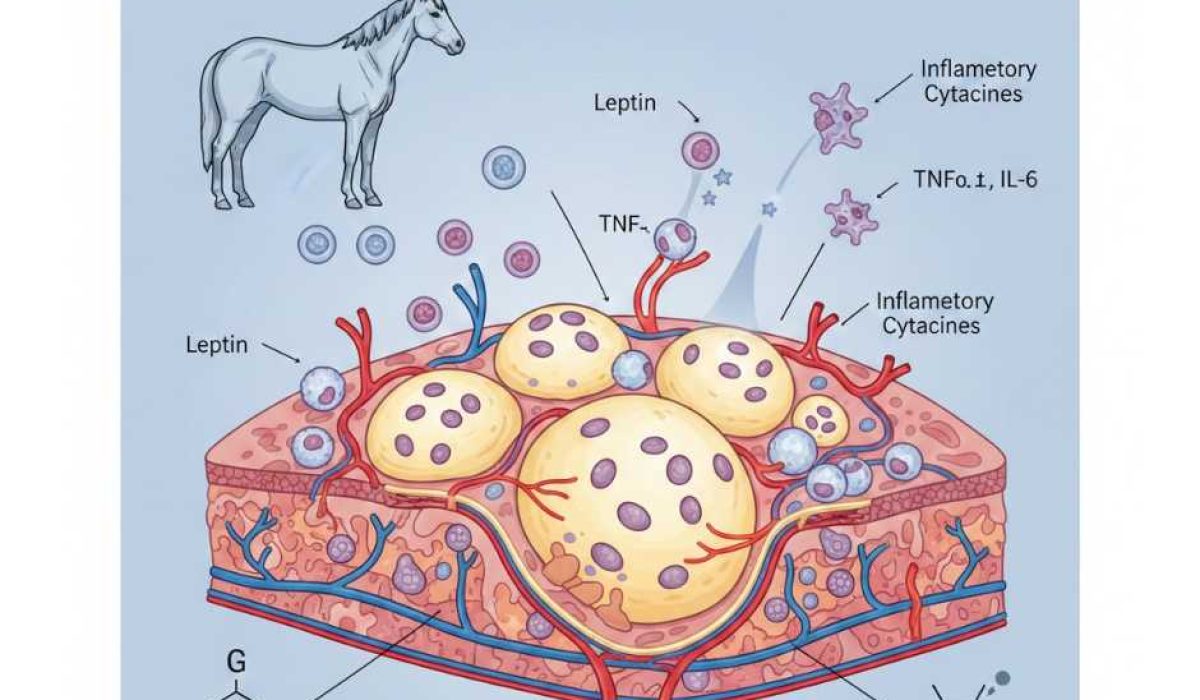
The cause lies in endocrine fat function. As adipose tissue expands, it becomes hormonally active, releasing adipokines and inflammatory mediators that influence insulin pathways body-wide. These changes can drive EMS, even when caloric intake appears normal.
This article explains:
- How adipose tissue functions as an endocrine organ in horses.
- How adipokines alter metabolic signaling.
- Why endocrine fat activity increases laminitis susceptibility.

What Are Adipokines?
Adipokines are hormone-like molecules released from fat. In horses:
- Leptin: rises with adiposity, correlates with body condition score (Buff et al., 2002).
- Adiponectin: enhances insulin sensitivity. Reduced levels are linked to insulin dysregulation and laminitis risk.
How Fat Tissue Becomes an Endocrine Organ
Equine adipose tissue consists of adipocytes, a vascular network, and immune-cell–rich stromal matrix.
- In lean horses: energy storage and mobilization are efficient.
- In obese horses: adipocytes enlarge and shift toward endocrine signaling, releasing hormones that influence skeletal muscle glucose uptake, hepatic metabolism, pancreatic insulin secretion, vascular responses, and lamellar cell function.
Expanded adipose tissue explains why obese horses’ metabolism differs significantly from lean horses under similar feeding conditions.
Regional Adiposity and Metabolic Risk
Cresty neck adiposity correlates with elevated insulin and higher metabolic risk.
- Regional fat may be more predictive of dysfunction than total body weight.
- Genetically thrifty breeds, especially ponies, are more susceptible to pasture-associated laminitis and insulin dysregulation.
Breed predisposition combined with endocrine fat activity amplifies metabolic dysfunction in EMS horses.
Effects on Insulin: Why Obese Horses Develop Insulin Dysregulation
EMS is defined primarily by insulin dysregulation, not classic insulin resistance.
- Features: resting hyperinsulinemia and exaggerated post-prandial insulin responses.
- Glucose may remain normal, while insulin levels are elevated.
Mechanisms:
- Enteroinsular axis: Gut–pancreas communication amplifies insulin secretion in response to dietary non-structural carbohydrates (NSC).
- GLUT4 translocation impairment: Laminitis-prone ponies show reduced cellular glucose uptake, contributing to elevated circulating insulin.
-
Practical Management Insights
Recognizing fat as an endocrine organ emphasizes metabolic monitoring:
- Body condition scoring and regional adiposity assessment.
- Veterinary insulin testing.
- Careful management of dietary NSC.
- Structured weight reduction improves insulin sensitivity and reduces laminitis risk.
Cytokines and Inflammatory Pathways
Expanded adipose tissue may also release inflammatory mediators:
- Low-grade metabolic inflammation can exacerbate insulin dysregulation.
- Though endocrinopathic laminitis differs from classic inflammatory laminitis, inflammatory signaling contributes to hormonal obesity effects.

Conclusion
Adipose tissue in obese horses functions as an endocrine organ, reshaping insulin regulation and metabolic balance.
- Adipokine imbalance, cytokine signaling, impaired insulin receptor pathways, and IGF-1 activation in lamellar tissue collectively increase EMS and laminitis risk.
- Understanding endocrine fat function reframes obesity as systemic metabolic dysfunction, not cosmetic excess.
Frequently Asked Questions (FAQs)
Q1: Why do obese horses have hormonal problems?
A: Adipose tissue becomes endocrine-active, releasing adipokines and cytokines affecting insulin regulation.
Q2: How does fat contribute to insulin resistance?
A: Adipokine imbalance and inflammatory signaling interfere with insulin receptor pathways and GLUT4-mediated glucose uptake.
Q3: Can weight loss improve metabolic dysfunction?
A: Yes. Reducing weight improves insulin sensitivity and lowers laminitis risk.
Q4: Does equine obesity increase laminitis risk?
A: Yes. Hyperinsulinemia alone has been shown to induce laminitis (Asplin et al., 2007).
Call to Action
If your horse shows cresty neck adiposity, high body condition, or seasonal foot sensitivity:
- Consult your veterinarian for metabolic evaluation.
- Review dietary carbohydrate intake and implement long-term weight-management strategies.
- Educate yourself on EMS and endocrine fat function to prevent laminitis.