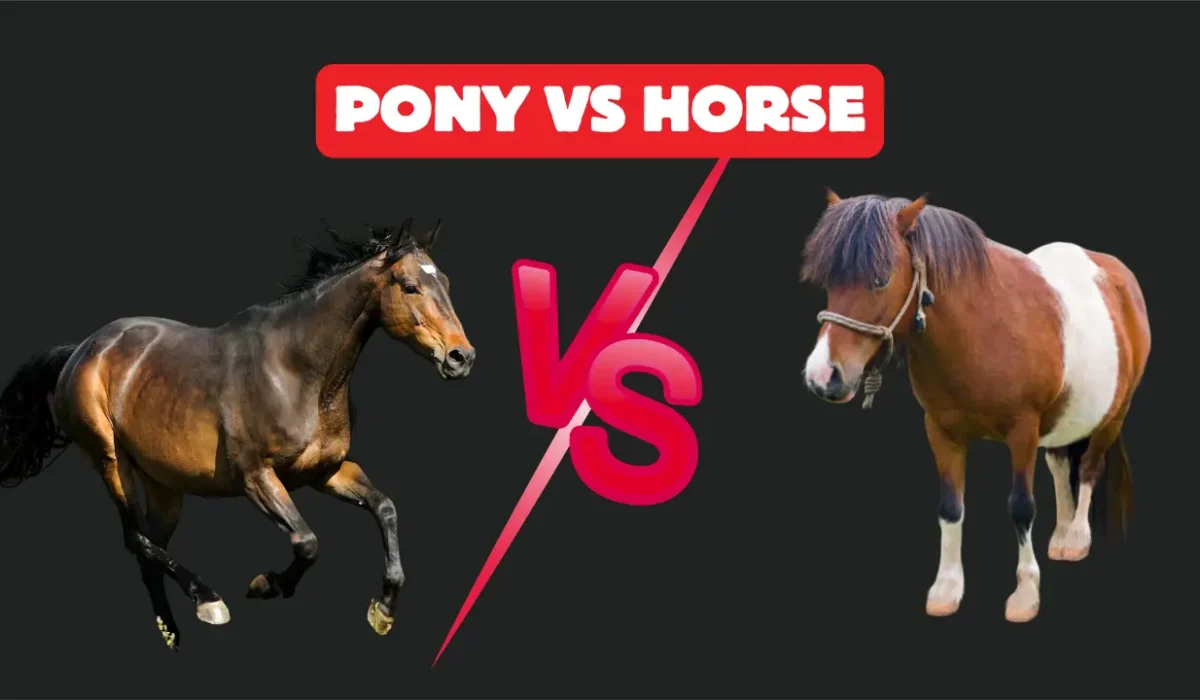
A pony is an adult equine that stands 14.2 hands or under at the withers, while a horse stands above 14.2 hands. Beyond height, ponies show denser bone, thicker coats, and stronger pound for pound power, making them distinct from horses in build and temperament rather than age.
This guide cuts through the confusion. You will learn the official height rule, the science behind why ponies pull harder pound for pound, the daily care differences that matter, the temperament patterns each type tends to show, and which option suits beginners best. By the end, you will know exactly how to choose, train, and care for the equine that lands in your barn.
KEY TAKEAWAYS
- Ponies stand at or under 14.2 hands; horses stand above 14.2 hands.
- Pound for pound, ponies carry stronger bone density than most horses.
- Pony diets demand tighter calorie control to prevent metabolic disease.
- Horse temperament is generally more uniform; ponies show more individuality.
- Beginners often suit ponies first, then move to horses for stride and reach.
What Is the Difference Between a Horse and a Pony?
The official line between a horse and a pony sits at exactly 14.2 hands, or 58 inches, measured at the withers. Anything taller is a horse. Anything at or below is a pony. The United States Equestrian Federation and the Federation Equestre Internationale both apply this rule for sport classifications across the modern equestrian world.
Yet height is only one factor. A miniature horse stands well under 14.2 hands and is still labeled a horse based on phenotype, not size. The full difference between horse and pony shows up in build, coat, and metabolism, which is why the comparison runs deeper than a simple ruler measurement.
Here is the key thing to remember: classification serves competition, breeding, and pricing rather than care. A 14 hand Welsh Cob and a 14 hand Arabian look almost identical in height, yet they require different feeding, training, and tack approaches because their underlying physiology differs.
Height Difference
Hand measurement is the standard everywhere from the United Kingdom to Australia. One hand equals four inches. A 15 hand horse stands 60 inches at the withers, while a 12 hand pony stands 48 inches. Hands are measured in halves, so 14.2 hands equals 14 hands plus 2 inches, not 14.2 inches in decimal form.
The pony size vs horse size cutoff matters most in competition. A 14.1 hand animal can enter pony classes; a 14.3 hand animal must compete against horses, even though only two inches separate them. That single rule shapes show entries, prize divisions, and breeding decisions across the equestrian world.
Some governing bodies allow slight variation. The American Quarter Pony Association recognizes ponies up to 14 hands, while the Pony of the Americas registry allows up to 14 hands as well. International Federation rules use the 14.2 cutoff for major competition, so always check the rulebook of your specific discipline before entering a class.
Body Shape and Build
A pony skeleton is dense, short, and powerful. The neck runs shorter, the back stays compact, and the legs sit stocky beneath a wide barrel. Pony bone density, according to research published in the Equine Veterinary Journal, often exceeds horse bone density per unit volume by a meaningful margin.
Horses, by contrast, carry a longer frame. Their legs reach further, their shoulders slope at an angle that promotes a longer stride, and the overall silhouette looks more athletic. The build differences explain why a horse sprints faster while a pony pulls heavier loads relative to body mass over a working day.
This compact frame also explains why ponies tend to retain heat better than horses. Less surface area relative to body mass means less heat loss in winter, which is one reason native pony breeds thrive without rugs in temperatures that would force a Thoroughbred into the barn for the night.
Mane and Tail Features
Pony manes and tails grow thicker, coarser, and longer than most horse manes. The double coat that many pony breeds carry traps body heat through harsh winters. Native breeds like the Shetland and Highland evolved these traits to survive on windswept hillsides where shelter was scarce.
Horse manes and tails tend to be silkier and finer. Breeds like the Arabian carry sleek, almost flat hair coats that suit warmer climates. Many horse owners must rug their animals in winter, while most ponies handle cold without artificial layers, which saves money and time during the colder months.
Forelocks also differ. Pony forelocks often fall heavy across the eyes, useful for shielding sensitive faces from biting flies and harsh sun. Horse forelocks are typically shorter and finer, which is why show grooming routines for horses focus more on plaiting and pulling than on simple maintenance work.
Pony vs Horse Strength: The Science of Power
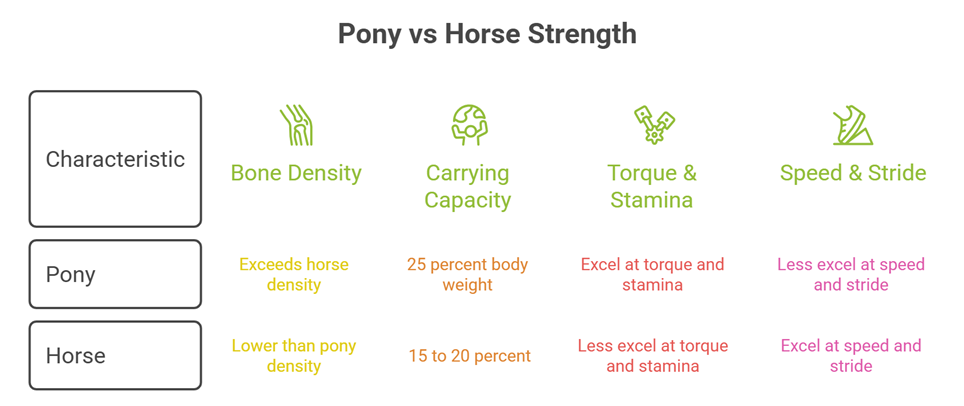
Pound for pound, ponies are stronger than horses. That single fact surprises most beginners, yet it is well documented across veterinary research and working equine studies. The pony skeleton, muscle structure, and metabolic efficiency all combine to produce remarkable power in a small frame.
Strength, however, comes in different forms. A horse pulls a carriage faster; a pony pulls one further on less feed. A Thoroughbred races at 40 miles per hour; a working pony plows fields all day with steady torque. Understanding the kind of strength each animal offers helps you match the right equine to the right job.
Are Ponies Stronger Than Horses?
Yes, ponies are stronger pound for pound than horses, but horses pull more weight in absolute terms. A Shetland can carry up to 25 percent of its body weight, while most riding horses safely carry 15 to 20 percent. Kentucky Equine Research has documented similar load ratios across draft breeds and working ponies.
The reason lies in dense bone, short levers, and a high muscle to skeletal ratio. Short legs deliver greater mechanical advantage, much like a stocky weightlifter outperforming a tall one in the squat. The pony body is built like a compact engine, generating torque rather than top speed across a working day.
Think of it this way: a horse is a sports car built for the open road, while a pony is a four wheel drive truck built for steep hills and rough loads. Both are powerful, but the power expresses itself in completely different ways once you put either animal to genuine work.
Riding and Work Abilities
Working ponies have hauled coal, plowed crofts, and packed mountain trails for centuries. Welsh, Fell, and Dales ponies still serve as pack animals in remote regions because they cover rough ground reliably and require less feed than horses of comparable working capacity.
Horses excel where speed and stride length matter. They cover ground faster, jump bigger fences with ease, and carry heavier total loads. Their longer reach also makes them more suitable for tall riders who would otherwise tower over the equine.
Mountain rescue services in Scotland, Wales, and Ireland still rely on hardy ponies for terrain that would lame a Thoroughbred within a single day. The combination of sure footedness, weather tolerance, and minimal feed requirements makes them irreplaceable for genuine working roles in remote country.
Sports and Performance
Pony classes exist in every major discipline, from dressage to show jumping to driving. Connemaras and Welsh Section D ponies compete at international levels and routinely outperform horses on tight, technical courses where agility beats stride length.
Horses dominate in racing, polo, and Olympic level dressage, where extreme stride length and muscle volume matter most. The British Horseracing Authority records confirm that no pony has ever won a major flat race at top Thoroughbred meetings, though that is by design rather than by inability.
The National Pony Finals at the Kentucky Horse Park draws thousands of competitors every year. The event proves that ponies and pony riders can deliver world class performance in jumping, equitation, and hunters when matched correctly with skilled handlers and good conditioning programs.
Pony Care vs Horse Care
Pony care and horse care share the same foundations: clean water, quality forage, regular hoof attention, and routine veterinary checks. Yet the daily execution differs in ways that can save or shorten an equine life. Ponies often die from too much food; horses often suffer from too little.
The American Association of Equine Practitioners flags obesity and metabolic syndrome as the top welfare risks in modern pony populations. Horses, especially performance breeds, more often face ulcers, joint strain, and respiratory disease. Adjusting your management plan to suit the animal in your barn is essential for long term welfare.
Feeding Requirements
Ponies are easy keepers. They evolved on sparse forage and convert calories with brutal efficiency. A pony grazing rich spring pasture can gain unsafe weight in days. Limit grass time, soak hay to reduce sugars when needed, and avoid sweet feeds entirely unless your veterinarian directs otherwise after a clinical assessment.
The pony feeding plan typically follows this order of priority:
- Mature, low sugar grass hay as the foundation forage.
- A balanced mineral and vitamin supplement to fill nutrient gaps.
- Limited or strip grazing to control daily calorie intake.
- Plain water available at all times in clean buckets.
- A salt block accessible in the stall and the field.
- Targeted concentrates only when condition score drops below ideal.
- Regular dental checks to ensure efficient digestion.
Horses, especially large or working types, often need additional grain or fortified concentrates to maintain weight. The National Research Council guidelines recommend forage as the foundation but allow concentrates when energy demand exceeds what hay alone can supply. Always introduce changes gradually over 7 to 14 days to protect gut health and reduce colic risk.
Grooming Needs
Ponies grow heavy winter coats that need regular currying to prevent skin issues. Mud fever and rain rot strike thick coated equines more often than thin coated ones. A stiff brush, weekly bathing during dry weather, and routine mane management keep skin healthy throughout the year.
Horses tend to have shorter coats that show every speck of dust. Show horses often need daily grooming, mane pulling, and conditioning sprays to maintain a sleek finish. The grooming time investment can be significant for performance horses, while many native ponies thrive with simpler weekly care.
Hoof care is similar for both, but pony feet are typically harder and more compact than horse feet. Many ponies work barefoot in conditions that would require shoes for a horse. A skilled farrier should still trim every six to eight weeks regardless of whether the equine wears shoes or not.
Exercise and Space
A pony does not need a 10 acre paddock. In fact, too much rich pasture is harmful. A smaller turnout area or a track system that encourages movement without overgrazing works best for most ponies and helps protect them from laminitis during high risk seasons.
Horses generally benefit from larger turnout for stride extension, joint flexion, and mental stimulation. The British Horse Society recommends a minimum of 1.5 acres per horse, with 2 to 3 acres being ideal for most adult animals on full time turnout. Pasture rotation helps protect grass quality and reduces parasite load.
Daily ridden or in hand exercise matters for both. A working pony often handles 30 to 45 minutes of focused work, while a riding horse may need 45 to 75 minutes depending on fitness goals. Mental work, including ground exercises and obstacle navigation, benefits all equines and reduces stable vices like weaving and cribbing.
Common Health Issues in Horses vs Ponies
Health risks differ noticeably between horses and ponies, even though both share the same digestive anatomy and most veterinary protocols. Knowing which conditions hit each type hardest lets you prevent rather than treat, which protects welfare and saves significant money over the life of the animal.
The same vaccine schedule, dental program, and parasite control plan applies to both. Yet ponies face metabolic threats that rarely trouble most horses, while horses face stress, joint, and respiratory issues that ponies rarely show in equal measure. The key is matching prevention to the actual risks in your stable.
Laminitis and Metabolic Syndrome
Laminitis is the most feared condition in pony populations. The American Association of Equine Practitioners reports that ponies are several times more likely than horses to develop laminitis, often triggered by sugar rich grass or sudden grain intake. Equine Metabolic Syndrome and Cushing disease frequently sit behind these episodes.
Prevention is straightforward in principle and demanding in practice. Restrict grazing during high sugar windows, monitor body condition score weekly, and test fasting insulin annually for any pony showing a cresty neck or fat pads. Early diagnosis turns a long term threat into a manageable condition.
Ulcers and Performance Stress
Equine gastric ulcer syndrome is far more common in horses than in ponies, particularly in racehorses and high level sport horses. Studies cited by the American College of Veterinary Internal Medicine suggest that more than 60 percent of performance horses carry some degree of gastric ulceration during heavy training.
Ponies in pleasure work face much lower risk. The combination of constant forage access, less stress, and lower stall confinement times keeps the equine stomach lining healthier. When ponies do develop ulcers, the cause is often abrupt management change rather than chronic stress.
Joint and Respiratory Conditions
Horses, especially heavy or athletic types, develop joint issues at higher rates than ponies. Osteoarthritis, navicular syndrome, and ringbone show up most often in horses that train hard on hard surfaces. Hoof balance, surface management, and gradual fitness work prevent the majority of these cases.
Respiratory disease, including equine asthma, also strikes horses more often than ponies. Dust, mold, and poor stable ventilation drive most cases. Ponies kept on year round turnout rarely develop these conditions, which is one more argument for matching your management style to the equine type in your barn.
Dental health follows the same general protocol for both, but pony teeth tend to wear evenly and require less frequent floating. Most horses need professional dental work every 6 to 12 months, while many ponies can stretch to 12 or 18 month intervals depending on age, diet, and bite alignment. A qualified equine dentist or veterinarian should always make the call.
Horse vs Pony Temperament: Personality Differences
Horse vs pony temperament is one of the most discussed topics in the riding world. While individual personality always varies, certain patterns repeat across the two groups. Ponies are widely known for sharp intelligence, strong opinions, and the occasional stubborn streak. Horses, especially well bred performance types, tend to display a more uniform, trainable temperament.
But here is where most owners go wrong: they assume a smaller equine equals a calmer ride. The opposite is often true. A bored pony with too much energy and not enough work becomes a behavioral challenge. A horse, given the same conditions, often simply stands quietly and waits for the next session.
The difference often comes down to natural selection. Pony breeds developed in harsh environments where survival required cleverness and self preservation. Horses bred for sport were selected for cooperation, willingness, and athletic response. Both temperaments have their place, but they shape the rider relationship in distinct ways.
Why Ponies Test Their Riders
Trainers at the Pony Club regularly remind young riders that ponies need firm, consistent handling to thrive. A pony will quickly identify the weakest link in any partnership, whether that is unclear cues, inconsistent rules, or a hesitant attitude. Once a pony learns it can outsmart a rider, the lesson is hard to unteach.
Horses, especially older school masters, often forgive small inconsistencies in cues. That single trait makes ponies excellent teachers for skilled handlers and frustrating for beginners who lack confidence or experience. Pairing a green rider with a green pony almost always ends in tears for both parties.
Building Trust With Either Type
Trust building applies equally to horses and ponies, but the methods differ slightly. Ponies respond best to clear boundaries set early and reinforced consistently. They thrive on routine and become genuinely affectionate once they accept your leadership in a herd of two.
Horses generally respond to softer cues and rewards based learning. Many warmbloods and Thoroughbreds shut down under heavy correction, while a pony often shrugs off mild discipline and tries again. Knowing which approach to apply makes the difference between a willing partner and a dangerous one.
Best Pony Breeds for Different Riders
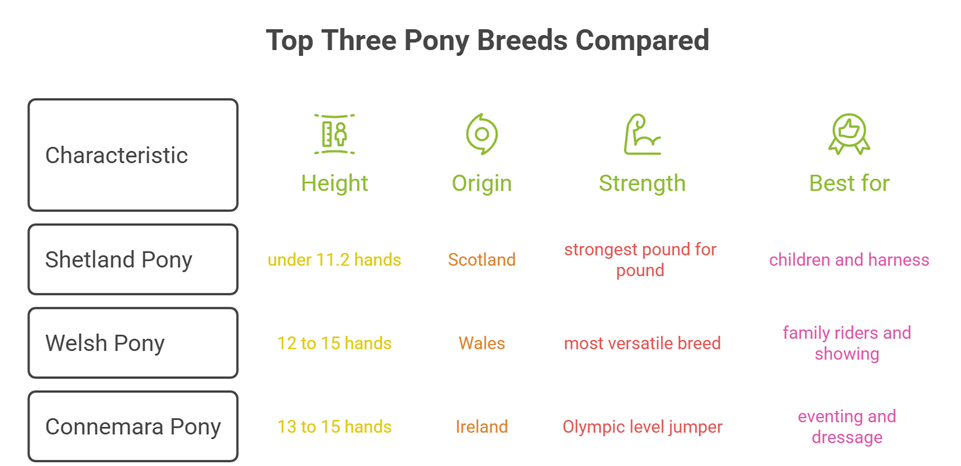
Choosing the right pony is as much about temperament and conformation as it is about height. A few breeds stand out for their reliability, versatility, and proven track record across riding disciplines. The three most respected pony breeds in the modern equestrian world are the Shetland, the Welsh, and the Connemara.
Each carries a distinct purpose. The Shetland excels with small children and harness work. The Welsh, particularly the larger sections, suits everyone from juniors to small adults. The Connemara is a dual purpose pony that competes seriously in jumping and dressage at recognized levels.
Shetland Pony
Shetlands stand at or under 11.2 hands and originate from the Shetland Islands of Scotland. They are widely regarded as one of the strongest equines pound for pound on Earth. Bred to haul peat and seaweed in brutal conditions, they carry remarkable bone density and stamina that few other breeds can match.
Despite their size, Shetlands need careful handling. They are sharp, opinionated, and sometimes cheeky. A Shetland that learns to take advantage of a small child can be a handful. Properly trained, however, they are unbeatable lead rein and harness ponies for younger riders building confidence.
Shetlands also live remarkably long lives, often working into their thirties with good care. Their hardiness, low feed requirements, and weather tolerance make them economical for families on a budget. Just be prepared for a strong willed equine that respects only firm, consistent leadership.
Welsh Pony
Welsh ponies come in four sections: A, B, C, and D. Section A is the smallest at under 12 hands, while Section D, also called the Welsh Cob, can reach 15 hands and is technically classed as a horse in some registries despite the breed name.
The Welsh Pony of Cob Type, Section C, is often called the perfect family equine. They are sturdy, sensible, and athletic. Section B Welsh ponies dominate showing rings, while Section D cobs excel in driving and ridden classes for adult amateurs and competitive juniors alike.
The Welsh Pony and Cob Society maintains strict breed standards across all four sections. Welsh ponies routinely succeed in dressage, eventing, jumping, driving, and showing, which makes the breed one of the most versatile equines available to recreational and competitive riders worldwide.
Connemara Pony
The Connemara hails from the rocky western shores of Ireland. Standing 13 to 15 hands, it sits at the upper end of pony classification. The breed is famous for jumping ability, kind temperament, and a versatility that few breeds can match across multiple disciplines.
Connemaras have produced Olympic level eventers and have won pony classes at the highest levels. They mature slowly and live long, often working into their late twenties. The Connemara Pony Breeders Society of Ireland documents performance records dating back nearly a century of structured breeding.
Connemaras adapt to most climates and require less specialized care than warmer blooded sport horses. They thrive on basic forage, tolerate cold weather, and rarely need extensive shoeing on rocky ground, which keeps long term costs manageable for most amateur owners and breeders.
Horse vs Pony for Beginners: Which Is Right for You?
The horse vs pony for beginners question depends on three factors: rider size, rider age, and rider goals. There is no universal answer, but a few patterns help most newcomers make a smart first decision and avoid expensive mismatches that frustrate everyone involved.
Children almost always start on ponies. A pony is closer to the ground, easier to mount, and typically less intimidating. The Pony Club and the United States Pony Clubs both build their programs around beginner pony riders for safety and skill progression reasons documented over decades of structured instruction.
When a Pony Is the Better Choice
Pick a pony when the rider is under 5 feet 4 inches, weighs under 150 pounds, or is a child or teenager. Pony temperaments suit small bodies and developing balance. The lower height also reduces fall distance, an underrated safety factor for first time riders learning to canter.
A small adult often does well on a stout 14 hand pony like a Welsh Section D or a Highland. The animal can carry the weight, the rider feels secure, and the pony tends to be more manageable than a 16 hand horse during the early learning phase.
Cost is another factor. Ponies eat less, need less stabling space, and typically require simpler tack. A first pony at a livery yard often costs 25 to 40 percent less in monthly upkeep than a comparable horse, which matters for families managing tight budgets through several years of lessons.
When a Horse Suits a Beginner
A horse becomes the better fit when the rider is taller, heavier, or planning to compete in adult divisions. A 5 foot 9 inch beginner on a 13 hand pony will look out of proportion and may overload the animal beyond comfort or safe carrying capacity.
Older school master horses are some of the best teachers in the equine world. A 15 to 18 year old veteran with show experience can guide a new rider through every gait, every transition, and every introductory jumping session with patience that most ponies simply do not offer.
The bottom line is this: rider proportion and goals matter more than the horse vs pony label. Use this horse and pony comparison table as a starting point for your decision.
| Factor | Pony Suits Better | Horse Suits Better |
| Rider Height | Under 5 ft 4 in | Over 5 ft 4 in |
| Rider Weight | Under 150 lb | Over 150 lb |
| Rider Age | Child or teen | Adult |
| Goal | Local shows, learning | Competitive sport |
| Budget | Lower running cost | Higher feed and care |
| Lifespan | 25 to 35 years | 20 to 30 years |
| Stride Length | Short, quick | Long, smooth |
Pony vs Horse FAQs
The most common pony vs horse questions repeat across forums, riding lessons, and tack shops. Below are direct, evidence based answers to the queries new owners ask most often when shopping for a first equine.
Is a pony a baby horse?
No, a pony is not a baby horse. A pony is a fully grown adult equine that stands 14.2 hands or under at the withers. A baby horse is called a foal until it turns one year old, at which point it becomes a yearling. Foals of all breeds are small, but they grow into horses, while ponies remain small for life by genetics.
Can adults ride ponies?
Yes, adults can absolutely ride ponies. Many adult riders prefer larger pony breeds like the Connemara, Welsh Section D, or Highland for their compact build and easy keeper nature. The general rule is that the rider plus tack should weigh no more than 20 percent of the pony body weight to remain safe and humane for sustained work.
Why are ponies so strong?
Ponies are remarkably strong because of dense bone, compact muscle structure, and high skeletal efficiency. Their evolutionary history in harsh environments selected for animals that could pull, carry, and survive on minimal feed. Pound for pound, a pony can outpull most horses, though absolute pulling power favors larger draft horses like the Belgian or the Shire.
At what height does a pony become a horse?
A pony becomes a horse at any height above 14.2 hands, which equals 58 inches at the withers. The classification is based purely on adult height, not breeding. An animal that finishes growing at 14.3 hands is a horse, even if both parents were ponies. Some breeds, like the Arabian, are always classed as horses regardless of how small they finish.
Are ponies easier to care for?
Ponies are often easier to care for in some ways and harder in others. They eat less, need smaller stabling, and tolerate harsh weather better than most horses. However, they are more prone to obesity, laminitis, and metabolic syndrome, which means feeding management requires constant vigilance throughout the year.
Do ponies live longer than horses?
Yes, ponies generally live longer than horses. The average horse lifespan ranges from 20 to 30 years, while many ponies live 25 to 35 years. Some Shetlands and Welsh ponies have been documented working into their forties. Smaller body size, slower metabolism, and lower stress on joints contribute to greater longevity in pony breeds.
How much does a pony cost compared to a horse?
A pony typically costs less to buy and maintain than a horse. Purchase prices vary widely, but feed bills, farrier fees, and stabling costs are generally lower for a pony. Annual care costs for a pony often run 20 to 30 percent below comparable costs for a full size horse, which makes them a strong choice for budget conscious owners.
Can a pony pull as much as a horse?
A pony can pull a remarkable amount relative to its body size, but a draft horse pulls more in absolute weight. A Shetland has reportedly pulled more than twice its body weight under controlled conditions, while a Belgian draft horse can pull a similar percentage but at far greater absolute load measured in tons of carriage and cart.
The pony vs horse decision shapes everything from the tack you buy to the riding goals you can chase. Ponies bring strength, longevity, hardiness, and personality in a compact package. Horses bring stride, speed, athletic range, and a calmer general temperament for many riders working at higher levels of competition.
Neither is universally better. A child learning to canter belongs on a steady Welsh pony. An adult eventer training for novice levels usually needs a 16 hand horse. Recognizing the natural strengths of each type protects your investment and your relationship with the animal in your barn.
If you are still unsure which is right for you, take time to ride several different equines before buying. Talk to instructors, breeders, and current owners. Spend time at competitions and observe how riders interact with both horses and ponies in real settings.
Above all, remember that every equine is an individual. The breed and the height matter, but personality, training, and management decide the final outcome. For specific feeding, health, or training advice tailored to your equine, please consult your veterinarian or a certified equine nutritionist who can assess your animal in person.