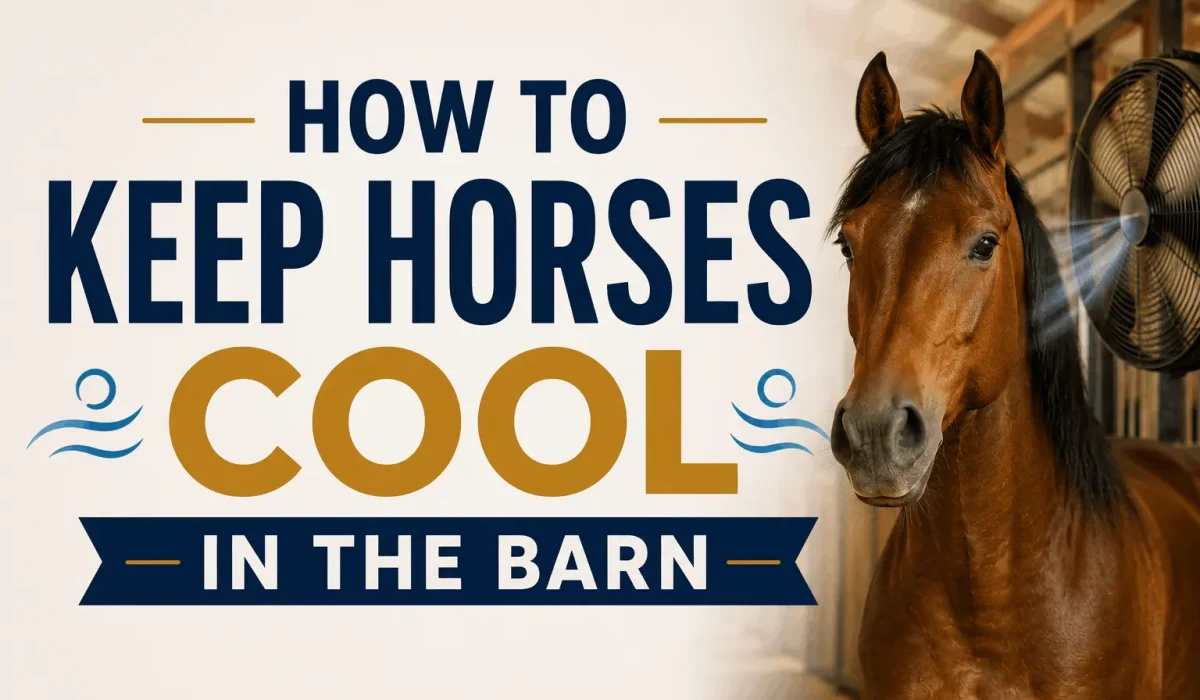
When the thermometer climbs, a closed barn can turn into an oven, and your horse pays the price. Learning how to keep horses cool in the barn is one of the most important summer skills any owner or barn manager can master. A horse cannot tell you it is overheating until the problem is already serious, so the job falls to you to read the conditions and act early. Heat does not announce itself politely, and the owners who stay ahead of it are the ones who plan before the forecast turns brutal. This guide walks you through ventilation, safe fan use, hydration, cooling tools, and the warning signs of heat stress, so you can step in before a hot day becomes a medical emergency. Use these horse barn cooling tips as a complete playbook, and you will have proven horse cooling strategies ready long before the first heat wave arrives. The advice here is practical, affordable, and grounded in guidance from respected equine authorities, so read on and build a heat plan your horse can count on all summer long.
| KEY TAKEAWAYS • Still, humid barn air traps heat and raises a horse’s risk of heat stress fast. • Good cross ventilation and smart fan placement move heat out and fresh air in. • A horse can drink more than 20 gallons of water a day in hot weather. • Early signs of heat stress include heavy sweating, rapid breathing, and dullness. • When the AAEP heat index passes 180, stop work and call your veterinarian. |
Why Horses Overheat in the Barn
Horses overheat in the barn because their large bodies produce a lot of heat and a stuffy stall gives that heat nowhere to go. A 1,000 pound horse generates significant warmth simply by digesting forage, moving around, and standing still. That internal furnace runs all day, so without an exit for the heat, the stall slowly bakes. Add summer humidity and poor airflow, and stall temperatures can climb well above the air outside.
Heat stress in horses is a dangerous rise in core body temperature that happens because the horse produces more heat than it can shed through sweat and airflow. In a still, humid barn that trapped heat builds quickly, which can push a horse toward heat exhaustion or even heat stroke in a matter of hours rather than days. The risk rises sharply during a multi day heat wave, when the barn never fully cools overnight and each morning starts hotter than the last.
Here is the key thing most owners miss. Horses cool themselves mainly by sweating, and sweat only cools the body when it evaporates. In a humid, airless barn, sweat sits on the coat instead of evaporating, so the horse keeps making more heat while losing the ability to release it. That is the trap you want to break with better barn temperature control and steady air movement.
How Heat and Humidity Work Together
The combination of heat and humidity matters far more than temperature alone. The American Association of Equine Practitioners promotes a simple heat index that adds the air temperature in degrees Fahrenheit to the relative humidity percentage. According to US Equestrian, this combined number tells you how hard it is for a horse to cool itself, because high humidity blocks the evaporation that sweat depends on.
The table below shows how to read that number on any hot day. Keep it posted in your tack room as a quick reference for summer horse management, and check it against your local forecast every morning before you plan turnout or work.
| AAEP Heat Index (temp F plus humidity) | What It Means | Your Action |
| Below 130 | Low risk | Normal turnout and work are fine |
| 130 to 150 | Moderate risk | Watch for early signs of heat stress |
| 150 to 180 | High risk | Limit work, prioritize cooling and water |
| Above 180 | Severe risk | Do not work the horse, call your vet if needed |
Think of it this way. On a 90 degree afternoon with 70 percent humidity, your index is 160, which sits firmly in the high risk zone even if the barn feels merely warm to you. Horses feel heat differently than people do, so the number protects you from guessing wrong on a deceptively pleasant day.
Barn Design Factors That Trap Heat
Your building itself can work against you. Low ceilings, a dark metal roof, few windows, and stalls tucked into a still interior all trap heat and slow airflow. Bedding choices and muck buildup add humidity and ammonia, which make the air feel heavier and harder to breathe.
The bottom line is this. You cannot always rebuild your barn, but you can spot its weak points. Identify the hottest, stillest stalls in your barn and treat them as priority spots for fans, shade, and extra water during heat waves. Small fixes in the worst corners protect the horses that need help most.
A quick walk through at the hottest hour tells you more than any thermometer reading from the morning. Notice which stalls feel stale, where the air sits dead, and which horses sweat the most. Those observations become your map for where to focus cooling effort and budget first.
Barn Ventilation Tips To Keep Horses Cool in the Barn
Good horse barn ventilation is the single most powerful tool you have to keep horses cool in the barn. Moving air carries heat, moisture, and stale ammonia out of the building and pulls cooler, fresher air in. Strong horse barn airflow is what separates a comfortable building from a stifling one, so before you buy a single fan, look closely at how air already moves through your structure on a hot day.
Cross ventilation is the movement of fresh air through a barn that happens because openings on opposite walls let breezes pass straight through. This natural airflow carries heat and moisture out of the building, which keeps stall temperatures closer to the cooler air outside and lowers the heat load on every horse inside.
Use Cross Ventilation When It Is Safe
Open doors, windows, and vents on opposite sides of the barn to create a clear path for air. Aisle doors at both ends, combined with stall windows or grilles, let a breeze travel the full length of the building. Many barns also benefit from a ridge vent or cupola that lets hot air rise and escape through the roof, which pulls cooler air in low.
But here is where most horse owners go wrong. They open everything during a storm or leave sharp window hardware exposed at horse height. Open vents only when wind and weather are safe, and make sure every opening is covered with secure grilles or screens. Cross ventilation in horse barns should never come at the cost of an injury or an escaped horse.
Pay attention to the prevailing breeze on your property and design your openings around it. Even a modest, steady current through the aisle does more for comfort than a single open door at one end. Natural airflow is free, quiet, and gentle, so use every bit of it before you reach for power. Track how the breeze shifts from morning to afternoon, because the same opening that helps at dawn can fall still by midday.
Add Mechanical Ventilation When Natural Airflow Is Not Enough
Many barns simply do not have enough natural airflow, especially older structures or those built in low, sheltered spots. When that happens, mechanical ventilation systems fill the gap. Ceiling mounted exhaust fans, gable fans, and large barn fans all help move stale hot air out and draw cooler air through the building.
The bottom line is this. Aim for steady air exchange rather than a single blast of wind in one stall. A well planned system improves barn airflow throughout the building, reduces humidity, and keeps every horse more comfortable, not just the ones nearest a door. The University of Georgia Equine Program notes that consistent airflow is central to managing horses in hot weather.
Think of mechanical ventilation as a backstop for the days your windows cannot keep up. On the stillest, most humid afternoons, a quiet exhaust fan pulling air out through the roofline keeps the whole barn breathing. Combine that with open vents and you create a reliable airflow improvement that holds up through any heat wave.
Safe Fan Use for Cooling Horses in Stalls and Aisles
Barn fans for horses are wonderful cooling tools, but they carry real fire and injury risks when used carelessly. Electrical faults in dusty barns are a leading cause of structure fires, so safe fan use protects both your horse and your property. A few simple rules keep fans working for you, not against you, all season.
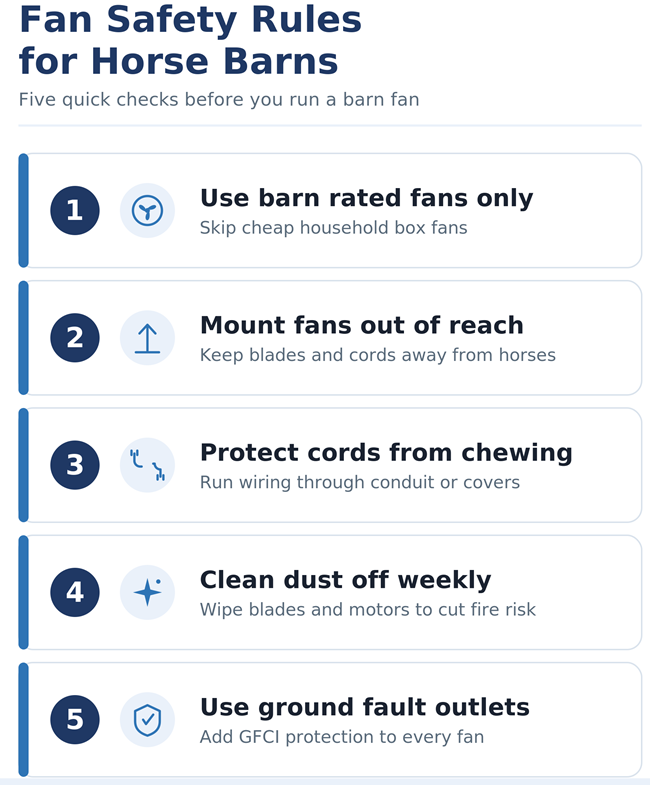
Fan Safety Checklist for Horse Barns
Follow these steps before you plug in a single fan this summer. Each one reduces a known hazard in horse stall cooling, and together they form a routine you can repeat every year.
- Choose fans rated for agricultural or barn use, never cheap household box fans.
- Mount fans out of reach so horses cannot bite cords or blades.
- Run cords through conduit or metal covers to protect them from chewing and dust.
- Plug fans into outlets with ground fault protection to reduce shock and fire risk.
- Clean dust and cobwebs off fan blades and motors every week.
- Inspect cords for fraying or heat damage before each use.
- Turn fans off when no one is on the property if your wiring is older.
Print this list and keep it by your electrical panel. A two minute check before each hot stretch is far cheaper than the alternative, and it gives you real peace of mind when you leave the barn at night.
Best Fan Placement for Barn Airflow
Place fans to move air along the aisle and across stall fronts rather than blasting one horse head on. A steady, gentle current improves barn airflow improvement without chilling or stressing the animal. Mount fans high, angle them slightly downward, and aim for airflow that the horse can move into or away from as it chooses.
Here is the key thing. A horse should always be able to step out of a direct draft. Constant strong wind in the eyes and ears is uncomfortable and can dry out sensitive tissues over time. Good fan placement cools the space, supports cooling horse stalls, and still lets your horse pick its own comfort zone within the stall.
Avoid pointing every fan at the same spot, which creates a wind tunnel in one stall and dead air everywhere else. Spread your fans out, stagger their angles, and watch how dust and bedding move to confirm air is actually circulating. The goal is a calm, even flow that reaches every horse on the row. Oscillating fans cover more ground than fixed ones, but confirm the sweep still leaves each horse a quiet corner to retreat to.
Water, Hydration, and Electrolytes for Horses in Hot Weather
Water is the most important cooling tool in your barn, and it costs almost nothing. Horse hydration in hot weather drives every other cooling process, because a well hydrated horse can sweat, circulate blood, and shed heat far more effectively. Dehydration, by contrast, makes heat stress far more likely and far harder to reverse.
How much does a horse need? Quite a lot. A horse at rest in mild weather drinks roughly 6 gallons a day for every 1,000 pounds of body weight. In hot weather that same horse may drink more than 20 gallons a day, according to figures cited by the University of Georgia Equine Program. Always assume your horse needs more water in summer than you think it does.
Make Water Easy To Find and Hard To Ignore
Place clean, fresh water for horses where your horse cannot help but notice it, and refill it often. Horses drink more when water is cool, clean, and close at hand. Scrub buckets and troughs daily, because algae, heat, and floating debris all reduce horse water intake just when you need it to climb.
Think of it this way. A bucket in a dim corner that tastes warm and stale is a bucket your horse will skip. Offer multiple water sources, keep them topped off, and check them several times a day during heat waves. Reliable hydration is the foundation of horse welfare in hot weather, and it is the easiest win in your whole plan.
Watch each horse’s drinking habits the way you watch its appetite. A horse that suddenly drinks less, or that leaves full buckets in extreme heat, may be heading toward trouble. Catching a drop in water intake early often lets you correct a problem before it ever becomes a crisis, so make a habit of glancing at every bucket on each pass.
Electrolytes Are Helpful for Some Horses, But Not a DIY Guessing Game
Electrolytes for horses replace the sodium, chloride, and potassium lost in sweat, and these minerals matter because plain water alone cannot restore them. Kentucky Equine Research notes that a heavily sweating horse can lose significant body salts in a single hot hour, which is why hard working horses often benefit from a balanced electrolyte supplement during summer.
That said, electrolytes are not a casual additive. Too much, or the wrong product, can upset a horse or discourage drinking if the water suddenly tastes odd. Always provide plain water alongside any supplemented water, and ask your veterinarian which product and dose suit your horse. Never treat electrolytes as a substitute for shade, airflow, and rest.
Many lightly used horses meet their needs with quality forage and free access to a plain salt block. The horses that truly need supplements are the heavy sweaters, the endurance and competition horses, and those in prolonged extreme heat. When in doubt, let your vet guide the decision rather than guessing at a scoop. A simple pinch test on the neck skin and a quick look at gum moisture give you useful clues about whether hydration is keeping up.
Cooling Tools That Can Help in a Barn
Beyond air and water, several practical cooling tools help bring a hot horse’s temperature down. Horse cooling equipment ranges from a simple garden hose to misting systems, and each has a place in your summer plan. The right choice depends on your barn, your climate, and the individual horse standing in front of you. What works for a clipped competition horse may be overkill for an easy keeper that lives outdoors, so scale the gear to the animal in front of you.
The comparison below outlines common cooling horses during summer methods so you can match the tool to the moment and avoid wasting money on gear your climate does not support.
| Cooling Method | Best For | Keep In Mind |
| Cold hosing | Rapid cooling after work or in heat | Scrape off water so it cannot trap heat |
| Misters and fans | Lowering ambient barn temperature | Works best in dry climates, not humid ones |
| Shade and timing | Everyday prevention at no cost | Plan turnout around the coolest hours |
| Cooling sheets | Wicking sweat from clipped horses | Choose breathable, light colored fabric |
Cold Hosing and Rapid Cooling Basics
Cold hosing horses is one of the fastest, most effective ways to lower body temperature. Run cool water over the large blood vessels of the neck, chest, and inner legs, then scrape the water off and repeat. Continuous cool water removes heat far more quickly than people once believed, and scraping prevents the warmed water from acting like an insulating blanket against the skin.
But here is where many owners hesitate without reason. Old advice warned against cold water on hot muscles, yet current research from equine sports science supports applying plenty of cool water right away. For a genuinely overheated horse, fast cooling is the priority, so do not delay while you second guess the temperature of the hose.
Keep hosing until the horse’s breathing slows and the water running off the body no longer feels hot. One quick rinse is rarely enough on a severe day. Repeated cycles of cool water and scraping, continued patiently, are what actually pull the core temperature back down to a safe range and keep it there.
Water Misters and Evaporative Cooling
Evaporative cooling for barns uses fine water mist that absorbs heat as it evaporates, lowering the surrounding air temperature. Misting fans can make a real difference in dry climates, where the air readily takes up extra moisture. Pair misters with good airflow so the damp air moves out of the barn rather than settling into the stalls.
The bottom line is this. In humid regions, misters often add moisture without much cooling, because the air is already close to saturated. Test how your barn responds before investing heavily, and lean on airflow and shade if misting only makes your stalls feel muggier and the footing slick.
If you do run misters, site them where the spray will not soak bedding, feed, or electrical fittings. Aim for a light, drifting mist rather than a soaking spray, and run it alongside fans so the moist air keeps moving. Used well in the right climate, evaporative cooling is a quiet, steady helper.
Shade and Timing Are the No Cost Cooling Trick
The cheapest cooling strategy is also one of the best. Shade for horses and smart scheduling cost nothing and prevent heat from building in the first place. Turn horses out overnight or in the early morning, bring them into the coolest part of the barn during peak afternoon heat, and avoid hard work when the heat index is high.
Here is the key thing. Prevention beats rescue every time. A horse kept in shade with airflow and water rarely reaches the danger zone, while a horse left in a baking paddock at noon can spiral fast. Build your day around the sun and you solve most heat problems before they ever start.
Natural shade from trees, run in sheds, and the barn itself all count, as long as the shaded space also has airflow. A dark, still shed can be hotter than open shade with a breeze. Combine shade, moving air, and water, and you give every horse a genuine refuge from the worst of the day.
Signs of Heat Stress in Horses and What To Do
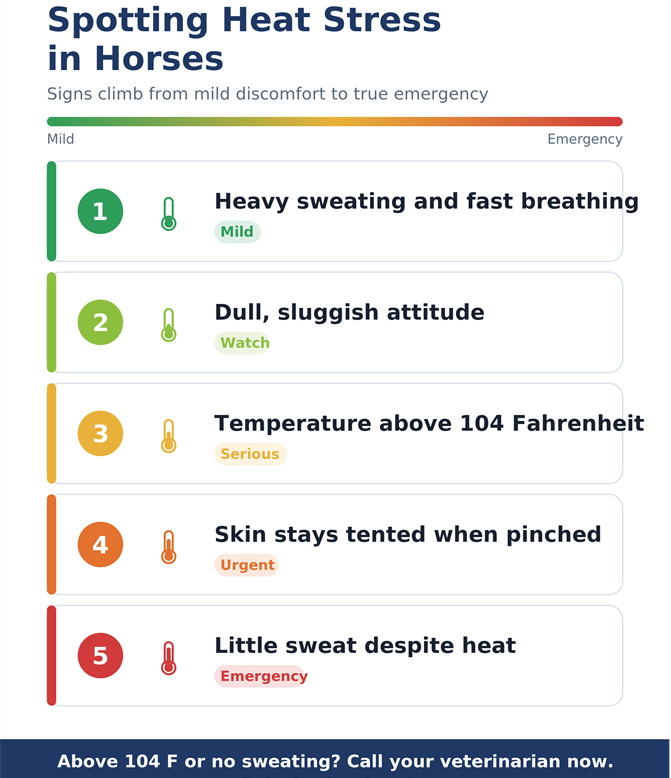
Recognizing heat stress early gives you the best chance to help your horse before the situation turns serious. Horse overheating symptoms follow a rough ladder, from mild discomfort to a true emergency. Knowing where your horse sits on that ladder tells you whether to adjust management or call for help right now.
Early Signs to Watch For and Call Your Vet for Guidance
Early signs of heat stress in horses include heavy sweating, faster breathing, a higher heart rate, and a dull or sluggish attitude. You might notice your horse seeking shade, drinking poorly, or sweating far more than the work explains. At this stage, move the horse to a cooler spot, offer water, and start active cooling right away.
Think of it this way. These early signals are your horse asking for help while it still can. Call your veterinarian for guidance if signs persist after cooling, because horse heat exhaustion can progress even after you intervene. Trust the overall pattern of behavior, not a single reading on a single thermometer.
Emergency Signs That Mean You Seek Veterinary Care Now
Some signs demand immediate veterinary care. Stop and call your vet right away if you see any of the following warning signals in a hot horse.
- A rectal temperature above 104 degrees Fahrenheit that does not fall with cooling.
- Rapid breathing that does not slow after several minutes of rest.
- Stumbling, weakness, collapse, or obvious confusion.
- Skin that stays tented when pinched, signaling serious dehydration.
- Little or no sweating despite intense heat, a red flag for a condition called anhidrosis.
- A racing or irregular heartbeat that will not settle.
These point toward heat stroke or severe dehydration, both of which can be fatal without prompt treatment. While you wait for the vet to arrive, keep cooling the horse with cool water and keep it as calm and still as you can.
Move, Cool, Call Is Your Action Plan
If a horse seems overheated, follow three simple steps in order: move, cool, and call. First, move the horse out of direct sun into shade or a ventilated aisle. Second, cool it aggressively with cool water over the neck, chest, and legs, scraping and repeating. Third, call your veterinarian if the horse does not improve quickly.
The bottom line is this. You do not need perfect information to act. Moving, cooling, and calling covers the essentials of horse heat stress prevention in a crisis, and it buys precious time. When in doubt, cool the horse and pick up the phone, because acting early is always safer than waiting to be sure. Keep your vet’s number and your barn’s address posted by the door so anyone on site can call for help without delay.
Hot Day Barn Checklist
A simple routine keeps your whole barn safer through a heat wave. This hot weather horse care checklist breaks the day into three windows so nothing slips through the cracks. Print it, post it, and share it with everyone who handles your horses so the plan does not depend on one person’s memory.
Morning
Start before the heat builds. Top off and scrub every water source, turn horses out while the air is still cool, and check the day’s forecast and heat index. Set up fans and open vents so the barn is already moving air before temperatures climb toward their afternoon peak.
Midday
Midday is peak danger. Bring horses into the coolest, most shaded part of the barn, run fans on safe settings, and refill water that the heat has warmed. Walk the aisle to check each horse for early heat stress signs, and hold off on hard work, training, or trailering until conditions ease.
Evening
Evening is for recovery and prevention. Refresh water again, offer electrolytes only as your vet advises, and turn horses back out as the air cools. Do a final airflow check, confirm fans and cords are safe for the night, and note any horse that struggled so you can watch it closely tomorrow.
Why a Written Routine Beats Memory
A posted checklist removes guesswork on the days when everyone is busy and tired. When the heat is brutal, it is easy to forget a water bucket or skip a stall check, and that is exactly when a horse gets into trouble. A shared routine keeps every helper on the same page and protects your horses even when you are not the one in the barn that afternoon.
Horse Cooling FAQs
What temperature is too hot for horses in a barn?
There is no single cutoff, because humidity matters as much as temperature. Use the AAEP heat index, which adds temperature in Fahrenheit to humidity percentage. Below 130 is low risk, while a reading above 180 is dangerous and means you should stop work and prioritize cooling and veterinary advice for your horse.
Are fans safe to use around horses in the barn?
Fans are safe when you use barn rated models, mount them out of reach, protect the cords, and clean them often. The biggest risks are electrical fires and chewed wiring. Position fans to move air gently across the aisle so your horse can always step out of a direct draft when it wants to.
How much water should a horse drink in hot weather?
A horse drinks roughly 6 gallons a day per 1,000 pounds in mild weather and often more than 20 gallons a day in hot weather. Always provide clean, cool, fresh water at all times, refill it several times daily during heat waves, and scrub buckets often to keep your horse drinking well.
Do horses really need electrolytes in the summer?
Some do, especially horses that sweat heavily during work or long turnout in extreme heat. Electrolytes replace sodium, chloride, and potassium that plain water cannot restore. Many lightly used horses do fine with quality forage and a salt source, so ask your veterinarian before adding any electrolyte supplement to the routine.
What are the first signs of heat stress in horses?
The earliest signs of heat stress in horses are heavy sweating, faster breathing, an elevated heart rate, and a dull, tired attitude. Your horse may also seek shade and drink poorly. Move the horse somewhere cooler, begin active cooling, and call your veterinarian if the signs do not ease within a short time.
Can I use misters or sprinklers to cool my horse barn?
Yes, misters and sprinklers can help, but they work best in dry climates where moisture evaporates quickly. In humid regions they may make stalls feel muggy without cooling much. Always pair misting with strong airflow so damp air moves out, and watch that footing in and around the barn does not become slick.
How do I keep an older horse cool during summer heat waves?
Older horses and those with conditions like anhidrosis need extra care for horse comfort during heat waves. Offer constant shade, steady airflow, and easy water access, and limit work to the coolest hours of the day. Watch them closely for early heat stress, and ask your veterinarian about a tailored summer management plan.
Is cold water bad for a hot horse after exercise?
No, applying plenty of cool water to a hot horse is safe and effective. Older advice to avoid it has been set aside by current equine sports science. Run cool water over the neck, chest, and legs, scrape it off, and repeat until the horse’s breathing and temperature return toward a normal range.
Keeping your horse safe through summer comes down to a few reliable habits: move air through the barn, keep cool water everywhere, use shade and timing wisely, and watch closely for the first signs of trouble. Once you understand how to cool a horse in hot weather, keeping horses cool in summer becomes a steady routine rather than a scramble. With a solid plan, you can keep horses cool in the barn even through the hottest stretches of the year. Every barn and every horse is a little different, so treat this guide as a strong starting point rather than the final word. For advice tailored to your horse’s individual needs, especially for older animals or those with health conditions, consult your veterinarian or a certified equine specialist.