

Choosing the best fly protection for horses comes down to two proven tools: fly sheets and fly spray. Fly sheets create a physical barrier that blocks biting insects, while fly spray applies a chemical repellent directly to the coat. Most owners get the strongest results by combining both.
This guide breaks down how each option works, where each one wins, and how to build a layered defense. You will learn the real costs, the trade offs, and a simple routine that keeps your horse comfortable from the first warm day to the last.
Flies are far more than a summer nuisance. They spread disease, damage skin, and steal your horse’s peace. The good news is that smart horse fly protection becomes simple once you understand your choices and how to use them together.
KEY TAKEAWAYS
- Fly sheets block insects physically and add UV protection during turnout.
- Fly spray repels insects chemically but needs frequent reapplication.
- Sheets cover the body, while spray reaches the face, legs, and belly.
- Combining both gives the most complete and reliable horse insect control.
- Always patch test new products and watch horses with sensitive skin.
Why Fly Protection Matters for Horses
Fly protection matters because biting insects threaten your horse’s health, comfort, and behavior all at once. A swarm of flies does not just annoy a horse. It drives constant stomping, tail swishing, and pacing that burns energy and raises stress. Good horse fly prevention restores calm and protects the body underneath.
Here is the key thing most owners miss. Flies are vectors, which means they carry and transmit disease from one animal to another. The risk is real, and it grows as the horse fly season peaks in the warmest months of the year.
According to Penn State Extension, horse flies and deer flies feed on blood and can transmit serious illnesses between animals. That makes fly control a genuine health priority, not just a comfort upgrade for your barn.
Common Problems Caused by Flies
Flies cause a chain of problems that start at the skin and reach the whole horse. Fly bites on horses create itchy welts, raw sores, and open wounds that quickly invite infection. Persistent biting flies on horses also trigger weight loss when animals refuse to graze in peace.
Different flies attack in different ways too. Stable flies bite the legs and chest, horse flies target the back and belly, and tiny midges swarm the mane and tail. Each species calls for a slightly different defense, which is why no single product solves everything.
Constant irritation also wears on the mind. A horse that spends all day fighting insects grows tense, distracted, and harder to handle. Steady horse insect control protects temperament as much as it protects the skin.
Fly Borne Diseases to Know
A fly borne disease is an illness passed from one horse to another through the bite or contact of an insect, because flies move blood and pathogens between animals as they feed. Knowing the main threats helps you take horse pest management seriously during peak season.
Stable flies are linked to the spread of equine infectious anemia, a viral disease with no cure. Filth flies can transmit habronema worms that cause painful summer sores around the eyes and on the legs. Mosquitoes, a closely related pest, carry West Nile virus and remind us why barrier protection matters.
Some horses also suffer from insect bite hypersensitivity, often called sweet itch. This allergic reaction to midge and fly saliva causes intense itching, hair loss, and thickened skin. For these horses, reducing exposure is the single most effective treatment you can offer.
The bottom line is this. Every bite you prevent lowers disease risk, protects the coat, and keeps your horse grazing calmly. That is the true value of consistent fly protection through the entire warm season.
The Hidden Costs of Poor Fly Control
Poor fly control costs more than most owners realize. The price shows up in vet bills, lost condition, and ruined turnout time. Counting these hidden costs makes the case for steady protection clear.
Health costs come first. Treating summer sores, skin infections, or a case of equine infectious anemia dwarfs the price of a sheet and a bottle of spray. Prevention is almost always the cheaper path.
Performance costs follow close behind. A horse losing sleep and condition to flies trains poorly and recovers slowly. Strong horse fly prevention protects your investment in both health and training.
What Are Fly Sheets?
A fly sheet is a lightweight mesh body covering that stops biting insects because it forms a physical barrier the flies cannot cross. It also blocks much of the sun’s UV rays during long turnout. Fly sheets for horses are among the most reliable tools available.
Think of it this way. A fly spray asks insects to land and then leave. A mesh fly sheet never lets them land at all. That simple difference explains why so many owners reach for fly gear for horses as their first line of defense.
Most sheets also block sun. A UV protection fly sheet shields the coat from fading and guards pink skinned areas from sunburn, which adds real value during the long days your horse spends at pasture.
How Fly Sheets Work
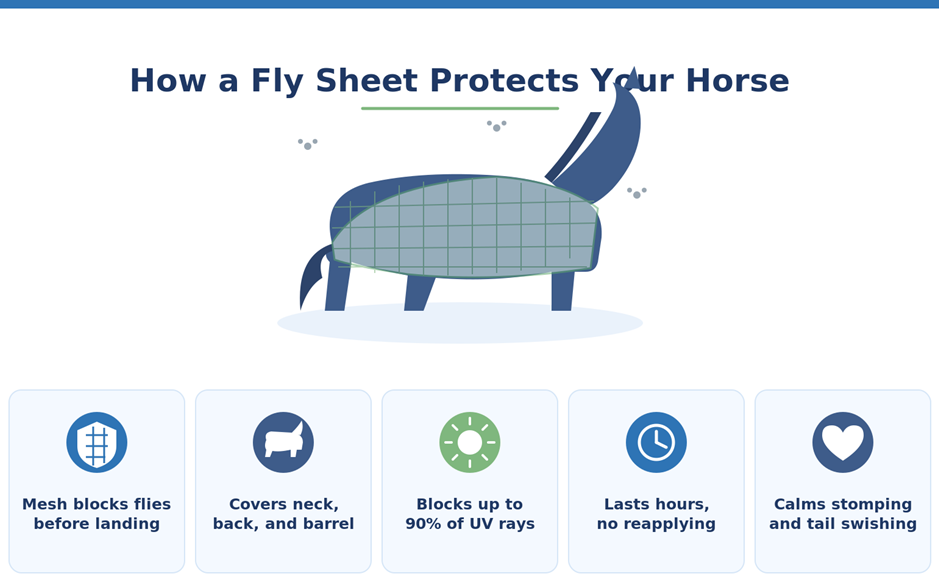
Fly sheets work by weaving synthetic mesh into a tight screen that insects cannot penetrate. The fabric covers the neck, back, barrel, and hindquarters, leaving only the legs and head exposed. A horse turnout fly sheet keeps this barrier in place during the hours flies are most active.
Weave density is the detail that matters most. A tighter weave blocks smaller insects like gnats and midges, while a looser weave favors airflow and cooling. Material like Textilene, a coated polyester, can block roughly 90 percent of UV rays while still letting air pass through.
Many sheets pair with a fly mask for horses to guard the eyes and ears. Together they form a near complete shield, which is why fly sheets anchor most turnout routines during periods of heavy fly pressure.
Types of Fly Sheets
Not every sheet suits every horse, so it helps to know your options. The right choice depends on your climate, your turnout hours, and how sensitive your horse’s skin is to bites and sun.
Standard mesh sheets are the most common and balance airflow with insect protection for horses. Combo sheets add a neck cover and belly band for fuller coverage. Hooded sheets extend over the face and ears for horses with severe sweet itch.
Fabric weight matters as well. Lighter sheets keep horses cool in extreme heat, while sturdier weaves resist tearing during rough turnout. Match the sheet to your horse’s real needs rather than buying the cheapest option on the shelf.
Choosing the Right Fit
A great fly sheet only works if it fits well, so measure your horse before you buy. Run a tape from the center of the chest to the point of the tail to find the correct size. A sheet that is too small rubs, while one too large slips and gaps.
Check the fit at the shoulders, chest, and withers, since these spots rub first. Look for smooth seams, adjustable straps, and a shaped neck that moves with the horse. Comfort keeps the sheet on, and a sheet that stays on keeps doing its job.
Watch for early signs of trouble during the first few wearings. Rubbed hair, restlessness, or a sheet that constantly shifts all signal a poor fit. Small adjustments now prevent sores and wasted money later.
Benefits of Fly Sheets
The biggest benefit is long lasting protection that does not wear off through the day. Once the sheet is on, it works for hours without reapplication, which makes insect protection for horses far easier to manage. You set it and the barrier simply holds.
Sheets also reduce reliance on chemicals. For owners who prefer fewer sprays, a sheet provides strong fly protection during turnout with no repeated dosing. That appeals to anyone managing horse skin sensitivity or recurring allergic reactions.
Added perks include sun protection, cleaner coats, and calmer behavior. Horses that stomp and pace to escape pasture flies often settle quickly once covered. Better horse comfort in summer is an easy win the moment the sheet goes on.
Potential Drawbacks
Fly sheets do have limits you should weigh honestly. They cover the body but leave the face, lower legs, and belly exposed, so some areas still need attention. A sheet on its own rarely solves the whole problem.
Heat is the next concern. Even breathable mesh adds a layer, and a poor fit can rub at the shoulders, chest, or withers. A sheet that slips or tears also loses value fast, so quality and correct sizing both matter.
Cost and care round out the trade offs. Quality sheets carry a higher upfront price, and they need regular washing to stay effective. Still, for everyday horse fly management, most owners find the durability well worth it.
Caring for Your Fly Sheet
A fly sheet lasts longer and works better when you care for it well. Dirt clogs the mesh, traps heat, and dulls UV protection, so regular cleaning is essential. A little maintenance protects both the sheet and your horse.
Wash the sheet on a gentle cycle with mild soap, then air dry it out of direct sun. Avoid harsh detergents that can irritate horse skin sensitivity on the next wearing. Check seams and straps each time for early wear.
Store the sheet clean and dry at season’s end. Fold it loosely in a breathable bag to keep pests and mildew away. Good storage means your horse turnout fly sheet is ready the moment fly season returns.
What Is Fly Spray?
Fly spray is a liquid repellent you apply directly to the coat to drive insects away on contact. It works fast, reaches places a sheet cannot, and travels easily to shows or trail rides. As a flexible form of fly repellent for horses, it remains a true barn staple.
But here is where most horse owners go wrong. They treat spray as a once and done fix. In reality, fly spray for horses fades with sweat, time, and movement, so timing and reapplication decide how well it actually performs.
Sprays come in many formulas, from synthetic repellents to plant based blends. Understanding what sits inside the bottle helps you match the right equine insect repellent to your horse and your goals.
How Fly Spray Works
Fly spray works by coating the hair with active ingredients that repel or kill insects on contact. Pyrethrin, a compound derived from chrysanthemum flowers, is a common natural option. Synthetic pyrethroids like permethrin offer longer staying power between applications.
According to University of Minnesota Extension, owners can treat horses daily with a one percent pyrethrin product or weekly with a synthetic pyrethroid such as permethrin or resmethrin. These schedules show how active ingredient choice changes how often you need to spray.
Coverage technique matters as much as the formula itself. You apply spray across the body, then use a cloth to reach the face and ears safely. Thorough, even application is what makes fly control products actually do their job.
Types of Fly Spray Formulas
Fly sprays fall into a few broad categories, and knowing them helps you choose wisely. The right formula depends on fly pressure, your horse’s skin, and how long you need protection to last.
Synthetic sprays built on permethrin or other pyrethroids offer the strongest, longest protection. Natural fly repellents for horses use plant oils like citronella, cedar, and eucalyptus for a gentler approach. Spot on products concentrate protection along the topline for extended coverage.
Each type has a place. Strong synthetics suit heavy fly seasons, while milder botanical blends suit sensitive horses and lighter conditions. Many owners keep more than one bottle so they can match the spray to the day.
Applying Fly Spray Correctly
Correct application is what separates a spray that works from one that disappoints. Start with a clean, dry coat, since dust and sweat block absorption. Spray in the direction of the hair and work methodically from neck to tail.
Never spray directly at the face. Instead, mist a soft cloth and wipe gently around the eyes, ears, and muzzle. This protects delicate areas while still giving the face the equine insect repellent it needs.
Reapply based on conditions rather than habit. Hot, humid days and heavy sweating shorten protection, so a midday touch up often helps. Pay close attention to the legs and belly, where stable flies attack most.
Benefits of Fly Spray
The top benefit is total reach. Spray protects the legs, belly, face, and other spots a sheet always leaves open. For complete horse stable fly control, that flexibility is genuinely hard to beat.
Spray is also fast and portable. You can treat a horse in minutes before a ride, a show, or evening turnout. That convenience makes it the go to choice when you need quick protection without any extra gear.
Choice is another advantage. From strong synthetic formulas to natural fly repellents for horses, you can match the product to your horse’s skin and your comfort with chemicals. This range lets you fine tune your approach over the season.
Potential Drawbacks
The main drawback is that protection fades and demands reapplication. Sweat, rain, and rolling strip the coat, so you may spray several times a day during peak season. That ongoing effort and cost quietly add up over the months.
Skin reactions are a real risk too. Some horses react to certain actives, especially those with existing horse skin sensitivity. A patch test on a small area helps you catch problems before a full body application goes wrong.
Effectiveness also varies by product and conditions. No spray repels every insect forever, and heavy fly pressure can overwhelm even a good formula. This is exactly why spray works best as one layer rather than your only line of defense.
Reading the Label and Active Ingredients
Reading the label is the smartest habit you can build before buying any fly spray. The active ingredient list tells you how strong, how lasting, and how gentle a product really is. A few seconds of reading prevents costly mistakes.
Look first for the active percentage. A higher pyrethrin or permethrin concentration usually means longer protection, while lower percentages suit sensitive horses. Match the strength to your fly pressure and your horse’s skin.
Check the directions and warnings too. Some fly control products are not safe near the eyes, on foals, or on broken skin. Following the label keeps your equine insect repellent both effective and safe.
Fly Sheets vs Fly Spray: Key Differences
The core difference is simple: fly sheets block insects physically, while fly spray repels them chemically. Sheets deliver long, hands off coverage for the body. Spray delivers fast, flexible coverage that reaches everywhere but fades with time.
Neither tool is a complete answer on its own. The best fly protection for horses usually blends the steady barrier of a sheet with the reach and speed of a spray. Comparing them side by side makes the right choice much clearer.
Here is a quick comparison of how the two stack up across the factors that matter most for everyday horse insect control.
| Factor | Fly Sheets | Fly Spray |
| Type of protection | Physical mesh barrier | Chemical repellent |
| Duration | Hours per application | Often needs daily reapplication |
| Body coverage | Neck, back, barrel, hindquarters | Legs, belly, face, full body |
| UV and sun protection | Yes, blocks most UV rays | No |
| Best use | Turnout and pasture time | Riding, shows, and travel |
| Ongoing cost | Higher upfront, lasts seasons | Lower upfront, repeats often |
| Skin sensitivity risk | Low, minimal contact chemicals | Possible reaction to actives |
Duration of Protection
Fly sheets win on duration because the barrier holds for the entire turnout period. You put the sheet on once and it protects for hours with no further effort. That makes it ideal for the long days your horse spends in the pasture flies love.
Spray protection is shorter and more variable. A pyrethrin product may last only a single day, while a synthetic pyrethroid stretches longer. For long lasting fly protection, the sheet keeps the clear edge.
Coverage
Spray wins on coverage because it reaches the legs, belly, and face that sheets always leave open. You can target the exact spots flies attack most. This makes spray essential for full body horse fly protection.
Sheets cover the largest surfaces but stop at the legs and head. Pairing a sheet with a fly mask for horses closes much of that gap. Combined, the two tools cover far more than either one can alone.
Convenience
Sheets offer set and forget convenience once they are on. There is no timing, no reapplying, and no mess during turnout. For daily routines, that simplicity saves you real time and effort.
Spray offers grab and go convenience for quick jobs and travel. You can protect a horse in minutes without packing any extra gear. Each tool proves convenient in its own situation.
Cost Considerations
Cost depends entirely on how you view the timeline. A quality sheet costs more upfront but can serve for several seasons with care. Spread over years, that price becomes very reasonable horse fly prevention.
Spray costs less per bottle, but you buy it again and again. Across a long season, repeat purchases add up faster than owners expect. Weighing upfront price against ongoing spend helps you protect horses from flies without overspending.
Which to Choose for Your Situation
The right choice depends on your horse, your schedule, and your climate. There is no universal winner, only the best fit for your specific situation. Matching the tool to the need separates good fly management from wasted money.
Choose a fly sheet first if your horse lives out, burns in the sun, or reacts badly to chemicals. The barrier suits long turnout and sensitive skin. It is the backbone of all day protection.
Reach for spray first if you ride often, travel to shows, or need to cover the legs and face quickly. For most owners, though, the honest answer is both. A layered plan delivers the best fly protection for horses in nearly every setting.
Using Fly Sheets and Fly Spray Together
The smartest strategy is to use fly sheets and fly spray together as a single layered system. The sheet guards the body while the spray protects the exposed legs, belly, and face. Together they deliver the complete horse fly management that neither tool achieves alone.
Texas A&M College of Veterinary Medicine notes that protecting horses from a growing fly problem works best with combined methods rather than one single approach. Layering your defenses follows that same proven logic right in your own barn.
Here is the key thing about layering. You are not doubling the work. You are covering each tool’s blind spot with the other’s strength, which is the real foundation of reliable equine fly control.
Building a Daily Routine
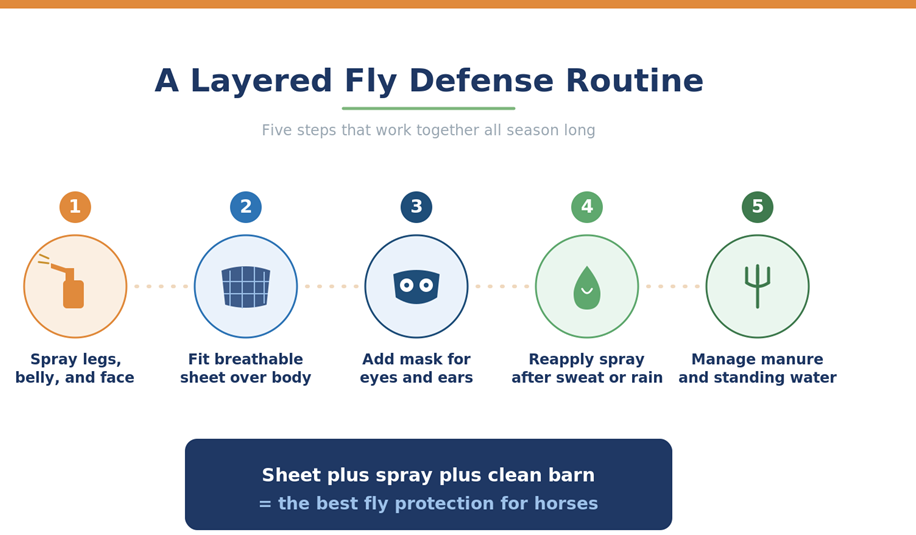
A consistent daily routine turns two good products into one strong system. Apply spray to the legs, belly, and lower body, let it dry, then fit the sheet over the back and barrel. Finish with a fly mask to guard the face.
Follow this simple routine to combine both tools effectively through the warm season.
- Fit a breathable mesh fly sheet for turnout during peak fly hours.
- Add a fly mask to shield the eyes, ears, and sensitive face.
- Spray exposed legs, belly, and lower body before the sheet goes on.
- Reapply spray as sweat, rain, or rolling wears it away.
- Clean and inspect the sheet weekly for tears, rubs, and fit.
- Manage manure and standing water to cut the fly population.
- Track which products work best for your individual horse.
Managing the Barn Environment
Even the best gear works better when you reduce the fly population at its source. Flies breed in manure, damp bedding, and standing water, so cleaning these areas pays off quickly. This step multiplies the value of every sheet and spray you own.
Kansas State Veterinary Health Center advises that environmental control, such as managing manure, is an essential part of any complete fly program. Removing breeding grounds is often the most overlooked piece of horse stable fly control.
Traps and fly predator wasps add another layer of defense. These tiny beneficial insects eat fly larvae in manure, lowering the number of flies that ever hatch. Combined with good grooming and fly protection, they keep pressure manageable all summer.
Adjusting Through the Seasons
Fly pressure shifts as the year moves, so your strategy should shift right along with it. Early season calls for lighter protection, while midsummer demands your full layered routine of sheet, spray, mask, and environmental control.
Watch your horse for clues rather than relying on the calendar alone. Stomping, restlessness, and fresh bites all signal that you need to step up protection. A clean coat from regular horse grooming and fly protection also helps you spot trouble early.
As temperatures cool, you can scale back gradually. Keep monitoring until the first hard frost, since flies often linger longer than owners expect in mild autumns. Steady attention beats a rigid schedule every single time.
Common Mistakes to Avoid
A few common mistakes quietly undo even a good fly program. Avoiding them keeps your horse protected and your effort from going to waste. Most come down to habits rather than products.
The first mistake is spraying a dirty coat. Dust and sweat block absorption, so always start clean. The second is ignoring fit, since a rubbing sheet does more harm than good over time.
The third mistake is forgetting the environment. Even perfect gear loses ground when manure and standing water breed new flies daily. Consistency, not any single product, is what truly protects your horse.
Protecting Foals and Sensitive Horses
Some horses need extra care, and a single approach fails them. Foals, older horses, and animals with sweet itch all react more strongly to both insects and chemicals. Adjusting your plan to fit these special cases protects the horses that need it most.
Foals have thin, delicate skin that many sprays can easily irritate. Lean on a properly fitted fly sheet and physical barriers first, and always ask your veterinarian before applying any equine insect repellent to a young horse. Gentle, careful protection always matters far more than convenience here.
Horses with sweet itch need the tightest barrier you can provide. A fine mesh sheet, a full fly mask, and stabling during dawn and dusk all reduce contact with the biting midges that trigger their misery. Every avoided bite eases their constant itching.
Older horses and those recovering from illness also deserve a softer touch. Choose mild formulas, watch closely for any skin reactions, and keep their surroundings as clean as possible. Thoughtful horse insect control keeps your most vulnerable animals comfortable through the worst of fly season.
Horse Fly Protection FAQs
Which is better for horses, fly sheets or fly spray?
Neither is strictly better, because they solve different parts of the problem. Fly sheets give long, hands off body coverage and UV protection during turnout, while fly spray reaches the legs, belly, and face. The best fly protection for horses usually combines both into one layered routine that covers every angle.
How long does a fly sheet protect a horse from insects?
A fly sheet protects your horse for the entire time it is worn, which is often many hours of turnout. Unlike spray, it does not fade or wear off through the day. Just check the fit and fabric regularly, since a torn or slipped sheet quickly loses its protective value.
How often should you reapply fly spray on horses?
Reapplication depends on the active ingredient and the conditions of the day. A one percent pyrethrin product may need daily use, while a synthetic pyrethroid like permethrin can last longer between applications. Sweat, rain, and rolling all shorten protection, so reapply whenever you see flies landing again.
Can fly sheets and fly spray be used together safely?
Yes, and using them together is the most effective approach for most horses. Apply spray to the exposed legs, belly, and face, then fit the sheet over the body. Let the spray dry before the sheet goes on, and always patch test new fly control products before regular use.
Are fly sheets safer for horses with sensitive skin than sprays?
For many horses with sensitive skin, fly sheets are a gentler choice because they limit chemical contact. A physical barrier suits animals prone to allergic reactions or sweet itch. If you do use spray on these horses, choose a mild formula and run a small patch test before any full application.
What is the best natural fly protection for horses?
Natural options combine a mesh fly sheet with plant based sprays built around ingredients like pyrethrin or essential oils. Pairing physical barriers with gentle repellents reduces chemical exposure while still cutting bites. Environmental steps, such as removing manure and standing water, strengthen any natural fly prevention plan you build.
Do fly masks really help protect a horse’s face?
Yes, a fly mask is one of the most valuable pieces of fly gear for horses you can own. It shields the eyes, ears, and face from flies that gather around moisture and can spread infection. A good mask uses fine mesh that protects vision while blocking insects from these sensitive areas.
How can you reduce flies around the barn and pasture?
Reduce flies by attacking their breeding grounds first. Remove manure regularly, eliminate standing water, and keep feed areas clean and dry at all times. Traps and fly predator wasps lower the population further, and these steps together make every sheet and spray you use far more effective.
Effective horse fly protection is never about a single product. It is about layering the right tools for your horse, your climate, and your daily routine. By combining the steady barrier of a fly sheet with the targeted reach of fly spray, you give your horse the best fly protection for horses through every month of the warm season. Pay attention to fit, reapply spray as needed, and manage the environment where flies breed.
Every horse is different, and skin sensitivity, allergies, and local fly pressure all vary widely. For guidance tailored to your horse’s individual needs, consult your veterinarian or a certified equine professional before starting any new fly control routine.