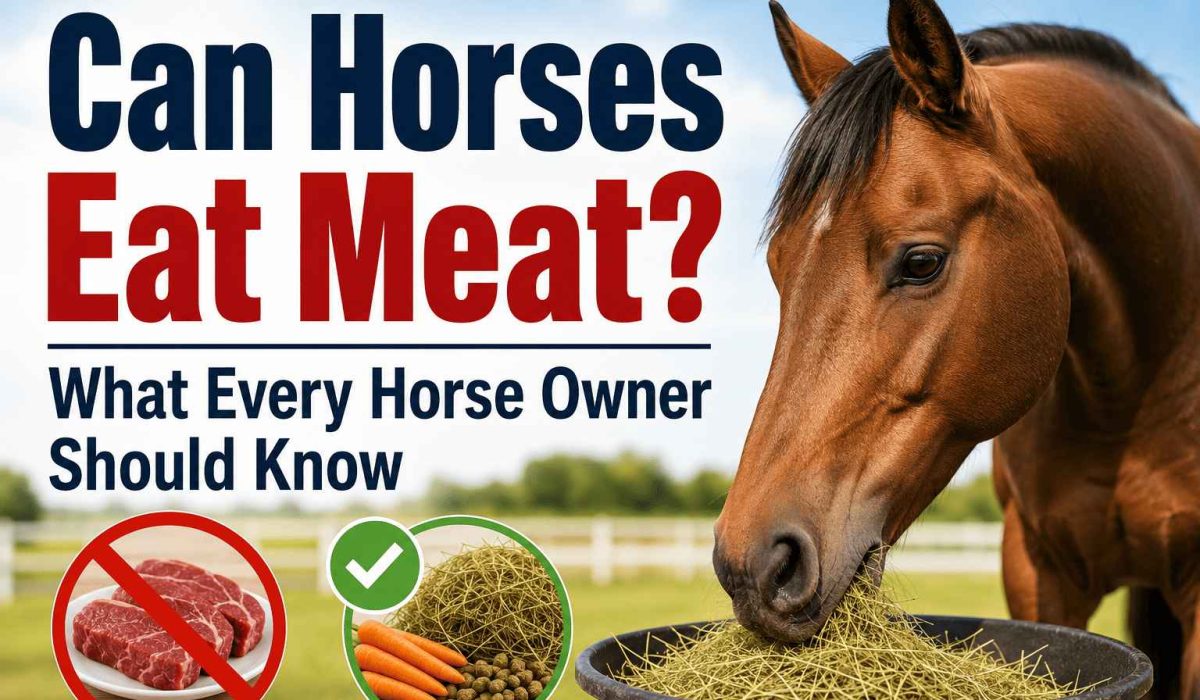
No, horses should not eat meat, because their bodies are built entirely for a plant diet. A horse may nibble a stray piece of food out of curiosity, yet its teeth, stomach, and gut all evolved to digest grass and forage. This guide explains exactly why meat does not belong in a horse diet, what happens when a horse swallows animal protein, and why those viral clips of horses eating birds are far less strange than they first appear.
| Key Takeaways Horses are herbivores and cannot properly digest meat or animal protein. Eating meat can trigger colic, kidney strain, and gut imbalance. Curiosity, boredom, and mineral cravings explain odd meat eating. Viral videos show rare opportunistic behavior, not a true diet shift. Always feed forage first and call your veterinarian with concerns. |
Can Horses Actually Eat Meat?
A horse can physically swallow meat, but it cannot digest it the way a dog or a human does. The mouth and gut of a horse are designed to grind and ferment fibrous plants, not to break down muscle, fat, and bone. So while a curious horse might pick up a sausage or a scrap, that single bite tells you nothing about what its body truly needs.
Here is the key thing to understand. A horse is what scientists call an obligate herbivore, an animal whose entire system depends on plant material for energy and nutrients. The horse digestive system runs on a steady flow of fiber, and meat simply does not fit that design.
The horse is a nonruminant herbivore, which means it has a single stomach rather than the multiple chambers found in cattle. According to Ohio State University Extension, the horse relies on hindgut fermentation, where billions of microbes in the cecum and large colon turn fiber into usable energy. This setup is brilliant for grass and hopeless for steak.
Can Versus Should
There is a real difference between what a horse can swallow and what a horse should eat. A horse can pick up almost anything with its flexible lips, but its body can only thrive on plants. Keeping that line clear helps you make calm, sensible feeding choices.
A horse that grabs a meaty scrap is not telling you it needs meat. It is showing you a curious mouth at work. The right response is to remove the item, not to add flesh to the menu.
Keep this simple rule in mind. When you decide what to feed, follow the body of the horse, not its momentary curiosity. The body always votes for plants.
A Quick Look at Equine Teeth and Jaws
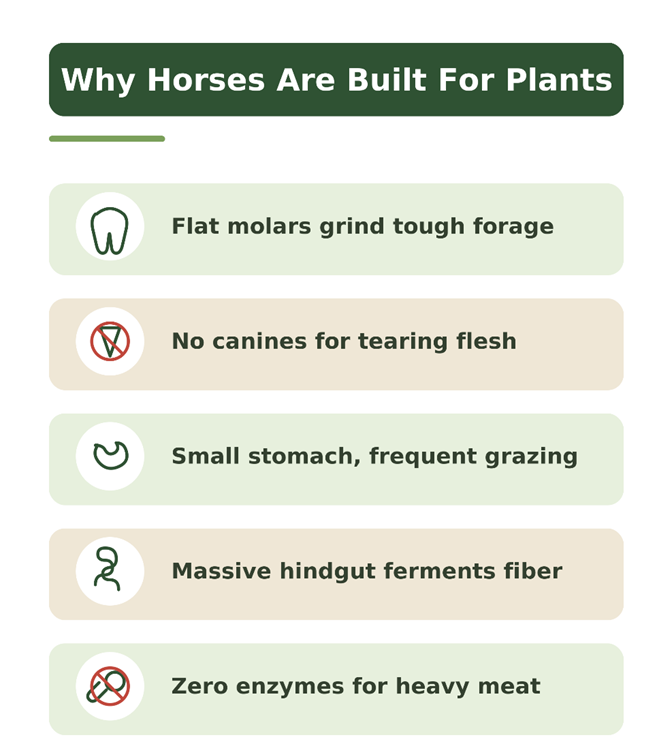
The teeth of a horse reveal its plant based purpose at a glance. Wide, flat molars sit at the back of the mouth and grind tough forage into a pulp. There are no large pointed canines built for tearing flesh, the hallmark of a true meat eater.
The lower jaw also moves in a sweeping sideways motion rather than the up and down chop of a carnivore. This grinding action suits grass and hay perfectly. It is one more sign that nature designed the horse to eat plants.
Watch a horse graze for a few minutes and the picture becomes obvious. The steady, circular chewing is built for fiber, and it would serve no purpose for an animal meant to tear and gulp flesh.
How the Equine Gut Handles Food
Food in a horse travels through a small stomach, then a long small intestine, and finally into a vast hindgut. The hindgut, which includes the cecum and large colon, is where microbes ferment fiber and release energy slowly over many hours. This is the engine room of equine nutrition.
That fermentation system needs a constant supply of fiber to stay healthy. Meat offers no fiber and can sour the balance of the gut. The design clearly favors a grazing life over any kind of hunting.
What the Science Says About Equine Digestion
Hindgut fermentation is the process where gut microbes break down plant fiber because the horse cannot digest it with enzymes alone, releasing energy and B vitamins the horse absorbs over many hours. This slow, steady system is the heart of how a horse fuels its body.
Researchers in equine nutrition stress that this microbial population is sensitive. A sudden flood of rich material, whether grain or meat, can throw it off balance. That sensitivity is exactly why a stable forage diet matters so much for daily health.
Are Horses Herbivores or Omnivores?
Horses are herbivores, full stop. They are not omnivores, and they are not secret carnivores hiding behind a gentle face. Every major feature of their anatomy points to a life spent grazing on grass, hay, and other plants.
Think of it this way. An omnivore like a pig has teeth and a gut built to handle both plants and meat. A horse does not. Its flat grinding molars, long fermentation gut, and grazing instincts all confirm that the question of whether horses are herbivores has only one honest answer.
Are horses herbivores by nature or by training? By nature. Wild horses, zebras, and donkeys all share the same plant focused biology, and none of them hunt for food. When people ask what do horses eat in the wild, the answer is grasses, leaves, bark, and shrubs, never prey.
What Makes a Horse a True Herbivore
A herbivore is an animal that feeds entirely on plants because its teeth, stomach, and gut evolved to extract nutrients from grasses and leaves rather than from flesh. The horse fits this definition completely, from its grinding molars to its fiber fueled hindgut and its instinct to graze for many hours each day.
Three features lock the horse into herbivore status. Its teeth grow continuously to handle endless grinding. Its stomach is small and suited to frequent small meals. Its enormous hindgut hosts the microbes that turn fiber into fuel.
A horse has no sharp tearing canines like a cat or wolf, and no gut enzymes tuned for heavy protein loads from flesh. The whole machine is a plant processor. Meat throws sand into that machine.
Comparing Horses to True Omnivores
A true omnivore is flexible by design. Pigs, bears, and humans carry a mix of sharp and flat teeth, a stomach with strong acid, and enzymes that handle both plants and meat. Their bodies expect a varied menu.
The horse carries none of that flexibility. Its acid levels, enzyme set, and gut layout all assume a plant diet. That is why feeding a horse like an omnivore invites trouble rather than balance.
So when someone insists a horse is really an omnivore at heart, you can answer with confidence. The anatomy settles the debate long before any video or anecdote enters the picture.
So Why Does the Omnivore Myth Persist?
The myth that horses might be omnivores spreads because people watch horses do surprising things. A horse may lick a salty hand, chew on a leather strap, or swallow a bird that wandered too close. These moments look dramatic, yet none of them change the underlying biology.
Curiosity is not diet. A horse exploring its world with its mouth is doing exactly what foals and adults naturally do. That exploration sometimes produces a strange snapshot, but it never makes the horse an omnivore.
How Horses Compare to Other Grazers
Horses sit alongside cattle, sheep, and deer in the broad family of plant eaters, yet they handle food differently. Cattle are ruminants that ferment food in a forestomach before digestion, while horses ferment later, in the hindgut. Both routes process plants, not meat.
This shared focus on forage tells a clear story. Across many grazing species, the body invests in breaking down fiber, never flesh. The horse is simply one more example of nature backing a plant diet.
Why Would a Horse Eat Meat?
A horse eats meat for behavioral reasons, not nutritional ones. Owners often search for why do horses eat meat, and once you understand why horses eat meat, the mystery disappears and you can prevent it. The most common drivers are curiosity, opportunity, an unmet mineral need, and plain boredom.
But here is where most horse owners go wrong. They assume a horse that grabs a chick must be craving protein like a predator. In reality, the horse is usually responding to a passing impulse or a gap in its diet that has nothing to do with hunting instinct.
Do horses eat meat on purpose? Rarely, and usually only when something in their environment or ration is off. Let us break the reasons down so you know exactly what to watch for and how to respond.
Curiosity
Curiosity is the most common reason a horse mouths something unusual. Horses explore the world with their lips and tongue the same way a toddler explores with its hands. A novel object or smell invites investigation, and sometimes that ends with a swallow.
A horse that licks a meaty bone or grabs a sandwich is testing, not hunting. The behavior fades once the novelty is gone, and it rarely signals a real appetite for flesh.
Opportunistic Feeding
Opportunistic feeding happens when a small animal is too slow or too close to escape. A nesting bird, an injured chick, or a cornered mouse can become an easy target. The horse is not stalking prey, it is simply acting on a sudden opportunity right in front of its face.
This is why a calm pasture horse can shock its owner by snapping up a baby bird. The moment passes quickly, and the horse returns to grazing as if nothing happened.
Opportunism like this shows up across the animal world, even in gentle grazers. It reflects a quick reaction to an easy target, not a deep change in what the horse truly is.
Nutritional Deficiencies and Pica
Nutritional deficiencies can push a horse toward strange foods, a behavior known as pica. When a horse lacks minerals such as phosphorus, sodium, or calcium, it may chew wood, lick soil, or even mouth bone and flesh. Equine veterinarians often flag bone chewing as a possible sign of a phosphorus shortfall.
Pica is the medical term for eating things that are not food, and it deserves attention because it points to a gap in the diet. A horse showing pica needs a feed review, not a scolding.
The bottom line is this. If your horse repeatedly seeks out unusual items, the fix is rarely discipline. It is a closer look at the ration, the mineral balance, and the daily enrichment in its life.
How to Prevent Strange Eating Habits
Prevention starts with a full ration and a busy mind. A horse with plenty of forage, the right minerals, and regular turnout has little reason to mouth a bird or chew a fence. Most odd habits fade once these basics are in place.
Pay attention to salt and water too. A horse that cannot reach a salt block or fresh water may search for those minerals in strange places. Simple fixes here often solve behavior that first looks alarming.
Enrichment is the final piece. Slow feed nets, safe pasture mates, and varied turnout keep the mind busy and the body grazing, which leaves little room for the boredom that drives odd habits.
Boredom and Stress
Boredom can turn an idle horse into a creative one. A horse left in a bare paddock with little forage and no company may chew fences, eat bedding, or grab a passing bird simply to fill empty time. Stress can fuel the same restless habits.
The cure here is a richer environment. More forage, more turnout, and more company give a horse better outlets than mouthing whatever crosses its path.
What Happens If a Horse Eats Meat?
A horse eating meat is an unsettling sight for most owners, and the worry is fair. If a horse eats a small amount of meat, it will often pass without obvious harm, but larger or repeated amounts can cause real digestive trouble. The gut of a horse has no efficient way to handle concentrated animal protein and fat, so the load can disrupt the delicate balance of the hindgut.
Can horses digest meat at all? Not well. The horse digestive system lacks the strong stomach acidity and protein enzymes that true carnivores use to break flesh down quickly. Instead, undigested protein can ferment in the wrong part of the gut and feed harmful bacteria.
Here is the key thing about equine digestion. The horse depends on a stable population of fiber loving microbes. When meat or other rich material disturbs that population, gas, cramping, and colic can follow.
The Digestive Cascade
When meat reaches the hindgut undigested, it can shift the balance of microbes and lower the pH of the gut. This change can release toxins and spark inflammation. In serious cases it contributes to colic, the leading cause of medical emergencies in horses.
Excess protein also forces the kidneys and liver to work harder to clear nitrogen waste. Over time, that strain is not something any owner wants to invite through an unsuitable diet.
Warning Signs to Watch After Meat Exposure
If your horse swallows meat, keep a close eye on it for the next day. Watch for restlessness, pawing, rolling, sweating, or a drop in appetite, since these can be early signs of colic. Reduced or absent droppings also deserve quick attention.
Here is the key thing. Most small accidental bites pass with no drama at all. Still, knowing the warning signs lets you act fast and call your veterinarian the moment something looks wrong.
Risks of Bacteria and Contamination
Raw or spoiled meat carries another hidden danger. Bacteria such as salmonella can ride along on animal flesh and upset a gut that never evolved to face them. A horse has little defense against these pathogens because its diet was never meant to include them.
Even cooked meat brings fat and salt loads that a horse handles poorly. The safest rule is to keep all meat, raw or cooked, well away from your horse.
Storage matters too. If you keep barn snacks or pet food near the stable, store them where curious lips cannot reach. A little planning prevents an accidental bite before it ever happens.
Comparing Plant Feed and Meat for Horses
The contrast between proper forage and meat is stark. The table below shows why a horse thrives on one and struggles with the other. Use it as a quick reference when you think about what belongs in the feed bucket.
| Feature | Forage and Plant Feed | Meat and Animal Protein |
| Matches equine biology | Yes, fully suited to the gut | No, the gut cannot process it well |
| Fiber content | High, fuels hindgut fermentation | None, starves the fiber microbes |
| Digestive risk | Low when fed correctly | High, can trigger colic and gut upset |
| Nutrient fit | Complete for grazing animals | Missing key forage nutrients |
| Contamination risk | Low with clean storage | High from bacteria in raw flesh |
| Long term safety | Proven over the life of the horse | Linked to kidney and liver strain |
Think of it this way. Forage is the fuel the engine was designed to burn, while meat is the wrong fuel that can clog and damage the system.
Why Do Viral Videos Show Horses Eating Chicks, Birds, or Small Animals?
Viral videos show horses eating chicks or birds because opportunistic feeding is real, surprising, and perfect for sharing online. A horse eating bird footage spreads fast precisely because it clashes with the gentle grazer image most people hold. The behavior is genuine, but it is rare and easily misread.
A clip of a horse eating chick prey looks alarming, yet it captures a single odd moment rather than a hidden carnivore lifestyle. The equine publication The Horse has covered documented cases of horses eating birds and even rabbits, framing them as unusual opportunistic acts rather than evidence of a meat based diet.
Here is where context matters. One viral horse ate chicken clip does not mean horses should eat meat or that their nature has changed. It means a hungry, bored, or curious animal seized a chance that the camera happened to catch.
What the Camera Does Not Show
A short video cannot show the hours of grazing that fill the rest of the horse day. It cannot show whether the animal had a mineral gap, an empty pasture, or a long stretch of boredom that set the stage for the behavior.
These clips also rarely show the aftermath. The horse almost always goes straight back to grass, which tells you exactly where its real appetite lies.
How to Read This Unusual Horse Behavior
Treat a single odd clip as a curiosity, not a care guide. Unusual horse behavior like snapping at a bird is worth noting if it repeats, because a pattern can signal a deficiency or a welfare gap. A one time event is usually just opportunism.
If your own horse shows this behavior more than once, log it and mention it to your veterinarian. The goal is to spot a trend early, not to panic over a strange afternoon.
What Experts Say About These Clips
Equine experts and publications treat these viral moments as curiosities rather than evidence of a changing diet. The equine publication The Horse has documented several cases and consistently frames them as opportunistic, one off acts. No expert reads them as proof that horses are turning carnivore.
Think of it this way. A single dramatic clip is a snapshot, not a study. The full body of equine science still points clearly to forage as the only sensible diet for a horse.
When to Worry and When to Relax
A horse that grabs a bird once and then grazes calmly needs no special concern. You can simply keep an eye out and move on with your day. Single events are part of life with a curious animal.
Repeated meat seeking is a different story. If your horse hunts out flesh, bone, or other odd items again and again, treat it as a signal to review the diet and the living setup with a professional.
A pattern almost always has a practical cause. Working through forage, minerals, turnout, and dental health usually uncovers the reason and points you toward a simple, lasting fix.
Should You Ever Feed Meat to a Horse?
You should never deliberately feed meat to a horse. There is no nutritional reason to do it, and there are several solid reasons to avoid it. A balanced forage based diet meets every need a healthy horse has.
History does include odd exceptions, and they are worth knowing so you can place them in context. They prove that horses can survive strange feeding in extreme conditions, not that meat is a smart or safe choice today.
The safest path is simple. Build the diet around forage, add concentrates and minerals only as needed, and leave animal protein out entirely.
The Historical Exceptions
Horses have occasionally eaten animal products during hardship. Equus Magazine has described how working horses in past centuries were sometimes fed unusual rations when normal forage ran short. According to historical accounts, horses in Iceland and the Shetland Islands once survived harsh winters partly on dried fish when grass lay buried under snow.
These cases were about survival, not health. They show a flexible animal coping with famine, and they do not recommend meat as part of any modern feeding plan.
It is worth remembering the context. People in those regions faced the same hard winters and made do with what they had. With today’s reliable forage and feed, no horse needs to repeat that desperate menu.
What Horses Should Eat Instead
The foundation of every healthy horse diet is forage, which means grass, hay, or a quality hay replacement. On top of that base, horses may need concentrates, vitamins, and minerals based on workload and life stage. Animal protein never makes the list.
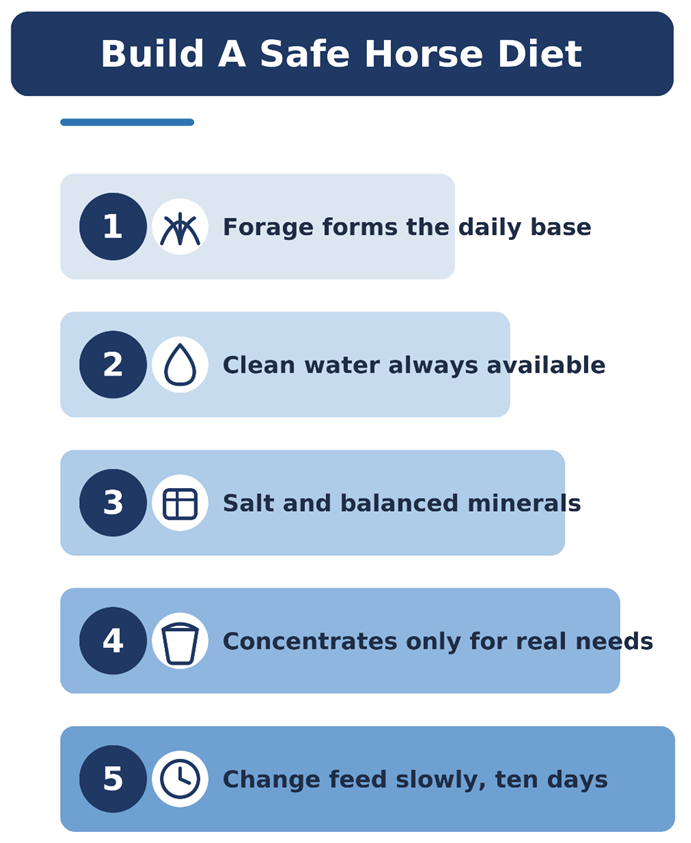
Follow these steps to keep the diet on track and avoid the gaps that drive strange eating.
- Offer free choice or frequent forage as the core of every day.
- Provide constant access to clean, fresh water.
- Supply a salt block and a balanced mineral source.
- Add concentrates only to match real workload or condition needs.
- Introduce any feed change slowly over seven to ten days.
- Book regular dental checks so the horse can chew forage well.
- Call your veterinarian if odd eating habits appear or persist.
Can Horses Eat Animal Protein in Any Form?
Can horses eat animal protein safely in small amounts? The honest answer is that they do not need it and should not be given it on purpose. Some commercial feeds once used animal byproducts, but modern equine nutrition has moved firmly toward plant and forage based formulas.
If you ever find animal protein listed in a feed, question it. A horse thrives on plant sources, and reputable feed companies build their products around that simple truth.
When you read a label, look for named forages, grains, and clearly listed vitamins and minerals. A transparent ingredient list is a good sign that the feed respects how a horse is built to eat.
Building a Balanced Horse Diet
A balanced diet starts with quality forage and clean water, then layers in only what the individual horse needs. A pleasure horse in light work may need little beyond good hay and minerals. A hard working performance horse may need extra calories from safe plant sources.
Work with your veterinarian or a nutritionist to match the ration to the horse. This personal approach beats any single feeding plan and keeps the gut, the weight, and the energy all in balance.
The Role of Protein in a Horse Diet
Protein matters for a horse, but the source must be plants, not meat. Forages such as alfalfa and quality grass hay supply the amino acids a horse needs to build muscle and repair tissue. A growing foal or a hard working horse may need a little more, still from plant feeds.
This is where confusion creeps in. Some owners hear protein and think meat, then worry their horse is missing out. In truth, plant proteins cover every need while keeping the gut safe and the diet natural.
Can Horses Eat Meat FAQs
These quick answers tackle the specific questions horse owners search for most. Each one builds on the science above, so you can act with confidence the next time meat and horses come up.
Can horses eat chicken?
Horses should not eat chicken. A small accidental bite is unlikely to cause a crisis, but chicken offers no nutritional benefit a horse can use. Cooked or raw, it can carry bacteria and disrupt the fiber based balance of the equine gut.
If your horse swallows chicken by accident, watch for signs of colic and call your veterinarian if anything seems off.
Can horses eat beef?
Horses should not eat beef. Like all meat, beef is rich in protein and fat that the horse gut is not built to process. There is no reason to offer it and several reasons, from gut upset to kidney strain, to keep it away.
A horse that grabs a beef scrap once will usually be fine, but beef should never appear in a planned ration.
Can horses eat bacon?
Horses should not eat bacon. Bacon is high in fat and salt and heavily processed, which makes it a poor and risky choice for an animal designed to eat grass. The fat load alone can upset a horse stomach.
Keep breakfast scraps well away from curious muzzles, since the smell can tempt a horse to take a bite it should not have.
Can horses eat fish?
Horses should not be fed fish as a normal food, even though a few Icelandic horses famously learned to eat dried fish in harsh conditions. That history is a survival story, not a feeding guide. A modern horse has no need for fish and gains nothing from it.
Stick to forage and let those old tales stay as interesting trivia rather than a meal plan.
If you keep horses near water where fish are present, there is no need to worry about the odd splash. A modern, well fed horse simply has no drive to hunt for a meal it never needed.
Can horses digest meat?
Horses cannot digest meat efficiently. The horse digestive system relies on hindgut fermentation of fiber and lacks the strong acids and enzymes that carnivores use to break down flesh. Undigested meat can ferment in the gut and cause problems.
This is the core reason meat does not belong in a horse diet, no matter how the meat is prepared.
Is meat toxic to horses?
Meat is not a classic poison, but it can be harmful to horses. The danger comes from digestive disruption, bacterial contamination, and the strain that excess protein and fat place on the body. Small accidental amounts rarely cause lasting harm, while repeated feeding can.
When in doubt, treat any meat exposure as a reason to monitor your horse and consult your veterinarian.
Why did my horse eat a bird?
Your horse most likely ate a bird out of curiosity, opportunity, or a mineral craving. A horse eating bird behavior is usually a one time opportunistic act when a slow or injured bird comes within reach. It does not mean your horse has turned into a predator.
If the behavior repeats, ask your veterinarian to review the diet for a possible deficiency such as phosphorus or salt.
Do horses eat meat in the wild?
Wild horses do not eat meat as part of their natural diet. Free roaming herds graze on grasses, shrubs, and other plants across open range, just as their bodies expect. Rare opportunistic nibbles can happen, but they never form a real part of the wild horse diet.
This matches everything we see in domestic horses, whose health depends on forage rather than flesh.
If you ever see a wild or feral horse near a carcass or a small animal, treat it as a rare exception. The vast majority of every herd’s day is spent grazing quietly on plants.
So can horses eat meat as a regular part of life? No. Everything from their teeth to their hindgut confirms that horses are herbivores designed to thrive on forage, and meat brings real risks with zero rewards. The strange videos and historical stories are interesting footnotes, not feeding advice. They remind us that horses are flexible survivors, while their true health depends on grass, hay, clean water, and balanced minerals. If your horse shows unusual eating habits or you have any worry about its diet, consult your veterinarian or a certified equine nutritionist for advice tailored to your horse’s individual needs.