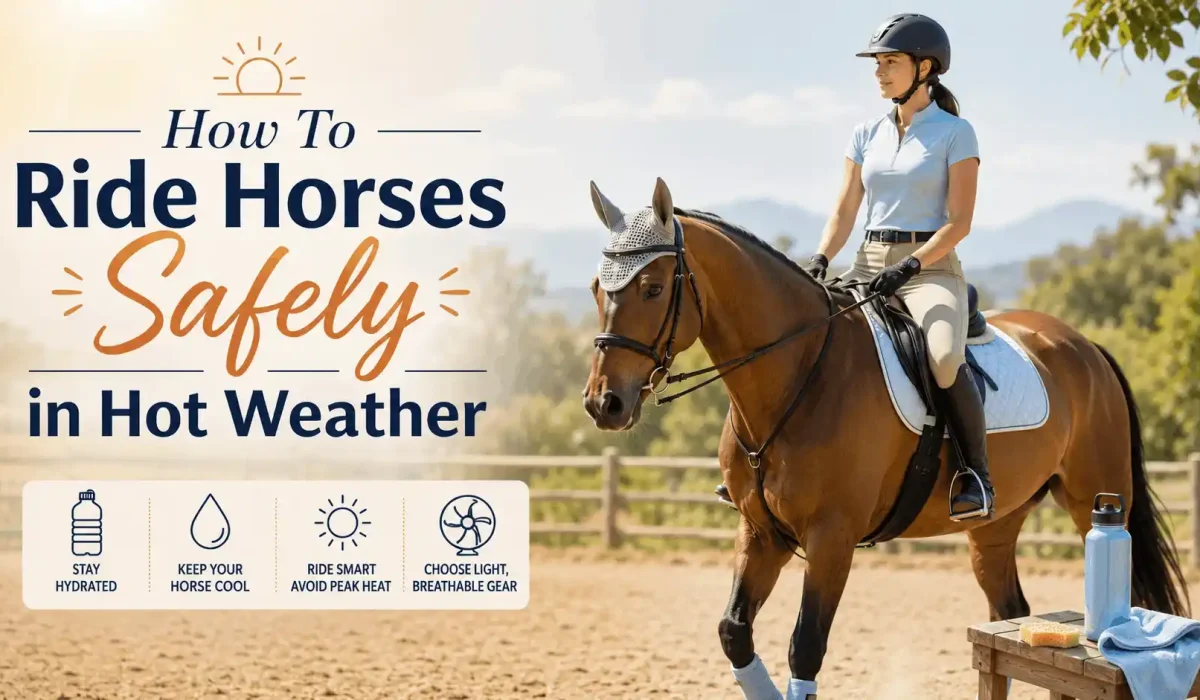
Hot weather horse riding is safe when you watch the heat index, adjust your schedule, and cool your horse the right way. Rising summer temperatures push your horse toward heat stress, dehydration, and dangerous spikes in body temperature. This guide shows you how to ride horses safely in hot weather, spot trouble early, and protect your horse through the hottest months of the year.
Your horse counts on you to make smart decisions when the mercury climbs. With a clear plan, you can keep riding all summer while keeping your horse comfortable, hydrated, and sound. Most heat problems are preventable, and the steps below give you a reliable system you can use every single day.
| Key Takeaways Add temperature and humidity to find your horse’s heat index. A heat index above 180 makes ridden work dangerous. Ride during early morning or late evening in summer. Horses may drink 15 or more gallons of water daily in heat. Cool an overheated horse with continuous cold water and shade. |
Why the Heat Index Matters for Horse Riding
The heat index tells you how hard your horse must work to stay cool. Temperature alone does not give you the full picture, because humidity controls whether your horse’s sweat can evaporate. When the air is already saturated with moisture, sweat sits on the coat and your horse loses its main cooling tool.
The equine heat index is the combined total of the air temperature in Fahrenheit plus the current relative humidity percentage, because both the heat and the moisture together decide how effectively your horse sheds its body heat through sweat evaporation during hard exercise. This single number turns a vague feeling that it is hot into a clear, measurable safety signal you can act on.
Here is the key thing. Your horse produces far more internal heat during work than you do, and it relies almost entirely on sweating to release that heat. When evaporation slows, core temperature climbs fast. The American Association of Equine Practitioners and US Equestrian both use the heat index to guide when ridden work should stop.
How Your Horse Releases Heat
Your horse sheds heat through four main routes, and sweating is by far the most important. As sweat evaporates from the skin, it carries heat away and lowers body temperature. This is why high humidity is so dangerous, because moist air slows evaporation to a crawl.
The other routes are convection, conduction, and radiation. A breeze moving across the coat carries warmth away, cool water against the skin draws heat out by direct contact, and the body radiates a small amount of heat into cooler surroundings. Understanding these pathways explains every cooling strategy later in this guide.
Think of it this way. When you ride, your horse is like an engine running hot, and sweat is its radiator. In humid conditions that radiator works at half capacity, so the same workout produces a much higher core temperature than it would on a dry day.
How Humidity Affects Performance
Humidity is the hidden factor that turns a warm day into a dangerous one. On a dry day at 90 degrees, your horse can sweat freely and stay reasonably comfortable. On a humid day at the same temperature, that sweat cannot evaporate, so heat builds inside the body and your horse’s performance drops fast.
You will often feel this shift before you see it on a thermometer. Your horse tires sooner, sweats more heavily, and takes far longer to recover between efforts. Watching humidity alongside temperature, rather than temperature alone, is what separates safe summer riding from a serious and avoidable mistake.
Heat Index Guidelines
Reading your heat index takes ten seconds. Check a weather app for the current temperature and humidity, add the two numbers, and match the total to the ranges below. This is the foundation of any sensible horse heat index guide.
| Heat Index (Temp °F + Humidity %) | What It Means | Your Action |
| Below 130 | Low risk | Ride normally, keep water available |
| 130 to 150 | Moderate risk | Monitor your horse for early heat stress |
| 150 to 180 | High risk | Watch closely, shorten and lighten the work |
| Above 180 | Severe risk | Avoid ridden work, the horse cannot cool itself |
The numbers tell a clear story. Below 130 your horse cools efficiently. Between 150 and 180, especially when humidity makes up more than half the total, your margin for error shrinks quickly. Above 180, US Equestrian advises against strenuous activity because the horse simply cannot release heat fast enough to stay safe.
The bottom line is this. The heat index is your first and most important check before you ever pick up a saddle. Build the habit of reading it every summer day, and you remove most of the guesswork from riding during high temperatures.
Which Horse Types Are Most at Risk in Summer
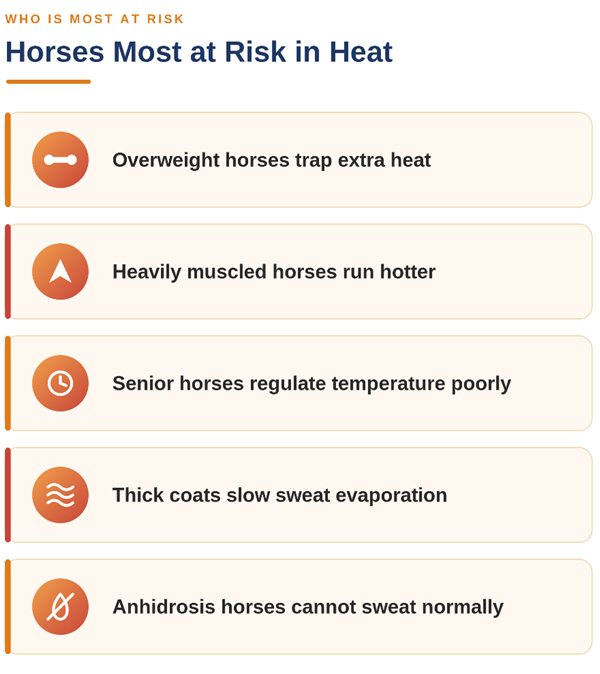
Some horses struggle far more in heat than others, and knowing your horse’s risk profile changes how cautious you need to be. Body type, fitness, age, and health all shape how well a horse handles high temperatures. A fit, lean horse cools more easily than a heavy, unfit, or older one.
You do not need to treat every horse the same. Matching your caution to your individual horse is smart summer horse care, and it starts with honest awareness of where your horse sits on the risk scale.
Body Condition and Build
Overweight and heavily muscled horses carry the highest heat risk from their build alone. Excess fat acts as insulation that traps warmth inside the body, while large muscle masses generate more heat during exercise. Both factors raise core temperature faster and slow recovery afterward.
A horse in lean, fit condition has a clear advantage in summer. Keeping your horse at a healthy body weight is one of the most effective long term steps you can take for heat tolerance. If your horse is carrying extra weight, scale back intensity even further on hot days.
Age, Fitness, and Acclimatization
Senior horses and unfit horses both regulate temperature less efficiently than fit adults in their prime. Older horses often have reduced circulation and may suffer conditions that impair sweating. Horses returning to work after time off have not yet adapted to either the workload or the season.
Acclimatization matters enormously. Horses that build up gradually over two to three weeks of warming weather cope far better than those hit by a sudden heat wave. The University of Georgia Equine Program notes that horses need time to adjust their sweating and cooling responses to rising temperatures.
Coat, Health, and Anhidrosis
Thick coats, certain illnesses, and the inability to sweat all raise heat risk sharply. A long or dense coat slows evaporation, so horses that have not shed fully need extra monitoring. Underlying health problems can blunt the body’s normal cooling responses.
Anhidrosis is a condition where a horse partly or fully loses the ability to sweat, because the sweat glands stop responding normally to heat and exercise demands. A horse that cannot sweat loses its primary cooling system and can overheat during light work, so these horses need the most conservative summer schedule of all.
But here is where most horse owners go wrong. They assume a young, athletic horse is safe in any conditions. Fitness helps, yet even elite equine athletes overheat when the heat index climbs and the work is hard. Risk is about the combination of horse, workload, and weather, never one factor alone.
Recognizing the Signs of Heat Stress in Horses
Catching heat stress early is the single most valuable skill you can build for summer riding. Your horse cannot tell you it is struggling, so you must read its body. The faster you notice horse overheating symptoms, the faster you can stop, cool, and prevent a true emergency.
Heat stress in horses is a dangerous state in which the body produces more heat than it can release, because high temperature, humidity, and heavy workload together overwhelm the horse’s natural cooling through sweating and increased blood flow to the skin. Left unchecked, it can progress to heat exhaustion and then life threatening heatstroke.
Early Warning Signs
Watch for these signs during and after work. Any one of them tells you to slow down and reassess:
- Rapid or labored breathing that does not settle with rest
- An elevated heart rate that stays high long after you stop
- Heavy sweating, or alarmingly, suddenly no sweat at all
- Lethargy, dullness, or unwillingness to keep working
- Stumbling, weakness, or poor coordination
- A dull expression, sunken eyes, or dry, tacky gums
Here is the key thing. Knowing your horse’s normal vital signs makes abnormal ones obvious. According to extension veterinary resources, a resting horse normally shows a temperature of 99 to 101 degrees Fahrenheit, 8 to 12 breaths per minute, and a heart rate of 32 to 36 beats per minute. A rectal temperature above 104 degrees after normal work, paired with other symptoms, signals real trouble.
How To Take Your Horse’s Vital Signs
Measuring vital signs takes only a minute and gives you hard numbers instead of guesswork. Take a rectal temperature with a digital thermometer, count breaths by watching the flank or nostrils for fifteen seconds and multiplying by four, and feel the pulse under the jaw or behind the elbow.
Practice these checks on a cool, calm day so you know your horse’s personal baseline. Some horses naturally run a little higher or lower than the textbook averages. When you know what is normal for your horse, you can spot a worrying change in seconds rather than minutes.
Heat Exhaustion Versus Heatstroke
Heat exhaustion and heatstroke sit on the same spectrum, but heatstroke is a true emergency. Heat exhaustion brings weakness, heavy sweating, and a fast pulse that still responds to rest and cooling. Heatstroke involves a soaring temperature, a horse that may stop sweating, and signs of distress that do not improve.
The bottom line is this. When you see several signs together, or a high temperature that will not come down, treat it as urgent. Stop work immediately, move to shade, and begin cooling while you decide whether you need veterinary help. Never wait to see if a severely affected horse recovers on its own.
Safe Hot Weather Horse Riding Practices
Smart scheduling and lighter work let you keep riding through summer without putting your horse at risk. The goal is simple. Match your effort to the conditions, and give your horse every chance to stay cool. These safe hot weather horse riding practices form the core of a sound summer routine.
You do not have to stop riding when it gets warm. You do need to ride differently. The habits below protect your horse on almost any hot day.
Choose the Right Time of Day
Ride during the coolest hours, which usually means early morning or late evening. Temperatures and the heat index typically peak in mid afternoon, so avoid that window entirely during hot spells. An early morning ride often gives you ten to fifteen degrees of relief compared with noon.
The same workout that is comfortable at 6 a.m. can become dangerous at 2 p.m. Shifting your schedule by a few hours is the cheapest and most effective safety tool you have for riding during high temperatures. Plan your week around the forecast and stay flexible when a heat wave arrives.
Adjust Exercise Intensity
Lower the intensity and duration of work as the heat index rises. Shorten your sessions, add walk breaks, and skip hard conditioning on the hottest days. Light hacking or in hand walking can replace a planned schooling session when conditions demand it.
Your horse generates heat in proportion to the work, so easing the effort directly reduces the heat load. Build in frequent rest periods in shade, and let your horse’s breathing return to normal before asking for more. Good horse exercise management in summer always favors caution over ambition.
Select Appropriate Riding Conditions
Pick your route and footing with heat in mind. Shaded riding trails, tree lined lanes, and routes with natural breezes keep your horse cooler than open arenas under full sun. Avoid deep sand and dark surfaces that radiate heat back at your horse.
Air movement matters more than many riders realize, because a breeze speeds evaporation and cooling. When you must work in an arena, choose the shadiest end, ride during the cooler hours, and keep sessions short. The University of Minnesota Extension recommends adjusting both timing and workload during hot, humid weather.
Warm Up and Cool Down Gradually
Ease your horse into and out of every hot weather session. A gradual warm up at the walk lets the body adjust before the real work begins, while a slow cool down walk helps clear heat and waste products from the muscles afterward. Rushing either phase raises strain in the heat.
End your ride before your horse is exhausted, not after. Finishing with energy to spare gives your horse a comfortable safety margin and makes the cooling process that follows far quicker and easier. A tired horse in hot weather has far less reserve to fall back on.
Choose Cooler Tack and Gear
Lightweight, breathable gear helps your horse stay cooler under saddle. Choose a saddle pad that wicks moisture, skip heavy or non breathable boots, and remove any equipment your horse does not truly need for the session. Less gear means more skin exposed to cooling airflow.
Think of it this way. Every extra layer is like a blanket your horse cannot take off. Stripping the tack back to the essentials gives the coat more chance to breathe and sweat to evaporate, which keeps body temperature lower throughout your ride.
Hydration and Water Management for Horses in Hot Weather
Water is your horse’s most important defense against summer heat, and proper horse hydration in summer prevents most heat related problems. A well hydrated horse sweats effectively, cools efficiently, and recovers faster. Dehydration does the opposite, raising the risk of heat stress and impaction colic.
Never restrict water before, during, or after exercise in the belief that it causes harm. Offering cool, clean water freely is one of the safest and most protective things you can do in hot weather.
Daily Water Requirements
A horse’s water needs rise sharply in heat. An idle adult horse drinks roughly 5 to 10 gallons per day in mild conditions, but in hot weather or during work that figure can climb to 15 gallons or more. Kentucky Equine Research notes that heavy sweating can push requirements even higher.
Here is the key thing. Your horse loses water and electrolytes through sweat far faster in summer, so intake must keep pace. Always provide constant access to fresh water, and check troughs and buckets several times a day to confirm they are full, clean, and cool.
Recognizing Dehydration
Spotting dehydration early lets you act before it becomes dangerous. A simple skin pinch test gives you a fast read on your horse’s fluid status. Pinch a fold of skin on the point of the shoulder and release it, watching how quickly it returns to flat.
In a well hydrated horse the skin snaps back instantly. If it stays tented for two seconds or more, your horse likely needs water and rest. Dry or tacky gums, sunken eyes, and reduced manure are further warning signs that your horse is falling behind on fluids.
Feed and Forage in the Heat
Forage drives hydration more than many riders realize. Digesting hay and grass draws water into the gut and creates a natural reservoir your horse can pull from during hot spells. Keep good quality forage available throughout the day in summer to support this hidden water store.
Avoid heavy grain meals right before riding in extreme heat, since digestion itself produces internal warmth. Light, frequent, forage based feeding supports steady energy and helps your horse hold its fluid balance through the hottest part of the day. A salt source nearby keeps the drive to drink strong.
Hydration Best Practices
Encouraging steady drinking takes a few simple habits. Follow these steps to keep your horse well hydrated through the hottest stretches of the year:
- Offer clean, cool water at all times, both in the stable and the field.
- Clean and refill troughs daily so the water stays appealing.
- Provide a salt block or loose salt to drive natural thirst.
- Add electrolytes after heavy sweating, always alongside plain water.
- Soak hay or feed to slip extra water into the diet.
- Offer water during long rides and at every rest break.
- Monitor manure and urine for signs of dehydration.
But here is where most horse owners go wrong. They reach for electrolyte supplements for horses without ensuring plain water is also available. Electrolytes only help when the horse can drink freely afterward, because without water they can actually worsen dehydration. Use them to replace what is lost in sweat, never as a substitute for water.
Cooling a Horse After Exercise
Effective cooling after work is essential, and modern research has overturned old myths about how to do it. The fastest, safest method is continuous cold water over the whole body. Good horse cooling techniques can bring a hot horse back to a safe temperature within minutes.
For years, riders were told that cold water on a hot horse caused harm such as muscle cramping or shock. Research has clearly disproven this idea, and the old advice is now firmly out of date.
Cooling Myths Debunked
The biggest cooling myth is that cold water harms a hot horse. Studies at the 1996 Atlanta Olympic Games showed that horses cooled with repeated cold water applications maintained safe core temperatures and recovered well. The colder the water, the more heat your horse loses.
Another myth says you must always scrape water off between applications. Recent research suggests that skipping the scrape can actually cool a horse slightly faster, and that leaving water on causes no harm. The real key is continuous reapplication, not the scraping itself.
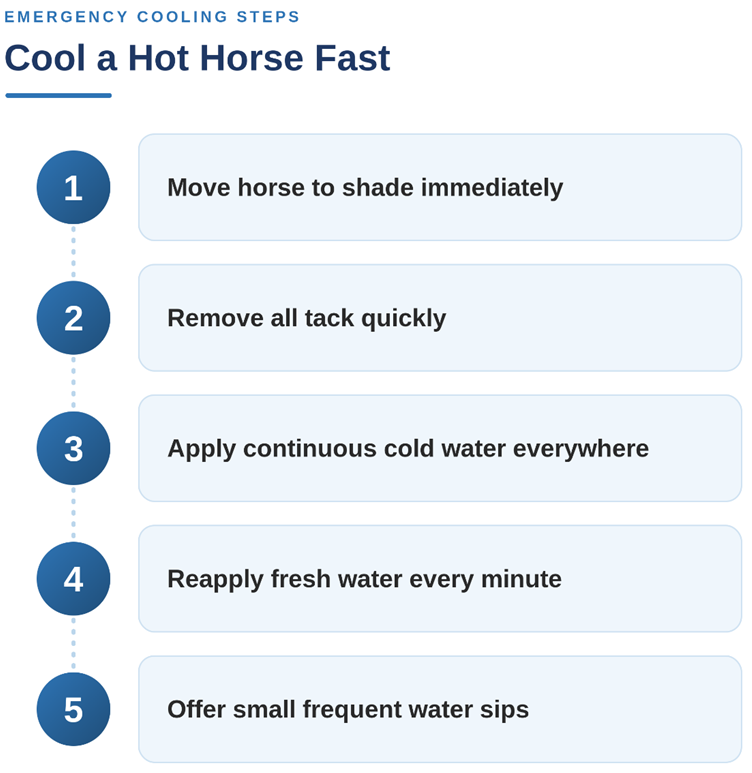
Immediate Cooling Steps
When your horse finishes work hot, or shows early heat stress, act quickly and follow these immediate cooling steps:
- Stop work and walk the horse to a shaded, breezy area.
- Remove the saddle and tack right away.
- Apply cold water continuously over the entire body, including the large muscles and legs.
- Keep reapplying water every minute, because warmed water must be replaced with fresh cold water.
- Offer cool water to drink in small, frequent amounts.
- Add a fan or seek a natural breeze to speed evaporation.
Modern guidance from US Equestrian and the UC Davis Center for Equine Health confirms that continuous cold water is the most effective cooling for a horse in distress. Do not fear cold hosing, and do not waste time worrying about scraping. Fresh cold water, applied again and again, is what brings the temperature down.
Post Ride Monitoring
Keep watching your horse after cooling until it has fully recovered. Check that breathing slows toward the normal 8 to 12 breaths per minute and that the coat feels cool to the touch. Recovery within ten to fifteen minutes is a good sign.
Think of it this way. Cooling is not finished when the horse looks better, but when its vital signs return to baseline. Continue offering water, keep the horse in shade, and avoid loading it onto a hot trailer until its temperature and breathing have clearly settled.
When to Contact a Veterinarian Immediately
Call your veterinarian without delay if your horse does not improve, or if serious signs appear. Some heat emergencies need medical treatment such as intravenous fluids, and waiting can be fatal. Trust your instincts and err toward caution.
Contact a veterinarian immediately if you see any of the following:
- A rectal temperature that stays above 104 degrees despite cooling
- Breathing or heart rate that will not return toward normal
- Collapse, severe weakness, stumbling, or disorientation
- Muscle tremors, cramping, or signs of colic
- A horse that has stopped sweating in the heat
The bottom line is this. You know your horse better than anyone. If something feels seriously wrong, begin cooling and call for help at the same time. Quick action during equine heat stress prevention saves lives and protects your horse’s long term health.
Preparing Your Horse and Barn for Hot Weather
A little preparation makes managing horses in hot climates far easier and safer. The work you do before a heat wave arrives pays off when temperatures spike. Shade, airflow, water, and a sensible routine all reduce heat load around the clock, not just during your ride.
Good summer management protects your horse during the twenty three hours a day it is not being ridden. These steps build a cooler, safer environment for the whole season.
Provide Shade and Airflow
Every horse needs reliable shade and moving air during hot weather. In the field, mature trees or a run in shelter give horses an escape from direct sun. In the barn, open doors and windows, and add fans to keep air moving across stalls.
Stagnant, humid barn air can be hotter than outside, so ventilation is essential. Position fans safely out of reach and well away from anything a horse could chew. A steady breeze speeds evaporation and helps your horse cool itself even while standing still.
Manage Turnout and Flies
Adjust turnout times so your horses are out during the cooler parts of the day. Many owners turn out overnight in summer and bring horses in during the worst afternoon heat. This simple switch keeps horses comfortable and cuts their heat exposure dramatically.
Flies add stress and drive horses to bunch together or stop grazing, so manage them with sprays, masks, and clean surroundings. Use fly sheets carefully, since heavy ones can trap heat. Light, breathable designs protect against insects without raising your horse’s temperature.
Plan for Travel and Competition
Travel adds heat stress on top of summer temperatures, so plan trailer journeys for the cooler hours. A parked trailer heats up quickly, so keep moving for airflow, offer water at every stop, and never leave a horse standing in a closed trailer in direct sun.
At competitions, scope out shade and water before your class and build in extra cooling time. Bring your own buckets, sponges, and a supply of cool water so you can cool your horse right after each effort, no matter how busy the venue becomes. A little planning keeps your horse safe far from home.
Build a Daily Summer Routine
A consistent routine keeps heat management from slipping through the cracks. Check water sources every morning and evening, read the heat index before any ride, and watch each horse for changes in appetite, attitude, or sweating. Small daily checks catch problems before they grow.
Think of it this way. Summer care is a system, not a single action. When shade, water, ventilation, and timing all work together, your horse stays in a safe heat balance and your hot weather horse riding stays enjoyable rather than risky.
Horse Hot Weather Riding FAQs
Is it safe to ride a horse in hot weather?
Yes, hot weather horse riding is safe when you check the heat index first and adjust your plan. Below a heat index of 130 you can usually ride normally. Between 150 and 180 you should lighten and shorten the work, and above 180 you should avoid ridden exercise entirely. Always provide water and cool your horse afterward.
What is the best time of day to ride a horse during hot weather?
Ride during early morning or late evening, when temperatures and humidity are lowest. Mid afternoon is the most dangerous window because the heat index peaks then. An early morning ride is often ten to fifteen degrees cooler than noon, which gives your horse a much safer environment for work and a far easier recovery afterward.
How can I recognize the signs of heat stress in my horse?
Look for rapid or labored breathing, an elevated heart rate slow to recover, heavy sweating or a sudden lack of sweat, lethargy, and stumbling. A rectal temperature above 104 degrees Fahrenheit after normal work is a clear warning. When several signs appear together, stop immediately, move to shade, and begin cooling your horse at once.
How much water should a horse drink in hot weather?
A horse may drink 15 gallons or more per day in hot weather, compared with 5 to 10 gallons in mild conditions. Heavy sweating during work raises that need further. Provide constant access to fresh, cool water, and consider adding electrolytes after hard, sweaty sessions, always alongside plenty of plain water to drink.
What is the best way to cool down a horse after riding in hot weather?
Apply cold water continuously over your horse’s whole body, reapplying every minute as the water warms. Move the horse to shade, remove the tack, and use a fan or breeze. Cold water does not harm a hot horse, and research shows continuous cold water cooling is the fastest, safest method to lower body temperature.
Can I prevent my horse from overheating during summer turnout?
Yes, provide ample shade, constant clean water, and salt to encourage drinking. Turn horses out during cooler hours when possible, and use fly sheets sparingly so they do not trap heat. Watch for horse overheating symptoms even at rest, since unfit, overweight, or senior horses can struggle in extreme heat without any exercise at all.
Should I use electrolytes for my horse in hot weather?
Use electrolyte supplements for horses after heavy sweating, but only when your horse can drink plain water freely afterward. Electrolytes replace the salts lost in sweat and encourage drinking, yet without water they can worsen dehydration. For light work in mild heat, a salt block and fresh water are often all your horse needs.
How do I keep riding safely through a summer heat wave?
During a heat wave, lower your expectations and prioritize your horse’s comfort. Ride only in the coolest hours, shorten and lighten every session, and choose shaded riding trails with good airflow. Read the heat index daily, keep water and cooling supplies ready, and be willing to skip ridden work entirely when conditions turn severe.
Hot weather horse riding does not have to mean hanging up your saddle for the summer. By reading the heat index every day, recognizing the early signs of heat stress, keeping your horse well hydrated, and cooling effectively after work, you can ride safely through even the hottest stretches. Pay close attention to your individual horse, since age, fitness, and health all change how it copes with heat. When in doubt, always consult your veterinarian or a certified.