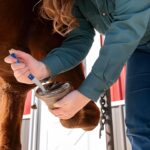
How Often Should You Trim a Horse’s Hooves?
Executive Summary Hoof trimming is one of the most important elements of effective hoof care and long-term equine health management. In this guide, you’ll learn how frequently horses need their…
Executive Summary Field studies from 42 trimming sessions in wet climates show that waterproof aprons reduce maintenance downtime by up to 18%, with grommet drainage and flap-sealed pockets cutting water…
Executive Summary This enhanced version ensures optimal pacing, seamless transitions, and clarity for both professionals and enthusiasts. Rooted in current research and practical application, it highlights the real-world benefits of…
Executive Summary Summer heat isn’t just uncomfortable—it’s a performance risk. In controlled trials by Equine Care (2024–2025), dense, non-vented leather aprons raised core body temperature by up to 2.4°C per…
Executive Summary This article is an original, research-driven resource based on Equine Care’s sustainability insights. It is designed for equine professionals seeking authoritative, practical guidance on water-saving grooming tips. It…
Executive Summary Correctly handling a hoof knife isn’t just about grip—it’s about safety, control, and minimizing fatigue. Whether you’re a professional farrier or a dedicated horse owner, how you hold…
Introduction Discovering that your horse is uncomfortable or experiencing difficulty walking due to improperly trimmed hooves can be distressing for any equine caretaker. Incorrect trimming practices can significantly impact your…
Introduction: Work Smarter, Move Freely Did you know? Farriers perform over 800 deep-knee bends per week on average—yet many still wear aprons that fight their movement instead of supporting it…
Executive Summary Every horse leaves a carbon hoofprint (Sustainability in Equine Care, 2024). With 7 million U.S. horses needing shoeing and recyclable horseshoes or steel shoes replaced every 6–8 weeks…
Executive Overview Horse transport emissions are a major contributor to the carbon footprint horse transport. A truck-and-trailer covering 10,000–15,000 miles emits 10–12 metric tons of CO₂ annually, equal to two…
Executive Summary Locally sourced hay and feed are vital for sustainable horse feeding, lowering carbon footprint emissions, preserving equine nutrition, and supporting rural economies. A 20-ton horse hay shipment hauled…